
Egyptian Arabic: Key Phrases to Know Before You Go

Learning a few phrases in Egyptian Arabic can transform your trip. It shows respect and helps you connect with locals, making your journey smoother and more personal. This guide gives you the key phrases for everyday situations, helping you feel more like a welcome guest and less like a tourist.
Koshary: The Ultimate Guide to Egypt’s National Dish

Koshary is Egypt’s national dish, a popular and affordable street food made of a hearty mix of rice, macaroni, and lentils. It’s topped with a spicy tomato sauce, garlic vinegar, chickpeas, and crispy fried onions.
Egyptian Culture: Guide to Human and Modern Side of Egypt

Dive into the real Egypt beyond the pyramids. This guide explores the human and modern side of the country, from its hospitable people to its vibrant street food and dynamic arts scene. Learn about local culture, find out what to eat, and prepare for an immersive, authentic travel experience.
The Profound Egyptian Impact on Roman Empire
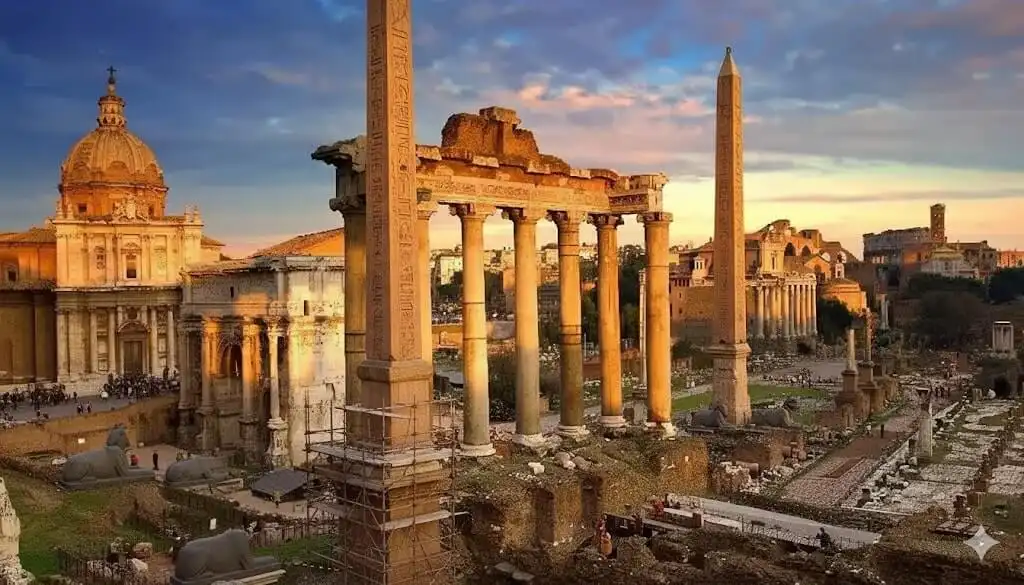
After Rome’s conquest in 30 BCE, Egyptian culture profoundly influenced the empire. The cults of Isis and Serapis became popular, while obelisks and Egyptian art transformed Roman architecture. Economically, Egypt served as Rome’s vital “breadbasket,” supplying grain and cementing imperial power.
The Profound Egyptian Influence on Greek Civilization
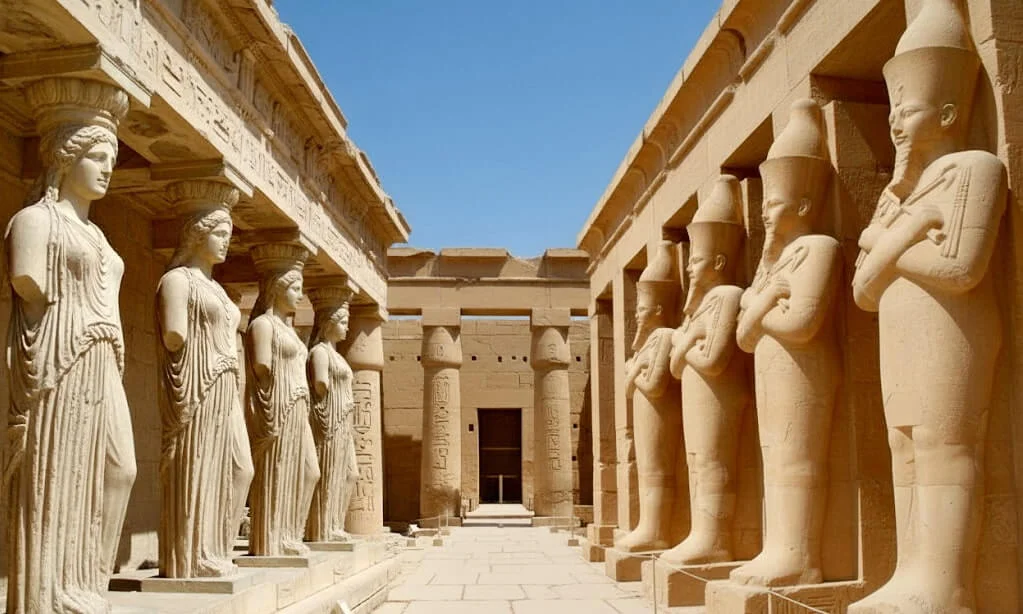
Egypt profoundly influenced ancient Greek civilization in various aspects. Key influences include religious syncretism, with Greek gods like Demeter being associated with Egyptian deities such as Isis. Egyptian artistic motifs and the distinctive frontal poses in sculpture were adopted, as were architectural elements like columns. Furthermore, the Greeks acquired valuable knowledge in mathematics, astronomy, and medicine from the Egyptians.
Ptolemy I Soter: From Macedonian General to Pharaoh of Egypt
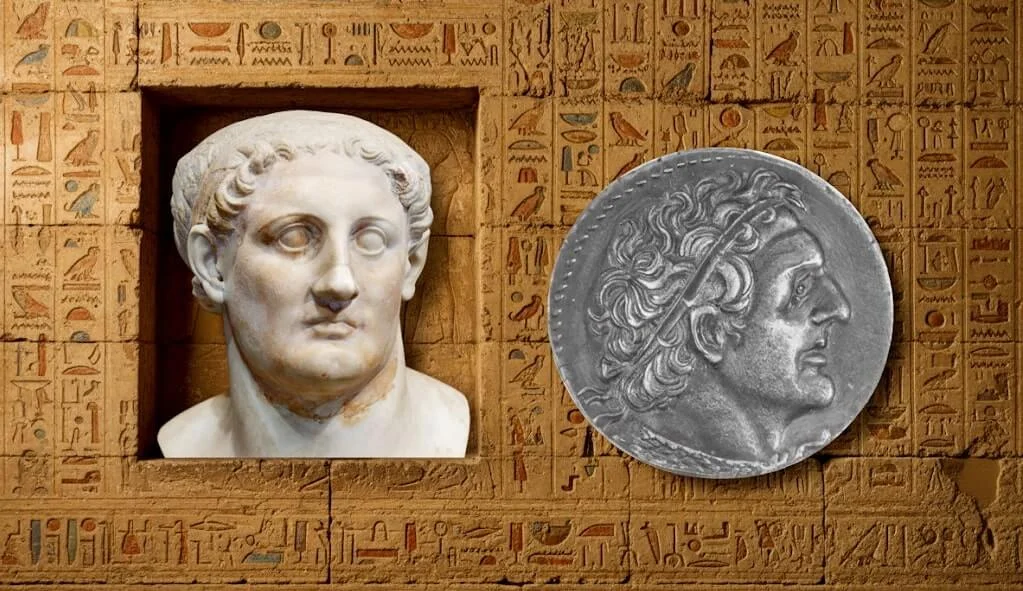
Ptolemy I Soter was one of Alexander the Great’s generals who founded the Ptolemaic Dynasty in Egypt. After Alexander’s death, Ptolemy seized control of Egypt, earning the title “Savior.” He transformed Egypt into a Hellenistic kingdom by blending Greek and Egyptian cultures. He founded Alexandria, which became a major cultural center, and promoted the god Serapis to unify his subjects. His reign established a dynasty that ruled for nearly 300 years.
Heb-Sed Festival: A Journey to Rejuvenation

The Heb-Sed Festival was an ancient Egyptian jubilee that celebrated the pharaoh’s reign. This ceremony ritually renewed the king’s physical and divine power. It typically occurred after a pharaoh’s 30th year on the throne to ensure his continued fitness to rule. Key rituals included a symbolic race to demonstrate vigor and a re-enthronement. The festival was vital for political stability and religious continuity, publicly confirming the pharaoh’s authority and ensuring the prosperity of Egypt.
The Serapeum in Saqqara: More Than a Tomb of Sacred Bulls
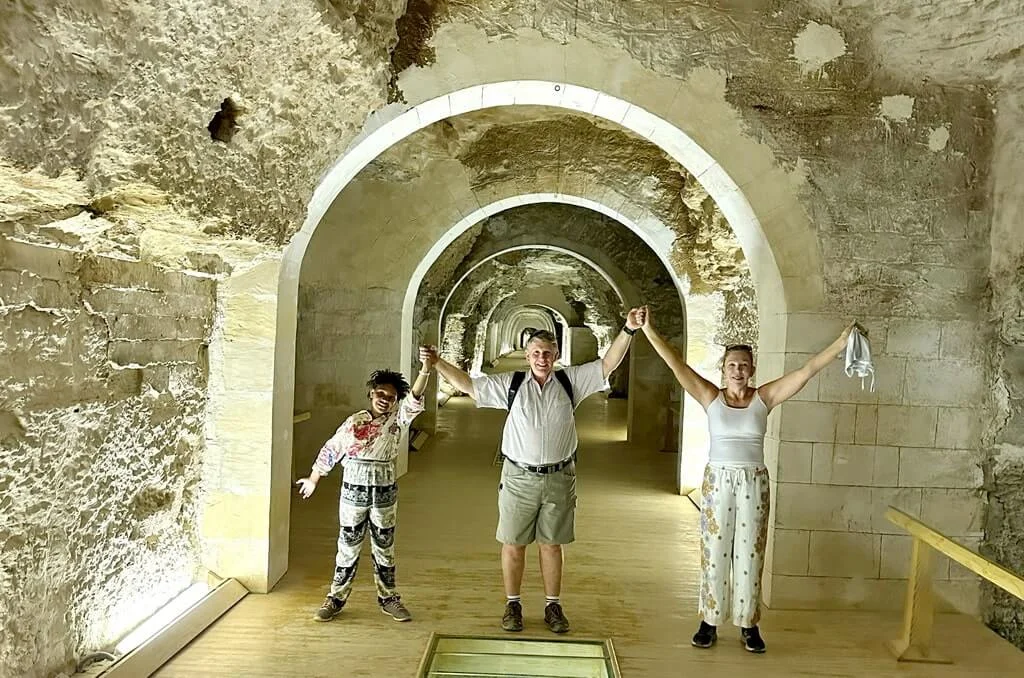
The Serapeum in Saqqara is an underground burial site for the sacred Apis bulls, which ancient Egyptians worshipped as manifestations of the god Ptah. Discovered in the mid-19th century, the site features a network of tunnels and huge granite sarcophagi that once held the mummified bulls, providing unique insights into Egyptian animal worship and religion.
King Snefru: The Perfecter of Pyramid Building
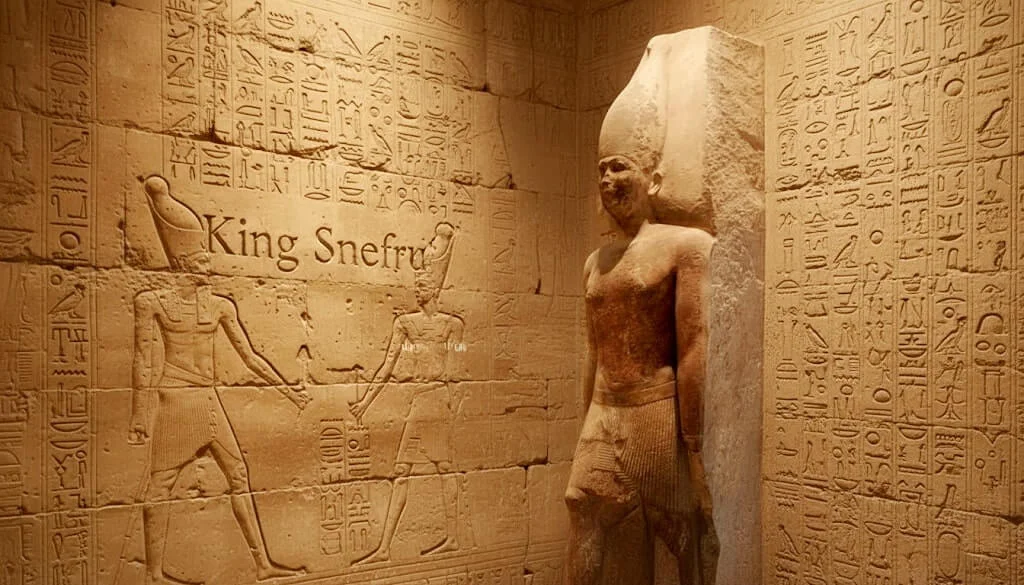
King Snefru, a pharaoh of Egypt’s Fourth Dynasty, was the most prolific pyramid builder in ancient Egyptian history. He experimented with three major pyramids—the Meidum, the Bent, and finally the Red Pyramid—which perfected the true pyramid form. His architectural innovations cemented his legacy as a visionary leader and the father of Egypt’s most iconic monuments.
King Djoser: The Pharaoh of The Step Pyramid

King Djoser was a pharaoh of Egypt’s Third Dynasty, most famous for commissioning the Step Pyramid at Saqqara, the world’s first large-scale stone building. His brilliant vizier and architect, Imhotep, designed the pyramid as a series of stacked mastabas, which became the prototype for all subsequent pyramids. This revolutionary monument was the center of a large mortuary complex, cementing Djoser’s legacy as a visionary leader.
King Menkaure: Who Completed the Giza Necropolis
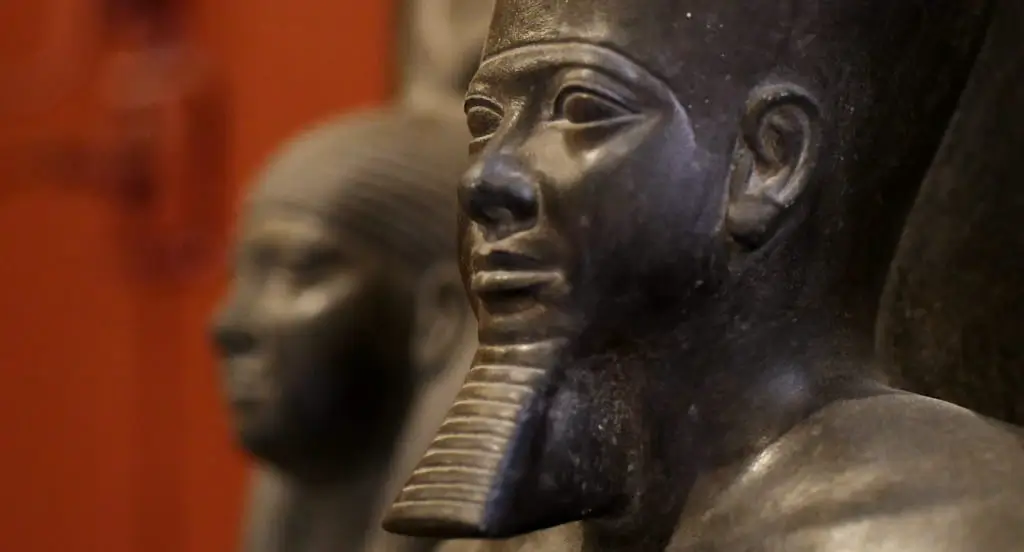
King Menkaure (also known as Mycerinus) was a pharaoh of Egypt’s Fourth Dynasty who completed the Giza pyramid complex. Although his pyramid is the smallest, it’s known for its artistic and architectural achievements, including a combination of red granite and limestone casing. His legacy includes the remarkable Menkaure Triads—statues found in his valley temple that are considered among the finest examples of Old Kingdom art.
Wadjet: The Cobra Goddess of Ancient Egypt

Wadjet, the cobra goddess of ancient Egypt, was a fierce protector and patron of Lower Egypt. She was one of the “Two Ladies” representing the unification of Upper and Lower Egypt. Her most significant role was protecting the pharaoh, and she is famously depicted as the uraeus on the royal crown. She symbolized divine authority, healing, and sovereignty.