
The Alabaster Sphinx: Memphis’s Majestic Guardian

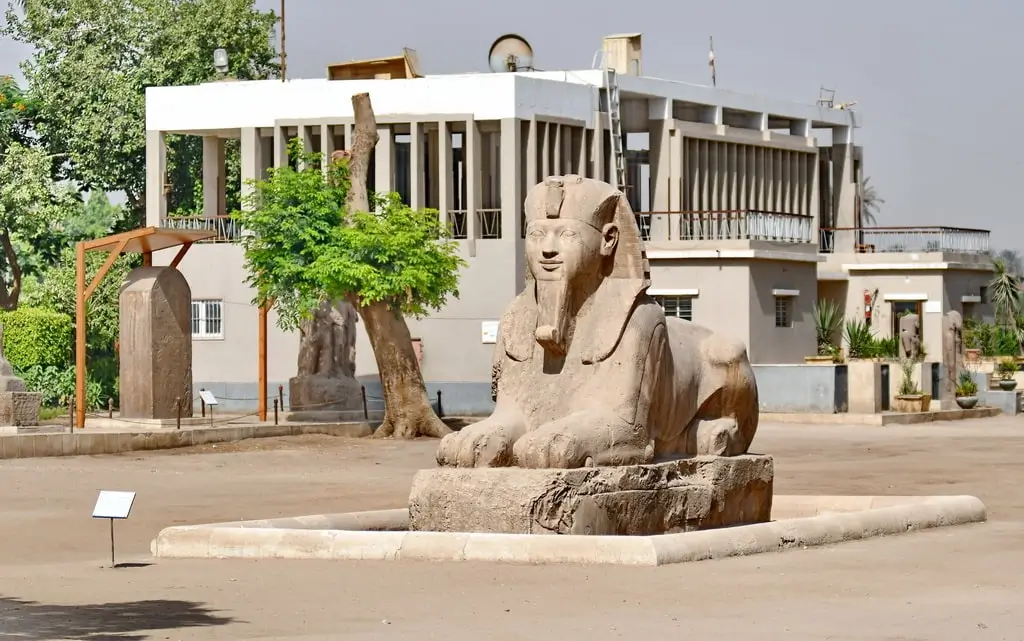
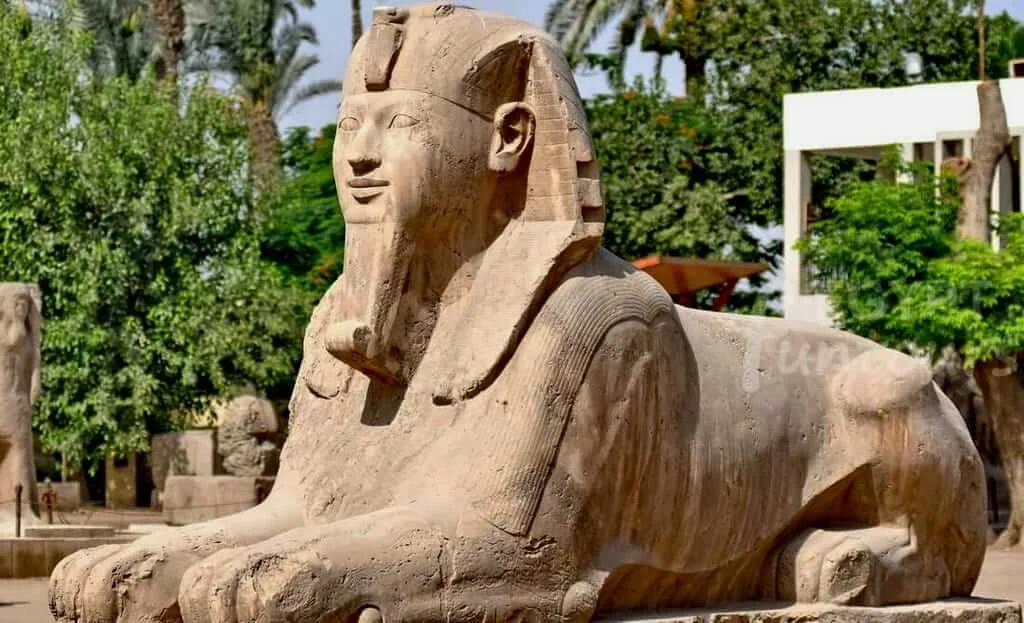
The Alabaster Sphinx of Memphis is a colossal ancient Egyptian statue, carved from a single block of calcite alabaster, currently displayed at the Memphis Open-Air Museum. Dating to the New Kingdom (likely the 18th Dynasty), it measures about 8 meters (26 ft) long and is one of the largest monuments ever made from this material. It features the body of a lion and a human head, serving as a powerful guardian. Although it has no inscription, its style suggests it may represent Pharaoh Amenhotep II or Queen Hatshepsut.
The eye of Horus
WhatsApp
Email
Print

The Alabaster Sphinx: A Guardian of Ancient Memphis

The Alabaster Sphinx in Memphis stands as a magnificent testament to ancient Egyptian artistry. This colossal statue is a key attraction at the open-air museum in Mit Rahina, the site of ancient Memphis. Unlike its famous counterpart at Giza, this sphinx features the more serene, almost luminous quality of alabaster. It offers a unique glimpse into the artistic and religious traditions of one of Egypt’s oldest capitals.

Divider

Memphis: A City of Ancient Power

Memphis, and ancient powerful city

Memphis was the ancient capital of Aneb-Hetch, the first nome of Lower Egypt. It was also the first capital of a unified Egypt. Founded around 3100 BCE by King Menes, it remained a powerful city for millennia. Memphis was a thriving center for trade, religion, and administration. Its strategic location at the apex of the Nile Delta made it a pivotal site. The city served as a vital hub where the pharaohs built temples and monuments. Many of these structures honored the god Ptah, the patron deity of Memphis. The Alabaster Sphinx once guarded one of these sacred spaces.

The city’s decline began with the rise of Thebes during the New Kingdom. However, it still held significant religious and political importance. Memphis remained a major center for the worship of Ptah and continued to attract royal patronage for centuries. The city’s eventual abandonment left its monumental structures to the forces of nature and later, to the hands of stone scavengers. Only through modern archaeology did its treasures, like the sphinx, come to light again.

Golden Scarab

Unveiling the Alabaster Sphinx

Unveiling the Alabaster Sphinx

Archaeologists discovered the Alabaster Sphinx during excavations in the 19th century. Its exact dating remains a subject of debate among scholars. However, most attribute it to the New Kingdom period, likely the reign of Amenhotep II (c. 1427–1401 BC) or Ramses II (c. 1279–1213 BC). Unlike the Great Sphinx of Giza, which combines a lion’s body with a human head representing a specific pharaoh, this sphinx may not depict a particular ruler. Its face is generalized and idealized. It suggests a representation of the pharaoh as a divine being rather than an individual.

The sphinx was discovered in a horizontal position. It had likely fallen from its original pedestal during an earthquake. Its material, alabaster, protected it from the wear and tear that affects monuments made from other stones. This preservation has allowed modern visitors to see its intricate details.

The eye of Horus

Features and Material

The Open air museum in Memphis

The Alabaster Sphinx is an impressive sight. It measures approximately 4 meters (13 feet) in height and 7 meters (23 feet) in length. Its most striking feature is its material: a single, massive block of calcite alabaster. This stone gives the sphinx a beautiful, translucent quality. It subtly changes hue with the shifting daylight. The choice of alabaster was significant. Egyptians associated it with purity and ritual. Its smooth, polished surface reflects light, creating a serene and majestic presence. The sphinx depicts the traditional crouching lion’s body, symbolizing strength. It has a human head, representing intellect and divinity.

The sphinx has a unique nemes headdress (the striped cloth worn by pharaohs) without a royal uraeus (the cobra symbol). This detail suggests a more generic, divine representation. Its serene expression and perfect symmetry are hallmarks of the refined artistry of the New Kingdom.

Divider

The Role of the Sphinx in Ancient Egypt

The role of the Sphinx in ancient Egypt

Sphinxes played a crucial role in ancient Egyptian religious and royal iconography. They were powerful guardians. Egyptians placed them at the entrances of temples and tombs. They believed these mythical creatures protected sacred sites from evil. The Alabaster Sphinx at Memphis would have served a similar protective function. It stood watch over a significant temple or monumental complex within the ancient capital. Its presence reinforced the divine authority of the pharaoh and the sanctity of the location.

The sphinx motif evolved. Early sphinxes were often more lion-like and ferocious. However, by the New Kingdom, the human head became more prominent and idealized, symbolizing the pharaoh’s intellect and control over the raw power of the lion. The sphinx served as a perfect visual metaphor for the pharaoh’s dual nature: a human ruler with the strength of a beast and the wisdom of the gods.

The eye of Horus

Visiting the Alabaster Sphinx Today

The Colossus of Ramesses II in Memphis

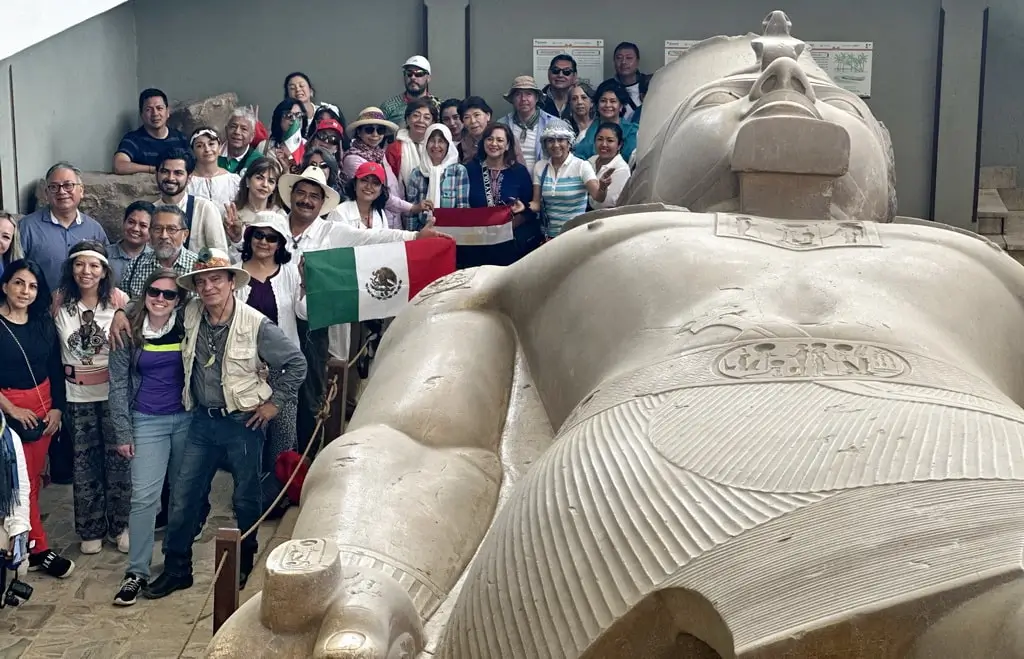
Today, visitors can admire the Alabaster Sphinx at the Memphis Open-Air Museum, located near the village of Mit Rahina. The museum also displays other impressive artifacts. These include a colossal statue of Ramses II. The site offers a tangible connection to Egypt’s earliest dynasties and its rich history. The Alabaster Sphinx continues to draw tourists and scholars alike, standing as a silent, eternal guardian of a once-great city.

Weather in Memphis

Divider

Egypt Fun Tours makes the most out of your layover!

I had a really short layover in Cairo and didn’t want to be stuck in the Cairo Airport for several hours. It was like Mission Impossible: Egypt Fun Tours’ mission was to show me around Cairo during my short 5 hour layover which was made even shorter because my plane

More »

Amazing tour to the pyramids of Sakkara and Dahshur

This week we had a great tour with Mohamed to the pyramids of Sakkara and Dahshur, as well as Memphis. He tailored the tour to our preferences, took a lot of time with us, and gave us detailed background information on everything. It was also great that he never tired

More »

What an amazing day!

I had a 12 hour layover on my way to Dar es Salaam and wanted to take full advantage of my time in Cairo. After researching for many hours, I came across Egypt Fun Tours and emailed for more information. I received a prompt reply with full details of several

More »

Excellent Egypt Adventure – All To Ourselves

Excellent trip to historic sites with no one else around. We came to see Egypt while most places still had COVID-19 fears. The staff at Egypt Fun Tours were professional, safe, and great to deal with. Very helpful, knowledgeable, and entertaining. I feel like I just got a year of

More »
group tour of wonders

Solid Tour Company

Last year (2010) my wife and I did a 20 day trip in Egypt, mostly Do-It-Yourself. However, one of the first things we did was a trip to Bahariya oasis and to the White Desert — not so easy to do yourself, so we needed an agency. After e-mail back-and-forths

More »
God_Anubis_Icon

Top-rated Tour Packages

God_Anubis_Icon
WhatsApp
Email
Print