King Menkaure: Who Completed the Giza Necropolis

King Menkaure (also known as Mycerinus) was a pharaoh of Egypt's Fourth Dynasty who completed the Giza pyramid complex. Although his pyramid is the smallest, it's known for its artistic and architectural achievements, including a combination of red granite and limestone casing. His legacy includes the remarkable Menkaure Triads—statues found in his valley temple that are considered among the finest examples of Old Kingdom art.
The eye of Horus
WhatsApp
Email
Print

King Menkaure: Who Completed the Giza Necropolis

King Menkaure, also known by the Greek name Mycerinus, was a prominent pharaoh of ancient Egypt’s Fourth Dynasty (c. 2548–2530 B.C.E.). He followed in the footsteps of his famous father, Pharaoh Khafre, and grandfather, Pharaoh Khufu, by constructing the third and final pyramid at the Giza Plateau. Although his pyramid is the smallest, Menkaure’s reign is celebrated for its artistic and architectural achievements. It represents the final monumental flourish of the pyramid-building era at Giza. The legacy of Mycerinus is forever tied to this grand project.
Divider

A Royal Lineage of Builders

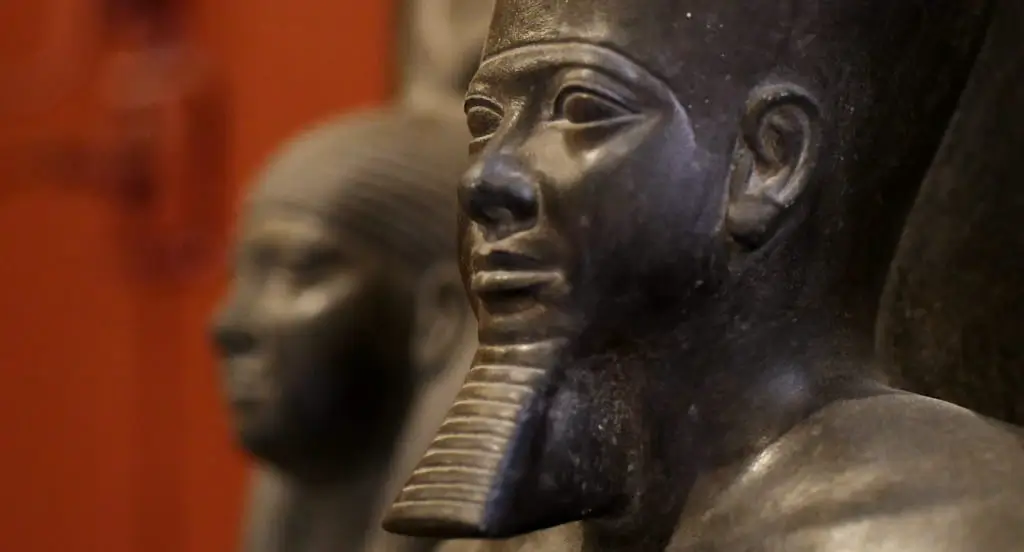
Statue of Menkawre in The Egyptian Museum

Menkaure was born into a powerful family. He was the son of Khafre, builder of the second pyramid and the Great Sphinx. He was also the grandson of Khufu, the mastermind behind the Great Pyramid. This lineage placed Menkaure in a position of immense power. It also came with the expectation that he would continue the legacy of monumental construction. The reign of Mycerinus, believed to have lasted around 18 to 22 years, was a period of stability and prosperity for ancient Egypt. Evidence from the Giza necropolis suggests a well-organized and efficient administration under his rule. He likely commanded vast resources and a large workforce to complete his ambitious building projects.

Golden Scarab

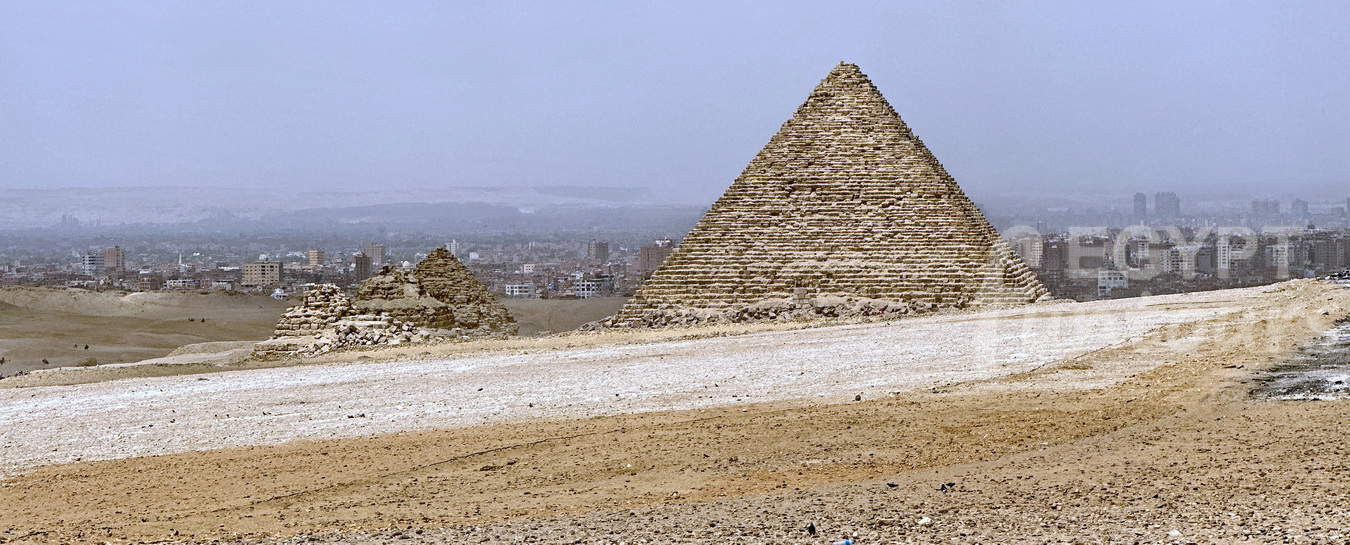
The Divine Pyramid of King Menkaure

6 Days UNESCO Tour Package - meditation tour

Menkaure’s most famous achievement is the Pyramid of Menkaure. It is the smallest of the three main pyramids at Giza. The ancient Egyptians called it “Netjeri Menkaure“, meaning “Mycerinus is Divine.” This pyramid is a testament to the exquisite craftsmanship of the Old Kingdom.

Unlike his predecessors’ pyramids, which people made entirely of limestone, Menkaure’s pyramid features a striking combination of materials. For instance, workers carved its lower courses in massive blocks of imported red granite from Aswan, a city over 500 miles away. Then, they finished the upper part of the pyramid with white Tura limestone. The use of granite showcases the impressive logistical and engineering skills of the time. However, Menkaure’s team left the pyramid unfinished upon his death, which provided archaeologists with a unique glimpse into ancient construction methods. Consequently, the partially completed granite casing gives us a clear view of the work stages, including the initial rough cutting and the final smooth polishing.

The eye of Horus

The Complex: Temples, Tombs, and Treasured Art

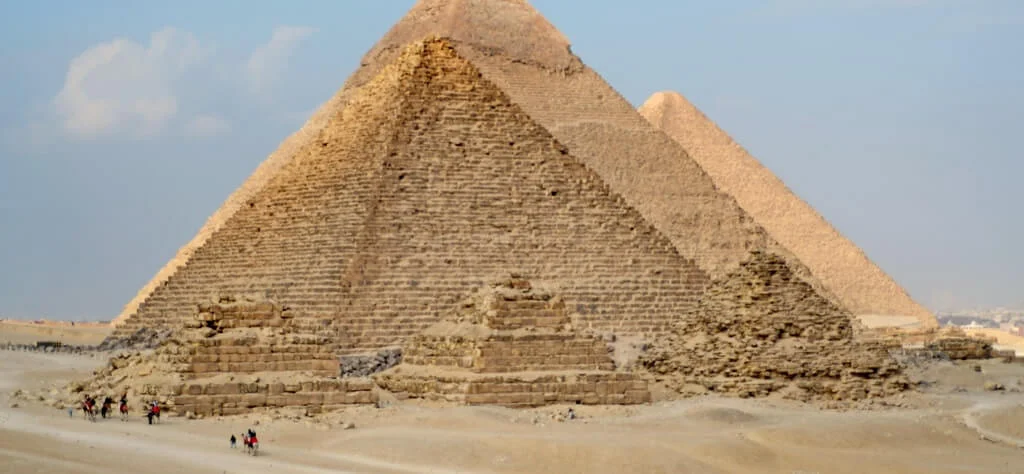
Menkaure Pyramid and Complex

The Pyramid of Menkaure was not a standalone structure. It was part of a larger mortuary complex. This complex included a mortuary temple, a valley temple, and three smaller satellite pyramids. These smaller pyramids were likely tombs for his queens, including Khamerernebty II. The mortuary temple, located east of the pyramid, was the site of daily rituals to honor the deceased king. The valley temple, connected by a long causeway, was where the king’s body was prepared and where funeral rituals took place before his burial.

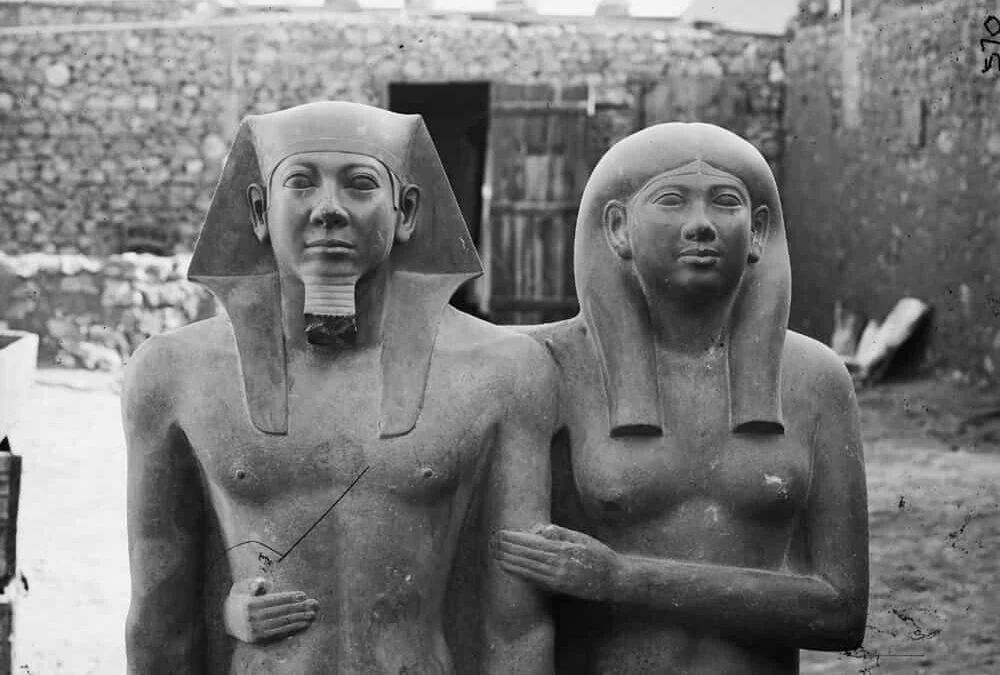
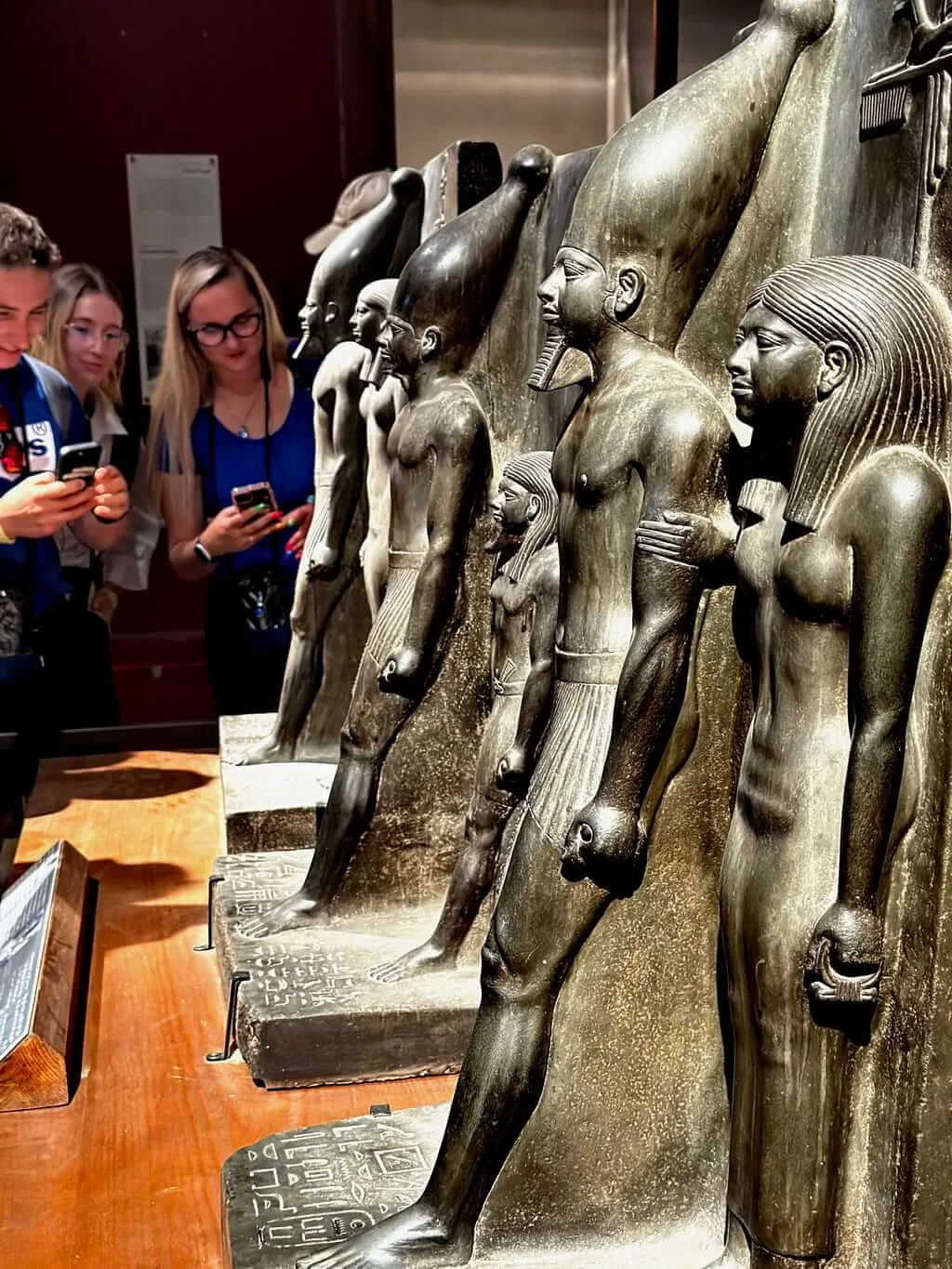
In 1910, archaeologists working at the Menkaure Valley Temple made a remarkable discovery. Led by George Reisner of Harvard University and the Boston Museum of Fine Arts, the team unearthed a collection of stunning statues. These included the famous Menkaure Triads and a beautiful double statue of the king and his queen. These finds from the reign of Mycerinus are considered some of the most significant in the history of Egyptology.

Divider

The Legacy of Mycerinus’s Statues

Menkawre Statue

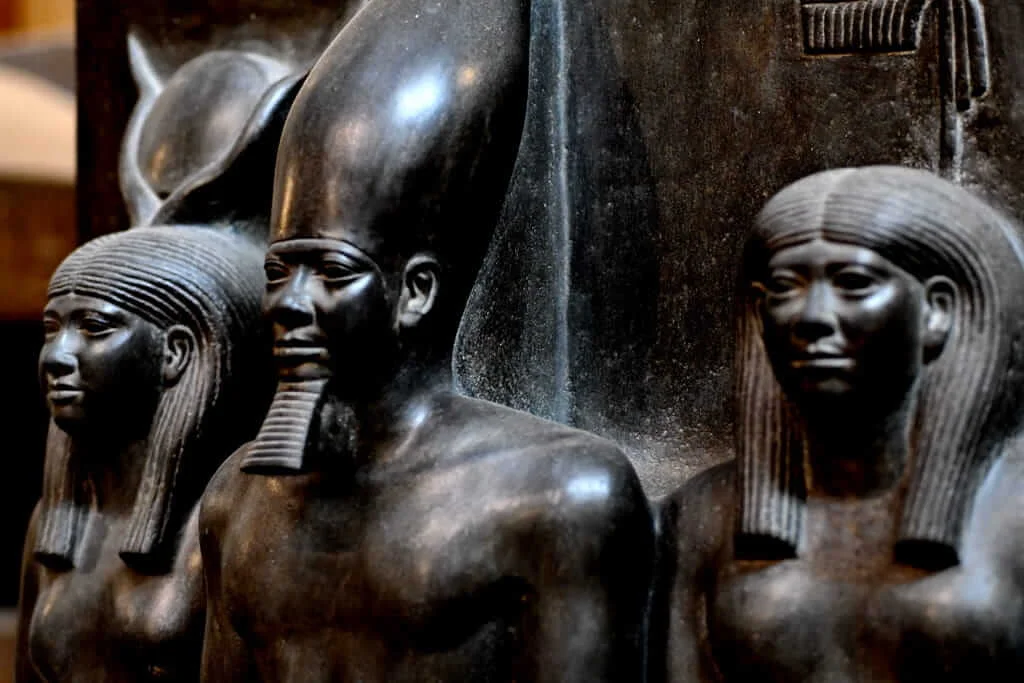
The statues that archaeologists found in Menkaure’s complex are some of the finest examples of Old Kingdom sculpture. Artists carved these masterpieces from durable greywacke, schist, and alabaster, and they depict the king in powerful and serene poses. For example, they show him standing with his queen or with the goddess Hathor and other regional deities.

Furthermore, these sculptures reveal a lot about the period’s artistic ideals. They portray the human form with a subtle, idealized realism. In particular, the triads are a unique feature of Menkaure’s reign. They depict the king flanked by the goddess Hathor and a personified nome (province) of Egypt, symbolizing his divine legitimacy and control over the land. Moreover, these statues were not merely decorative; people believed they were eternal bodies for the king and his royal family. Today, you can find these statues in museums worldwide, including the Museum of Fine Arts, Boston, and the Egyptian Museum in Cairo. Ultimately, the artistic style under Mycerinus shows a culmination of techniques from the Fourth Dynasty.

The eye of Horus

The Life and Enduring Story of King Menkaure

The Life and Enduring Story of King Mycerinus

Menkaure’s reign may have been shorter than his predecessors’, but his legacy certainly endures. His pyramid and the incredible statues discovered within its complex offer a unique window into the life, art, and beliefs of ancient Egypt. People remember him as a benevolent and refined ruler, a stark contrast to the historical accounts that portray his forebears as tyrants.

Furthermore, the discovery of a beautifully crafted sarcophagus in his pyramid emphasizes the high quality of craftsmanship during his rule. Although he lost this sarcophagus at sea in 1838 while transporting it to England, detailed drawings and descriptions remain. Ultimately, the story of Mycerinus is a testament to the power and artistry of ancient Egyptian civilization, as Menkaure’s monuments solidified his place in history, cementing his role as the final builder of the iconic Giza Necropolis.

Weather in Egypt

Divider

Very Considerate and Helpful

Guide and driver were on time, open to my requests and took care that I felt safe and saw the Pyramids and parts of old cairo during my less than 24 hour stay between flights. Office staff were great in communicating by email before and during the trip.

More »

What an amazing day!

I had a 12 hour layover on my way to Dar es Salaam and wanted to take full advantage of my time in Cairo. After researching for many hours, I came across Egypt Fun Tours and emailed for more information. I received a prompt reply with full details of several

More »
Souqs and Markets in Egypt - Egypt Fun Tours

Cairo walking tours

After a rocky start (the driver had been in an accident on his way to pick me up,) the company very quickly sent another driver/guide named Mohammed, who was a real pro. Thoroughly enjoyed my first day in Egypt!

More »

Well Done

All aspects of the experience were considered and well taken care of. Knowledgeable and friendly guide and organized itinerary.

More »
3-day desert safari trip from Cairo - Egypt adventure tours

Book with Egypt Fun Tours!!

In April 2011, my husband and I, after great debate, took a trip to Egypt. Because of the political situation, we decided to book a tour for our time in Cairo and Luxor. We are very happy that we did, since these are two cities that should not be missed.

More »
God_Anubis_Icon

Top-rated Tour Packages

God_Anubis_Icon
WhatsApp
Email
Print