Roman and Byzantine Egypt: Breadbasket of Rome & Rise of Christianity

Discover the pivotal era of Roman and Byzantine Egypt, a time of immense transformation following the tragic death of Cleopatra. Learn how Egypt served as the vital "breadbasket" that fed the Roman Empire and became the spiritual cradle of Christianity, giving rise to the Coptic Church and the world's first monasteries. Trace the history from the rule of distant Emperors to the final Arab Conquest in 642 CE that reshaped the region's identity forever.
WhatsApp
Email
Print

Roman and Byzantine Egypt lasted from 30 BCE to 642 CE. This period began with Octavian’s victory over Cleopatra VII and Mark Antony at the Battle of Actium. It ended with the Arab conquest of Egypt. The era spanned over six centuries. It was a time of major transformation for Egypt. The period was marked by a unique administrative structure and intense economic exploitation. It also saw a fascinating cultural and religious synthesis. These changes left a lasting mark on the region’s history.

The eye of Horus

Political and Economic Control

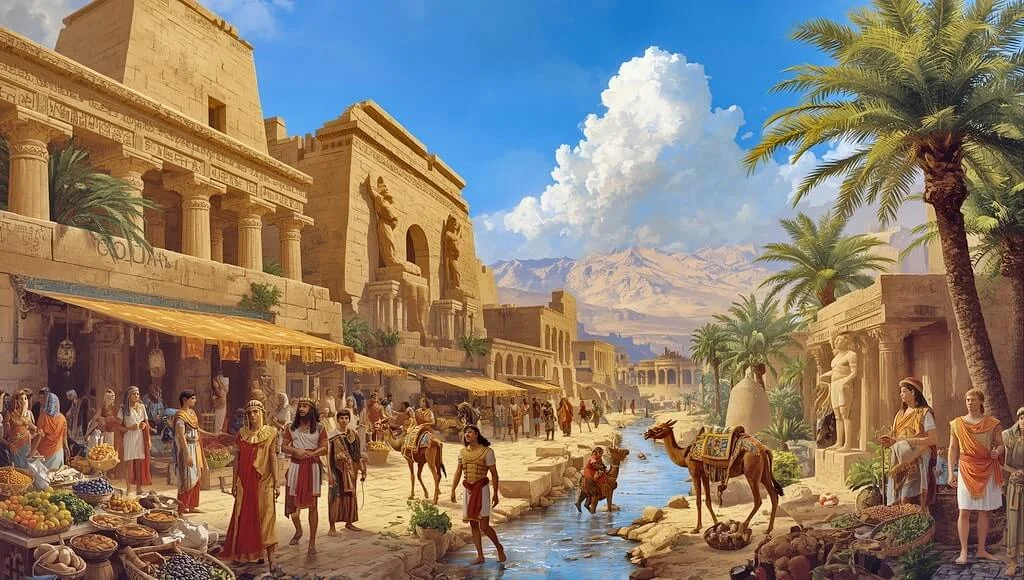
For the Romans, Egypt was not merely another province; it was a unique and highly valued imperial possession. To prevent any single powerful figure from using the province’s resources against the central government, the emperor governed it directly through a prefect of equestrian rank, rather than a senator. This deliberate centralization of power underscored Egypt’s immense strategic importance to the Roman state. The primary reason for this control was Egypt’s role as the “breadbasket” of the empire. The incredibly fertile lands of the Nile Delta, enriched by the river’s annual flooding, produced a massive surplus of grain. This grain was absolutely essential for feeding the vast population of Rome and, later, Constantinople, becoming a cornerstone of Roman food security and a key factor in maintaining urban stability and preventing civil unrest.

To maximize profits, the Roman administration implemented highly efficient and often burdensome taxation systems. They also revitalized the Red Sea ports, particularly those like Berenice, which significantly boosted the lucrative trade with India and other eastern regions. This control over key trade routes brought substantial revenue to the empire through taxes and tariffs, further cementing Egypt’s economic importance. The Roman legal system also brought a degree of standardization, though local laws and customs were often maintained, creating a dual legal framework in some areas.

Golden Scarab

Society and Culture

5-day family trip to Cairo and Alexandria

The social structure of Roman and Byzantine Egypt was a complex hierarchy based on ethnicity and citizenship status. Roman citizens were at the top, followed by the Hellenized urban elite, who lived primarily in cities like Alexandria. The native Egyptian population generally occupied the lower tiers of this social pyramid. While the Romans allowed Egyptians to maintain much of their traditional culture, Greek remained the official language of administration, law, and commerce, continuing the legacy of the Ptolemaic period.

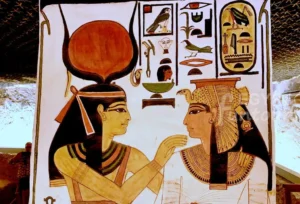
This period is renowned for its cultural syncretism, where Greek, Roman, and Egyptian traditions blended in fascinating ways. In art, the Fayum mummy portraits are the most striking example. These realistic, Greco-Roman style portraits were painted on wooden panels and placed over the faces of mummies, seamlessly combining Roman portraiture with the ancient Egyptian practice of mummification. Furthermore, Roman emperors were often depicted on Egyptian temple reliefs as pharaohs, wearing traditional headdresses and garments. This clever visual strategy acknowledged traditional religious continuity while simultaneously affirming Roman political dominance. The Egyptian cult of the goddess Isis also spread widely throughout the Roman Empire, demonstrating the significant influence of Egyptian religious thought on the wider Mediterranean world.

The Profound Egyptian Influence on Greek Civilization

Egypt profoundly influenced ancient Greek civilization in various aspects. Key influences include religious syncretism, with...
Related post
The eye of Horus

The Rise of Christianity and the Byzantine Era

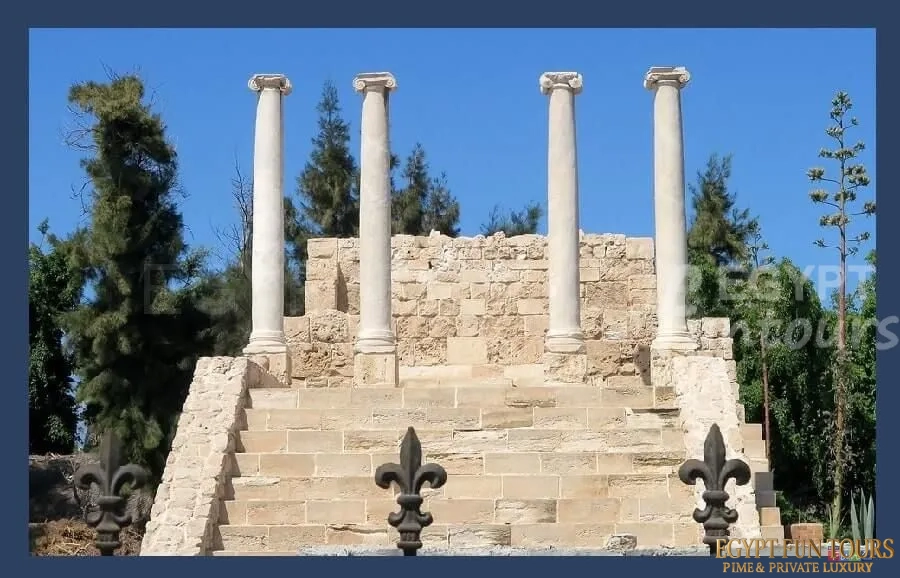
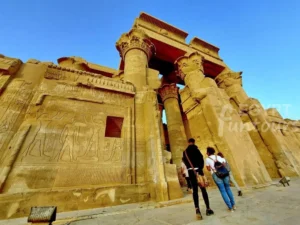
ras el soda temple roman monuments egypt fun tours

The definitive transition from Roman to Byzantine rule began with the administrative reforms of Emperor Diocletian in the late 3rd century CE, which divided Egypt into smaller provinces. The final separation occurred in 395 CE with the split of the Roman Empire, after which Egypt became a part of the Eastern Roman (Byzantine) Empire. During this time, Christianity grew rapidly and became the dominant religion. Christianity’s rise led to the decline and eventual suppression of ancient Egyptian religious practices. People either converted many temples into churches or left them to fall into ruin. The rise of Coptic Christianity marked this era, and monasticism flourished in the Egyptian deserts under figures like St. Anthony.

Sometimes, people repurposed old pagan temples as Christian worship places. A new sacred landscape of monasteries and churches emerged. The Byzantine period also had growing political instability. Internal theological disputes and external conflicts defined this time. For instance, the Sassanian Persian occupation in the early 7th century was a brief but disruptive event. It left the region economically and militarily vulnerable.

Ancient Agriculture in the Northern Oasis: How Qanats Powered Rome

Ancient engineers transformed Egypt’s harsh desert depressions into flourishing agricultural hubs through the sophisticated implementation...
Related post
Golden Scarab

The Arab Conquest

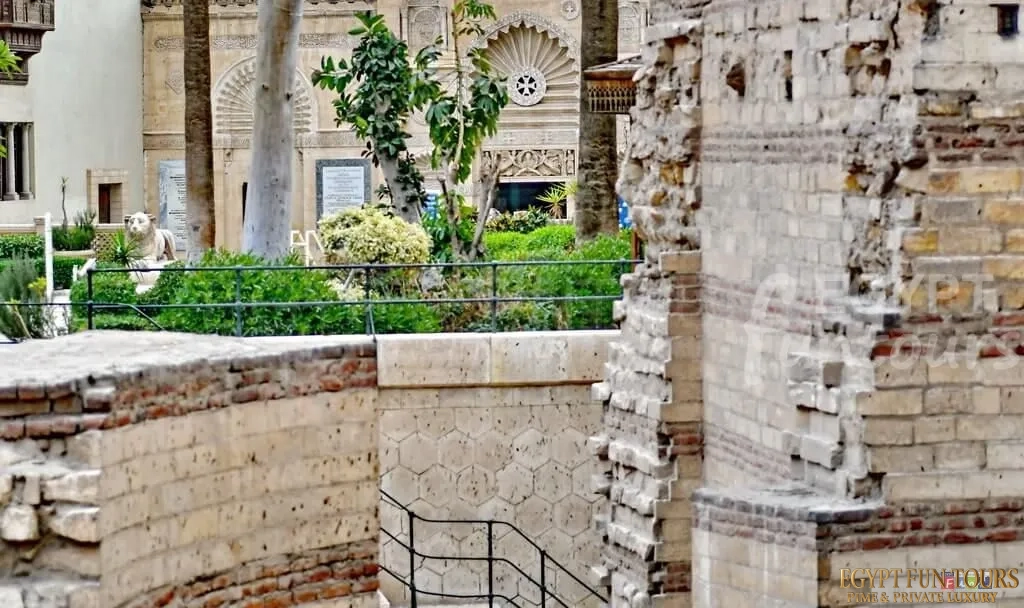
Babylon fortress roman monuments egypt fun tours

The Arab conquest in 641 CE ended the Roman and Byzantine Egypt period. The Rashidun Caliphate’s army, led by Amr ibn al-As, invaded the weakened province. They took advantage of the Byzantine Empire’s exhaustion from recent wars with the Sassanian Persians. The local population had felt alienated by Byzantine rule. Because of this, they offered little resistance. The swift conquest of Egypt marked the end of Greco-Roman rule. It ushered in a new era, fundamentally changing Egypt’s religious, cultural, and political landscape forever.

Crocodiles in Ancient Egypt: The Unseen Power of the Nile

The role of Crocodiles in Ancient Egypt was defined by a unique and powerful paradox:...
Related post
The eye of Horus
God_Anubis_Icon

Absolutely the best

We visited Cairo over a 15-hour layover. Egypt Fun Tours organized a customized and wonderful experience for us. We could not be happier. The day included a visit to all the great sites, the marketplace, dinner, a boat ride on the Nile, and a host of other special requests. I

More »

Islamic cairo and khan el khalili- great tour

Wonderful tour with the guide Hamada. I did not feel rushed at all. He explained a lot of facts about the city, the mosque, the water storage room, and also brought me to no-hassle shops. He picked a great place to eat and have Turkish coffee and a cold lemon

More »
hani ahmed 1

Hani Was our Awesome Tour Guide!

We had an 11-hour layover in Cairo on 12/15/2011. We wanted to go to see the Pyramids, Tahrir Square, and possibly the museum. We were so lucky to have a guide, Hani from Egypt Fun Tour, who made it possible to see all the above, plus the Bazaar, and time

More »

The best holiday ever!

The Nile cruise, Luxor, and Aswan were amazing sites to see, especially when you have the best tour guide in Egypt. Hamada was absolutely fantastic, lots of information, and some of it not spoken by others. This guy was not only a simple tour guide for us, but he also

More »
God_Anubis_Icon

Top-rated Tour Packages

God_Anubis_Icon
WhatsApp
Email
Print