
The Royal Mummies of Egypt: Pharaoh’s Journey to Immortality

Journey into the secret history of the Royal Mummies. It starts with the elaborate, 70-day mummification ritual—a theological necessity for securing the pharaoh's body (Khat) and ensuring eternal kingship. The adventure continues with the dramatic 19th-century uncovering of the Royal Caches (like DB 320), which protected giants such as Ramesses II from time and theft. The final chapter employs Modern Bioarchaeology, where CT scans and DNA analysis are used to settle ancient genealogical debates, ultimately unlocking the identities, health, and life stories of Egypt's most legendary rulers.
WhatsApp
Email
Print

The Enduring Mystery of the Royal Dead

The Royal Mummies of Egypt represent the ultimate triumph of ancient science and faith over mortality. Indeed, encountering the physical remains of a pharaoh face-to-face offers an unparalleled connection to a three-thousand-year history. Therefore, the mummies are not merely historical artifacts. They serve as physical witnesses to the grand scope of Dynastic Egypt.

Crucially, their existence rests upon a sophisticated system. This system involves a deep theological significance (the quest for immortality), the preservation techniques applied to the bodies, and profound historical importance (providing physical evidence of ruling families).

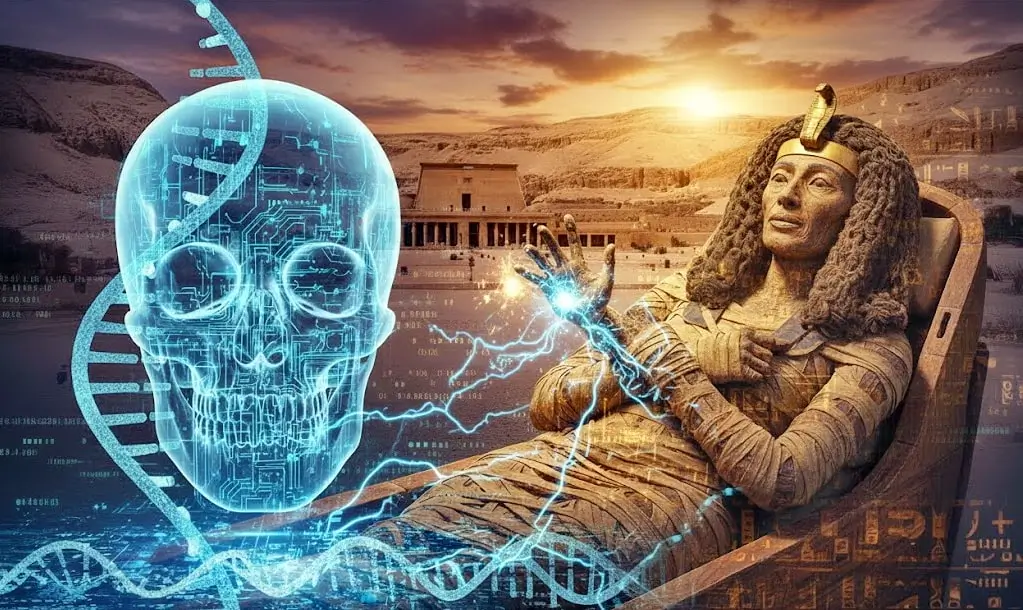
We explore the incredible journey of these kings. First, we detail the theological purpose behind the preservation of the pharaonic body. Subsequently, we examine their storied discovery in various hidden caches. Finally, we reveal what modern forensic science, including DNA analysis of royal mummies, has taught us about their lives and deaths.

The eye of Horus

The Theology and Purpose of Mummification

Understanding the Elements of the Soul - The Royal Mummies of Egypt

The drive to preserve the body was intensely spiritual. Specifically, the Egyptians believed physical survival was mandatory for eternal existence. Thus, the elaborate process was a sacred ritual, not a medical one.

The Egyptian Concept of the Soul

Egyptian theology defined the self as multifaceted. Significantly, the soul consisted of several components. Two elements were crucial for the afterlife: the Ba and the Ka.

  • The Ka (Life-Force): This represented the vital life force or double of the person. Furthermore, it required food and sustenance, hence the vast tomb offerings. The Ka resided in or near the tomb.
  • The Ba (Personality): This was the spiritual aspect, encompassing personality and mobility. Therefore, the Ba could travel between the tomb and the heavens.

Mummification ensured the physical body, the Khat, was perfectly preserved. Consequently, the Ba and Ka had a permanent, recognizable home to reunite with. Without this reunion, the individual faced a second death and ceased to exist.

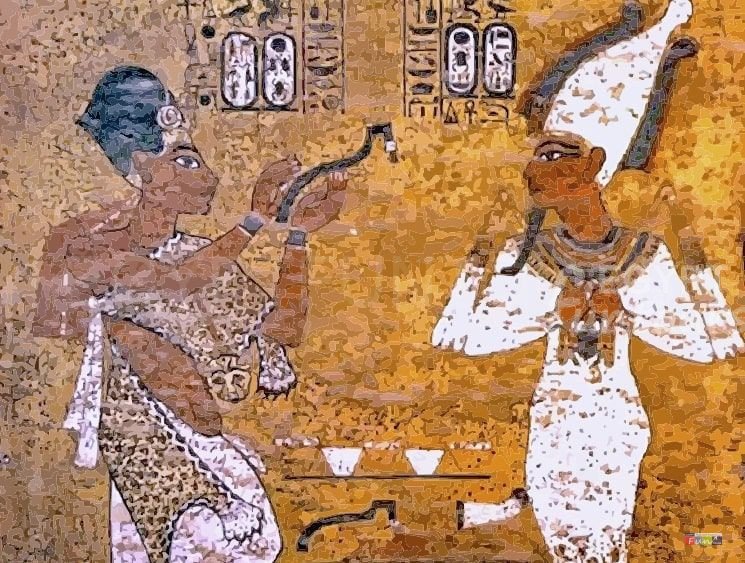
Osiris and the Divine Model

The ultimate template for resurrection was the god Osiris. Crucially, the myth details his murder and dismemberment by his brother Seth. However, his wife, Isis, pieced him back together. Finally, he was successfully mummified by Anubis.

Thus, Osiris’s successful resurrection provided the divine blueprint for every Egyptian, especially the divine King. Specifically, the pharaoh, upon death, became one with Osiris. Therefore, body preservation was an act of sacred imitation, confirming the king’s identity as the resurrected god who ruled the netherworld.

The Ritual of the Opening of the Mouth

Opening of the Mouth ancient egyptian mummification - ancient Egyptian embalmer

The final, crucial ceremony was the Opening of the Mouth. This occurred immediately before the burial. The ceremony was performed using special ritual instruments, including a peculiar adze.

The Purpose: The ritual was not merely symbolic. Its goal was to ritually “re-animate” the mummy. Specifically, it allowed the deceased to speak, breathe, eat, and drink in the afterlife. Furthermore, the ceremony transformed the mummy from a dead body back into a fully functional being. Consequently, it ensured the king could eternally receive the offerings necessary to sustain his Ka.

Golden Scarab

The Sacred Science: The Mummification Process

body wrapping ancient egyptian mummification - The Royal Mummies of Egypt

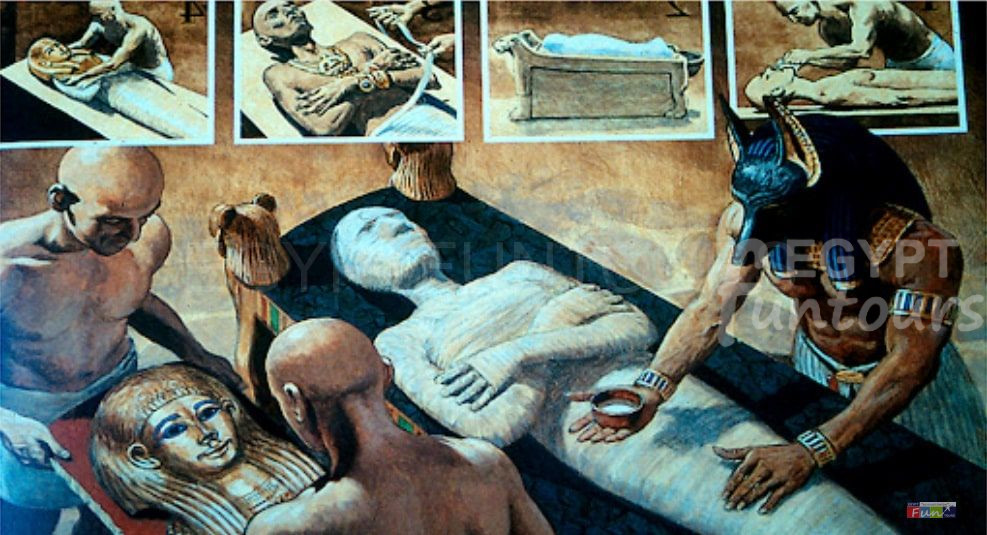
Embalmers, who simultaneously served as priests and technicians, performed the preservation of the pharaoh’s body in a highly specialized, 70-day ritual. This meticulously detailed process secured the physical vessel for the deceased king’s spirit.

The 70-Day Journey

The creators deliberately structured the entire process to mimic the 70 days the star Sothis (Sirius) remained invisible in the night sky, symbolically linking this period to purification and rebirth. The process involved several distinct stages:

  • Purification and Evisceration: The body was ritually cleansed, and the internal organs (except the heart) were removed. These organs were treated and stored in the protective Canopic Jars.
  • Dehydration: The body was completely dried out for 40 days using natron, a naturally occurring salt. This stopped decomposition.
  • Wrapping and Ritual: The final stage involved elaborate wrapping in hundreds of yards of linen, applying protective resins, and inserting vital amulets (like the heart scarab) for safe passage into the afterlife.

Explore the religious, chemical, and ritual details governing the 70-day transformation of the royal body in our dedicated Mummification Process guide.

The Profound Egyptian Influence on Greek Civilization

Egypt profoundly influenced ancient Greek civilization in various aspects. Key influences include religious syncretism, with...
Related post
The eye of Horus

Identity and Discovery: The Storied Royal Caches

Identity and Discovery; The Storied Royal Caches - Royal mummies of Egypt

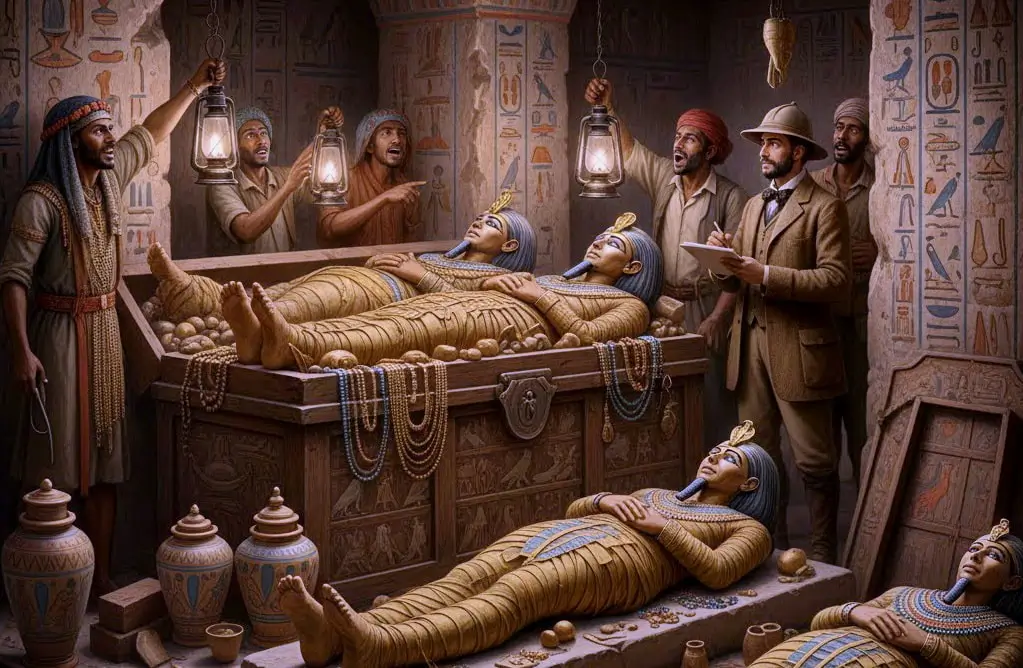
The Royal Mummies of Egypt would have remained a myth had they not been safeguarded by loyal priests. Consequently, rampant tomb robbery during the Third Intermediate Period (c. 1070–712 BCE) forced priests of the 21st Dynasty to gather, re-wrap, and hide their royal ancestors. These actions led to the two most spectacular finds in Egyptian archaeology.

The Deir el-Bahari Cache (TT 320)

The first great find occurred in 1881. Specifically, locals discovered a hidden tomb near the mortuary temple of Hatshepsut at Deir el-Bahari, officially designated TT 320 (or DB 320). Initially, the tomb belonged to the family of the High Priest of Amun, Pinedjem II. However, the priests repurposed it as a massive communal hiding place for dozens of monarchs.

The Discovery: The find was unofficial. Indeed, members of the Abd el-Rassul family discovered it as early as the 1870s. Subsequently, the appearance of specific royal artifacts on the antiquities market alerted authorities. Upon official investigation in 1881, the cache was hastily cleared by Émile Brugsch within 48 hours. Consequently, valuable archaeological data on the positioning of the mummies was lost forever.

Key Identities of DB 320: This cache contained a spectacular assembly of royalty. Most notably, it included some of the most powerful pharaohs of the New Kingdom:

  • Ramesses II (The Great): His mummy was famously well-preserved, despite having been damaged by robbers and later re-wrapped.
  • Seti I: His mummy is often cited as the pinnacle of the embalmer’s art. Furthermore, his serene, well-preserved features offered a direct view of a 19th Dynasty king.
  • Thutmose III: Known as the “Napoleon of Egypt” for his military genius.
  • Ahmose I: The founder of the New Kingdom (18th Dynasty).

The Second Royal Cache (KV 35)

A second, equally vital cache was discovered 17 years later. In 1898, Egyptologist Victor Loret discovered the tomb of Amenhotep II (KV 35) in the Valley of the Kings. Significantly, Loret found the original owner, Amenhotep II, still resting in his sarcophagus. However, the side chambers contained a relocated group of nine other royal mummies.

Key Identities of KV 35: This cache primarily protected 18th and 19th-Dynasty rulers. The transfer was meticulous, with the mummies carefully re-wrapped and tagged with hieratic dockets detailing the moves. Rulers found here included:

  • Amenhotep III: The father of Akhenaten.
  • Thutmose IV: Found alongside his father.
  • Merenptah, Seti II, Ramesses IV, V, and VI: Evidence of the repeated efforts by 21st Dynasty priests to safeguard the royal line.
  • Unidentified Royal Women: KV 35 held several anonymous female mummies, which were critical for later DNA analysis of royal mummies.

Tutankhamun’s Unique Burial

King Tutankhamun tomb discovery Egypt Fun Tours

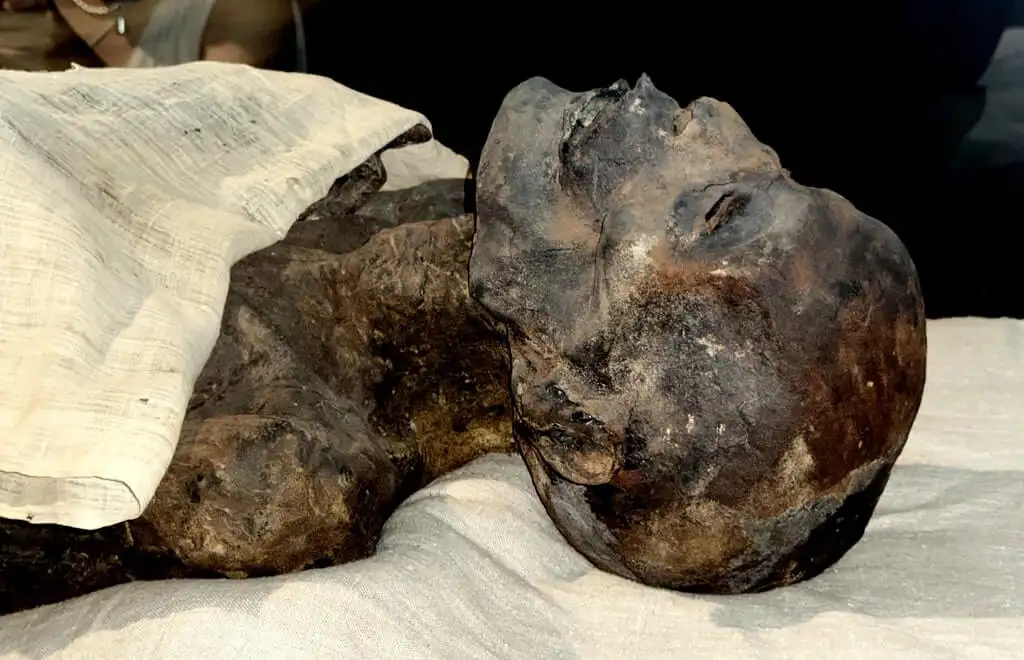
While not a cache, Tutankhamun’s tomb (KV 62) is essential. Uniquely, his tomb was found in situ in 1922. Therefore, his mummy, though poorly preserved due to rushed mummification, is critical. It is critical because it was found with all its surrounding burial goods. Thus, it provides the context that the plundered mummies from the caches lacked.

The result of these discoveries is the unparalleled collection of Royal Mummies of Egypt. These remains now form the core collection of the National Museum of Egyptian Civilization (NMEC).

Ancient Agriculture in the Northern Oasis: How Qanats Powered Rome

Ancient engineers transformed Egypt’s harsh desert depressions into flourishing agricultural hubs through the sophisticated implementation...
Related post
Golden Scarab

Modern Science and the Pharaohs (Bioarchaeology)

Modern Science and the Pharaohs (Bioarchaeology) - Royal mummies of Egypt

For centuries, researchers relied on historical texts and visual inspection to study the Royal Mummies of Egypt. Today, modern science actively drives discovery. New technologies, particularly forensic imaging and genetic analysis, allow us to investigate the physical remains without unwrapping them, successfully revealing personal histories, family secrets, and medical conditions.

Forensic Imaging: CT Scans and X-rays

Forensic imaging techniques revolutionized mummy studies. Researchers now use non-invasive technology—specifically CT scans and high-resolution X-rays—to peer beneath the linen bandages. This approach provides a three-dimensional map of the royal body, avoiding the damage caused by traditional unwrapping.

Crucially, scientists analyze skeletal structures, preserved organs, and the placement of amulets without touching the mummy. For instance, a 1975 analysis of the Ramesses II Mummy revealed an earlier attempt at embalming using materials that did not fully preserve the body’s internal structure. Similarly, scans identified advanced dental disease and severe arthritis in many of the later pharaohs.

Paleopathology and Disease

The mummies themselves provide a unique paleopathological dataset. Specialists actively study the remains to identify diseases and physical trauma. These studies successfully revealed that royal life was not immune to common ailments:

  • Vascular Disease: Evidence suggests that Amenhotep III suffered from a chronic, painful disease, likely severe periodontal infection or hardening of the arteries.
  • Smallpox: Researchers identified pustular lesions consistent with smallpox on the mummy of Ramesses V, possibly confirming the cause of his death.
  • Skeletal Trauma: Experts observed signs of violent death or severe injury on several individuals, including the controversial skull fractures visible on the remains of the “Younger Lady” (Tutankhamun’s mother).

DNA Analysis and Royal Lineage (The Amarna Connection)

The most groundbreaking scientific work involves genetic studies. Scientists successfully extracted viable genetic material from the bones and teeth of 11 key New Kingdom mummies in a 2010 study.

This pivotal research actively established the lineage of the Amarna period:

  • Tutankhamun’s Parents Identified: The study conclusively identified the mummy in KV 55 (King Akhenaten) as Tutankhamun’s father and the “Younger Lady” mummy from KV 35 as his mother. The analysis further confirmed that his parents were full siblings.
  • Queen Tiye Identified: Researchers successfully matched the mummy of the “Elder Lady” from KV 35 to Queen Tiye, the wife of Amenhotep III and grandmother of Tutankhamun.
  • Genetic Conditions: The DNA evidence confirms Tutankhamun suffered from multiple disorders, including Köhler disease II (a foot condition) and malaria, which likely contributed to his early death.

These findings definitively settled decades of historical and genealogical debate.

Conservation and Modern Legacy

Modern conservation actively protects these ancient bodies. The National Museum of Egyptian Civilization (NMEC) now houses the Royal Mummies of Egypt in state-of-the-art, climate-controlled environments. The Egyptian government undertook the ceremonial “Pharaoh’s Golden Parade” in 2021 to transfer 22 royal mummies to this new facility. This action guarantees their long-term preservation and presents them to the public in a dignified, scientifically informed context.

Guide to Ancient Egyptian Tattoos: History, Meanings, and Designs

For decades, scholars believed Ancient Egyptian tattoos were reserved for "dancing girls" or the lower...
Related post
The eye of Horus

The Immortal Witnesses

Protecting the mummy - Ancient Egyptian Funerary objects

The story of the Royal Mummies of Egypt transcends mere archaeology. Ultimately, the mummies stand as physical witnesses to the grand ambition of ancient Egyptian civilization: the conquest of death itself.

Theologically, the preservation process secured the eternal life of the pharaoh, transforming the mortal king into the resurrected god Osiris. This belief fueled the incredible effort and expense detailed throughout the creation of the mummies.

Historically, the 19th-century discoveries of the hidden caches (DB 320 and KV 35) rescued the Ramesses II Mummy and dozens of other monarchs from oblivion, delivering an unparalleled physical archive of kingship to the modern world.

Scientifically, the age of respectful, non-invasive study, spearheaded by DNA Analysis of Royal Mummies and advanced CT scanning, continues to unlock secrets. These studies have definitively settled genealogical puzzles, revealing family relationships and identifying the diseases and injuries that afflicted even the most powerful rulers, including Tutankhamun.

The journey of the Royal Mummies of Egypt—from sacred ritual to hidden cache to the climate-controlled display at the NMEC—affirms their role as the ultimate expression of Egyptian belief. They offer humanity a direct, physical link to the ancient quest for eternal kingship.

God_Anubis_Icon

Transit Stopover in Cairo

We have just returned from a two week holiday in Cape Town. On the way out our airline schedule meant that we had a 15 hour stop in Cairo. We decided to arrange a tour of the city and after asking for quotes/itineraries we chose Egypt Fun Tours. This worked

More »

Valley of the Kings, Hepchepsut

I never had a more positive experience and educational time than this tours. Learning about a variety of kings and queens was amazing! The tour guide was super nice and helped me and my friend every step of the way! Including bargaining for a few souvenirs! I will never forget

More »

Like two days of touring in one day!

I had a 12 hour stay in Cairo- and had made no plans on how to spend it until 8pm the night before departure. I emailed Egypt Fun Tours in a panic and they responded immediately. They made it incredibly easy to arrange a tour and we made arrangements via

More »

Cairo Day Trip

My day trip to Cairo was brilliant, and close to the best one-day experience of my life. Hani was an amazing ambassador for his city and country; his wealth of knowledge, courtesy, and good humour was awesome. The itinerary was perfect, I visited most of the famous landmarks as well

More »
group tour of wonders

Solid Tour Company

Last year (2010) my wife and I did a 20 day trip in Egypt, mostly Do-It-Yourself. However, one of the first things we did was a trip to Bahariya oasis and to the White Desert — not so easy to do yourself, so we needed an agency. After e-mail back-and-forths

More »
God_Anubis_Icon

Top-rated Tour Packages

God_Anubis_Icon
WhatsApp
Email
Print