
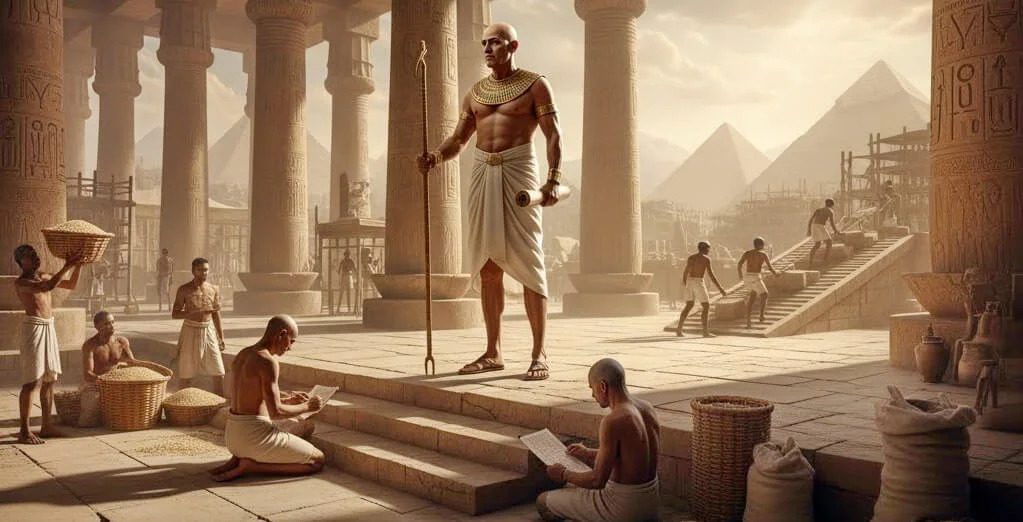
The Vizier in Ancient Egypt: Prime Minister of the Nile

Step behind the throne of ancient Egypt to discover the power of the Vizier. "The Vizier: Prime Minister of the Nile" reveals the functions of the Tjaty, the Pharaoh's indispensable right hand and the true engine of the state. This summary delves into the Vizier's immense responsibilities as the head of the legal system, chief administrator of the provinces, and coordinator of the national economy, demonstrating how this "prime minister" translated the Pharaoh's divine will into the daily reality of the empire.

If the pharaoh was the divine “living god” of Egypt, the Vizier in Ancient Egypt was the man who ran the world. While the pharaoh was the ultimate symbol of power, he could not personally manage the kingdom’s complex, day-to-day operations. That monumental task fell to the Vizier (known as Tjaty). This was, without question, the single most powerful and important position in the entire hierarchy of Ancient Egyptian Jobs, second only to the king.

The Vizier was the pharaoh’s “right-hand man,” chief advisor, and the head of the entire state bureaucracy. His authority was absolute, and his responsibilities touched every part of Egyptian life. He was a Prime Minister, Chief Justice, and Treasury Secretary all rolled into one.
The eye of Horus

The Vizier as Supreme Judge: Keeper of Ma’at

The Vizier in Ancient Egypt as Supreme Judge and Keeper of Ma'at

The Vizier’s most sacred duty was to act as the chief justice of all Egypt. Egyptians knew him as the “Priest of Ma’at,” the goddess of truth, order, and justice.

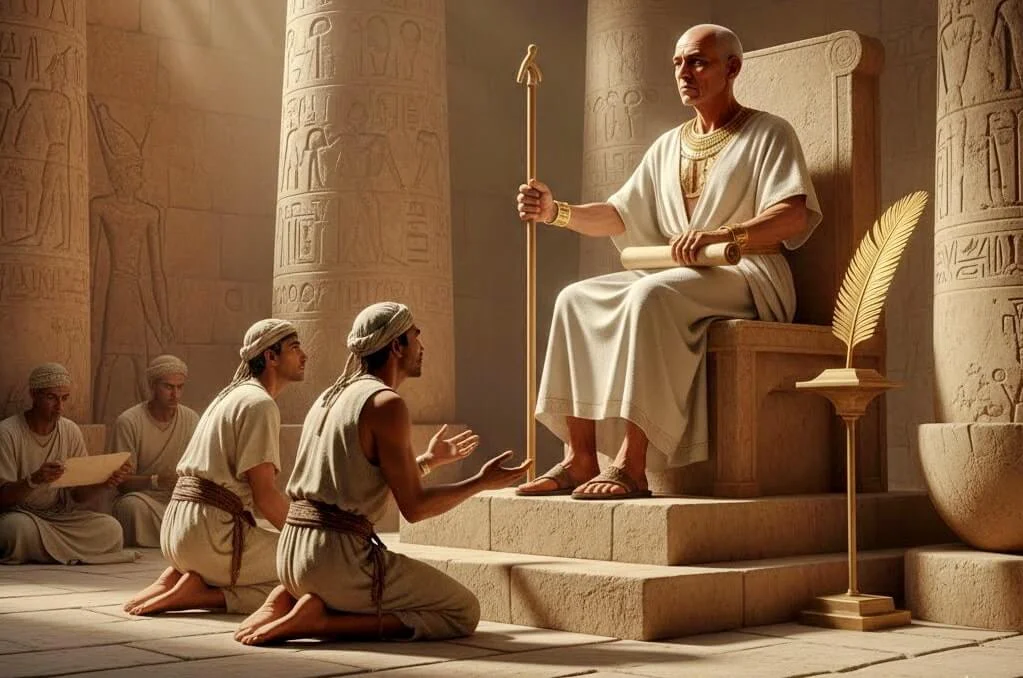
Every day, the Vizier held court. He sat on a special judgment seat to hear the kingdom’s most complex legal cases.

  • The High Court: He presided over the “Great Hall of Judgment.” He heard land disputes, inheritance battles, high-level criminal cases, and appeals from lower courts.
  • Embodiment of the Law: Everyone considered his judgments the final word (unless the pharaoh intervened). He had to ensure Ma’at (divine order) was upheld, which kept the gods happy and the kingdom stable.
  • Access for All: This judicial role was a core part of being the Vizier in Ancient Egypt. Tomb inscriptions, like Rekhmire’s, state his duty: to be fair and hear the pleas of both rich and poor.
Golden Scarab

Head of the Treasury: The Economic Mastermind

Head of the Treasury and The Economic Mastermind

Ancient Egypt did not use currency. The entire economy was a vast, state-controlled barter system, and the Vizier was in charge of all of it.

As the head of the treasury, the Vizier was the chief tax collector.

  • Collecting “Taxes”: He dispatched officials and scribes to assess and collect taxes. People paid these taxes in goods, not money. They used grain, cattle, beer, and linen.
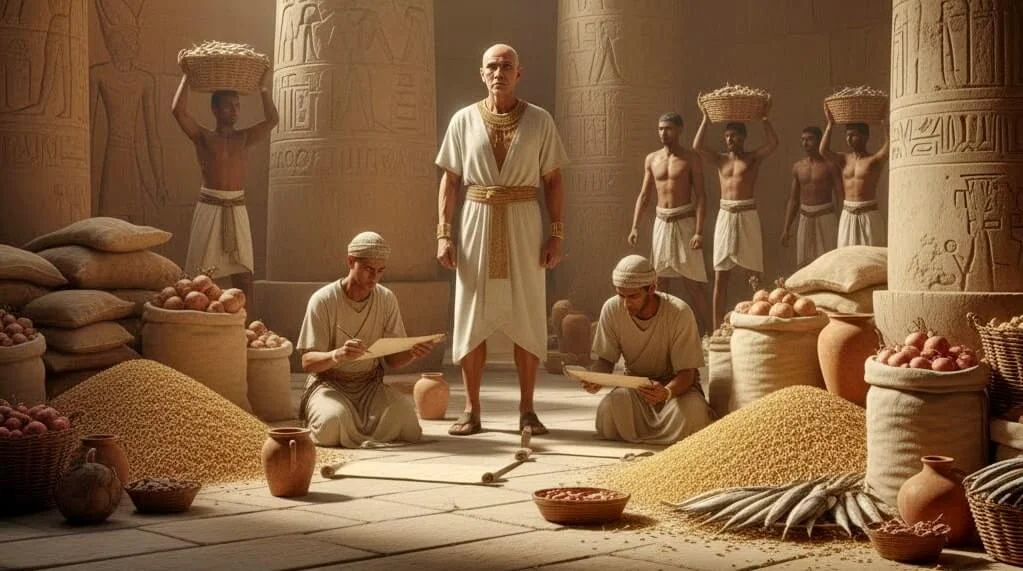
  • Managing the Granaries: The state stored all this wealth in granaries. These granaries acted as Egypt’s banks. The Vizier in Ancient Egypt was the only one with the authority to “open the treasuries.”
  • Funding the State: He redistributed this wealth to fund every state activity. This wealth paid state workers’ wages (in bread, beer, and grain). It also supplied the army, funded temple rituals, and provided for the pharaoh’s household.

The Profound Egyptian Influence on Greek Civilization

Egypt profoundly influenced ancient Greek civilization in various aspects. Key influences include religious syncretism, with...
Related post
The eye of Horus

Overseer of All Public Works: The Master Builder

Overseer of All Public Works and The Master Builder

When you look at the Pyramids of Giza or the temples of Karnak, you see the work of a Vizier. The pharaoh had the vision; the Vizier was the chief executive who made it happen.

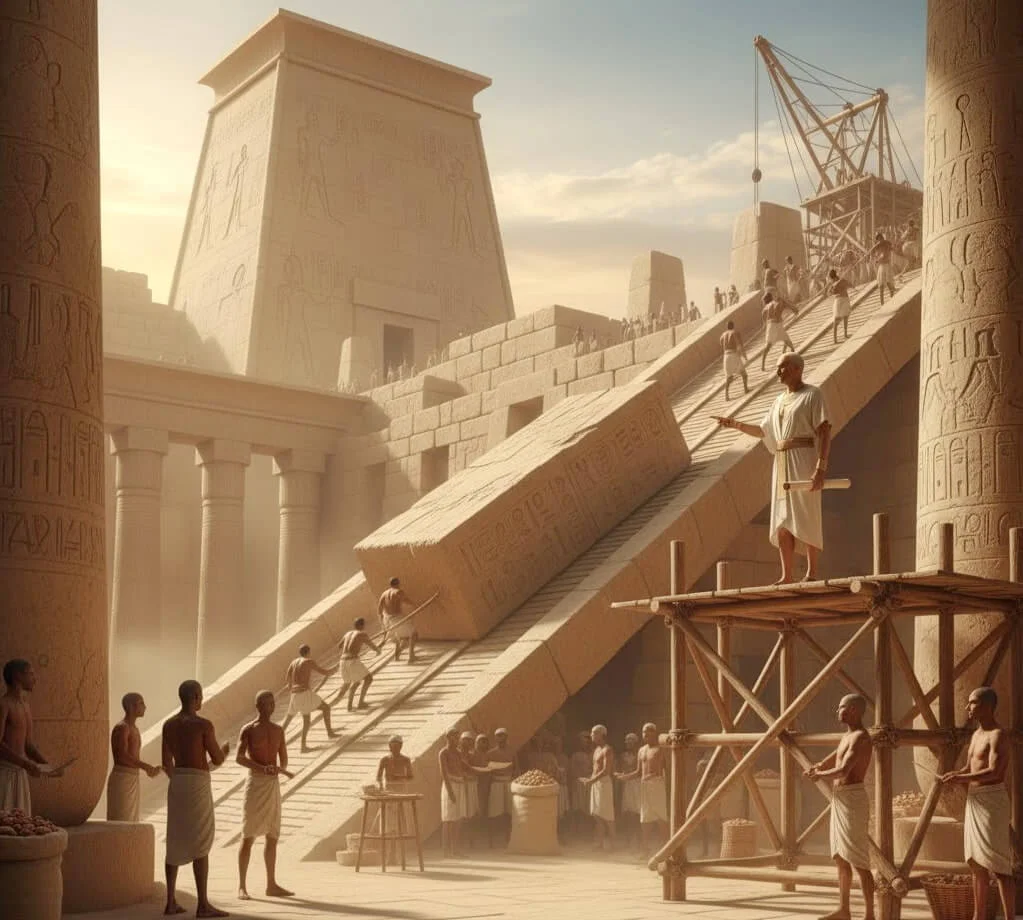
His title was “Overseer of All the King’s Works.” This made him the project manager for the world’s most massive construction projects.

  • Pyramid Building: The most famous Vizier in Ancient Egypt, Imhotep, served King Djoser. He was the architect and overseer who designed and built the very first Step Pyramid at Saqqara.
  • Organizing Labor: The Vizier managed the corvée system. This state draft called up farmers and laborers. They worked on state projects during the Nile’s flood season.
  • Managing Supply Chains: He dispatched expeditions for materials. These teams went to quarries for granite, the Sinai for turquoise, and Nubia for gold. The Vizier then ensured all materials—and food for thousands of workers—arrived at the building site.

The Daily Burden of the Vizier

The Daily Burden of the ancient Egyptian Vizier

A Vizier’s day was a grueling schedule of immense responsibility. He woke before dawn to receive reports and heard from the chief of police, the granary overseers, and the regional governors. He then spent his morning in the Hall of Judgment.

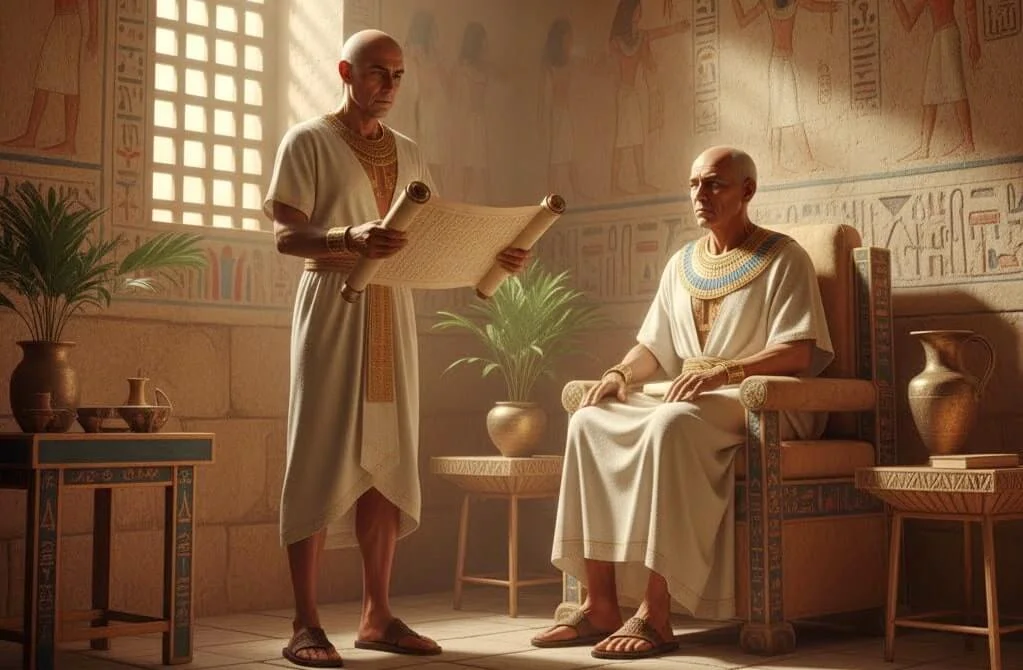
His most important meeting, however, was his daily briefing with the pharaoh. In this meeting, the Vizier alone reported on the complete “state of the two lands.”

The pharaoh was the divine head of Egypt. But the Vizier in Ancient Egypt was the engine that kept the entire civilization running.

Ancient Agriculture in the Northern Oasis: How Qanats Powered Rome

Ancient engineers transformed Egypt’s harsh desert depressions into flourishing agricultural hubs through the sophisticated implementation...
Related post
Golden Scarab

See the Vizier’s Legacy

You can’t meet a Vizier today, but you can see the results of their incredible power. When you join an Egypt Fun Tour, you see the legacy of these real-world administrators. You can see Imhotep’s Step Pyramid at Saqqara. You can visit the grand temples they funded and the tombs they built in Thebes. On our tours, you will walk through the history these “Prime Ministers of the Nile” forged.

Horus vs Seth: The Epic 80-Year Battle for the Throne of Egypt

The Horus vs Seth saga represents the ultimate legal and cosmic struggle of Ancient Egypt,...
Related post
The eye of Horus
God_Anubis_Icon

Very Considerate and Helpful

Guide and driver were on time, open to my requests and took care that I felt safe and saw the Pyramids and parts of old cairo during my less than 24 hour stay between flights. Office staff were great in communicating by email before and during the trip.

More »
Ancient Egyptian Sarcophagus - Egypt Fun Tours

Unforgettable experience with Fun Tours – Highly recommended!

Hello everyone! We would like to share our extremely positive experience with Fun Tours. Our tour was a complete success thanks to our guide, Osama, and our driver Hassan. Osama proved to be an enthusiastic and knowledgeable guide who answered all of our questions and catered to our individual wishes

More »

Day trip to Wadi el Hitan and Wadi el Rayan

We went on a full-day trip to Wadi el Hitan and Wadi el Rayan with Mohamed (Hamada). Mohamed was a wonderful guide, always making sure we had plenty of water and enough to eat, and providing us with information about the area and Egypt more generally. He also gave us

More »

AMAZING TOUR, SOLO TRAVELER.

I am a California woman who traveled to Egypt alone, and thanks to Egypt Fun Tours, I had a great time. Hani, Mohammed, Kamal, and David (my driver) were very professional and very knowledgeable. I appreciate how respectful they were and how protective they were of me. They showed me

More »
Tailored Services for Corporate Business Transportation Needs

On time, adaptable, and fun!

My friend and I planned a whirlwind trip to Dubai, the Dead Sea, Petra, Cairo, Luxor, and Sharm el Sheikh for early November 2011 – 6 cities in 10 days! We allotted one afternoon and evening for Cairo, and we wanted to see as much as we could! We drove

More »
God_Anubis_Icon

Top-rated Tour Packages

God_Anubis_Icon