
Akhmim: The City of Min and the Silk of the Pharaohs

Akhmim serves as a unique destination where ancient Pharaonic grandeur meets a vibrant living culture. As the home of the 11-meter colossus of Meret Amun, the city stands as a testament to the monumental legacy of the Ramses era. Beyond its archaeological ruins, Akhmim remains the textile capital of Egypt, where local artisans continue a weaving tradition that has thrived for over four millennia. For any traveler exploring the Sohag Governorate, Akhmim offers an essential look at the craftsmanship and spiritual history that define the heart of Upper Egypt.
Tuna el-Gebel Guide: Catacombs of Thoth & the Tomb of Petosiris
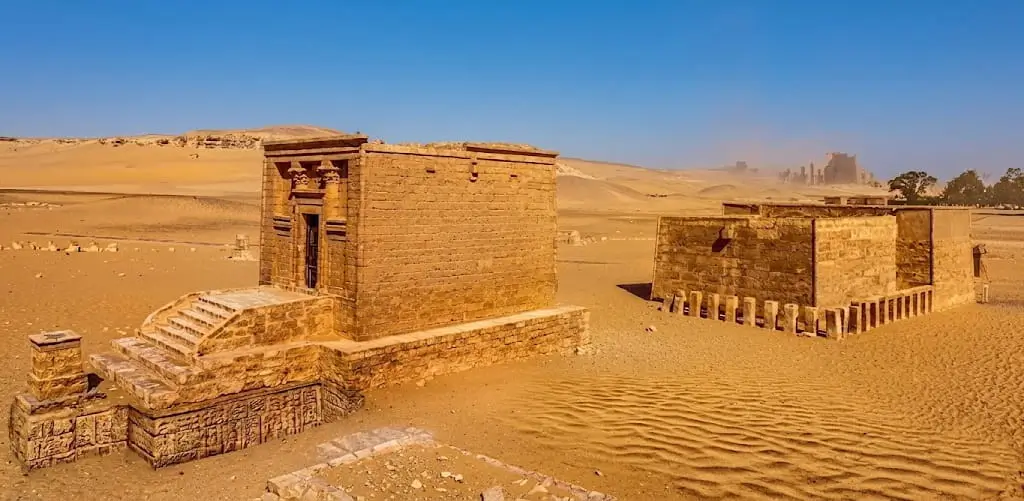
Tuna el-Gebel serves as the vast, hauntingly beautiful necropolis for the ancient city of Hermopolis Magna. This site stands as a vital spiritual and cultural crossroads, showcasing the seamless transition between traditional Pharaonic beliefs and the Greco-Roman world. Visitors can explore the massive subterranean catacombs housing millions of sacred ibises and baboons dedicated to the god Thoth. Additionally, the site features the world-renowned Tomb of Petosiris, which blends Egyptian architectural forms with Greek artistic realism, and the tragic Tomb of Isadora. Ultimately, Tuna el-Gebel offers an intimate and intellectual look at the ancient Egyptian pursuit of wisdom, justice, and eternal memory.
El Ashmunein Guide: Hermopolis Magna & The Temple of Thoth
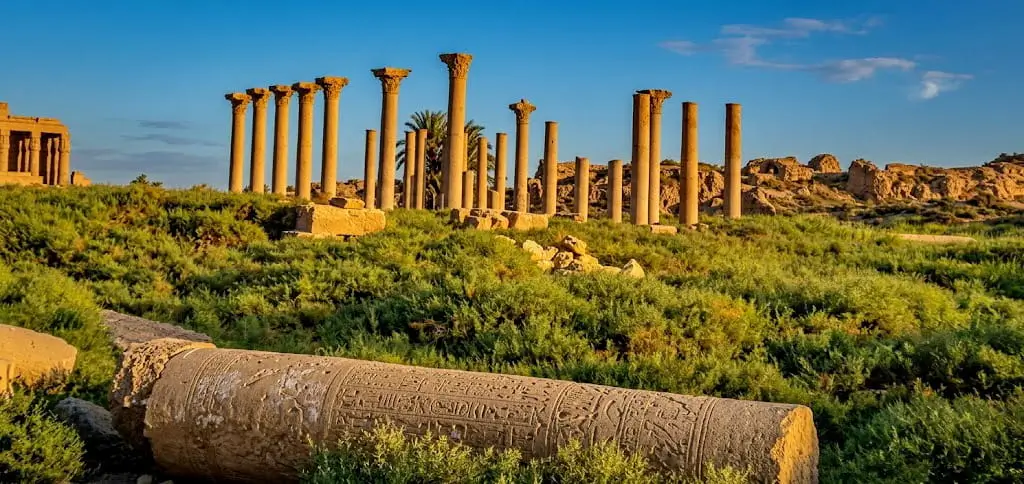
El Ashmunein, once known as Hermopolis Magna, is a spiritually significant site in Middle Egypt that served as the primary cult center for Thoth, the god of wisdom. The city is famous for its Ogdoad cosmology, a creation myth involving eight primordial deities who brought order to the universe. Visitors can explore unique architectural layers, including the massive New Kingdom colossi of Thoth in baboon form and the ruins of a grand Roman Basilica. Located near Tuna el-Gebel, El Ashmunein offers a profound look into the “Intellectual Heart” of ancient Egypt and the origins of its philosophical traditions.