
The Temple of Hibis: The Desert Sanctuary of Persia’s Egyptian Pharaohs

The Temple of Hibis stands as the ultimate crown jewel of Egypt’s Western Desert archaeology. Located in the fertile Kharga Oasis, this magnificent sanctuary holds the unique distinction of being the only major temple from the Saite-Persian Period (6th–5th centuries BCE) to survive relatively intact. Though built during a time of foreign conquest, Persian emperors like Darius the Great funded and expanded the site, choosing to depict themselves on its walls as traditional, pious Egyptian pharaohs. The temple acts as a vast visual encyclopedia of the Egyptian pantheon, featuring rare depictions of hundreds of deities alongside a globally famous 66-line Roman legal edict. Saved from destructive groundwater by a massive modern engineering project, this striking open-air museum offers modern travelers an unparalleled journey into Egypt’s imperial and multicultural past.
The Temple of Dush: The Roman Fortress and Hidden Gold of Ancient Kysis
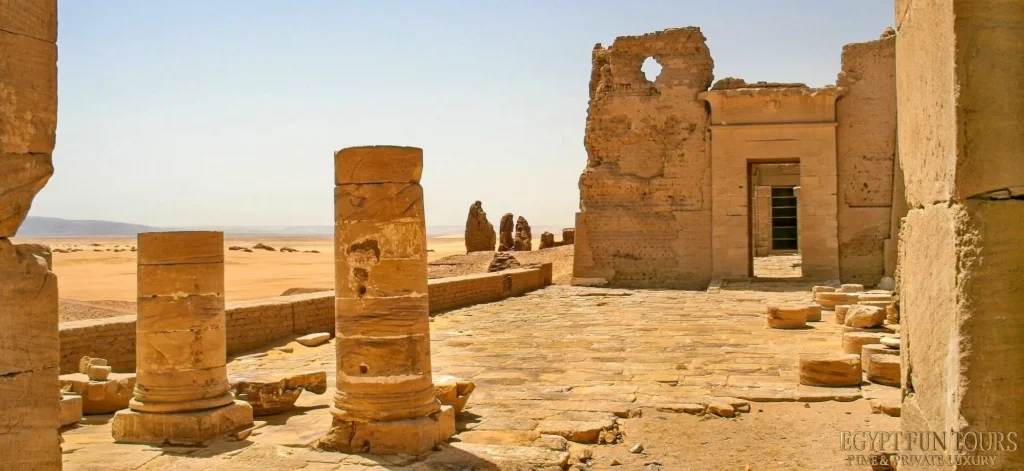
The Temple of Dush (ancient Kysis) stands as a mighty Roman frontier outpost at the southern edge of Egypt’s Kharga Oasis. Built during the 1st and 2nd centuries CE under powerful emperors like Domitian, Trajan, and Hadrian, the site uniquely blends an elegant stone sanctuary dedicated to Isis and Serapis inside a massive, protective mudbrick fortress. Positioned at the critical terminus of the Darb el-Arbain caravan route, it controlled vital African trade networks for centuries. Famous worldwide for the discovery of the spectacular 1989 Dush Gold Hoard, this remote desert stronghold offers modern travelers an unforgettable look into Rome’s military might and spiritual legacy in Egypt.