

The Backbone of Egypt: A Year in the Life of an Ancient Egyptian Farmer

They were the engine of the empire. This blurb follows a year in the life of the ancient Egyptian farmer, whose world revolved around the three seasons: Akhet (the flood), Peret (planting), and Shemu (the harvest). Discover their life in mud-brick villages, their simple diet, and the heavy crop taxes that fed a nation.

We often see Egypt’s glory in its golden pharaohs, massive temples, and complex gods. But who truly powered this civilization? The answer is the ancient Egyptian farmer. For over 3,000 years, they made up more than 80% of the population. They were the engine of the empire and the foundation of all ancient Egyptian jobs.

The ancient Egyptian farmer did not use a calendar like ours. Their life was governed by the Nile River and its three powerful ancient Egyptian seasons. This rhythm of flood, planting, and harvest dictated their entire year, their work, their taxes, and their family life. Let’s follow a year in their life.

Life in a Mud-Brick Village

Life in a Mud-Brick Village -Ancient Egyptian Farmer

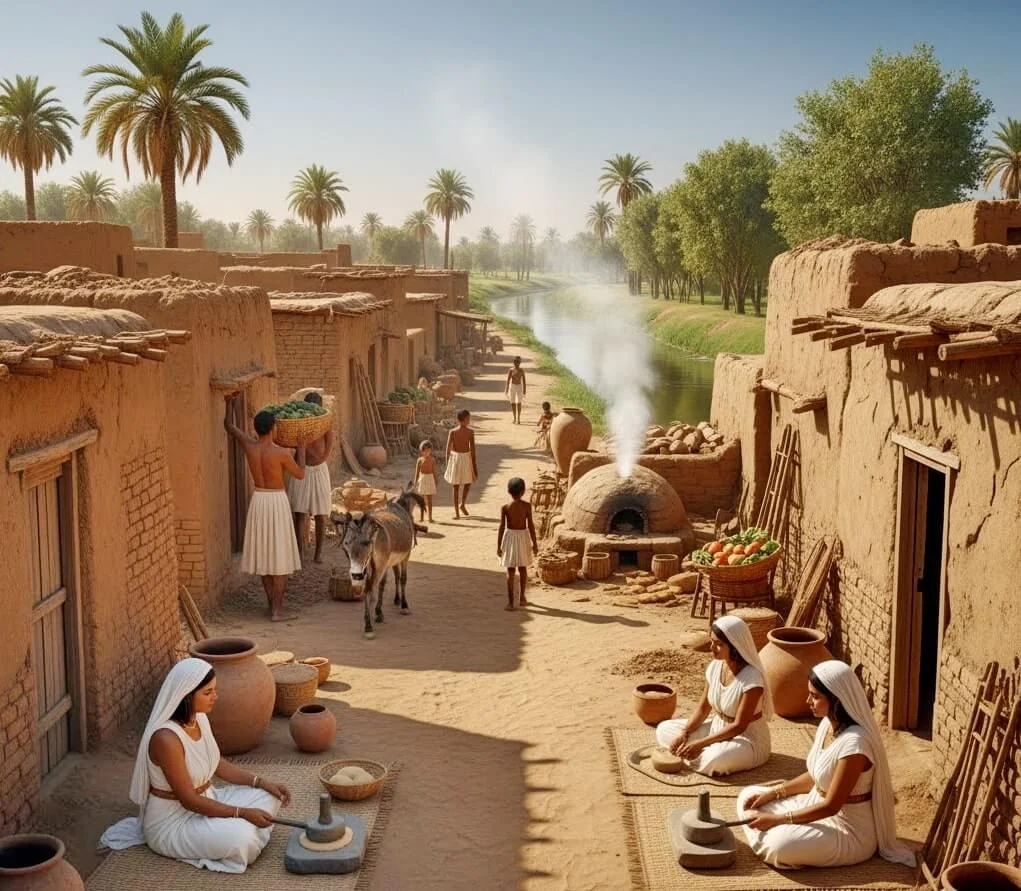
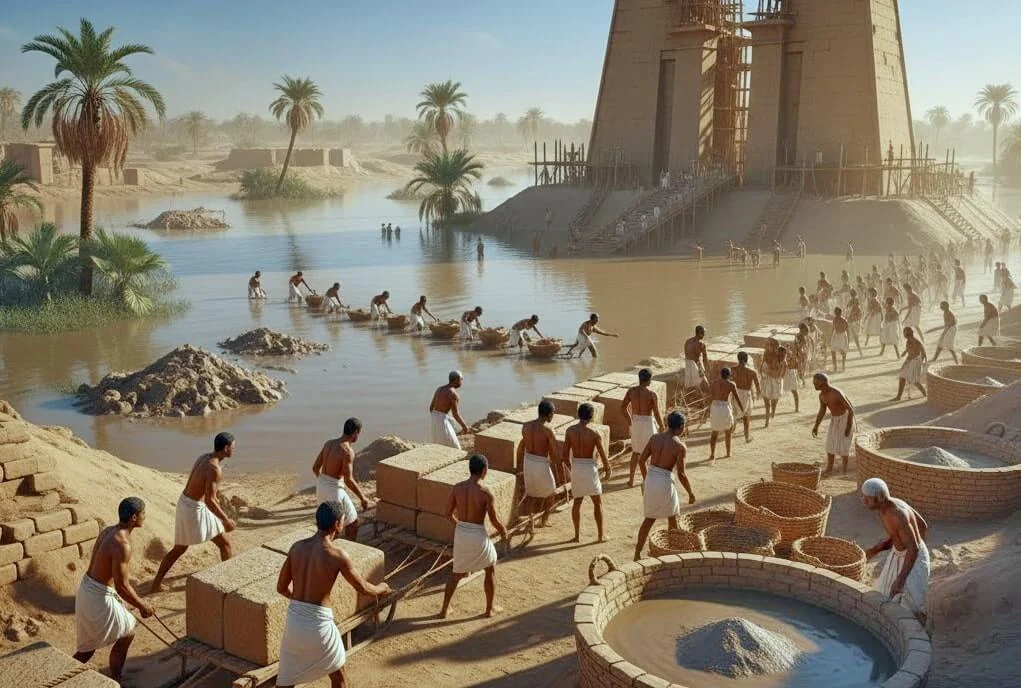
The typical farmer did not live in the grand cities. They lived in small, crowded mud-brick villages nestled along the edge of the fertile Nile valley. Their homes were simple, rectangular houses made from bricks of Nile mud and straw.

These homes usually had just a few rooms with high windows to let heat escape. Families slept on reed mats, sat on low wooden stools, and stored their grain in clay pots. Life was communal, public, and tied directly to their neighbors and the land they all worked.
The eye of Horus

Akhet: The Season of Inundation (The Flood)

Akhet; The Season of Inundation (The Flood)

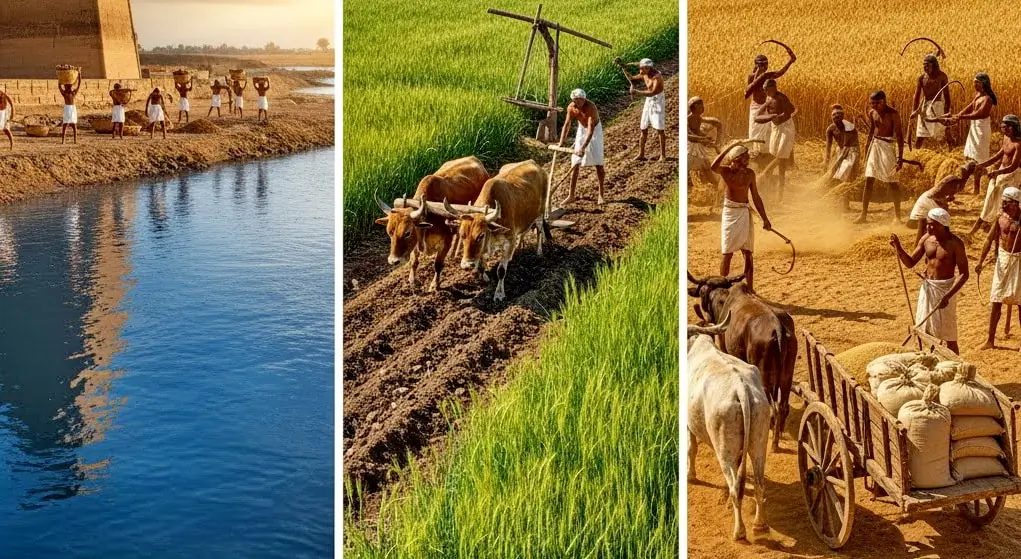
The Egyptian year began with Akhet, the Season of the Flood, which lasted roughly from June to September. This was the time of the great Nile inundation. The river would swell and spill over its banks, covering the farmland in a thick, rich layer of black silt.

This silt was the magic ingredient for all farming in ancient Egypt. It made the land incredibly fertile. But during Akhet, farmers could not work their fields. The land was underwater. So, what did the ancient Egyptian farmer do?

They paid their labor tax. This was the time of corvée duty. The pharaoh’s officials would conscript farmers into building projects. During Akhet, farmers became the workforce that built the pyramids, cut the tombs, and raised the great temples.

Golden Scarab

Peret: The Season of Growing (The Emergence)

Peret; The Season of Growing (The Emergence)

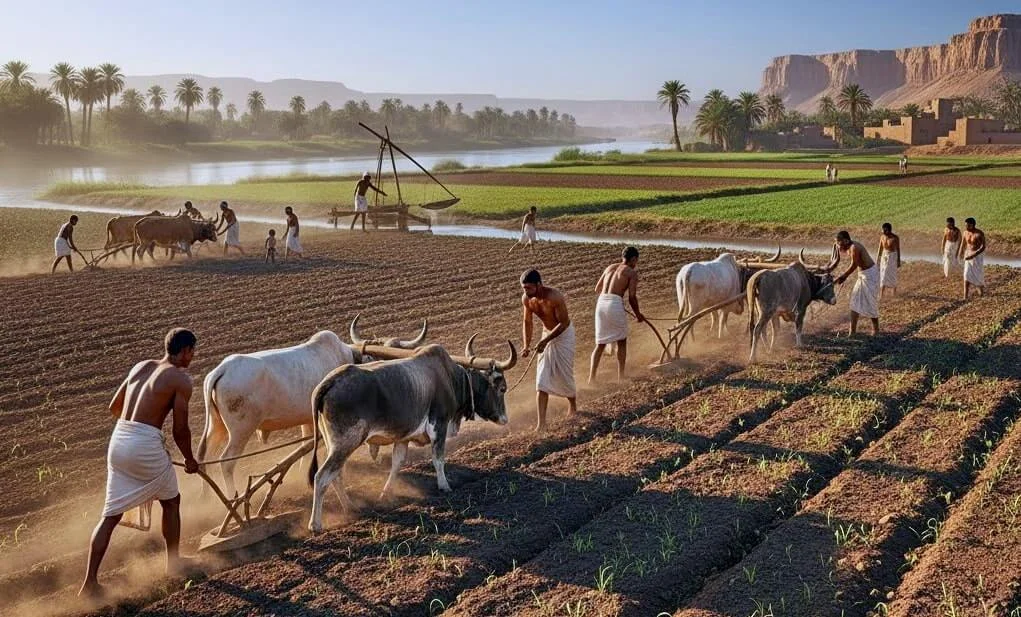
Around October, the floods receded. This marked the start of Peret, the Season of Growing, which lasted until about February. The water left behind the dark, fertile soil, and the true work of the ancient Egyptian farmer began.

This was the busiest time for farming in ancient Egypt.

  • Plowing: Farmers used simple wooden plows, often pulled by a pair of oxen, to break up the soil.
  • Planting: The entire family helped sow the seeds. The main crops were emmer (a type of wheat for bread) and barley (for beer). They also planted flax, which was used to make linen.
  • Irrigation: While the soil was fertile, the farmer still had to manage water. They used a shaduf—a long pole with a bucket and a counterweight—to lift water from the Nile into small irrigation canals.

This was hard, relentless, physical labor, but it was essential for a successful crop.

The Profound Egyptian Influence on Greek Civilization

Egypt profoundly influenced ancient Greek civilization in various aspects. Key influences include religious syncretism, with...
Related post
The eye of Horus

Shemu: The Season of Harvest (The Dryness)

Shemu The Season of Harvest (The Dryness) - Ancient Egyptian Farmer

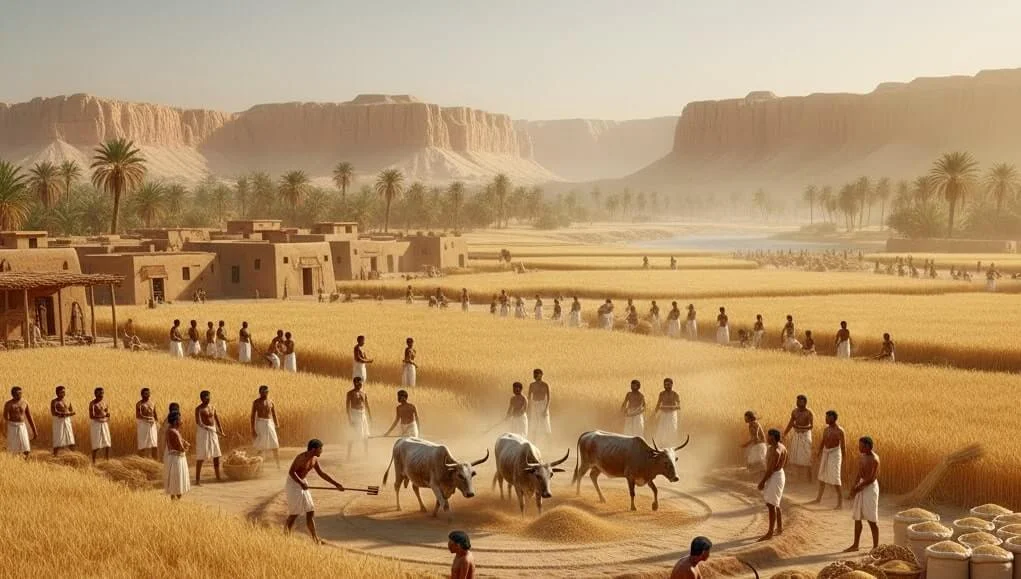
From roughly March to May, the land grew dry, and the crops turned golden. This was Shemu, the Season of Harvest. It was a race against time to gather the crops before they spoiled.

Once again, the entire family worked in the fields.

  • Reaping: Men walked through the fields, cutting the stalks of grain with curved wooden sickles set with sharp flint blades.
  • Example of Shemu tasks
  • Gathering: Women and children followed behind, gathering the fallen grain.
  • Threshing: They used donkeys to carry the grain to a hard, flat surface called a threshing floor. Here, they would have oxen trample the grain to separate the edible seeds from the stalks.

This was the farmer’s payday, and it led directly to the most feared day of the year.

Ancient Agriculture in the Northern Oasis: How Qanats Powered Rome

Ancient engineers transformed Egypt’s harsh desert depressions into flourishing agricultural hubs through the sophisticated implementation...
Related post
Golden Scarab

Paying the Price: The Farmer and Ancient Egyptian Taxes

The ancient Egyptian farmer never saw money. Their wealth was their harvest, and the state was ready to collect its share. Shortly after Shemu, the scribes arrived to collect the ancient Egyptian taxes.

These officials would measure the farmer’s fields and calculate the total yield. The tax was brutal. A large portion, often more than half, of the farmer’s grain was taken. This “tax” fed the pharaoh, his court, the priests, the soldiers, and the artisans (like those at Deir el-Medina). The farmer’s surplus was the fuel for the entire Egyptian empire.

The Simple Diet of an Ancient Egyptian Farmer

So, what was left for the farmer to eat? The ancient Egyptian diet for the commoner was simple and rarely changed.

  • Bread and Beer: These were the two staples of their diet, made from their emmer and barley. The beer was thick and nutritious, more like a food than a drink.
  • Vegetables: They tended small garden plots with onions, garlic, leeks, lettuce, lentils, and beans.
  • Protein: Red meat was a rare luxury, saved for festivals. Their main protein came from fish caught in the Nile and occasionally, poultry.

This simple diet, rich in fiber and carbohydrates, gave them the energy for their demanding life in ancient Egypt.

Ancient Egyptian Priests: Custodians of Ma’at and Power

The priests of ancient Egypt were far more than just religious figures; they were the...
Related post
The eye of Horus

The Unchanging Heart of Egypt

The ancient Egyptian farmer was the true, unsung hero of Egypt. Their life was a constant, predictable cycle of hard labor, submission to the Nile, and heavy taxes. They lived in simple mud-brick villages, worked the land, and paid the debts that built the pyramids. While pharaohs ruled and scribes wrote, it was the farmer’s resilience and endless toil that allowed the civilization to endure for millennia.

See the Farmer’s Enduring Legacy with Egypt Fun Tours

The ancient Egyptian farmer’s legacy isn’t just in the soil; it’s in the stone. Every magnificent temple, tomb, and pyramid you’ll see was built on their labor during the flood season. Their surplus crops fed the artisans who carved the reliefs, the priests who served the gods, and the pharaohs who ruled the land.

With Egypt Fun Tours, you don’t just visit the monuments; you understand their foundation. Our expert guides will show you how the rhythm of the Nile shaped every aspect of this civilization. As you drive through the Nile Valley, looking out at the green fields and palm groves, you will see the living, breathing echo of the ancient Egyptian farmer at work. Let us show you the full story of Egypt, from the pharaoh on his throne to the farmer in the field.

God_Anubis_Icon

Good but did not get what I paid for…

I had an 11 hour layover in Cairo. I wrote to them based on recent reviews for them on this site. After a few email exchanges with Hati, who I think is one of the owners, I was ready to get there. I was greeted by Hatem, a very good

More »

Valley of the Kings, Hepchepsut

I never had a more positive experience and educational time than this tours. Learning about a variety of kings and queens was amazing! The tour guide was super nice and helped me and my friend every step of the way! Including bargaining for a few souvenirs! I will never forget

More »

Amazing layover Tour

We had 12 hour layover in Cairo, and our guide Hani waited patiently for us when we had a few visa issues entering the country! We got on our tour, and had the best experience ever! We saw the pyramids, the sphinx, Islamic Cairo and rode through the city! We

More »

Layover Tour in Cairo

This August, my boyfriend and I had quite a long layover in Cairo, 9 hours to be exact. Instead of wasting our time at the airport, we decided to do a layover tour of the city. I had been before, but my boyfriend hadn’t, so we wanted to hit the

More »

Excellent Layover Tour

I would recommend Egypt Fun Tours to everyone who is looking for either a cultural or relaxing trip in Egypt. I was recently on a private layover tour and could not have been any happier with my day in Cairo. My tour guide, Hani was waiting just outside immigration and

More »
God_Anubis_Icon

Top-rated Tour Packages

God_Anubis_Icon