Papyrus in Ancient Egypt: The Plant That Revolutionized Writing

Long before the invention of modern paper, the Ancient Egyptians cultivated the Cyperus papyrus reed along the lush Nile Delta to create one of history's most enduring technologies. While famous for preserving the secrets of the Pharaohs on scrolls, this versatile plant was also the backbone of daily life, used to craft everything from sandals and mats to river boats. Explore the fascinating history and the meticulous process behind the medium that allowed Egyptian civilization to record its own greatness.
The eye of Horus
WhatsApp
Email
Print

Ancient Egyptian Papyrus: The Eternal Plant

Ancient Egyptian Papyrus played a crucial role in society, serving as both a practical material and a symbol of cultural significance. We will explore the various aspects of papyrus, including its production, uses, and symbolic meanings.

What is Ancient Egyptian Papyrus?
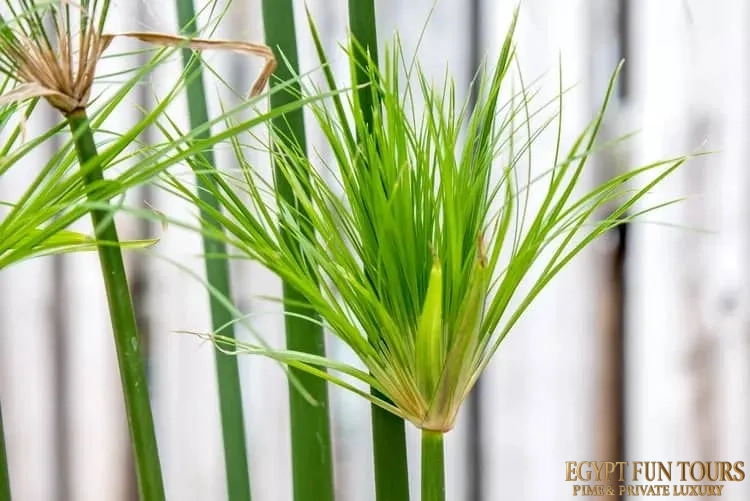
What is papyrus - Papyrus in ancient Egypt

Papyrus was a crucial writing material in ancient Egypt. Egyptians made it from the pith of the papyrus plant, Cyperus papyrus. This plant thrives in the marshy areas of the Nile Delta. It can grow up to 16 feet tall. Its unique structure allowed processing into sheets suitable for writing. Papyrus production dates back to at least the First Dynasty of Egypt, around 3000 BCE. This makes it one of the earliest forms of paper in history.

The eye of Horus

Ancient Egyptian Papyrus: Production Process

Making papyrus involved several key steps. First, workers harvested the stalks of the papyrus plant. They then removed the tough outer layers. Next, they sliced the inner pith into thin strips. These strips were carefully layered to form a sheet. One layer went horizontally, the other vertically, creating a crisscross pattern. Finally, artisans pressed and dried these layers. The plant’s natural gum acted as a binder, so no extra glue was needed. The finished sheets were then often rolled into scrolls, the common format for ancient Egyptian writings.

Uses of Ancient Egyptian Papyrus

Papyrus in ancient Egypt - Ancient Egyptian lotus flower

Ancient Egyptians used papyrus for many essential purposes. It served as their primary writing material. Scribes used it for official documents, sacred religious texts, and various forms of literature. Its smooth surface allowed for clear writing with ink. This made it ideal for recording vital information and preserving knowledge.

Beyond Writing

Beyond writing, papyrus found use in art and decoration. Artisans created elaborate scrolls. These scrolls featured artistic depictions and intricate hieroglyphics. These decorative pieces often graced tombs and temples, showcasing the material’s artistic and spiritual significance.

Golden Scarab

Everyday Items

Egyptians also crafted papyrus into various everyday items. They made mats, sandals, baskets, and even boats from the versatile plant. This demonstrated its wide range of applications in their daily lives.

Symbolic Significance

Ancient Egyptian lotus flower

In addition to its practical uses, papyrus held deep symbolic meaning in ancient Egyptian culture:
Unity and Order: The papyrus plant was often depicted alongside the lotus flower, symbolizing the unification of Upper and Lower Egypt.

Divine Associations: The goddess Wadjet, protector of Lower Egypt, was frequently shown carrying a papyrus scepter, further emphasizing the plant’s importance in religious and cultural contexts.

The eye of Horus

Legacy of Papyrus

Papyrus remained in use for thousands of years, continuing until the 11th century AD. Its durability, aided by Egypt’s dry climate, allowed many papyrus documents to survive to this day, providing invaluable insights into ancient Egyptian life, governance, and beliefs.

Economic Value

Papyrus was a vital resource in ancient Egypt, serving as the primary writing material and playing a significant role in the economy and culture of the civilization. Egypt maintained a monopoly on papyrus production, which became a significant aspect of its economy.

Papyrus paper - Papyrus in ancient Egypt

The Nile Delta’s abundant papyrus plants allowed Egypt to produce this writing material in large quantities. Consequently, Egypt exported papyrus to various Mediterranean countries, including Greece and Rome. These nations highly sought it for its quality and utility.

The papyrus trade not only contributed to Egypt’s wealth but also facilitated cultural exchange with other civilizations. The Greeks and Romans adopted papyrus for their own writing needs, further solidifying its importance in the ancient world.

The eye of Horus

A Lasting Impact of Papyrus in Ancient Egypt

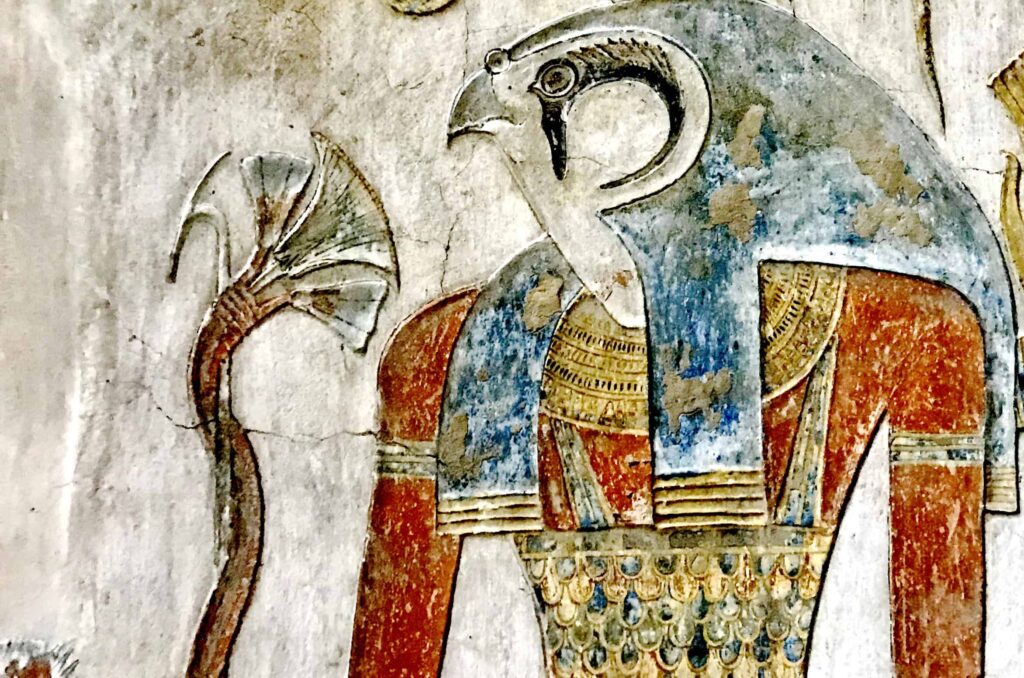
God Horus recieving offerings

Papyrus’s influence extended beyond Egypt. Various cultures throughout the Mediterranean region adopted it, marking a significant advancement in the history of writing materials.

In conclusion, papyrus was not only a vital resource for writing and documentation in ancient Egypt but also a powerful symbol of unity, order, and cultural identity. Its legacy continues to be felt in the study of ancient civilizations and the evolution of written communication.

The eye of Horus

Places to learn about Papyrus in ancient Egypt

  • Royal Papyrus Institute in Coptic Cairo: The Royal Papyrus Institute is one of a kind, as it is the only place that can still create royal, high-quality papyrus! Ayman Kamel, the owner, is the only person alive who keeps the secret of making the Royal high-quality Papyrus. Prices of Papyrus in this institute are not cheap.
  • 3 Pyramids Papyrus Institute: The 3 Pyramids Institute is a special place, as the staff is certified with a degree in Egyptology, so they can answer all your questions about Papyrus or Ancient Egypt.

Current weather in Egypt

Divider

Amazing one day tour

Fantastic tour. We were picked up at the airport early in the morning (6 am), and were dropped off in the evening after discovering amazing Cairo. The guide was knowledgeable and took us to many hidden places, which we wouldn’t have found without him. Thank you!

More »

Great one day tour in Cairo

My husband and I had a long layover in Cairo on our way to Kenya in 2010. Since we had never been to Egypt, we decided to sign up for a one-day tour with Egypt Fun Tours Day Trips. Our guide was there when we arrived and quickly guided us

More »

Big tick off our bucket list!

Booked the evening before and were able to do everything we hoped to in a day, with a knowledgeable guide & at a reasonable price! Lunch was included and absolutely delicious! Learnt about the history of Egypt, which was the most important part of sightseeing in Cairo/Giza. Hamada also gave

More »
6 Days Luxury Tour {Egypt Treasures} - Cairo and Nile Cruise Affordable Tour Package

A trip of a lifetime in a 10 hour layover!

We recently scheduled a layover tour in Cairo through Egypt Fun Tours. Our layover was 10 hours and we scheduled the tour just about a day and a half before our arrival. When we arrived in Cairo we very easily made our way out of the airport (after getting our

More »

Great Walking Tours!

My husband & I were very very happy with the walking tour we took with Egypt Fun on Nov 26. Our guide (Manal) was amazing & very very knowledgeable. Thanks to Manal, we were able to really get a very good understanding of the city, its history & its great

More »
God_Anubis_Icon

Top-rated Tour Packages

God_Anubis_Icon
WhatsApp
Email
Print