
The Tomb of Zed-Amun-ef-ankh: A Window into the Saite Period
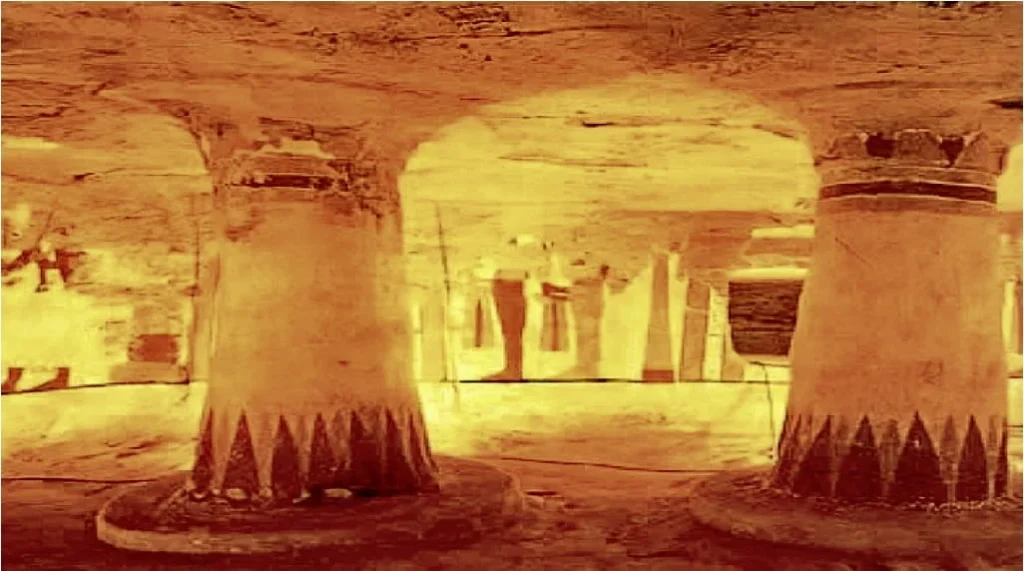
The Tomb of Zed-Amun-ef-ankh is a significant archaeological site located in the Bahariya Oasis, dating back to the 26th Dynasty of Egypt. This monument reflects the “Saite Renaissance,” a period characterized by a cultural revival that consciously adopted Old Kingdom artistic styles, such as clean lines and restrained color palettes, to establish political and theological legitimacy. The tomb’s structure, carved into the limestone bedrock, features a central burial chamber designed to protect the deceased and ensure a successful transition to the afterlife, as evidenced by its intricate iconography including the “Weighing of the Heart” ceremony. Modern conservation efforts, such as environmental monitoring and structural reinforcement, are currently underway to protect the site’s delicate plaster and pigments from the harsh desert environment, ensuring its preservation for future scholarly research and public education.
Lake Qarun: The Ancient, Salty Heart of the Fayoum Oasis
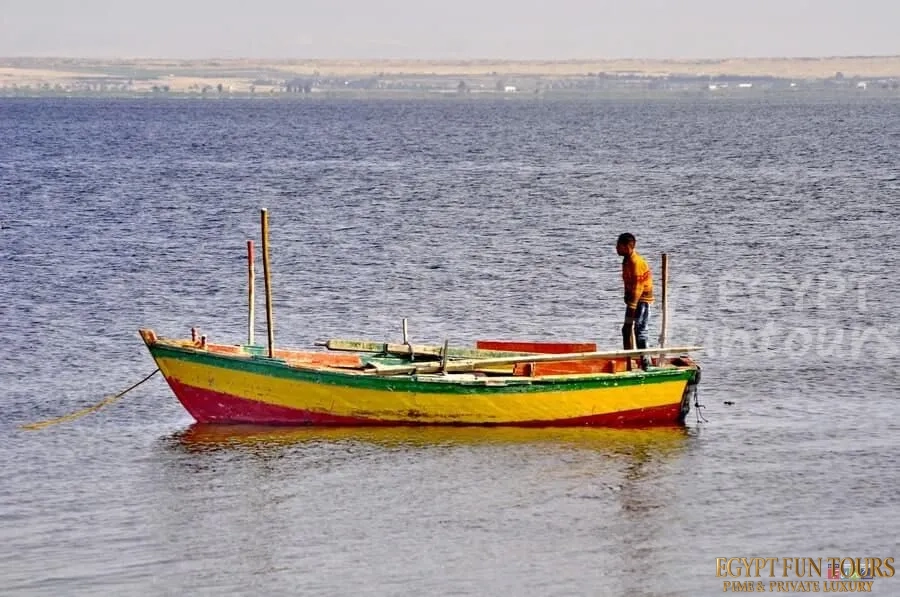
Explore Lake Qarun, the ancient, salty heart of the Fayoum oasis and Egypt’s third-largest lake. This vast body of water, sitting 45 meters below sea level, is all that remains of the legendary, freshwater “Lake Moeris,” an engineering marvel pharaohs built to tame the Nile. Today, it’s a protected national park, a vital haven for migratory birds like flamingos, and the source of the famous legend of Qarun, the wealthy man swallowed by the earth, whose treasure is fabled to be lost beneath its waters.
Discover the Magic Lake: Fayoum’s Hidden Desert Gem
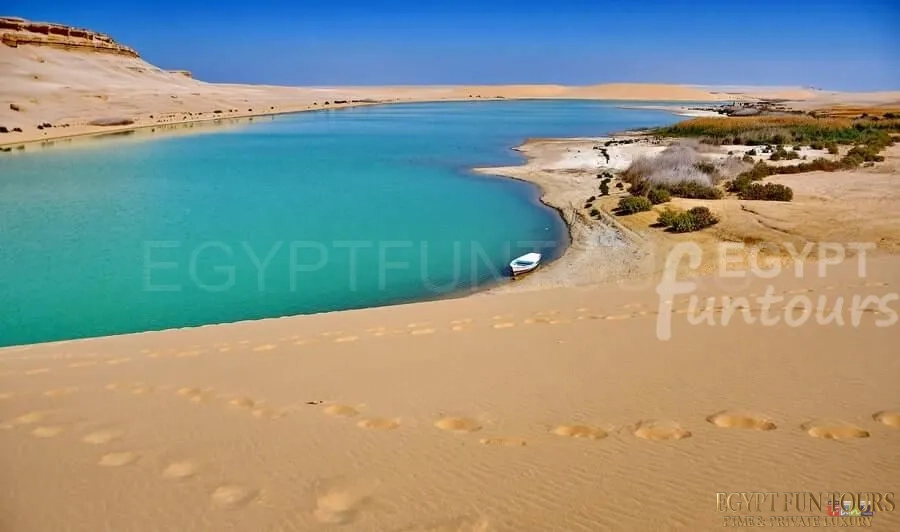
Discover Fayoum’s best-kept secret: the Magic Lake. This stunning oasis, hidden among golden dunes, gets its name from its water that miraculously changes color throughout the day. Join Egypt Fun Tours for an unforgettable day trip from Cairo packed with a thrilling 4×4 safari, sandboarding down pristine dunes, a refreshing swim, and an authentic Bedouin BBQ lunch.
Wadi El Hitan: Journey to the Valley of the Whales
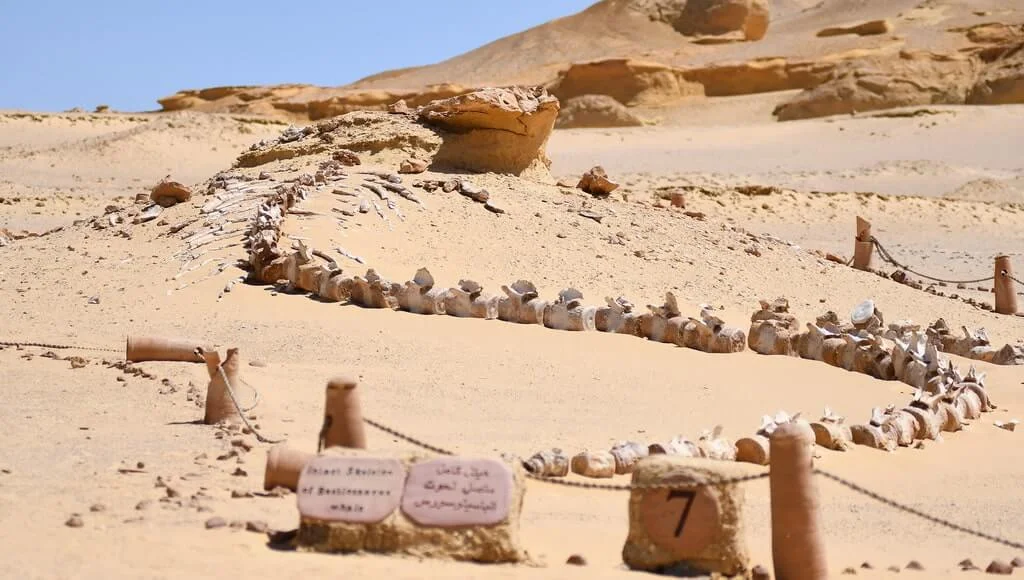
Journey 40 million years into the past at Wadi El Hitan (Valley of the Whales), a UNESCO World Heritage Site. Walk through an ancient sea floor, now a vast desert, and see the perfectly preserved skeletons of prehistoric whales that once swam here. Our tour includes the open-air fossil trail and the stunning Fossil Museum, revealing the incredible story of whale evolution.
The Royal Jewelry Museum: A Hidden Palace of Dazzling Treasures
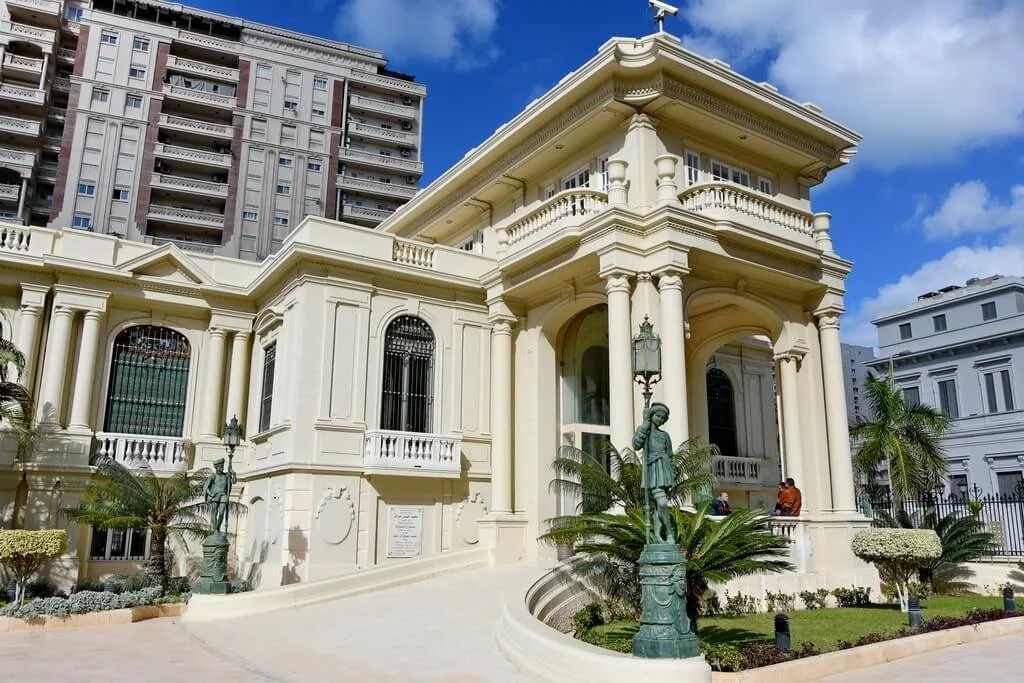
Step into a world of unbelievable opulence at the Royal Jewelry Museum in Alexandria. This isn’t just a museum; it’s a stunning, neoclassical palace that once belonged to the royal family. Inside, you’ll discover the personal, diamond-encrusted treasures of the Muhammad Ali Dynasty, from King Farouk’s chess set to Queen Nazli’s tiaras. It’s a true hidden gem and a must-see on any Alexandria tour.
Alexandria National Museum: A Journey Through Egypt’s Mediterranean History
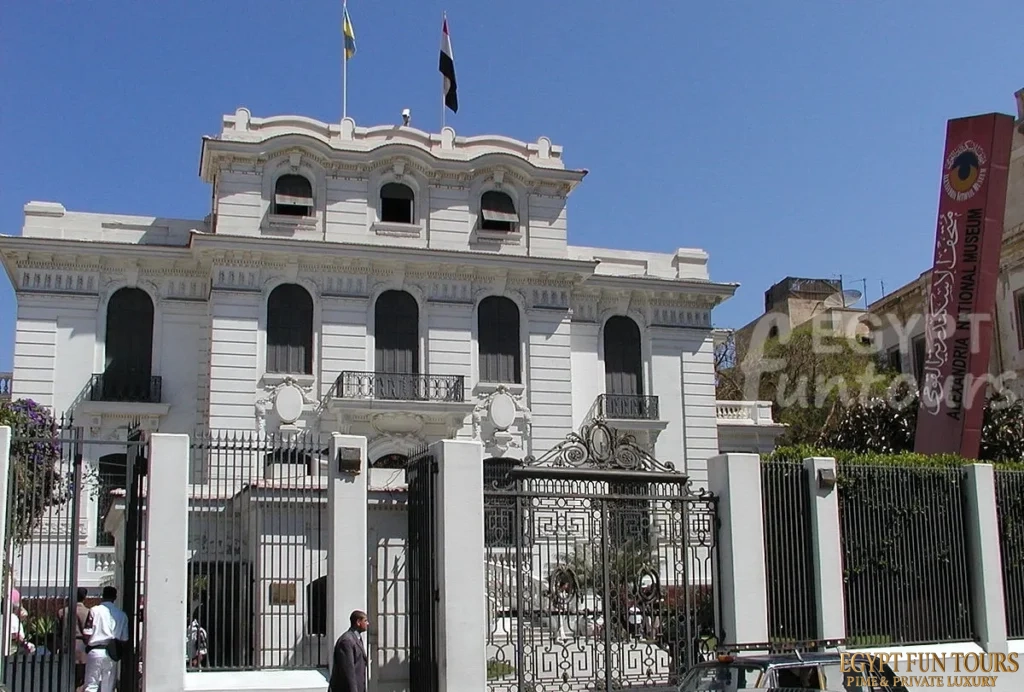
Housed within the restored elegance of a restored Italianate villa, the Alexandria National Museum serves as a breathtaking chronological gateway to the soul of Egypt’s Mediterranean “Bride.” This curated sanctuary masterfully weaves together the tapestry of the city’s multifaceted identity, guiding visitors through the majestic artifacts of the Pharaonic era, the intellectual splendor of the Hellenistic and Roman periods, and the intricate artistry of the Coptic and Islamic ages. By showcasing treasures recovered from the depths of the submerged cities alongside land-based excavations, the museum offers a powerful, singular narrative of a city that has remained a global beacon of culture and conquest for over two millennia.
Discover Kom el-Dikka: Alexandria’s Roman Amphitheater & Lost University
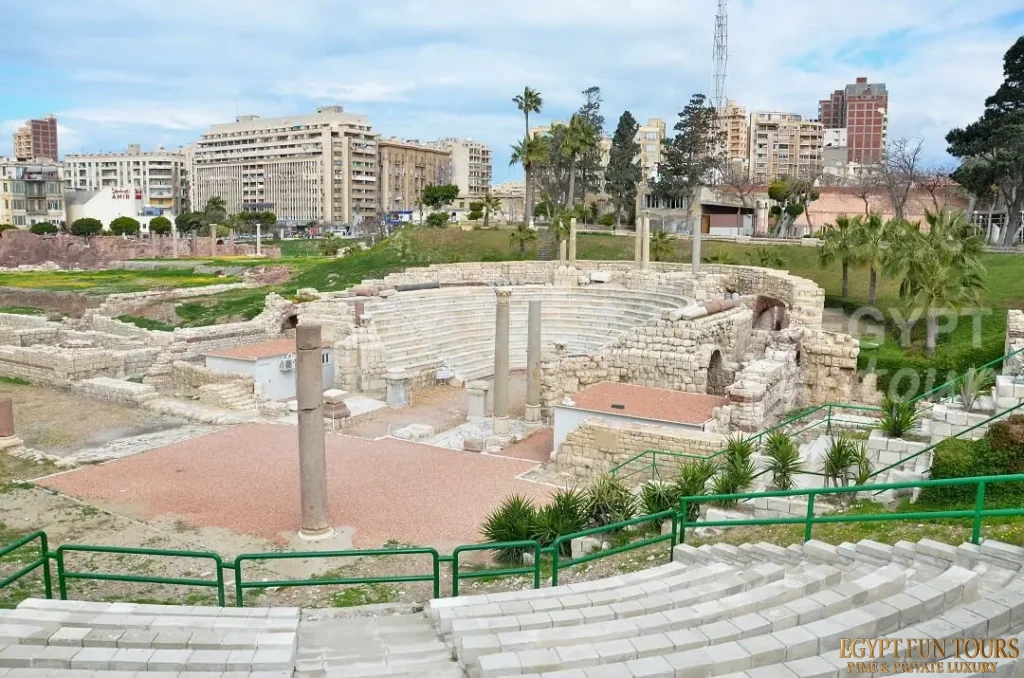
Discover Kom el-Dikka, Alexandria’s fascinating open-air archaeological park. This site is home to Egypt’s only Roman Amphitheater (Odeon), the ruins of a Roman-era university, and the beautiful mosaics of the Villa of the Birds. It’s a captivating look at daily life in Roman Alexandria and a must-see on your day trip from Cairo.
Bibliotheca Alexandrina: The Reborn Wonder of the World
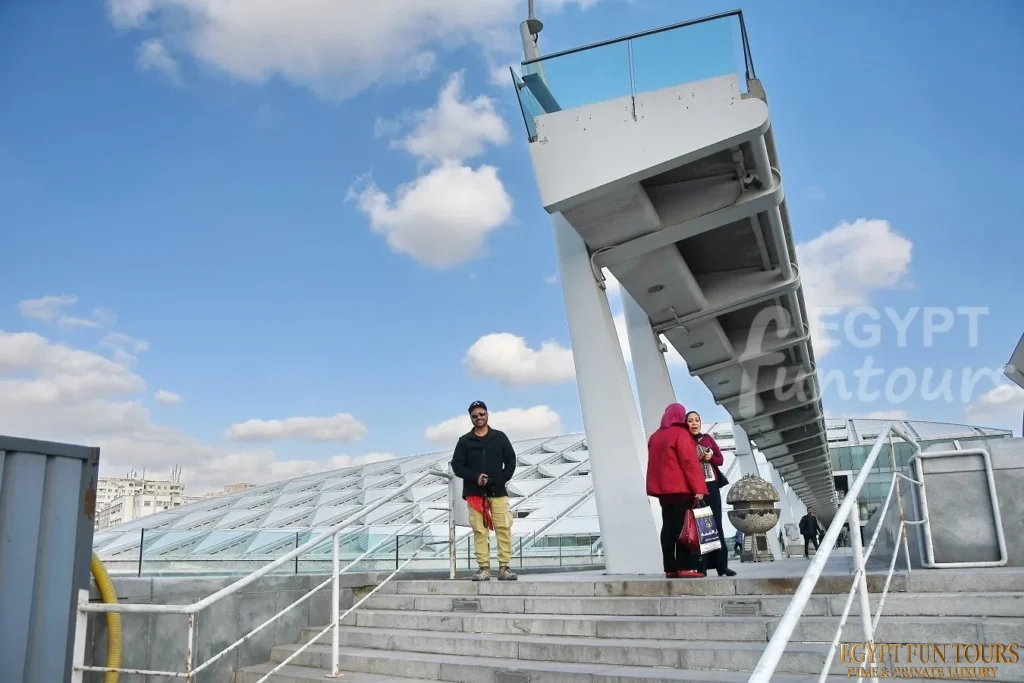
Experience the reborn wonder of the world: the Bibliotheca Alexandrina. This stunning architectural marvel, designed as a “rising sun,” is a modern tribute to the legendary ancient library. More than just a library, it’s a vast cultural center. Explore its breathtaking, 11-level main reading hall, discover Greco-Roman statues in the Antiquities Museum (located inside), see priceless ancient texts in the Manuscripts Museum, and visit the futuristic Planetarium. It’s the must-see cultural heart of modern Alexandria.
El-Mursi Abul Abbas Mosque: Alexandria’s Dazzling Seaside Sanctuary
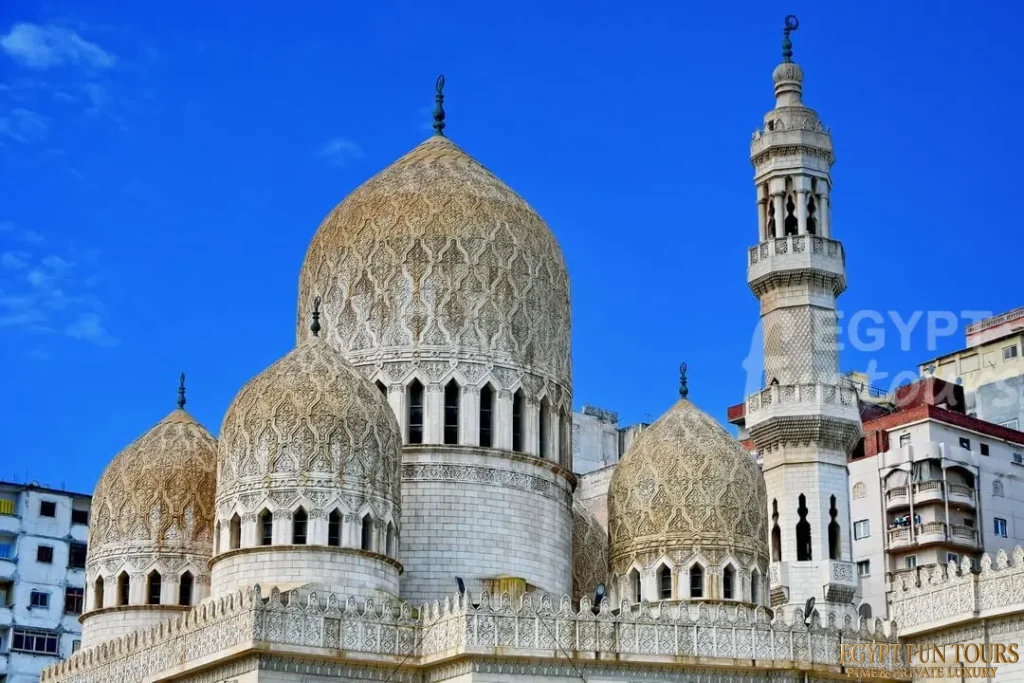
Don’t miss Alexandria’s most famous and beautiful mosque: the El-Mursi Abul Abbas Mosque. With its stunning, creamy-white facade, intricate domes, and towering minaret, it’s a breathtaking masterpiece of Islamic architecture.
Located right on the harbor near the Citadel of Qaitbay, this is more than just a mosque—it’s an active spiritual center built over the tomb of a revered 13th-century Sufi saint, Abu al-Abbas al-Mursi, who is celebrated as the “patron saint of fishermen.” It’s an essential, beautiful stop to appreciate the living, spiritual heart of Alexandria.
The Catacombs of Kom Esh-Shokafa: Roman-Egyptian Underworld
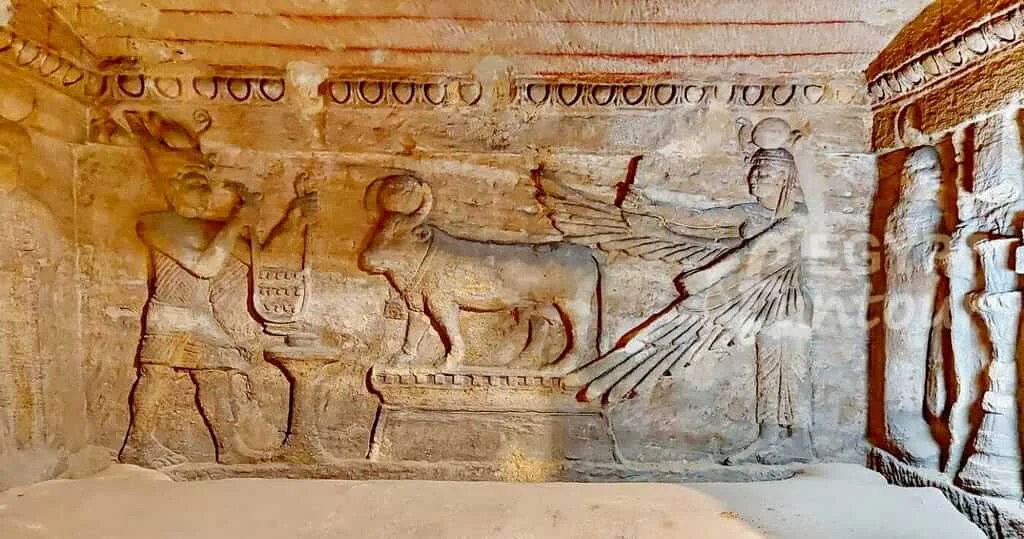
Descend into one of the “Seven Wonders of the Middle Ages” at the Catacombs of Kom Esh-Shokafa in Alexandria. Discovered by a falling donkey, this 2nd-century Roman tomb is a bizarre and unique “fusion” of art. See the god Anubis dressed as a Roman soldier, a Greek Medusa on an Egyptian tomb, and a Roman-style banquet hall for funeral feasts. It’s the most fascinating, “hidden gem” on any Alexandria day trip.
The Egyptian Scarab: Rebirth, Protection, and Power (Dung beetle)
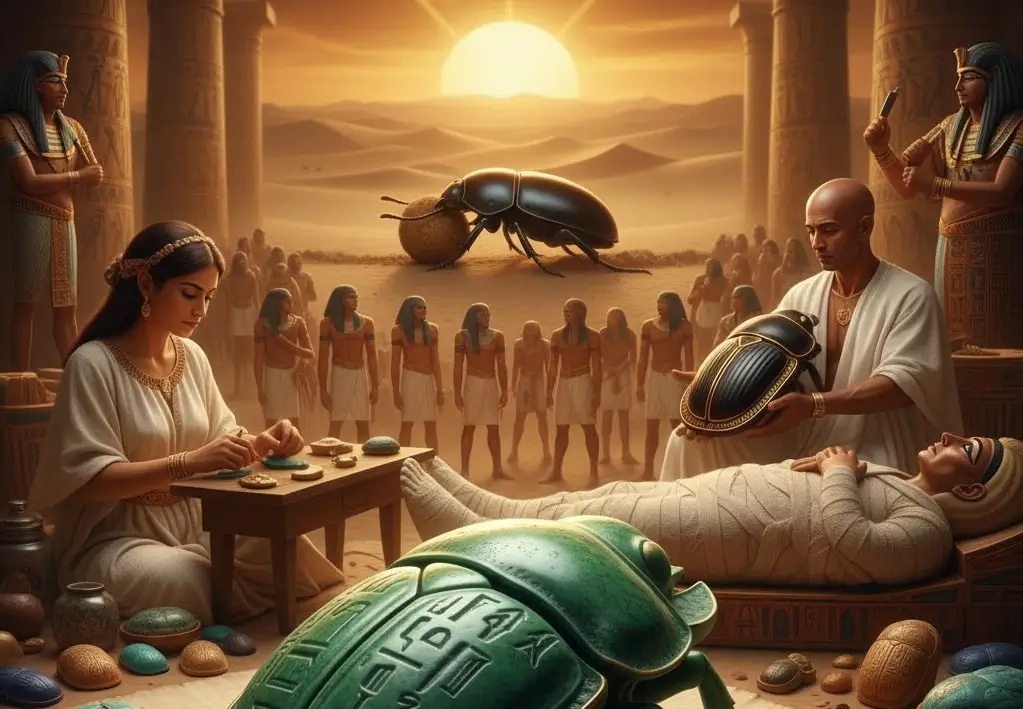
The Egyptian scarab stands as the enduring symbol of rebirth and regeneration in the ancient world. Modeled after the humble dung beetle and linked to the sun god Khepri, this sacred amulet offered powerful protection and good luck to the living while serving as a seal of authority for officials. Beyond daily life, it played a critical role in the afterlife as the “Heart Scarab,” placed on mummies to silence the heart during the Judgment of the Dead, ensuring the soul’s safe passage into eternity.
The Citadel of Qaitbay: Alexandria’s Guardian of the Mediterranean
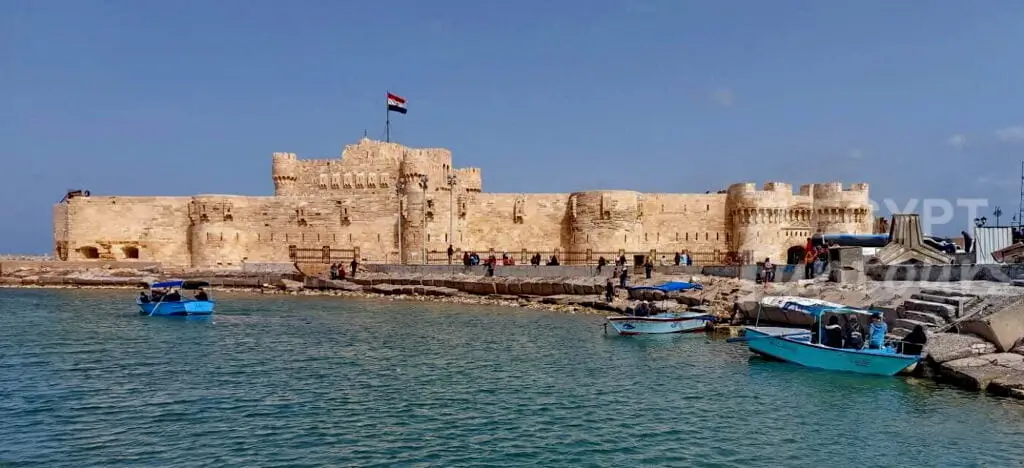
The Citadel of Qaitbay stands as a 15th-century masterpiece of Mamluk military architecture, occupying the exact site of the legendary Pharos Lighthouse on Alexandria’s Mediterranean coast. Built by Sultan Al-Ashraf Qaitbay between 1477 and 1479 AD, the fortress serves as a physical bridge between the ancient and medieval worlds by incorporating massive granite blocks from the ruined Lighthouse into its own foundations. The structure features a unique concentric defense system, a three-story square keep, and one of the oldest mosques in the city, all designed to shield Egypt from naval invasions. Beyond its golden limestone ramparts, the surrounding seabed remains a vast underwater archaeological field where colossal statues and ancient debris still rest, cementing the Citadel’s status as the eternal sentinel of the “Pearl of the Mediterranean.”