
Ouroboros: Snake Eating Its Tail Meaning
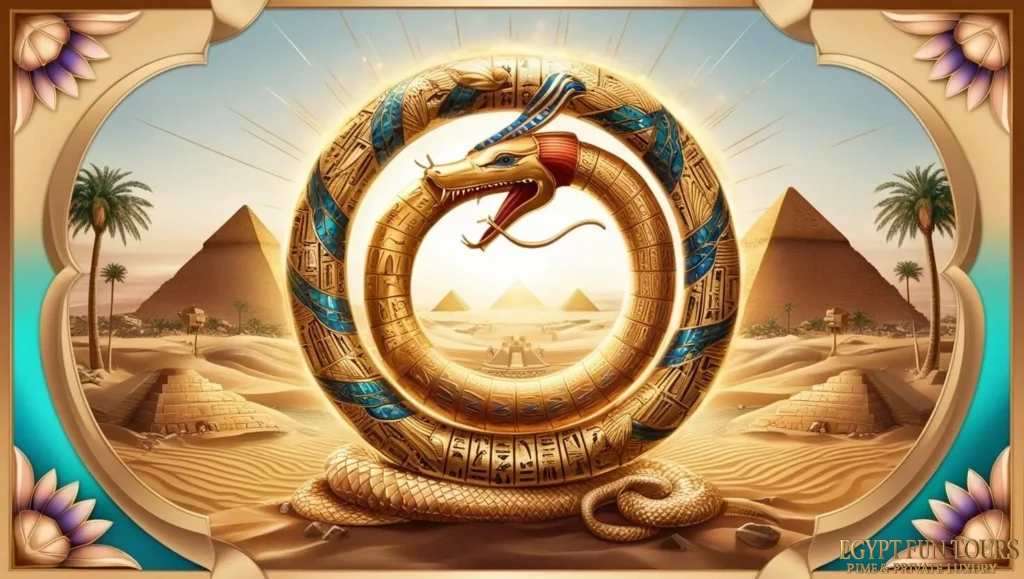
The Ouroboros is an ancient, powerful symbol of a serpent or dragon consuming its own tail, signifying eternal cyclic renewal and the unity of all things. Originating in Ancient Egypt, it was adopted by Greek alchemists, Gnostics, and Norse mythology (Jörmungandr) to represent the endless cycle of creation and destruction. (246 characters)
The Flower of Life Symbol: Meaning, Origins & Sacred Geometry
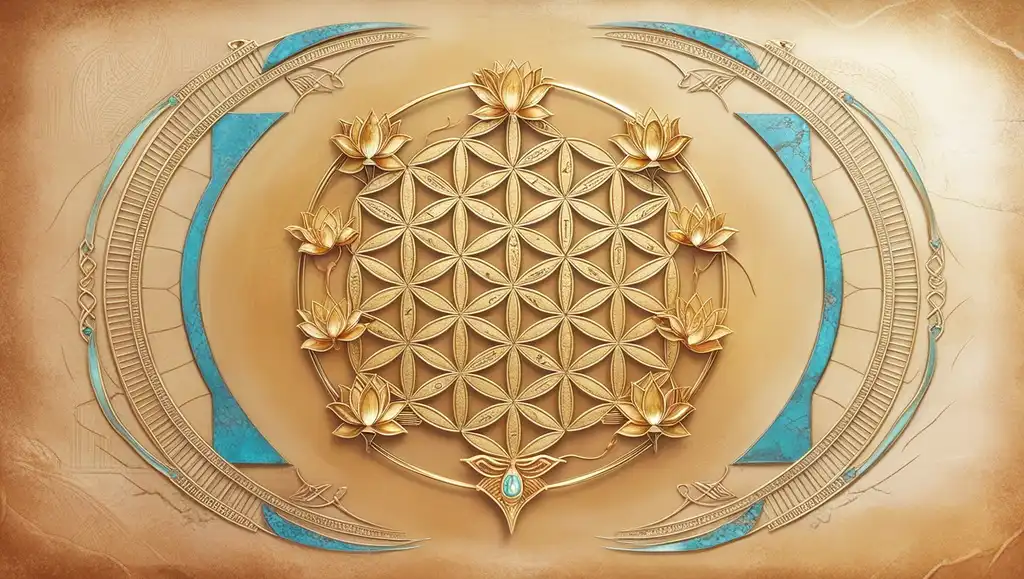
The Flower of Life is a potent symbol in sacred geometry, composed of multiple evenly-spaced, overlapping circles arranged in a hexagonal pattern. Dating back to Ancient Egypt, it is revered across cultures as the blueprint of creation and the source of all existence. This intricate structure is believed to contain the fundamental patterns of the universe, representing the interconnectedness of all life and the continuous, unified cycle of creation.
Crowns of the Pharaohs: The Deshret, Hedjet, Pschent, and Khepresh
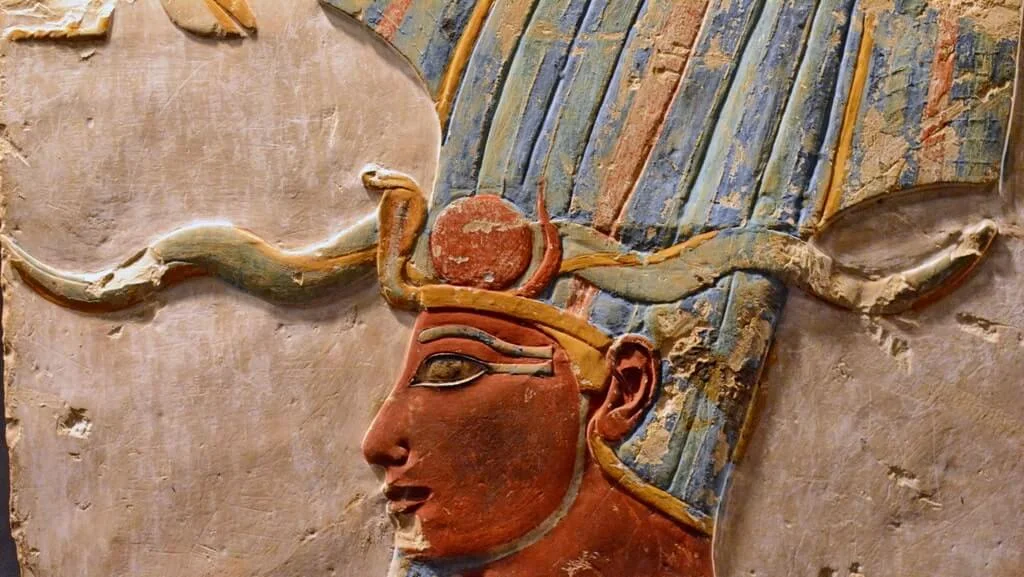
The Pschent, or the Double Crown of Egypt, served as the single most critical piece of royal regalia, acting as a powerful visual proclamation of the Pharaoh’s absolute authority over the entire unified nation. Formed by seamlessly combining the red Deshret (Crown of Lower Egypt, representing the Delta region) and the white Hedjet (Crown of Upper Egypt, representing the Nile Valley), the Pschent symbolized the foundational concept of Egyptian civilization: The Two Lands are One. This crown was not merely decorative; it was a potent religious and political tool, signifying that the Pharaoh was the sole legitimate ruler capable of maintaining the crucial balance of Ma’at (cosmic order) across all of Egypt.
The Was Scepter: Egypt’s Ultimate Symbol of Divine Power
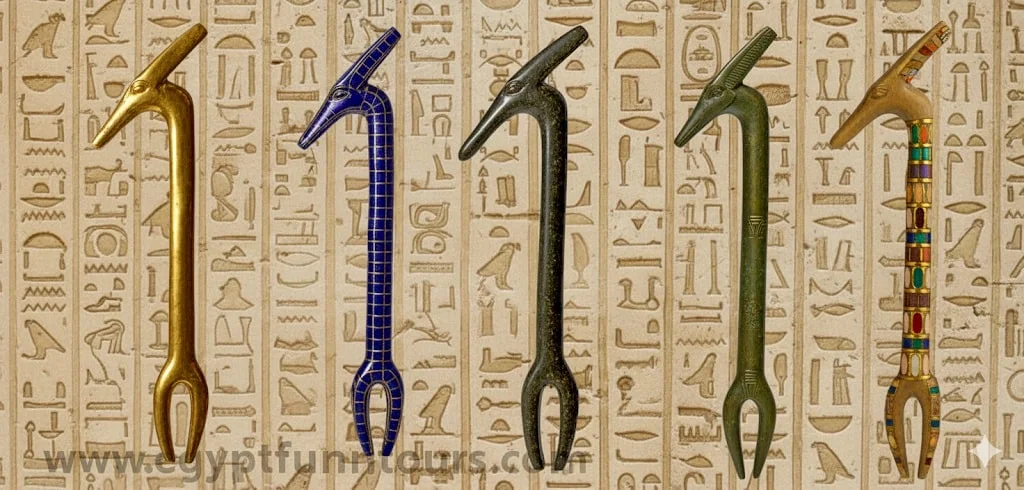
The Was scepter is one of ancient Egypt’s most potent symbols, representing divine power, authority, and dominion. This iconic staff, instantly recognizable by its straight shaft, forked base, and stylized animal head, was wielded by gods like Ptah and Set, as well as by pharaohs, to signify their control over the cosmos. This article explores the Was scepter’s origins, its deep religious meaning, and its prominent role in hieroglyphs and art as the ultimate emblem of divine and royal power.
The Pyramid of Senusret I: Engineering the Middle Kingdom’s Greatest Wonder
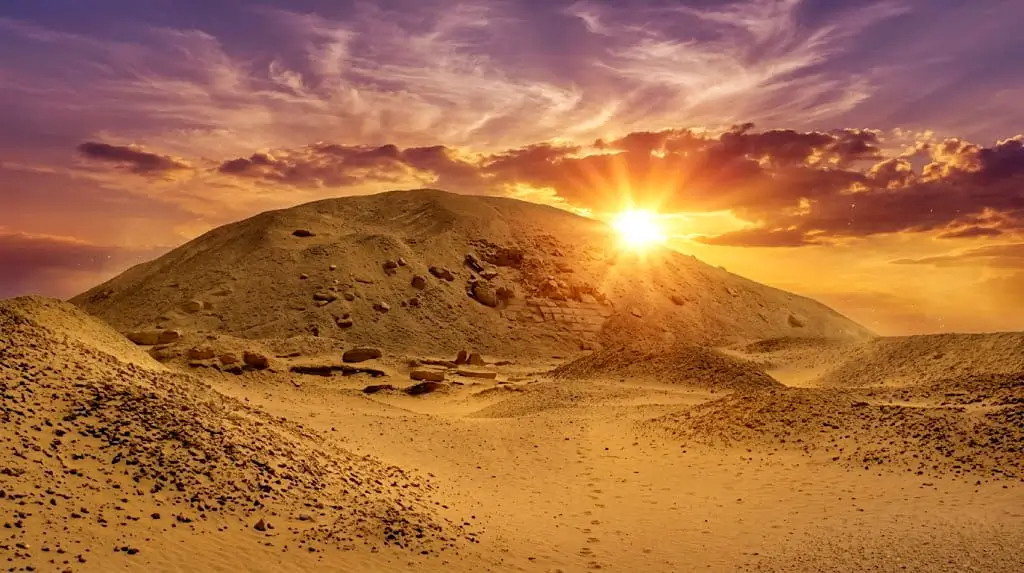
The Pyramid of Senusret I at Lisht marks the architectural peak of the 12th Dynasty. By introducing a revolutionary “grid-wall” skeleton of radiating stone walls, architects solved the structural instabilities of earlier mud-brick cores. This internal frame supported a massive volume of limestone rubble, all encased in high-quality Tura limestone. With its ten satellite pyramids and a gallery of life-sized royal statues, the complex transformed the landscape into a sprawling center of political and artistic power. Ultimately, the monument stands as an authoritative example of the Middle Kingdom “Renaissance,” successfully blending Old Kingdom grandeur with sophisticated, forward-thinking engineering.