Ptolemy I Soter: From Macedonian General to Pharaoh of Egypt

Ptolemy I Soter was one of Alexander the Great's generals who founded the Ptolemaic Dynasty in Egypt. After Alexander's death, Ptolemy seized control of Egypt, earning the title "Savior." He transformed Egypt into a Hellenistic kingdom by blending Greek and Egyptian cultures. He founded Alexandria, which became a major cultural center, and promoted the god Serapis to unify his subjects. His reign established a dynasty that ruled for nearly 300 years.

Ptolemy I Soter: The Founder of a Dynasty

Ptolemy I Soter was one of the most successful and influential of Alexander the Great‘s generals. He was a close friend and confidant of the young conqueror. After Alexander’s sudden death in 323 BCE, his vast empire was torn apart by his successors, the Diadochi. While others fought for control of the entire empire, Ptolemy set his sights on one prize: Egypt. By securing this rich and powerful land, he established a dynasty that would rule for nearly 300 years.

FUN

From General to Pharaoh: How Ptolemy Seized Power

Ptolemy’s rise to power was a masterclass in strategy and ambition. Initially, he served as a satrap, or provincial governor, of Egypt under the authority of Alexander’s appointed regent. However, Ptolemy quickly consolidated his power. He took a bold step by seizing Alexander the Great’s body as it was being transported for burial. Ptolemy brought the body to Memphis, Egypt, and eventually to Alexandria, where he built a magnificent tomb for it. This act was highly symbolic. It legitimized his rule by associating him directly with the great conqueror. Ultimately, Ptolemy declared himself king of Egypt in 305 BCE and took the royal title of Ptolemy I Soter, meaning “Ptolemy the Savior.”

FUN

Building a New Empire: The Hellenistic Transformation of Egypt

5 Days Cairo and Alexandria Tour Package Egypt Fun Tours min 1

Ptolemy I did not simply rule Egypt; he transformed it. He understood that to secure his power, he needed to appeal to both the native Egyptians and the new Greek-Macedonian ruling class. Therefore, he created a unique blend of Greek and Egyptian cultures, known as the Hellenistic period.

Founding Alexandria

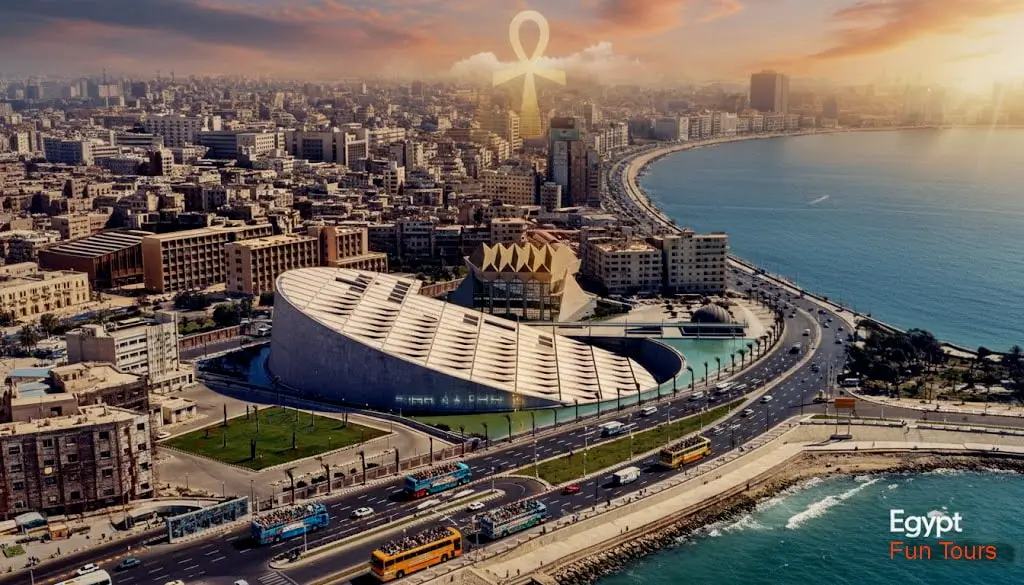
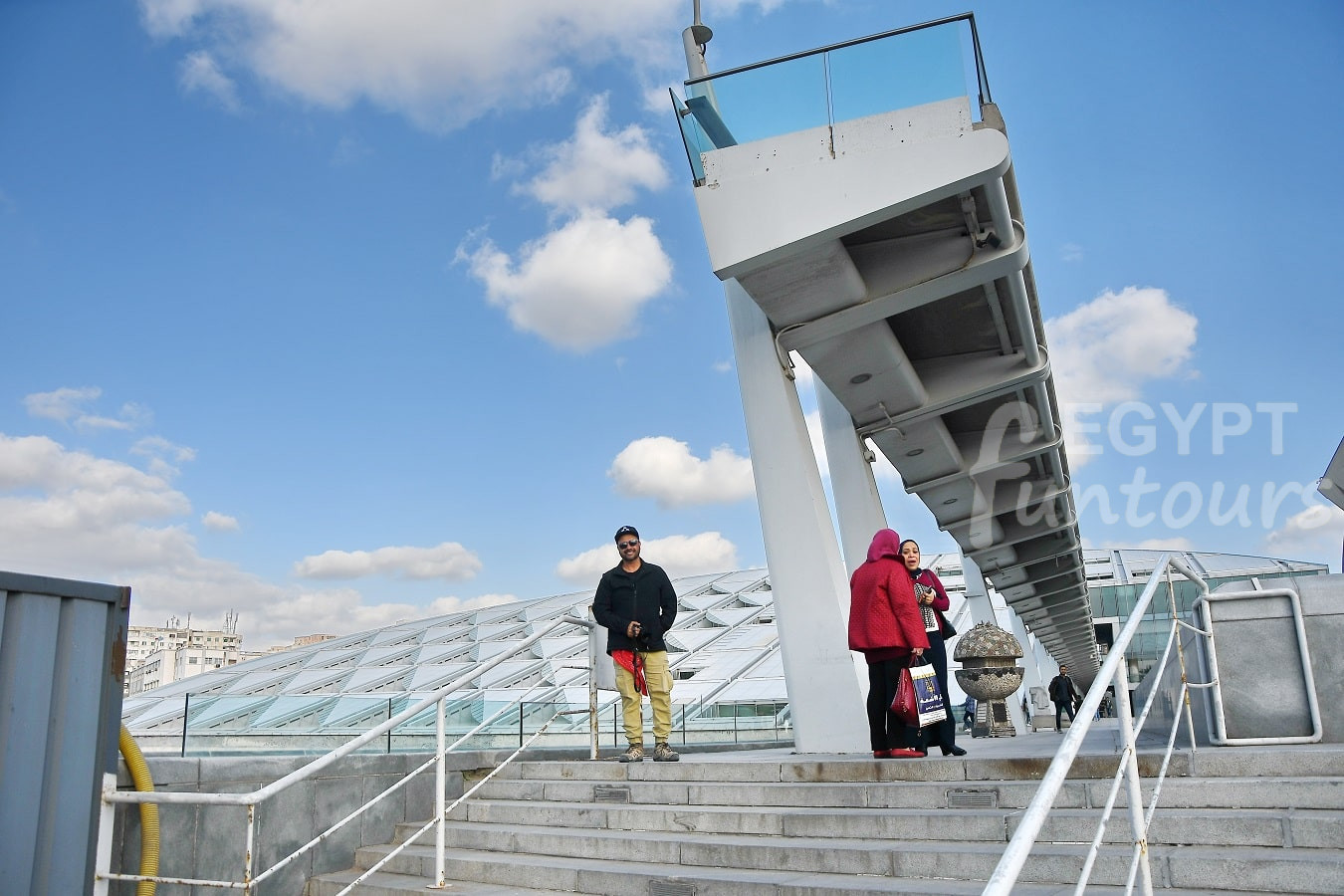
Ptolemy’s most lasting legacy is the city of Alexandria. He oversaw its rapid development into a magnificent metropolis and the new capital of his kingdom. Alexandria became the center of the Hellenistic world, rivaling even Athens in its cultural and intellectual output. He also established two of its most famous institutions: the Library of Alexandria and the Mouseion (a center of research and learning). The library became the largest in the ancient world, attracting scholars, poets, and scientists from across the Mediterranean.

Cultural and Religious Blending

To bridge the gap between Greek and Egyptian religions, Ptolemy promoted the new god, Serapis. This deity was a fusion of the Egyptian god Osiris and the Apis bull, with traits of Greek gods like Zeus and Hades. The cult of Serapis gained widespread popularity and helped unify his diverse subjects under a shared religious identity. Meanwhile, Ptolemy and his successors embraced the traditional roles of Egyptian pharaohs. They built temples, participated in ancient rituals, and presented themselves as divine rulers in the traditional Egyptian style.

Alexander the Great: Travel the Path of a Pharaoh-King

Alexander the Great became Pharaoh in Egypt (332 BC). He founded Alexandria, a world capital,...
Related post
FUN

Ptolemy’s Legacy: A Lasting Dynasty

Bibliotheca Alexandrina Library - cairo and alexandria from luxor - 9-day egypt tour

Ptolemy I ruled until he died in 282 BCE. His reign established the Ptolemaic Dynasty, a line of pharaohs who would rule Egypt for nearly three centuries. This dynasty ended with the death of the famous Cleopatra VII. Ptolemy’s descendants successfully maintained Egypt as an independent kingdom, despite constant wars and political intrigues. His political foresight and cultural innovations were key to his dynasty’s longevity. He also left a legacy as a writer, penning a history of Alexander’s campaigns that, while now lost, was used as a primary source by later historians.

King Snefru: The Perfecter of Pyramid Building

King Snefru, a pharaoh of Egypt's Fourth Dynasty, was the most prolific pyramid builder in...
Related post
FUN

In conclusion, Ptolemy I Soter was more than a conqueror. He was a statesman and a visionary. He founded a dynasty, built a world-renowned city, and created a new Hellenistic culture that defined Egypt for centuries. His actions transformed Egypt and helped to shape the course of the Hellenistic world.

Current weather in Egypt

King Ahmose I: The Liberator Pharaoh and Founder of the New Kingdom

Meet King Ahmose I, the "Liberator Pharaoh" who saved Egypt from foreign occupation. This guide...
Related post
FUN
An adventure designed for family is an absolute gift worthy of remembering....
Enjoy the charming atmosphere of Egypt....
15-Day Historical Egypt Tour Package

all good!

we took pyramid and Cairo city tours and all went smoothly. The were very flexible to adapt to our requirements. Car, car driver and guide were great. very knowledgable and professional tour. Very recommendable

More »

Cairo Day Trip

Great trip organised. I had a 12-hour layover in Cairo and had a great time with Sherif, who answered every question I had on ancient Egypt. Highly recommend.

More »
Tailored Services for Corporate Business Transportation Needs

On time, adaptable, and fun!

My friend and I planned a whirlwind trip to Dubai, the Dead Sea, Petra, Cairo, Luxor, and Sharm el Sheikh for early November 2011 – 6 cities in 10 days! We allotted one afternoon and evening for Cairo, and we wanted to see as much as we could! We drove

More »
Isis with wings

Top-rated Tour Packages

Isis with wings