
The Crook and Flail: The Ultimate Symbols of Ancient Egyptian Kingship

Unlock the symbolism behind the Crook and Flail, the ultimate insignias of pharaonic power. This guide explains how the Crook (a shepherd's staff) represented the king's duty to guide and protect his people, while the Flail (an agricultural tool) symbolized his authority to provide fertility and maintain order. Discover how these crossed scepters linked the living Pharaoh to Osiris, the god of the underworld, representing the eternal balance between mercy and might.

Symbols of Pharaoh’s Power and Responsibility

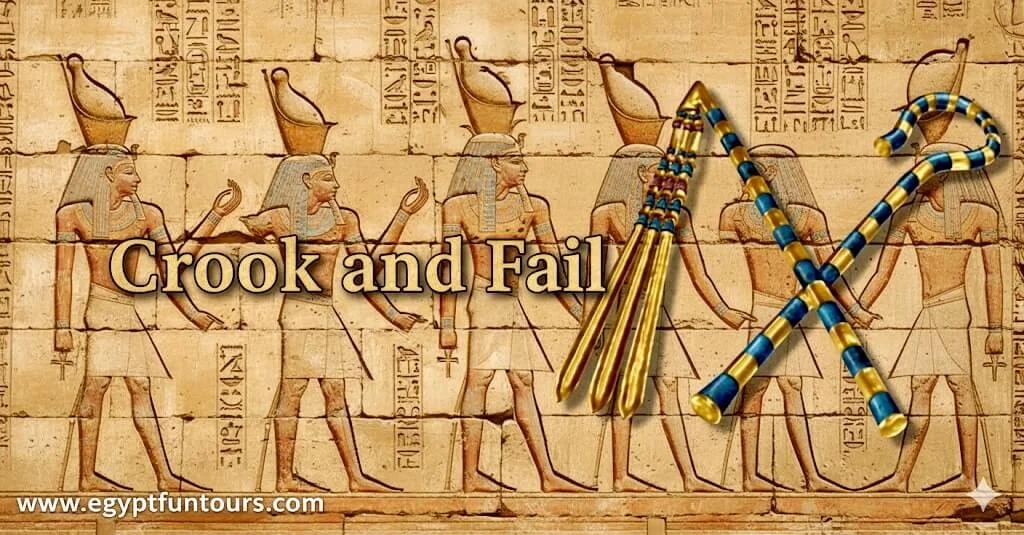
The crook and flail are two of the most iconic symbols of ancient Egypt, universally recognized as emblems of pharaonic authority. Far more than mere staffs, these powerful objects represented the dual nature of the pharaoh’s role: to guide and to punish, to nurture and to control. Together, they symbolized the complete spectrum of royal power and responsibility over the land and its people.
FUN

What Are the Crook and the Flail?

What Are the Crook and the Flail

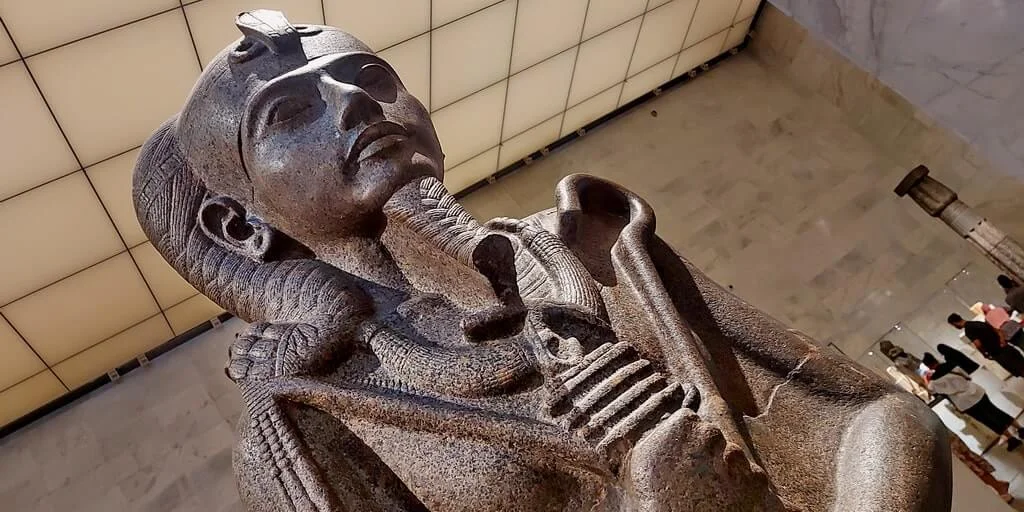
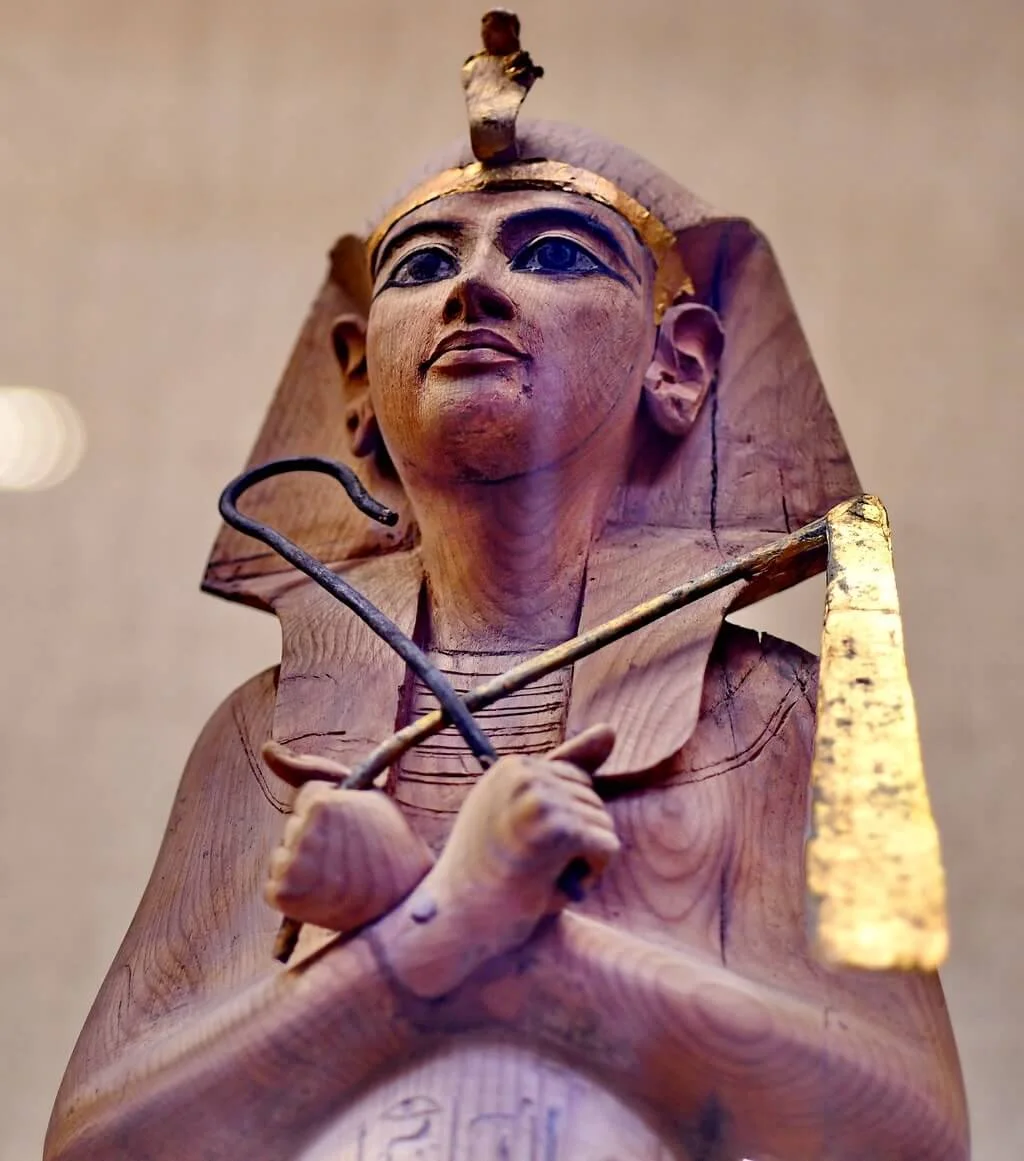
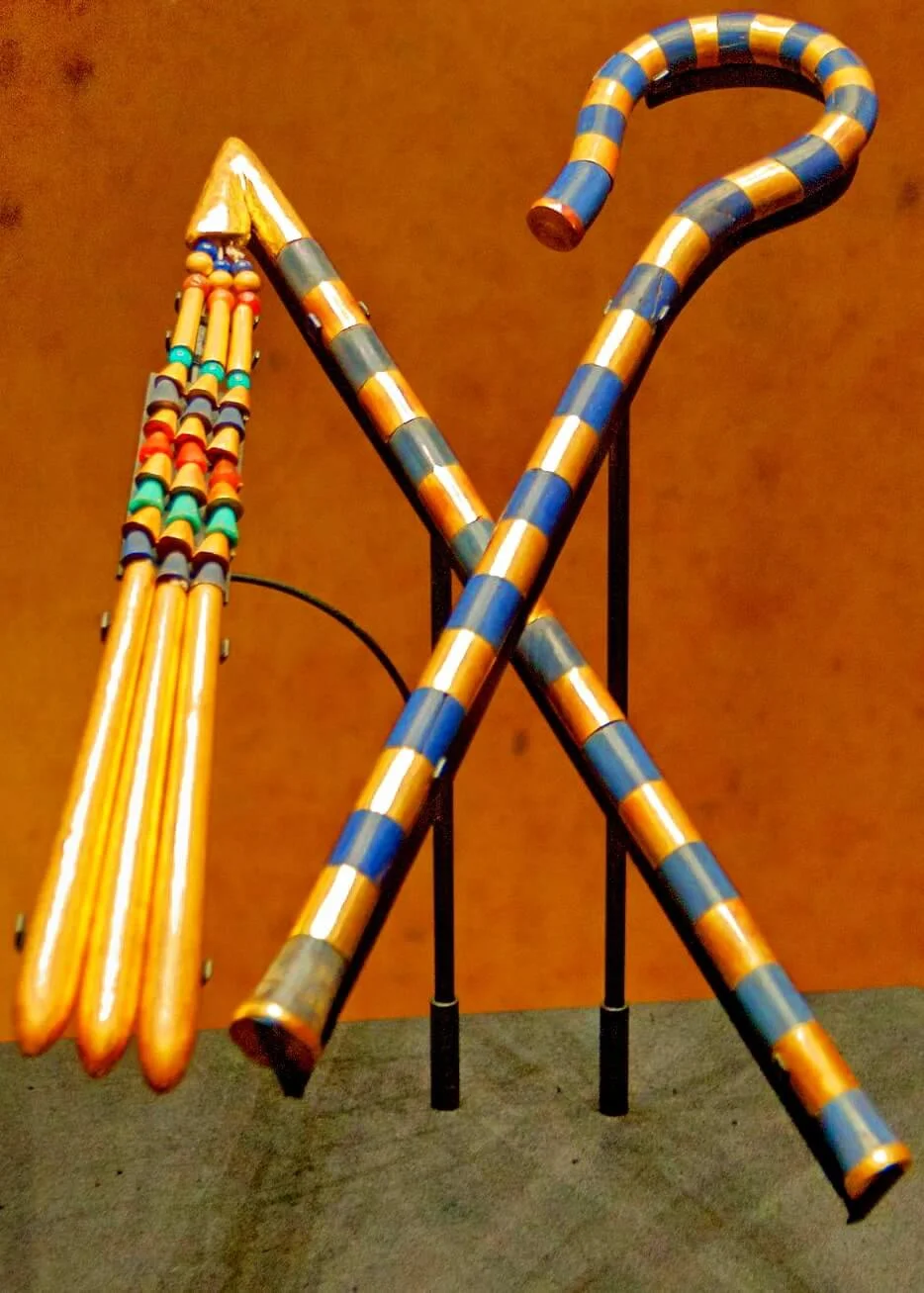
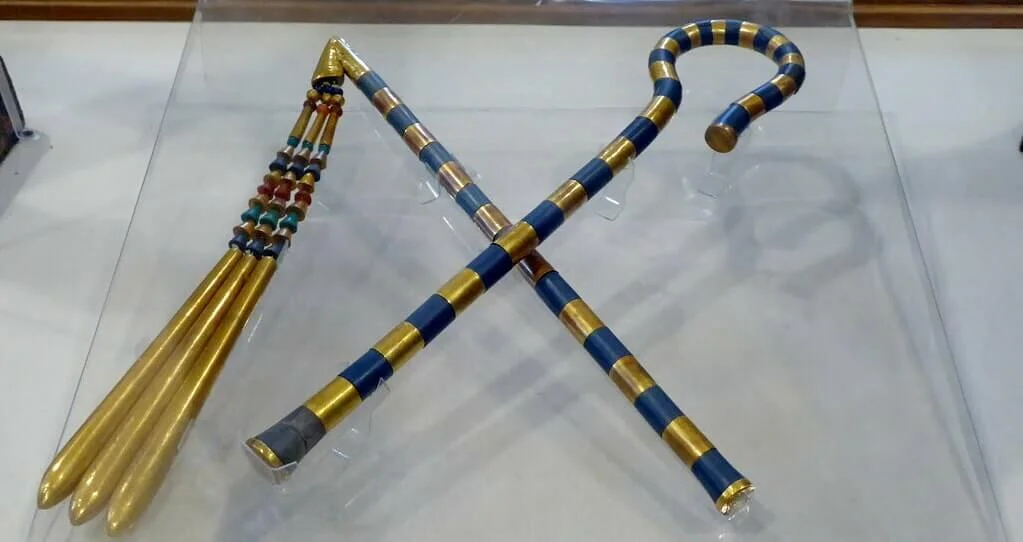
The crook (known in ancient Egyptian as the heka) is a shepherd’s staff. It features a long handle with a curved or hooked end. This design naturally connects to its primary meaning: guidance and leadership. Shepherds used similar tools to manage their flocks, gently guiding them or hooking stragglers to bring them back into line.

The flail (called nekhakha) is a more complex instrument. It consists of a short handle with three strands of beads or thongs attached to it, sometimes depicted with segments. While scholars debate its exact origin, many believe it evolved from an agricultural tool, possibly used for threshing grain. This agricultural connection lends itself to its symbolic meaning: provision and discipline.

FUN

Symbolic Meaning of the Crook

Symbolic Meaning of the Crook

The crook symbolized the pharaoh’s role as the “shepherd of his people.” Just as a shepherd guides and protects his flock, the pharaoh was expected to care for his subjects, leading them to prosperity and maintaining order. It represented benevolent leadership, guidance, and protection. When the pharaoh held the crook, he visually declared his responsibility for the welfare of every Egyptian. This was not a passive role; it implied active direction and ensured the well-being of the entire kingdom.

Symbolic Meaning of the Flail

Symbolic Meaning of the Flail

The flail’s symbolism is often seen as the counterpart to the crook. If the crook represents gentle guidance, the flail represents enforcement, discipline, and even punishment. It symbolized the pharaoh’s power to maintain Ma’at (cosmic order and justice) by any means necessary. This included punishing wrongdoers, enforcing laws, and protecting the kingdom from internal dissent and external threats. The flail underscored the pharaoh’s ultimate authority to ensure stability and justice, acting as a powerful deterrent. Its agricultural roots also hinted at the pharaoh’s role in ensuring bountiful harvests and the nation’s prosperity through careful management.

The Egyptian Cartouche: Symbol of Royalty and Eternal Protection

Uncover the meaning of the ancient Egyptian cartouche, one of the most iconic symbols from...
Related post
FUN

The Crook and Flail Together: Dual Nature of Kingship

The Crook and Flail Together Dual Nature of Kingship

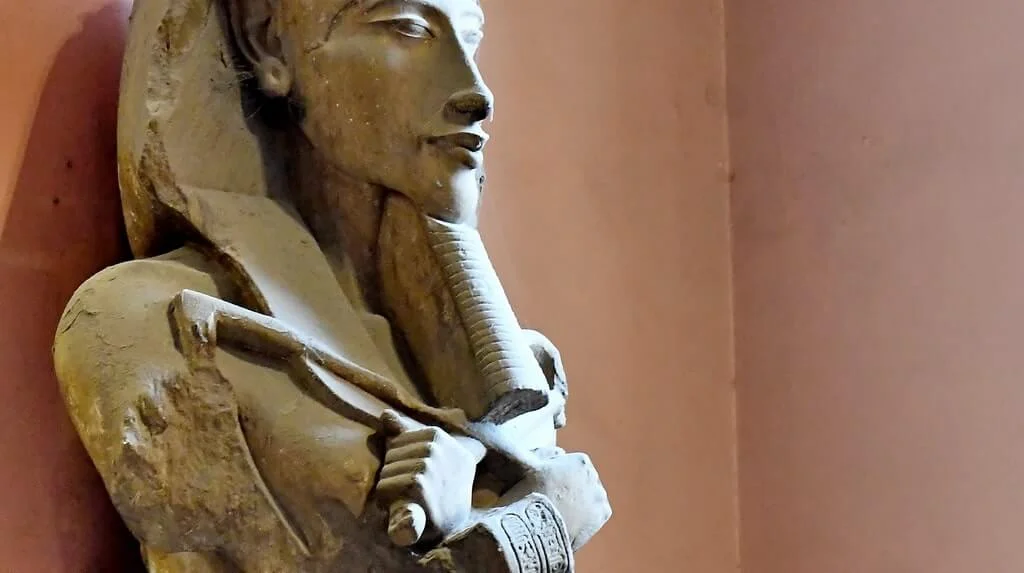
When depicted together, the crook and flail presented a complete picture of the pharaoh’s authority. They represented the dual nature of kingship: the need for both compassion and firmness, care and control. The pharaoh had to be both a nurturing guardian and a strong disciplinarian. This combination showed that the pharaoh possessed the full range of powers needed to govern effectively and maintain the complex balance of Egyptian society. No single symbol could fully convey the scope of the pharaoh’s responsibilities; it required the partnership of these two distinct emblems.

Historical Context and Usage

Historical Context and Usage

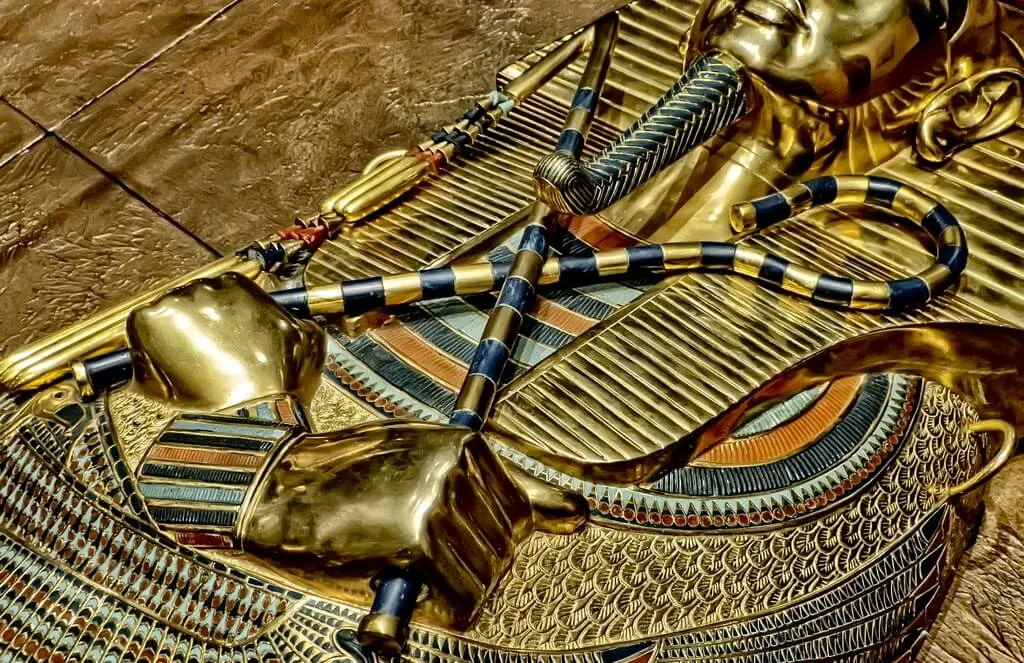
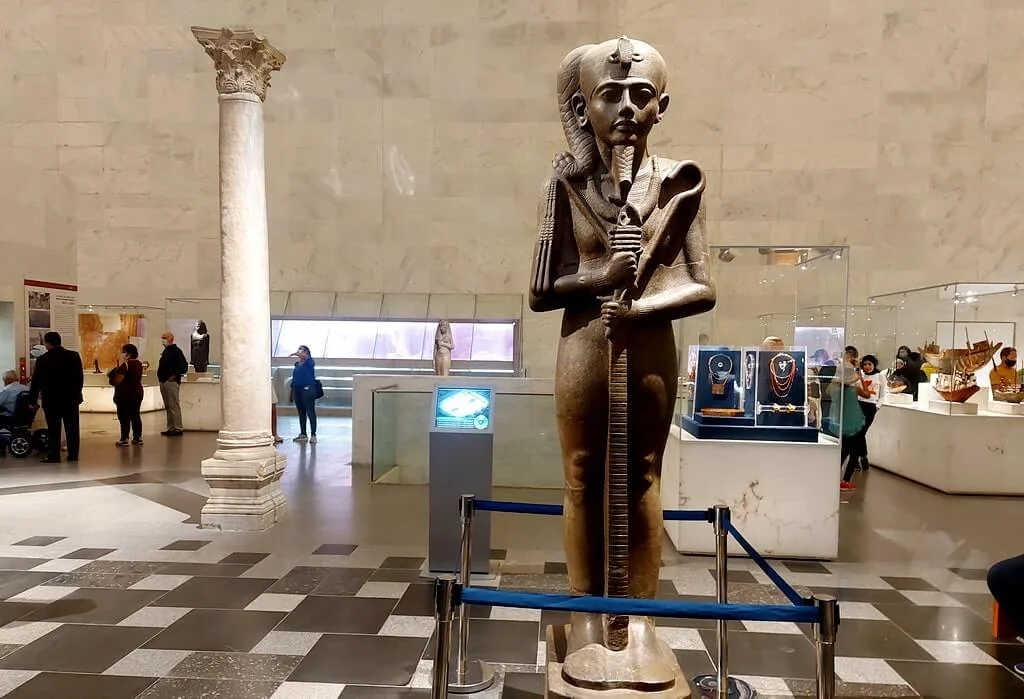
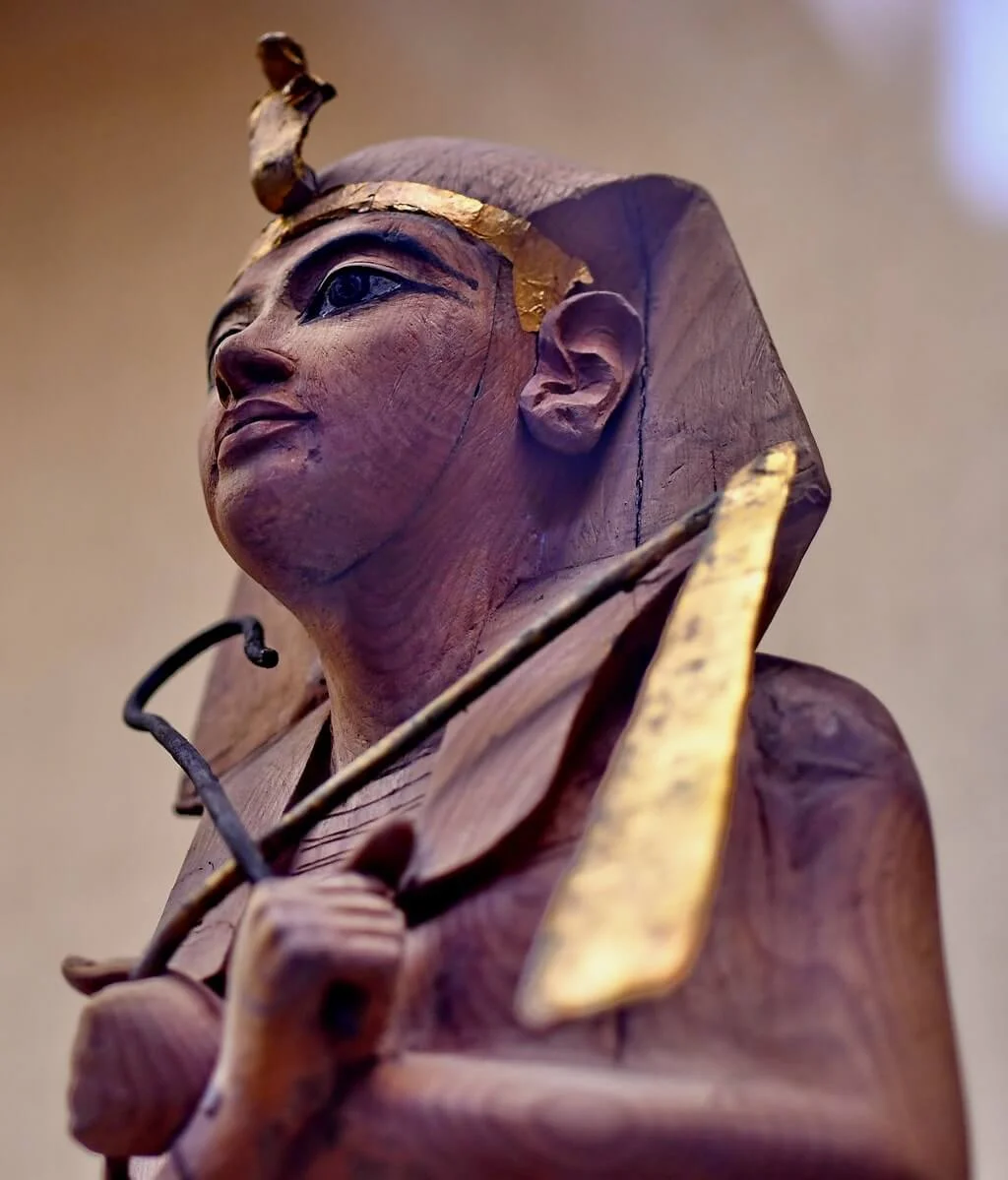
The earliest evidence of the crook and flail as royal insignia dates back to the Early Dynastic Period. Over time, they became indispensable components of the pharaoh’s regalia. Pharaohs frequently held both symbols across their chests, especially in their mummified form on sarcophagi and canopic chests. This powerful pose emphasized their continued authority even in the afterlife. We find the most famous example with Tutankhamun, whose golden sarcophagus and other funerary objects prominently feature him holding the crook and flail, which artisans crafted from gold and inlaid with blue faience.

Crowns of the Pharaohs: The Deshret, Hedjet, Pschent, and Khepresh

The Pschent, or the Double Crown of Egypt, served as the single most critical piece...
Related post
FUN

Evolution and Materials

Evolution and Materials

While the core design remained consistent, the materials and craftsmanship for the crook and flail varied over time and according to the pharaoh’s status. Early versions might have used simple wood, but artisans often exquisitely crafted royal examples. They commonly featured gold plating, lapis lazuli, faience, and other precious materials. The elaborate ornamentation reinforced the pharaoh’s divine status and the symbols’ importance. The crook might have striped patterns, while artisans could richly decorate the flail’s beads or segments, showcasing the peak of ancient Egyptian artistry.

Religious and Funerary Significance

Religious and Funerary Significance

Beyond earthly rule, the crook and flail held significant religious meaning. They were closely associated with Osiris, the god of the afterlife and resurrection. Osiris was often depicted holding these symbols, representing his dominion over the underworld and his role as the judge of the dead. By associating themselves with Osiris through these symbols, pharaohs hoped to ensure their own successful passage into the afterlife and eternal kingship. In funerary rituals, the presence of the crook and flail on a mummy or in a tomb guaranteed the deceased pharaoh’s continued power and ability to receive offerings in the realm of the dead. They were essential tools for eternal governance.

Sema-Tawy: Ancient Egyptian Symbol of Unitifaction

The Sema-Tawy is a powerful ancient Egyptian symbol that represents the unification of Upper and...
Related post
FUN

The Crook and Flail: Modern Interpretations

The Crook and Flail Modern Interpretations

Even today, the crook and flail remain powerful images that evoke the grandeur of ancient Egypt. They appear in countless books, documentaries, and museum exhibits worldwide, immediately signifying pharaonic power. While modern interpretations sometimes simplify their meaning, their historical depth reveals a sophisticated understanding of leadership that encompassed both compassionate care and firm governance. These symbols offer a window into the complex political, social, and religious beliefs that shaped one of the world’s most enduring civilizations, highlighting the careful balance ancient Egyptians sought in their rulers.

Weather in Egypt

Enjoy lavish living in the heart of Egypt's four most famous and ancient cities....
This comprehensive tour includes 2 days of sightseeing in Cairo, a day trip to Alexandria, and 5 days of exploration in Luxor and Aswan, complete...
God_Anubis_Icon
Giza pyramids Tours - Egypt Fun Tours

Thanks to egypt fun tours!

Thank u Hani for the enlightening tour of Giza and Saqqara. Thank u also for the great recommendation – Felfela – which we enjoyed a lot. returning the commission u got at the papyrus shop was something we didn’t expect and truly appreciate. shookran!

More »

Layover tour of Cairo Pyramids

On a recent trip, I had 8 hours from the time I landed in Cairo to when my next flight was scheduled to leave. Luckily, I arrived in the morning and left in the afternoon, so, not being one to sit around an airport for 8 hours, I visited the

More »
Premium Cairo Tour Package Egypt Fun Tours

THE MOST AMAZING TRIP

Hi Hamada! Sorry, we were so quick to say goodbye—my mom was fading 🙂 I just wanted to say thank you for THE MOST AMAZING trip… You thought of every detail, improvised, adapted, overcame every challenge, multitasked personalities, and did it all with grace, intelligence, and kindness. From the bottom

More »

Layover Tour in Cairo

This August, my boyfriend and I had quite a long layover in Cairo, 9 hours to be exact. Instead of wasting our time at the airport, we decided to do a layover tour of the city. I had been before, but my boyfriend hadn’t, so we wanted to hit the

More »
God_Anubis_Icon

Top-rated Tour Packages

God_Anubis_Icon