Who Built the Pyramids? The Truth About Egyptian Laborers

Forget the popular myth of slaves building the pyramids. Archaeological evidence reveals the truth: the pyramids were built by tens of thousands of skilled Egyptian citizens. This article explores the corvée system, a form of state labor where farmers worked during the Nile's flood season. We uncover their daily lives in organized workers' villages, their wages in bread and beer, and the medical care they received, proving they were a valued workforce building a monument for their god-king.

For centuries, the image of slaves hauling massive stones under the crack of a whip has dominated our imagination. Movies and stories have cemented this idea. But is it true? Who built the pyramids? The answer is far more fascinating than the myth.

Archaeological evidence and historical records paint a very different picture. The pyramids weren’t built by slaves. They were built by skilled Egyptian citizens.

Did Slaves Build the Pyramids? Debunking a Common Myth
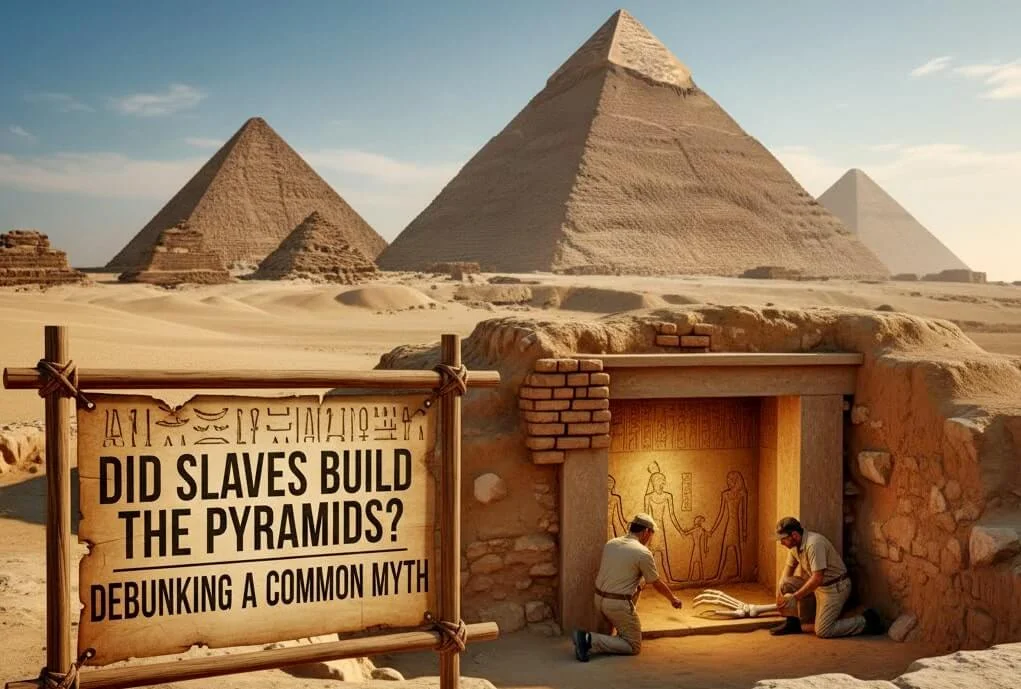
Did Slaves Build the Pyramids; Debunking a Common Myth

Let’s clear this up immediately: Historical evidence does not support the idea that slaves built the Giza pyramids. The ancient Greek historian Herodotus likely started this popular myth when he wrote about the pyramids thousands of years after their construction. Hollywood later sensationalized this story.

So, where is the proof?

Archaeologists have discovered tombs right next to the pyramids. These tombs belonged to the pyramid builders. In ancient Egypt, burial with such honor near the pharaoh was a privilege. Slaves would never have received this honor. The skeletons found show that these ancient Egyptian laborers ate well and received medical care.

FUN

So, Who Really Built the Pyramids?

The people who built the pyramids were tens of thousands of conscripted Egyptian farmers and skilled artisans. This was a national project, drawing workers from all over the kingdom.

There were two main groups:

  1. A permanent, skilled workforce: These were the master stone masons, architects, engineers, and artists who lived at the site year-round.
  2. A rotating, seasonal workforce: This larger group consisted of farmers and other laborers.

These workers were not slaves. They were conscripts, but they were respected for their work.

FUN

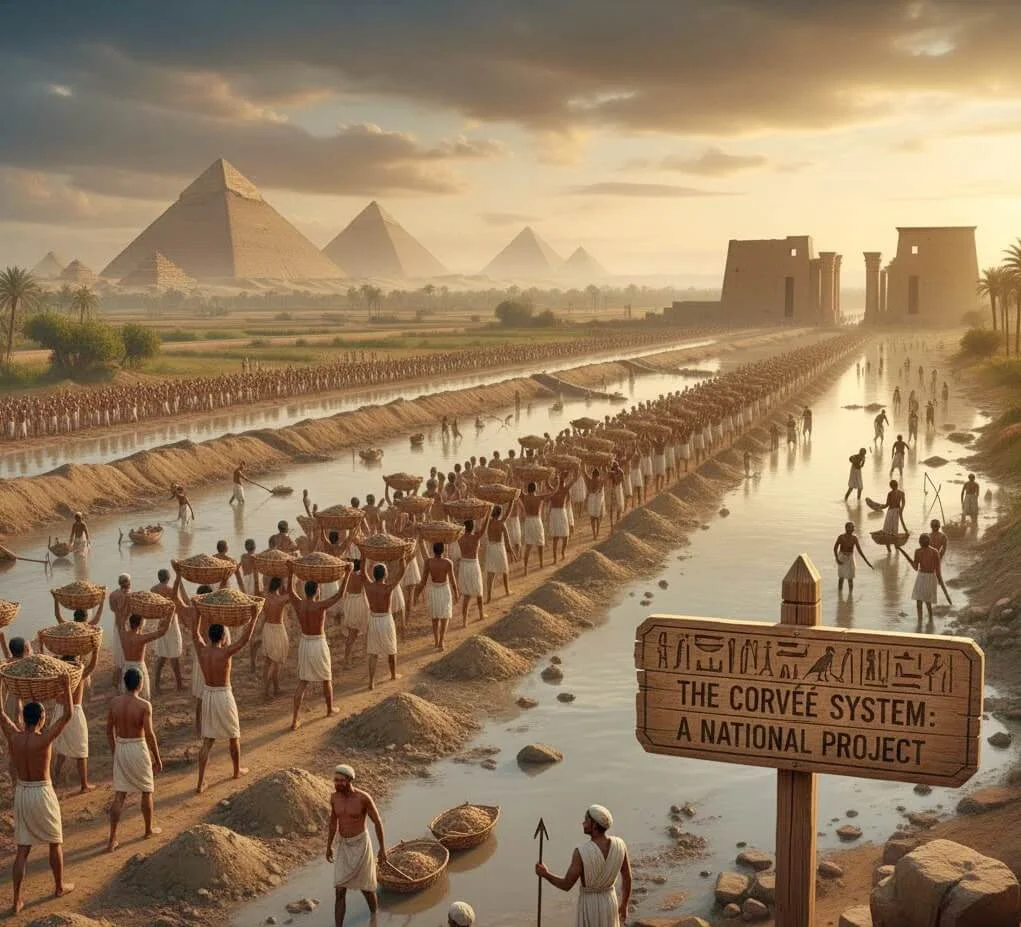
The Corvée System in Ancient Egypt: A National Project

The Corvée System in Ancient Egypt; A National Project

The pharaoh’s administration organized this massive workforce through the corvée system in ancient Egypt. This was a form of state-organized labor, essentially a tax people paid with work instead of money.

Here’s how it worked:

  • Each year, the Nile River flooded the fields (a period called Akhet). During this time, farmers couldn’t work their land.
  • The pharaoh’s administration would call upon these farmers to work on state projects, like building the pyramid, temples, or canals.
  • This system mobilized the entire country for a common goal. Egyptians considered it a civic and religious duty to build the pharaoh’s eternal home.

The Unification Battle by King Narmer

The Unification Battle by King Narmer The unification battle of King Narmer is shown on...

Related post
FUN

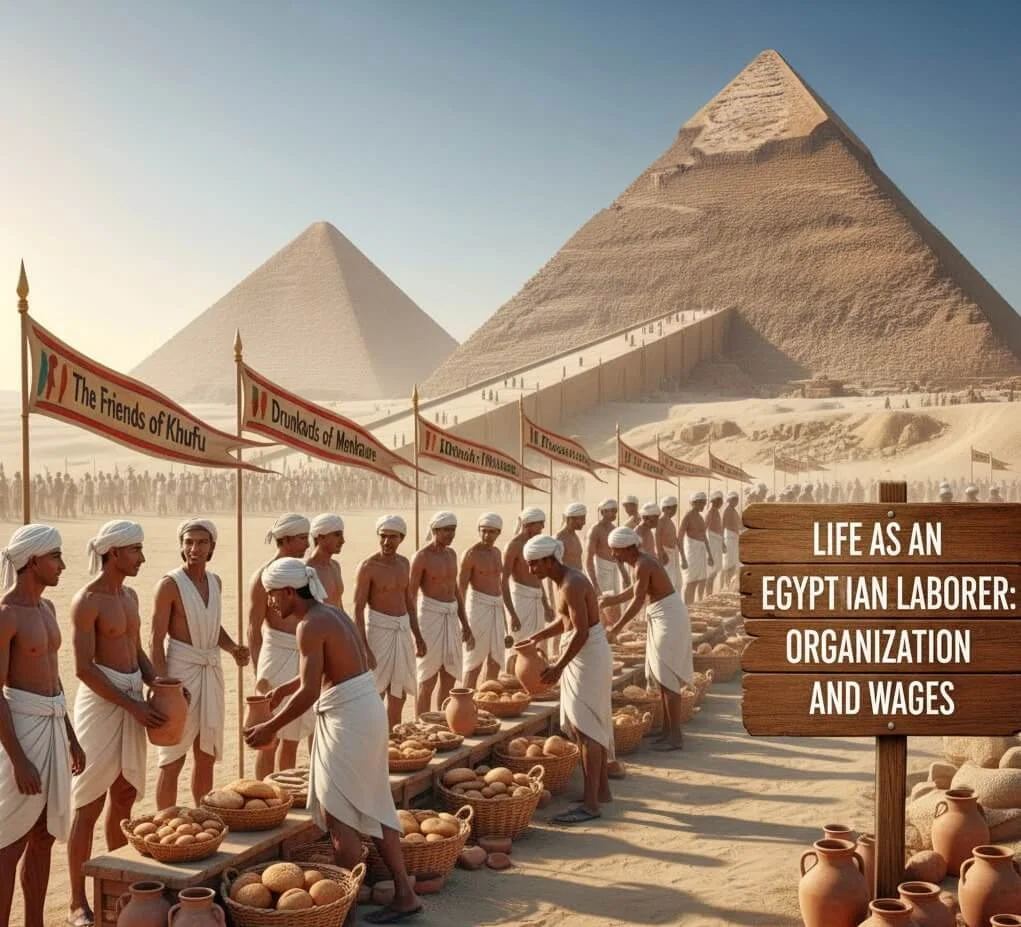
Life as an Ancient Egyptian Laborer: Organization and Wages

Life as an Ancient Egyptian Laborer; Organization and Wages

The administration highly organized these laborers. Organizers divided them into crews, or “phyles,” and further split these crews into smaller gangs. We know the names of some of these gangs from graffiti they left, such as “The Friends of Khufu” or “The Drunkards of Menkaure.”

But what did the pyramid builders receive as payment? They didn’t receive gold coins, as people had not invented money yet. Instead, they received their pyramid workers’ wages in high-quality provisions.

  • Food: They ate well. Excavations show the state supplied them with large quantities of meat (beef and goat), fish, and poultry.
  • Drink: They received daily rations of bread (a staple food) and beer. The beer was thick, nutritious, and a core part of the Egyptian diet.
  • Shelter: They lived in a dedicated settlement, which we’ll explore next.

This compensation was excellent for the time and shows the state valued them as workers, not as an expendable-slave workforce.

Queen Tuya: The Royal Matriarch of the 19th Dynasty

Queen Tuya stands as the definitive matriarch of the 19th Dynasty, serving as a vital...
Related post
FUN

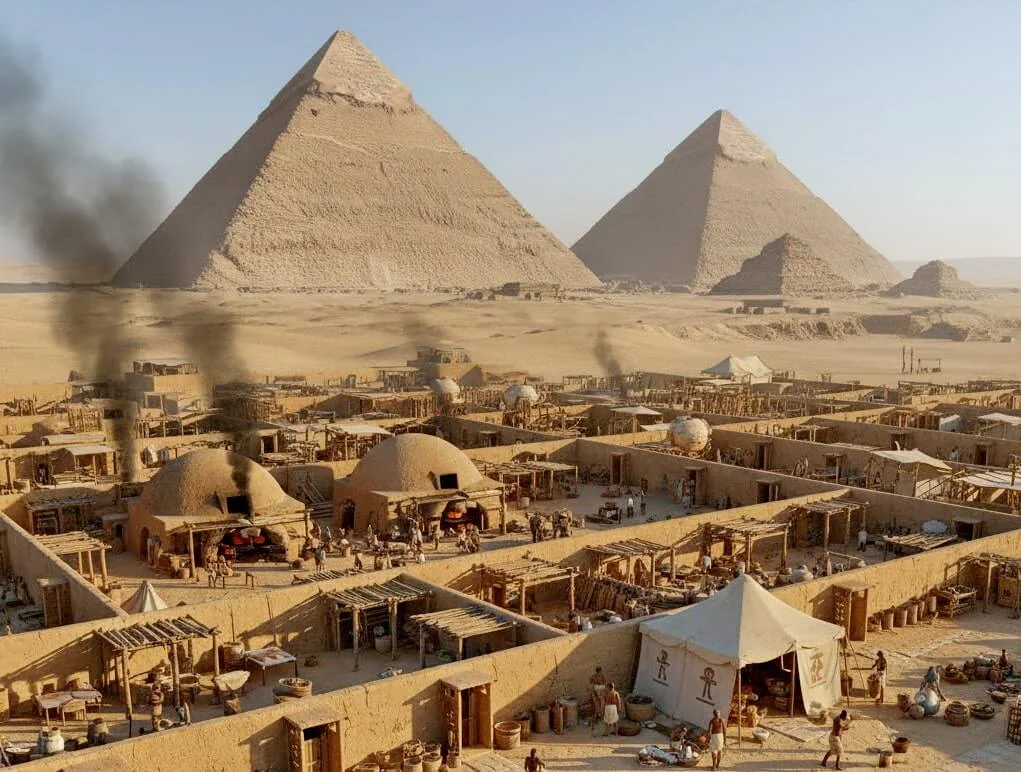
The Pyramid Workers’ Village: Home on the Giza Plateau

The Pyramid Workers' Village; Home on the Giza Plateau

In the 1990s, archaeologists discovered the remains of the pyramid workers’ village (Heit el-Ghurab). People sometimes call it the “Lost City of the Pyramid Builders.” This discovery provided incredible insight into the workers’ lives.

This wasn’t a slave camp. It was a highly organized city. Archaeologists found:

  • Barracks: Long galleries that could house rotating teams of workers.
  • Bakeries: Massive, industrial-scale bakeries capable of producing thousands of loaves of bread every day.
  • Fish Processing: Evidence of a large-scale operation to salt and prepare fish from the Nile.
  • Medical Care: Skeletons of workers show signs of healed bone fractures and even brain surgeries. This proves they received medical treatment, a clear sign of their value.

The Middle Kingdom of Egypt: The Complete History of the Classical Age

Discover the Middle Kingdom, often called Egypt’s "Classical Age" of culture and stability (c. 2055–1650...
Related post
FUN

More Than Just a Job: The Honor of Building for a God-King

Working on the pyramid was more than just one of many ancient Egyptian jobs. It was a deeply religious act. Egyptians considered the pharaoh a living god, and his pyramid was his “machine” for resurrection.

By building the pyramid, the workers believed they were helping to ensure the pharaoh’s journey to the afterlife. This, in turn, maintained ma’at—the divine order, balance, and stability of the entire universe. It was a project that guaranteed the prosperity of Egypt itself.

This was a “job” that came with national pride and a sense of sacred duty. The men who built the pyramids were building their civilization’s future and ensuring their own place in the cosmos.

8 Days Wheelchair Tour To Cairo, Nile Cruise & Hurghada...
Wonderful adventure trip to Egypt. Visit the best ancient Egyptian landmarks....
FUN
God_Anubis_Icon

Excellent Egypt Adventure – All To Ourselves

Excellent trip to historic sites with no one else around. We came to see Egypt while most places still had COVID-19 fears. The staff at Egypt Fun Tours were professional, safe, and great to deal with. Very helpful, knowledgeable, and entertaining. I feel like I just got a year of

More »

Absolutely the best

We visited Cairo over a 15-hour layover. Egypt Fun Tours organized a customized and wonderful experience for us. We could not be happier. The day included a visit to all the great sites, the marketplace, dinner, a boat ride on the Nile, and a host of other special requests. I

More »

Amazing layover Tour

We had 12 hour layover in Cairo, and our guide Hani waited patiently for us when we had a few visa issues entering the country! We got on our tour, and had the best experience ever! We saw the pyramids, the sphinx, Islamic Cairo and rode through the city! We

More »

Day trip to Wadi el Hitan and Wadi el Rayan

We went on a full-day trip to Wadi el Hitan and Wadi el Rayan with Mohamed (Hamada). Mohamed was a wonderful guide, always making sure we had plenty of water and enough to eat, and providing us with information about the area and Egypt more generally. He also gave us

More »

Islamic cairo and khan el khalili- great tour

Wonderful tour with the guide Hamada. I did not feel rushed at all. He explained a lot of facts about the city, the mosque, the water storage room, and also brought me to no-hassle shops. He picked a great place to eat and have Turkish coffee and a cold lemon

More »
God_Anubis_Icon

Top-rated Tour Packages

God_Anubis_Icon