
Daraw Camel Market: The Pulse of the Desert
The quiet town of Daraw sits on the banks of the Nile. It rests between Aswan and Kom Ombo. Here, the air carries a scent unchanged for centuries. You will smell dry hay, Nile silt, and the musk of desert animals. This is the Daraw Camel Market. It is the most visceral livestock exchange in the Middle East. This market does not cater to casual tourists. Instead, it serves as a living monument to an ancient economic system. This system still thrives today.
Daraw Camel Market: The Legacy of the Forty Days Road
For historians, Daraw represents the final stop of the Darb Al Arba’een. People know this legendary route as the “Forty Days Road.” This grueling path once spanned over a thousand miles. It crossed the inhospitable Sahara Desert. The route connected Sudan’s Darfur and Kordofan regions to the Nile Valley. Modern trucks now handle parts of the journey. However, the spirit of the trade remains fiercely traditional. Traders still measure a camel’s value with a keen eye. They judge the animal by its strength and its history.
Daraw Camel Market: A Crossroads of Culture
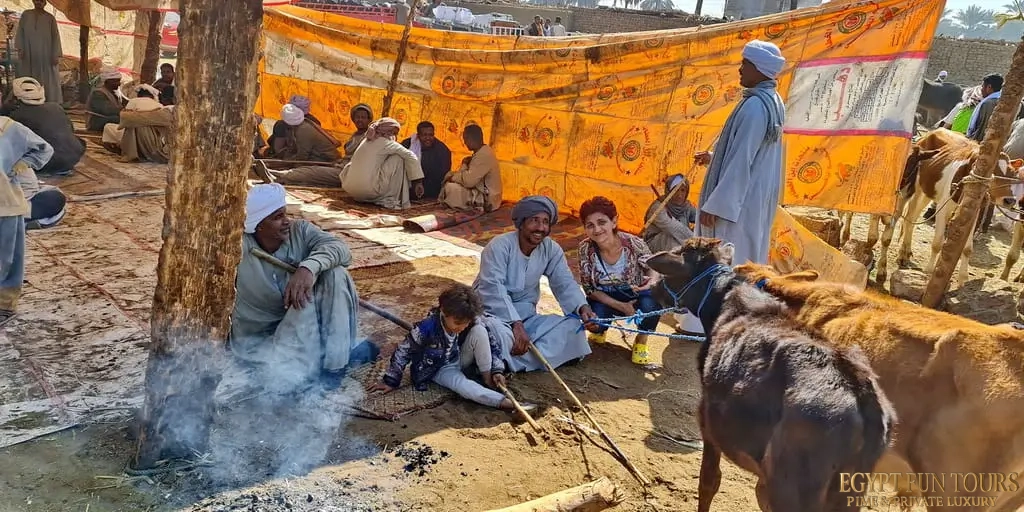
A Sunday dawn at the market reveals a masterclass in human interaction. You will hear the lowing of livestock. You will hear the rhythmic calls of auctioneers. The market acts as a cultural melting pot. Sudanese traders wear flowing white jalabeyas. They negotiate with local farmers and buyers from Cairo. These men carry the stories of the desert on their faces. Handshakes and glasses of hot tea seal every deal. Here, the “Ship of the Desert” remains the most valuable currency.
Daraw Camel Market: What This Guide Covers
This guide views the Daraw Camel Market as a cultural phenomenon. We will journey through its deep historical roots. We will also examine the logistics of moving animals across borders. Finally, we provide the practical insights you need to navigate this intense landscape. Travelers seeking the “real” Egypt will find Daraw unforgettable. It offers a raw experience far beyond the temple walls.