The Red Pyramid of Dahshur: The World’s First Successful True Pyramid

The Red Pyramid Dahshur represents the ultimate architectural triumph of King Sneferu and the Fourth Dynasty. As the world’s first successful true, smooth-sided pyramid, it corrected the structural instability seen in earlier monuments. By utilizing a consistent 43-degree angle and innovative horizontal masonry, ancient engineers created a structure that has endured for over 4,500 years. Specifically, its three massive internal chambers and soaring corbelled ceilings showcase the peak of Old Kingdom engineering. Furthermore, its unique reddish limestone core provides one of the most striking sights on the Dahshur plateau. Therefore, the Red Pyramid in Dahshur remains an essential pillar of Egyptian history and a must-visit destination for travelers.

The Triumph of the Red Pyramid

The Red Pyramid stands as a monumental success in the history of human architecture. King Sneferu commissioned this massive structure during the Fourth Dynasty of the Old Kingdom. Specifically, it is the first successful attempt to build a “true,” smooth-sided pyramid. Because previous projects faced structural challenges, this pyramid represents a breakthrough in ancient physics. Consequently, the Red Pyramid serves as the definitive blueprint for the later wonders at Giza. Therefore, it is a vital site for anyone studying the evolution of the Egyptian state.

The pyramid derives its modern name from the reddish hue of its internal limestone blocks. Originally, the structure featured a brilliant casing of white Tura limestone. Specifically, this casing made the pyramid shine like a beacon in the desert sun. However, local builders stripped the outer stone during the Middle Ages to build Cairo. Consequently, the “rusty” core of the Red Pyramid became visible to the world. For this reason, the monument possesses a unique color that distinguishes it from the golden sands of the Dahshur plateau.

The Red Pyramid: A Legacy of Engineering Excellence

The Red Pyramid is the third-largest pyramid in Egypt. It is surpassed only by the Great Pyramid and the Pyramid of Khafre at Giza. Specifically, its base measures approximately 220 meters on each side. This massive scale reflects the immense power and resources of King Sneferu’s reign. Furthermore, the builders chose a shallow angle of 43 degrees for the slopes. This decision was a direct reaction to the instability of the earlier Bent Pyramid. Consequently, the Red Pyramid achieved a level of stability that allowed it to endure for over 4,500 years.

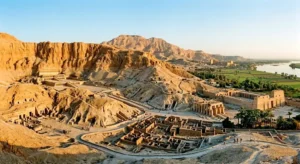
For travelers in 2026, the site offers a rare and quiet experience. Unlike the crowded Giza plateau, Dahshur remains peaceful and contemplative. Specifically, visitors can explore the massive base and internal chambers without the pressure of large tour groups. This allows for a deeper connection to the history of the Old Kingdom. Furthermore, the surrounding landscape provides stunning views of the nearby Bent Pyramid. Therefore, the Red Pyramid is more than a historical site. It is a testament to the perseverance of a civilization that refused to fail.

The eye of Horus

The Engineering of Perfection: Why 43 Degrees?

The Engineering of Perfection Why 43 Degrees

The design of the Red Pyramid is a direct response to the structural lessons learned at the nearby Bent Pyramid. Specifically, the architects realized that a steep slope created too much internal pressure on the core. Because the lower section of the Bent Pyramid featured a 54-degree angle, it began to show signs of cracking during construction. Consequently, for the Red Pyramid, the builders chose a consistent 43-degree angle from the base to the summit. This shallow slope ensures that the weight of the limestone blocks is distributed more evenly across the foundation. Therefore, the structure achieved a level of permanence that redefined Egyptian tomb building.

This 43-degree angle was not an arbitrary choice. Specifically, it matches the reduced angle used to finish the top half of the Bent Pyramid. Architects realized that this “lower” slope was the threshold for structural safety on the soft Dahshur plateau. Furthermore, the builders shifted the way they laid the internal masonry. Instead of leaning the stones inward in accretion layers, they laid them in stable horizontal courses. Consequently, the Red Pyramid does not suffer from the same internal stresses as the Meidum Pyramid. For this reason, it remains the most structurally sound monument of the Fourth Dynasty.

The Red Pyramid: Foundation Stability and Massive Scale

The Red Pyramid Foundation Stability and Massive Scale

The scale of the Red Pyramid required a massive limestone foundation to prevent sinking. Specifically, the base covers an area of roughly 53,000 square meters. This large surface area allows the weight of millions of tons of stone to rest safely on the desert floor. Because the builders prioritized stability, they were able to reach a total height of 105 meters. Consequently, it was the tallest artificial structure in the world at the time of its completion. Moreover, the precision of the base alignment shows an incredible understanding of geometry. Specifically, each side is nearly identical in length, with only minimal variations.

  • Angle of Inclination: A consistent 43 degrees for maximum safety.
  • Horizontal Masonry: Stones laid flat to prevent outward sliding.
  • Base Dimensions: Approximately 220 meters per side.
  • Total Height: 105 meters (344 feet).

Therefore, the Red Pyramid represents the transition from experimental architecture to mastered engineering. It proved that a smooth-sided pyramid was not only possible but sustainable. Furthermore, the success of this project gave the royal court the confidence to attempt even larger structures. For this reason, the engineering of the Red Pyramid is the direct ancestor of the Great Pyramid of Khufu. By mastering the 43-degree slope, Sneferu’s builders conquered the sky.

The Red Pyramid: Strategic Material Selection

The Red Pyramid Strategic Material Selection

The material used in the Red Pyramid contributed significantly to its longevity. Specifically, the core consists of local reddish-brown limestone quarried from the Dahshur plateau. This stone is exceptionally hard and resistant to the elements. Because the builders used massive blocks for the lower tiers, the structure remains immovable. Furthermore, the original white Tura limestone casing provided a protective “skin” for the core. Consequently, the pyramid was protected from wind and sand erosion for millennia. Even though most of the casing is gone today, the core remains sharp and well-defined.

Therefore, the choice of materials was just as important as the choice of angle. The builders understood that the quality of the stone must match the ambition of the design. Specifically, the use of high-quality local limestone reduced the logistical strain on the workforce. For this reason, the Red Pyramid was completed relatively quickly compared to earlier projects. As travelers in 2026 examine the blocks, they can still see the chisel marks left by these ancient masons. This connection to the raw labor and logic of the past makes the site an unparalleled historical archive.

Golden Scarab

The Crimson Stone: The Materials of the Red Pyramid Dahshur

The Crimson Stone The Materials of the Red Pyramid Dahshur

The Red Pyramid is famous for its unique iron-rich limestone core. Specifically, the stone comes from local quarries located right on the Dahshur plateau. Because the stone contains high levels of iron oxide, it takes on a distinct reddish or “rusty” hue. Consequently, the monument stands out sharply against the golden desert background. However, it is important to remember that this was not the pyramid’s original appearance. For thousands of years, the Red Pyramid looked almost identical to the Great Pyramid of Giza.

Originally, a thick layer of white Tura limestone covered the entire structure. Specifically, this high-quality stone was brought across the Nile from quarries on the eastern bank. Because the Tura limestone was smooth and bright, the pyramid would have glowed with a brilliant white light. Furthermore, the casing stones were fitted together with such precision that the joints were nearly invisible. However, during the Middle Ages, many of these stones were removed to build the city of Cairo. Consequently, the reddish core was exposed to the world. For this reason, we now call it the “Red Pyramid,” though King Sneferu likely knew it as the “Shining One.”

Journey to the Core: The Three Magnificent Chambers

Journey to the Core The Three Magnificent Chambers

The interior of the Red Pyramid is one of the most accessible and impressive in all of Egypt. Specifically, the entrance is located on the north face, approximately 28 meters above the ground. From there, a long, narrow passage descends nearly 60 meters into the heart of the mountain of stone. Because the shaft is steep, visitors must move slowly and carefully. Consequently, the journey into the pyramid feels like a descent into another world. Therefore, the Red Pyramid offers an immersive experience that few other sites can match.

At the bottom of the shaft, you enter a series of three spectacular chambers.

  1. The First Antechamber: This room features a massive corbelled ceiling that reaches 12 meters in height.
  2. The Second Antechamber: Located directly under the center of the pyramid, this room mirrors the first. It is here that the scale of the construction truly becomes clear.
  3. The Burial Chamber: Accessible via a wooden staircase, this final room sits higher than the others. Specifically, it features a ceiling that rises 15 meters above the floor.

Because the architects used corbelled ceilings, they were able to create these high, open spaces without the risk of collapse. Each layer of stone sits slightly inward, distributing the weight of the pyramid outward. Furthermore, the air inside these rooms remains surprisingly cool, even in the heat of the Egyptian summer. For this reason, the Red Pyramid is a favorite for travelers who want to see the “bones” of ancient architecture. By standing in the final chamber, you are standing in the very place where the concept of the royal tomb was perfected.

The Rare Pyramidion and the External Landscape

The Rare Pyramidion and the External Landscape

Outside the Red Pyramid, archaeologists made a remarkable discovery in the 1980s. Specifically, they found the fragments of the original pyramidion, or capstone. This is the oldest pyramidion ever found in Egypt. Because it was found in pieces, experts have carefully reconstructed it near the base of the structure. Consequently, you can see the exact angle and scale of the very top of the pyramid. This offers a rare perspective that you cannot find at Giza or Saqqara.

Furthermore, the surrounding area includes the remains of a mortuary temple. Specifically, this temple was located on the eastern side of the pyramid. While much of it is now in ruins, it still shows the layout of the royal funerary cult. Because the site is so open, you can clearly see the relationship between the pyramid, the temple, and the nearby causeway. Therefore, the Red Pyramid is more than just a tomb. It is part of a complex religious landscape designed to ensure the king’s eternal life. For the 2026 traveler, walking around the base provides a true sense of the massive labor involved in its creation.

The Egyptian Pyramids: A Complete Guide to the Ancient Wonders

This definitive guide covers the complete story of the Egyptian pyramids. We explore their true...
Related post
The eye of Horus

The Cult of Sneferu: The Mortuary Temple and Religious Life

The Red Pyramid was the center of a thriving religious community. Specifically, the site included a Mortuary Temple located on the eastern face of the pyramid. While only ruins remain today, this temple was essential for the king’s afterlife. Because the ancient Egyptians believed the soul required constant nourishment, priests performed daily rituals here. Consequently, the Red Pyramid was a place of active worship for centuries after Sneferu’s death. Therefore, the site serves as a record of the complex funerary cults of the Fourth Dynasty.

The temple featured several key architectural elements.

  • The Offering Hall: Where food and drink were presented to the king’s spirit.
  • The False Door: A symbolic portal that allowed the king’s ka to move between worlds.
  • The Courtyard: A space for public ceremonies and royal anniversaries.

Furthermore, the Red Pyramid was originally named “Sneferu Shines in the North.” This name highlights the king’s divine status and his connection to the sun god, Ra. Because Sneferu was one of the most beloved pharaohs in history, his cult lasted much longer than those of other kings. Specifically, records show that people were still making pilgrimages to the Red Pyramid during the Middle Kingdom. Consequently, the monument remained a symbol of royal perfection for nearly a thousand years.

The Step Pyramid Complex: A Revolution in Stone

The Step Pyramid Complex of King Djoser, built around 2670 BCE by the architect Imhotep,...
Related post
Golden Scarab

Traveler’s Blueprint: Navigating Dahshur Today

Traveler’s Blueprint Navigating Dahshur Today

For travelers, visiting the Red Pyramid is a rewarding experience. Because the site is about 40 kilometers south of Cairo, it is best visited as a half-day trip. Specifically, most visitors combine Dahshur with a visit to the nearby Saqqara Necropolis. Consequently, you can see the entire history of pyramid building in a single day. Furthermore, the 2026 visitor infrastructure has improved, offering smoother access and clearer signage across the plateau.

The Red Pyramid: Essential Travel Logistics

  • Ticket Prices: As of 2026, the general admission for Dahshur is 200 EGP. Specifically, this ticket covers both the Red and Bent pyramids.
  • Opening Hours: The site is open daily from 8:00 AM to 5:00 PM. We recommend arriving early to avoid the midday sun.
  • Transportation: Hire a private driver from October Gardens or Cairo. Because ride-share apps can be unreliable in remote desert areas, a pre-arranged car is the safest choice.
  • Cashless Payments: Please note that many major archaeological sites in Egypt now prioritize credit or debit cards for ticket purchases. Therefore, ensure your payment method is ready before arrival.

Physical Demands: Entering the Crimson Core

Physical Demands Entering the Crimson Core

Entering the Red Pyramid is a physical challenge. Specifically, the entrance is 28 meters up the side of the pyramid. From there, you must descend a 61-meter passage that is only 1.2 meters high. Because the tunnel is steep and narrow, it is not recommended for those with mobility issues or claustrophobia. However, the reward at the bottom is unparalleled. The three massive corbelled chambers offer a sense of scale and silence that you cannot find anywhere else in the world.

For the best experience in 2026, wear comfortable, closed-toe shoes with good grip. Specifically, the wooden ramps inside the pyramid can be slippery due to fine desert dust. Furthermore, bring a small bottle of water, as the climb back up the tunnel can be strenuous. Consequently, the Red Pyramid is a destination for the truly adventurous traveler. By reaching the burial chamber, you are walking in the footsteps of the architects who changed the course of human history.

The White Pyramid of Amenemhat II: A Middle Kingdom Revival

Amenemhat II, a ruler of the 12th Dynasty, broke with the precedent set by his...
Related post
The eye of Horus

Historical Comparison: The Red Pyramid vs. The Great Pyramid

The Red Pyramid and the Great Pyramid of Giza are the two most important structures in the history of civil engineering. While the Great Pyramid is more famous, it could not have been built without the lessons learned at Dahshur. Specifically, King Sneferu’s Red Pyramid served as the essential “test case” for his son, Khufu. Because the Red Pyramid successfully utilized a smooth-sided design, it provided the structural confidence needed for the larger Giza projects. Consequently, historians view the Red Pyramid as the intellectual predecessor to the Giza plateau. Therefore, to understand Giza, one must first study the stones of Dahshur.

Comparison of Geometry and Slope

The most striking difference between the two structures is their angle of inclination.

  • The Red Pyramid: Features a shallow angle of 43 degrees. Specifically, this was a “safety angle” chosen to prevent the structural collapse seen in earlier attempts.
  • The Great Pyramid of Giza: Features a steeper angle of 51 degrees. Because the builders had mastered internal weight distribution at Dahshur, they felt confident enough to return to a steeper, more towering slope.

Consequently, the Red Pyramid appears “squat” or wide compared to the Great Pyramid. However, this wider base was a deliberate engineering choice that ensured the structure’s survival for over 4,500 years. Furthermore, both pyramids were originally encased in the same Tura limestone. Specifically, they both once functioned as massive solar reflectors that could be seen from miles away. Therefore, while their shapes differ, their intended visual impact was nearly identical.

Internal Innovation: Corbelled Chambers vs. Granite Slabs

The internal architecture of the Red Pyramid represents the peak of the “Corbelled Era.” Specifically, the three chambers inside the Red Pyramid use limestone layers that step inward to support the massive weight above. This technique was perfected at Dahshur and remains a marvel of the Fourth Dynasty. Because the corbelling was so successful, it allowed for vertical heights of up to 15 meters. Consequently, the Red Pyramid’s internal rooms are some of the most soaring spaces in the ancient world.

In contrast, the Great Pyramid at Giza introduced the use of massive granite beams for its “King’s Chamber.” Specifically, Khufu’s builders moved away from limestone corbelling for the main burial room, opting instead for a flat ceiling made of 50-ton granite slabs.

  1. Dahshur Strategy: Relied on the geometry of corbelling to divert pressure.
  2. Giza Strategy: Relied on the sheer strength of imported Aswan granite and “relieving chambers” to manage the weight.

However, the Great Pyramid still utilized corbelling for its famous “Grand Gallery.” Specifically, this passage is a direct, larger-scale evolution of the corbelled tunnels found in the Red Pyramid. Therefore, the DNA of Dahshur is present in every hallway of Giza. Moreover, the transition from the limestone-only construction of the Red Pyramid to the multi-material engineering of Giza shows the rapid growth of Egyptian technology. By comparing these two sites, you witness a civilization moving from trial-and-error to absolute mastery.

The Father and the Son: A Dynasty of Builders

The relationship between the Red Pyramid and the Giza pyramids is also a story of family legacy. King Sneferu, the builder of the Red Pyramid, was the father of Khufu. Specifically, Sneferu is credited with moving more stone than any other pharaoh in history. Because he built three major pyramids (Meidum, Bent, and Red), he provided a “training ground” for the architects who would eventually work for his son. Consequently, the workforce that built the Great Pyramid was already highly skilled thanks to the projects at Dahshur.

Furthermore, the administrative organization required for the Red Pyramid set the standard for Giza.

  • Logistics: Sneferu established the supply lines for Tura limestone and cedar wood.
  • Workforce: He organized the massive labor teams during the Nile flood season.
  • Site Management: He pioneered the use of causeways and valley temples as part of a unified complex.

For the traveler in 2026, seeing the Red Pyramid first provides the necessary context to appreciate Giza. It allows you to see the “prototype” before the “final product.” Specifically, the quiet atmosphere of Dahshur allows you to examine the masonry and joinery without the distractions of the Giza crowds. Therefore, the historical comparison is not just about size or height. It is about the human journey of learning, adapting, and ultimately reaching for the stars.


God_Anubis_Icon

Goes well beyond “tour”

I am tempted to say “my friend Hani” runs an amazing service, because that is how he makes you feel. I first went on the 9-hour layover tour in summer 2011. Hani and driver picked me up at the airport at 3am, and by the time I left at noon

More »

Very Considerate and Helpful

Guide and driver were on time, open to my requests and took care that I felt safe and saw the Pyramids and parts of old cairo during my less than 24 hour stay between flights. Office staff were great in communicating by email before and during the trip.

More »

AMAZING TOUR, SOLO TRAVELER.

I am a California woman who traveled to Egypt alone, and thanks to Egypt Fun Tours, I had a great time. Hani, Mohammed, Kamal, and David (my driver) were very professional and very knowledgeable. I appreciate how respectful they were and how protective they were of me. They showed me

More »

Layover tour of Cairo Pyramids

On a recent trip, I had 8 hours from the time I landed in Cairo to when my next flight was scheduled to leave. Luckily, I arrived in the morning and left in the afternoon, so, not being one to sit around an airport for 8 hours, I visited the

More »

Layover Tour in Cairo

This August, my boyfriend and I had quite a long layover in Cairo, 9 hours to be exact. Instead of wasting our time at the airport, we decided to do a layover tour of the city. I had been before, but my boyfriend hadn’t, so we wanted to hit the

More »
God_Anubis_Icon

Top-rated Tour Packages

God_Anubis_Icon