The Oracle Temple of Siwa: Alexander the Great & Ancient Prophecies

The Oracle Temple of Siwa, perched atop the ancient ruins of Aghurmi village, stands as one of the most enigmatic and historically charged sites in Egypt’s Western Desert. Renowned in antiquity for the prophetic power of its priests, the temple served as a vital spiritual and political nexus where Egyptian, Libyan, and Hellenistic traditions converged. Most famously, it was the site of Alexander the Great’s historic pilgrimage in 331 BCE—a pivotal journey that culminated in his proclamation as the "son of Amun," forever altering his imperial destiny. Today, the enduring limestone remnants of this sanctuary offer a profound glimpse into a world where kings braved the treacherous Sahara to seek divine truth, marking the site as a timeless monument to the intersection of ancient faith and political ambition.

Perched atop the craggy ruins of Aghurmi village, the Oracle Temple of Siwa stands as a silent witness to the rise and fall of empires. In the ancient world, it was more than just a sanctuary; it was a beacon of truth. Kings, conquerors, and commoners braved the lethal, shifting sands of the Sahara to hear the voice of the god Amun.

From the ambitious pilgrims of the 26th Dynasty to the legendary arrival of Alexander the Great in 331 BCE, this remote temple shaped the destiny of the Mediterranean. Today, exploring the remains of the Oracle Temple offers a unique journey into the intersection of faith, politics, and the enduring mystery of the Siwan desert. This guide explores the history, the legend, and the lasting legacy of one of antiquity’s most important sites.

FUN

Unveiling the Oracle Temple of Siwa: History and Purpose

Unveiling the Oracle Temple of Siwa History and Purpose

To truly understand the Oracle Temple of Siwa, you must look beyond its crumbling stone walls. You must imagine it as the spiritual epicenter of the ancient Mediterranean world. While many temples served local needs, this site functioned as a global authority. Kings and conquerors traveled across hundreds of miles of unforgiving desert terrain just to hear the divine voice of Amun.

The Origins of the Oracle Temple in Siwa

Historical records suggest the temple emerged during the 26th Dynasty (c. 664–525 BCE). During this era, Egypt sought to project power and religious legitimacy deep into the Western Desert. By building a sanctuary in this isolated oasis, the ruling elite established a permanent Egyptian presence.

However, the site quickly transcended its Egyptian roots. It became a unique melting pot of cultures. Libyan, Egyptian, and later Greek traditions merged here, creating a distinct religious identity. This synthesis transformed the temple into a pilgrimage destination that bridged different civilizations.

Why the Ancient World Valued the Oracle Temple in Siwa

The reputation of the Oracle Temple of Siwa rested on its perceived ability to predict the future. Unlike smaller shrines, this temple was believed to house a direct line to the divine. Ancient leaders faced constant uncertainty regarding war, politics, and state succession. Consequently, they viewed the “truth” provided by the temple’s priests as an essential tool for governance.

The temple acted as a political barometer for the region. If you held the favor of the Oracle, you held the favor of the gods—and by extension, the loyalty of your subjects. This immense influence ensured that the temple remained relevant for centuries, serving as a silent arbiter for some of history’s most powerful figures. Even as empires rose and fell across the Nile Valley, the desert silence of Siwa remained a constant, powerful constant for those seeking absolute guidance.

FUN

Architecture and Layout of the Oracle Temple of Siwa

Architecture and Layout of the Oracle Temple of Siwa

The structural design of the Oracle Temple of Siwa reflects the ingenuity of ancient builders working in a remote desert environment. While centuries of erosion have claimed much of the original facade, the remaining ruins still reveal a sophisticated layout. This architecture was not merely for shelter; it was designed to facilitate the sacred rituals performed by the temple’s priests.

Defining the Oracle Temple of Siwa Layout

The temple follows a traditional layout found in many ancient Egyptian sanctuaries, yet it integrates unique local elements. Its primary components include:

  • The Outer Courtyard: This served as the public gathering area. Pilgrims would wait here, catching their first glimpse of the massive stone walls that signaled their arrival at the sacred destination.
  • The Pillared Hall: As you move deeper, the structure narrows. Here, large limestone pillars supported the ceiling, creating an atmosphere of overwhelming weight and solemnity. The architecture was designed to humble visitors, signaling their transition from the mundane desert into a space of divine presence.
  • The Inner Sanctum: This was the most restricted area of the Oracle Temple of Siwa. Only the high priests could enter this chamber. It was here that the god Amun supposedly spoke. The thick limestone walls provided acoustic isolation, ensuring that the priests’ voices—acting as the vessel for the god—remained mysterious and amplified.

Structural Integrity in the Sahara

Builders constructed the temple primarily from local limestone. This choice was both practical and symbolic. Practically, the abundance of local stone reduced the need to transport materials across the vast, dangerous desert. Symbolically, it grounded the temple in the very earth of the Siwa Oasis, suggesting that the divine power of the oracle was rooted in the landscape itself.

The walls were built with incredible precision to withstand the harsh environmental conditions of the Sahara. Despite the persistent threat of wind erosion and the occasional sandstorm, the core structure has survived for over 2,500 years. This architectural resilience further bolstered the site’s reputation in antiquity; the fact that the temple stood firm against the elements was often interpreted by ancient travelers as a sign of divine favor.

Why the Oracle Temple of Siwa Architecture Mattered

The temple’s layout performed a psychological function. By moving through a series of increasingly restricted spaces, the visitor underwent a process of purification. The physical journey into the heart of the temple mirrored the spiritual quest for answers. This mastery of spatial design ensured that by the time a person reached the inner sanctum, they were primed to accept the oracle’s prophecy as an absolute, undeniable truth.

Queen Hatshepsut’s Temple: The Dazzling Masterpiece of Egypt’s Female Pharaoh

Visit the Mortuary Temple of Queen Hatshepsut, a stunning three-tiered masterpiece carved into the cliffs...
Related post
FUN

Alexander the Great and the Oracle Temple of Siwa: A Legendary Encounter

Alexander the Great in Siwa, A Legendary Encounter

In 331 BCE, Alexander the Great embarked on a perilous journey that cemented the reputation of the Oracle Temple of Siwa forever. After conquering Egypt, the young king sought more than mere land; he craved divine validation. Consequently, he led his army across hundreds of miles of blistering, treacherous desert to consult the gods.

The Mythic Journey to the Oracle Temple of Siwa

Ancient historians recount the trek as a miracle. For instance, when the army lost its path in the shifting dunes, it reportedly received guidance from divine forces. Some accounts claim two ravens flew ahead to mark the route, while others suggest the desert snakes themselves revealed the way. Regardless of the specific legend, the army arrived at the Siwa Oasis exhausted but resolute. Undoubtedly, the extreme isolation of the site added to the dramatic intensity of the encounter.

The Divine Verdict at the Oracle Temple of Siwa

Upon reaching the temple, Alexander entered the inner sanctum alone. At this pivotal moment, the high priest of the Oracle Temple of Siwa addressed him. While no living soul heard the exact words spoken within those stone walls, the outcome changed history. The priest proclaimed Alexander the “son of Amun.”

By doing so, the oracle provided the Macedonian king with the ultimate political tool: divine legitimacy. Previously, Alexander had to justify his rule through conquest. Now, he possessed the mandate of the gods. Furthermore, he began to adopt the iconography of Amun, often appearing in art with the god’s characteristic ram’s horns. Clearly, the oracle’s words transformed him from a human conqueror into a living deity in the eyes of his subjects.

The Lasting Impact on the Oracle Temple of Siwa

This single visit elevated the temple’s status across the Mediterranean. As a result, the Oracle Temple of Siwa became a mandatory stop for leaders who followed in Alexander’s footsteps. Essentially, the temple served as the final arbiter of power for centuries. Because Alexander found his truth in the desert, every subsequent ruler hoped to replicate his success. Thus, the temple evolved from a local sanctuary into a cornerstone of ancient geopolitics.

The Temple of Dush: The Roman Fortress and Hidden Gold of Ancient Kysis

The Temple of Dush (ancient Kysis) stands as a mighty Roman frontier outpost at the...
Related post
FUN

Mythology and Worship at the Oracle Temple of Siwa

Mythology and Worship at the Oracle Temple of Siwa

The Oracle Temple of Siwa functioned as a profound intersection where different cultures synthesized their spiritual beliefs. In particular, the worship of Amun-Zeus defined the religious identity of the site. Over time, this fusion of Egyptian and Greek theology transformed the temple into one of the most significant hubs of antiquity.

The Syncretism of Amun-Zeus

The ancient inhabitants of the Siwa Oasis identified the Egyptian god Amun with the Greek god Zeus. Consequently, pilgrims viewed the Oracle Temple of Siwa as a place where both deities spoke with a single voice. By merging these two powerful entities, the priests created a universal god who appealed to diverse travelers. Furthermore, this theological bridge enabled the temple to maintain its relevance even as power shifted from Egyptian pharaohs to Greek and Roman rulers.

The Prophetic Rites at the Oracle Temple of Siwa

The priests performed highly specific rituals to channel the divine message. Typically, the process involved elaborate ceremonies designed to heighten the sense of mystery. First, the priests bathed the cult statue of the god. Then, they placed the statue into a golden boat, which they carried in a solemn procession through the temple. During these moments, the priests interpreted the movements or “signals” of the boat as the literal answer from the god.

Undoubtedly, this process relied heavily on the priests’ interpretation. Because the average pilgrim could not understand the technical nuances of the ritual, they relied entirely on the high priest’s explanation. In this way, the priests maintained complete control over the “truth” that emerged from the Oracle Temple of Siwa.

The Spiritual Significance of the Sahara

The desert environment played a vital role in the worship experience. Essentially, the isolation of the oasis forced pilgrims to detach from their daily lives. As they traveled through the silent, empty landscape, their anticipation built steadily. Once they finally reached the temple, their physical and mental state made them highly receptive to any prophecy. Therefore, the landscape itself acted as a catalyst for belief. Simply put, the geography of the Siwa Oasis amplified the perceived power of the Oracle, making every prophecy seem not just plausible, but inevitable.

Colossi of Memnon: The Giant Guardians of Luxor’s West Bank

Make your first stop on the Luxor West Bank at the Colossi of Memnon. These...
Related post
FUN

The Decline and Eventual Silence of the Oracle Temple of Siwa

The Decline and Eventual Silence of Amun

Every great institution eventually faces a moment of obsolescence. Similarly, the Oracle Temple of Siwa did not vanish overnight; instead, it experienced a slow, centuries-long decline. As the political landscape of the Mediterranean shifted, the temple’s influence began to wane, eventually leaving it to the mercy of time and the desert winds.

The Shift in Global Power

Initially, the rise of the Roman Empire altered the geopolitical significance of the oasis. Although early Roman leaders still sought divine counsel, the centralized power of Rome eventually deemed local oracles a potential threat to their authority. Moreover, the spread of new religious ideologies further marginalized the traditional worship of Amun-Zeus. As a consequence, the stream of powerful pilgrims—once a constant flow—dwindled into a mere trickle.

Environmental and Structural Challenges

The harsh desert environment also took its toll. Over the centuries, earthquakes and the constant erosion of limestone weakened the temple’s structural integrity. Additionally, the abandonment of the surrounding village of Aghurmi meant that maintenance crews no longer repaired the site. Because the temple lacked active protection, the desert slowly reclaimed the space. In effect, the shifting sands effectively buried parts of the sanctuary, shielding it from further human damage but also accelerating its decay.

The Final Silence

Eventually, the temple fell completely into silence. The arrival of new faiths in the region fundamentally transformed the spiritual identity of Siwa. By the medieval period, the once-revered sanctuary existed only in local folklore and historical texts. Nevertheless, this period of neglect proved vital for preservation. Because no one occupied the site for centuries, the ruins remained largely untouched by modern construction or large-scale pillaging. Today, the Oracle Temple of Siwa stands as a rare, authentic window into the ancient world. It survives not as a functioning center of prophecy, but as a poignant monument to the enduring human need for answers in a vast, uncertain world.

Visiting the Oracle Temple of Siwa: A Practical Guide for Modern Travelers

Exploring the Oracle Temple of Siwa today requires more than just a map; it requires a sense of adventure. Because the site remains somewhat remote compared to Egypt’s mainstream tourist hubs, you must plan your visit carefully to fully appreciate its historical significance.

Planning Your Visit to the Oracle Temple of Siwa

First, reach out to a local guide. Since the temple is located in the ancient village of Aghurmi, local knowledge is invaluable. Not only will a guide help you navigate the winding paths of the old mud-brick village, but they will also provide context that you cannot find in any guidebook. Furthermore, they can help you coordinate transport, as the trek up to the temple ruins involves uneven, sandy terrain.

The Best Time to Explore the Oracle Temple

Undoubtedly, you should time your visit during the cooler months, specifically between October and April. During these months, the desert sun remains manageable, allowing you to climb the hill to the Oracle Temple of Siwa without suffering from extreme heat exhaustion. Alternatively, if you prefer a more dramatic experience, try to visit during the “golden hour.” As the sun sets, the limestone ruins take on a stunning, fiery glow, which offers perfect conditions for photography and quiet contemplation.

Essential Tips for Your Journey

  • Respect Local Customs: The Oracle Temple of Siwa sits within an area with a deep, conservative culture. Therefore, dress modestly and always ask for permission before taking photographs of residents in the village of Aghurmi.
  • Carry Sufficient Supplies: You will find limited amenities on the hill itself. Consequently, pack plenty of water and wear sturdy walking shoes. Although the climb is relatively short, the ground is loose, so comfort is key.
  • Practice “Leave No Trace”: As a final point, please help preserve this site for future generations. Because the ruins are fragile, do not climb on the walls or remove any fragments of stone.

Why the Experience Matters

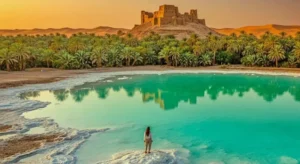
Ultimately, walking through the ruins of the Oracle Temple of Siwa offers a rare connection to the past. While the grandeur of the ancient world is often lost to time, you can still feel the weight of history here. Standing where Alexander the Great once stood, looking out over the vast expanse of the palm-fringed oasis, you will understand exactly why this site commanded the respect of the world’s greatest leaders. By visiting this location, you are not just seeing a ruin; you are participating in a tradition of pilgrimage that stretches back over two millennia.


FUN
God_Anubis_Icon

Alexandria! Wow!

Muhammad is the best! He showed me a world I never thought possible! The tombs in Alexandria, by far, were my favorite! I never knew there was a place on earth that contained both Greek and Egyptian carvings in the same tombs! The history and culture of Egypt is so

More »
Souqs and Markets in Egypt - Egypt Fun Tours

Cairo walking tours

After a rocky start (the driver had been in an accident on his way to pick me up,) the company very quickly sent another driver/guide named Mohammed, who was a real pro. Thoroughly enjoyed my first day in Egypt!

More »

Cairo Day Trip

Great trip organised. I had a 12-hour layover in Cairo and had a great time with Sherif, who answered every question I had on ancient Egypt. Highly recommend.

More »
Giza pyramids Tours - Egypt Fun Tours

Thanks to egypt fun tours!

Thank u Hani for the enlightening tour of Giza and Saqqara. Thank u also for the great recommendation – Felfela – which we enjoyed a lot. returning the commission u got at the papyrus shop was something we didn’t expect and truly appreciate. shookran!

More »

Great Walking Tours!

My husband & I were very very happy with the walking tour we took with Egypt Fun on Nov 26. Our guide (Manal) was amazing & very very knowledgeable. Thanks to Manal, we were able to really get a very good understanding of the city, its history & its great

More »
God_Anubis_Icon

Top-rated Tour Packages

God_Anubis_Icon