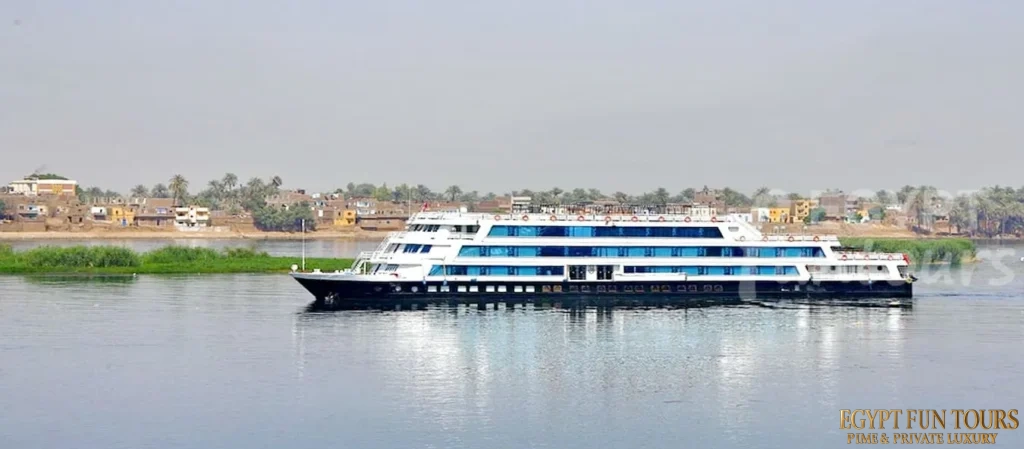
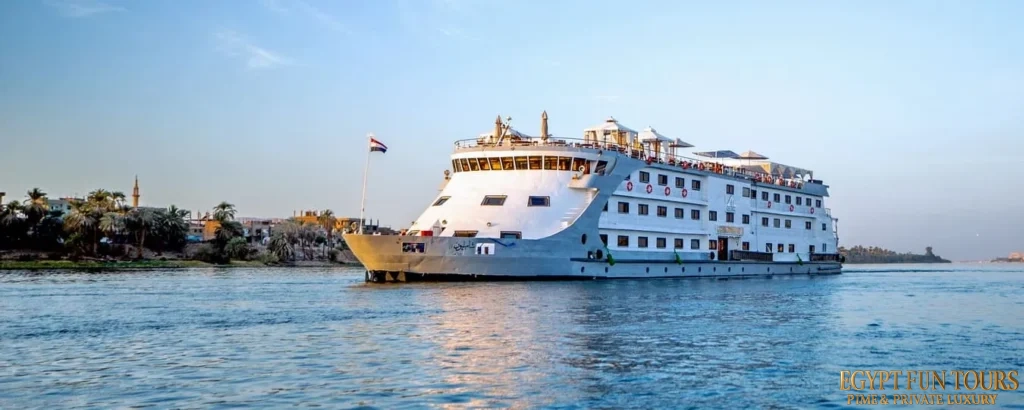
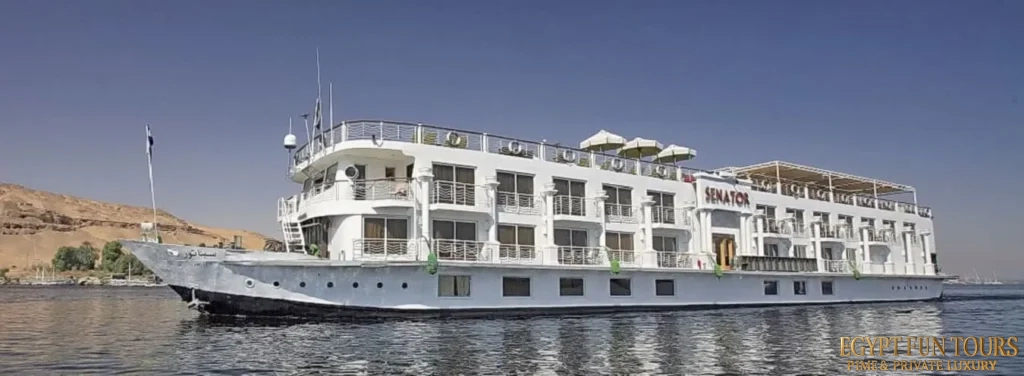
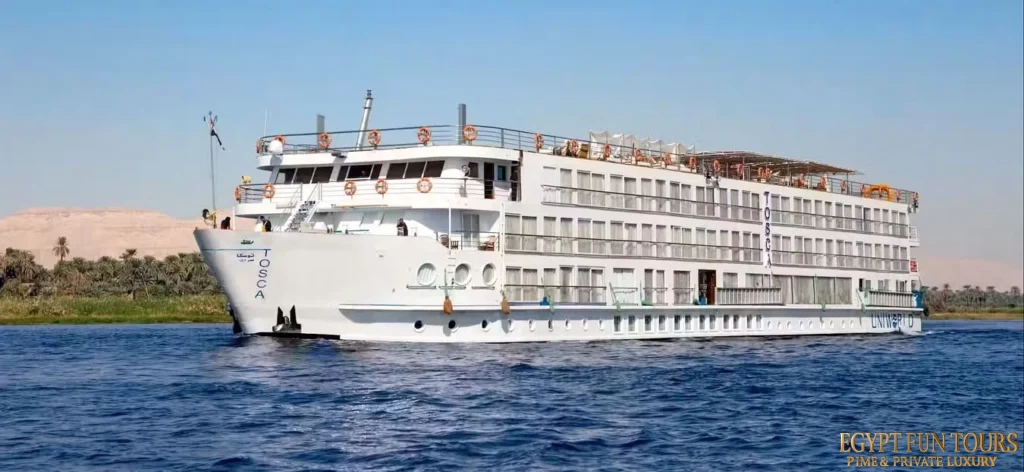
Operating Nile Cruises

Discover Luxor and Aswan

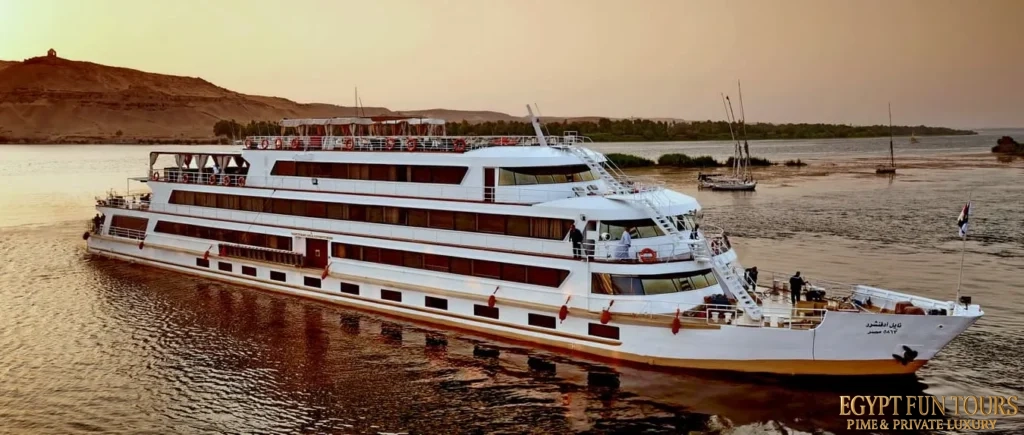
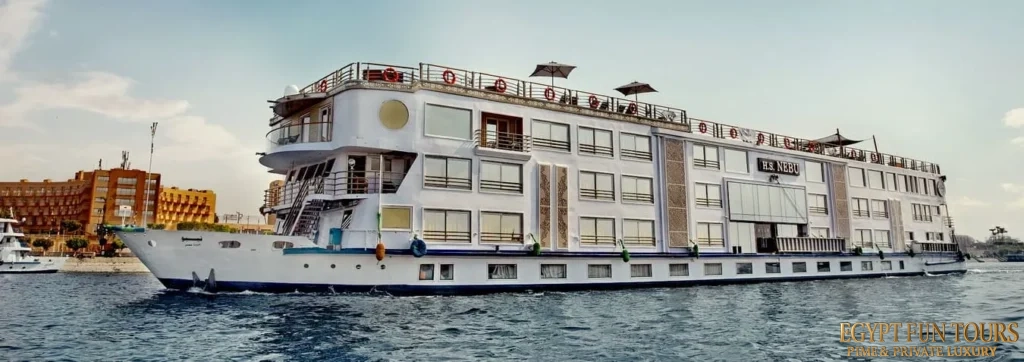
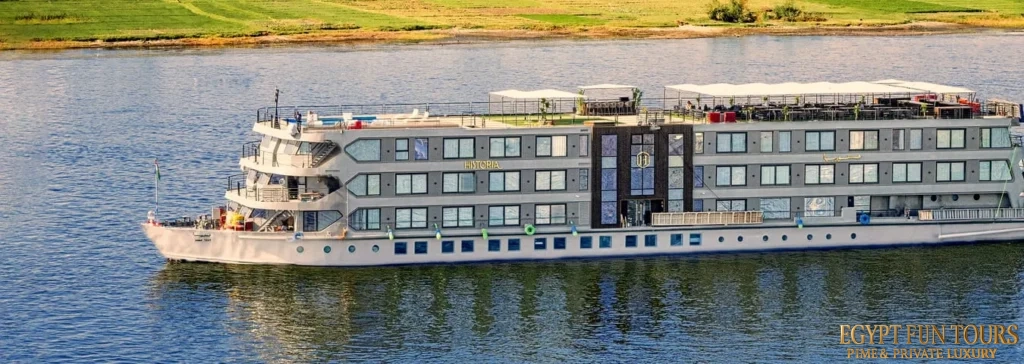
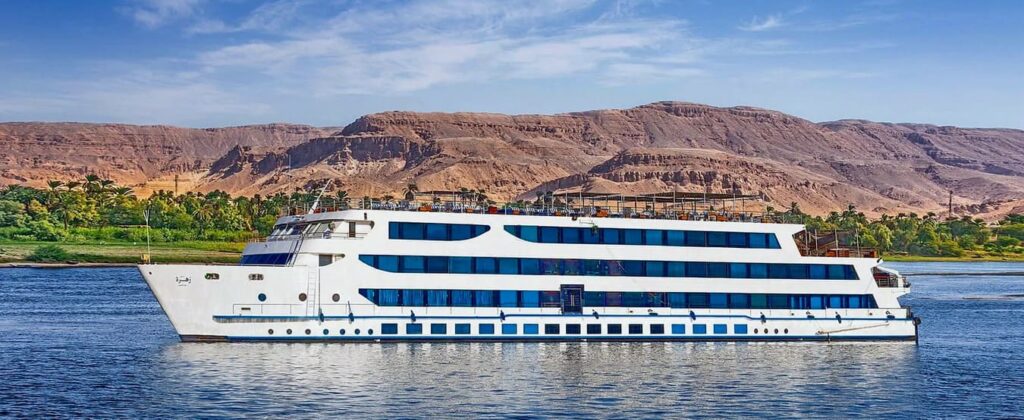
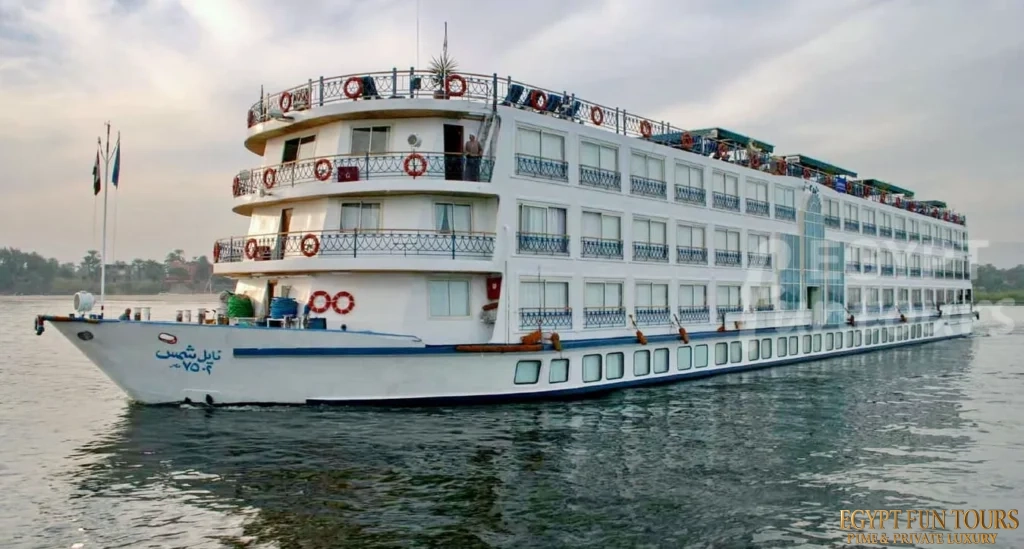
The Nile Cruises that are currently in operation vary periodically! There are those who join the service and those who leave for maintenance-related reasons. All currently operating Nile Cruises are listed here.

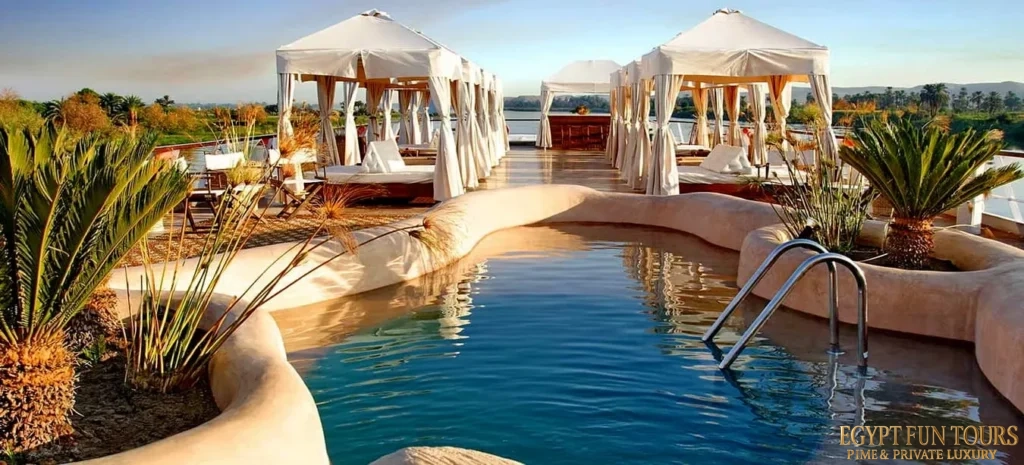
The Majority of Nile Cruises in Operation are 5-star floating hotels, however, they are classified into regular 5 stars, deluxe 5 stars, top deluxe 5 stars, and Ultra luxury 5 stars.

hieroglyphs divider-small
Isis with wings

The Black Pyramid of Amenemhat III: A Haunting Desert Landmark

The Black Pyramid Dahshur remains a haunting masterpiece of Middle Kingdom ambition and geological struggle. King Amenemhat III attempted to revolutionize royal burials by creating a massive mudbrick labyrinth for himself and his queens. However, the heavy core and unstable ground caused the structure to sink and crack almost immediately. Specifically, the discovery of the grey basalt pyramidion proves that the monument once achieved a state of artistic perfection. Because the king eventually abandoned the site, the pyramid stands today as a silent, jagged mountain of dark brick. For the traveler in 2026, it offers a rare look at the risks of ancient engineering and the raw beauty of the Dahshur plateau. Therefore, it is an essential chapter in the story of Egypt’s royal funerary evolution.

Read More »

The Bent Pyramid: A Masterpiece of Ancient Engineering and Evolution

The Bent Pyramid Dahshur represents a definitive turning point in the history of Egyptian architecture. It stands as a physical record of the transition from step pyramids to smooth-sided structures. By adjusting the slope from 54 to 43 degrees, ancient engineers saved the monument from structural failure. Consequently, the pyramid remains one of the best-preserved examples of Old Kingdom construction. Furthermore, its surviving limestone casing offers a rare look at the original splendor of royal tombs. Therefore, the Bent Pyramid Dahshur is a vital destination for any traveler seeking to understand the ingenuity of the Fourth Dynasty.

Read More »

The Pyramid of Senusret III: A Fortress for the Afterlife

The Pyramid of Senusret III Dahshur stands as a bold monument to Middle Kingdom security and royal power. King Senusret III revolutionized pyramid design by moving the entrance from the traditional north side to a hidden location in the west. This strategic shift aimed to protect the royal remains from the growing threat of tomb robbers. While the original white limestone casing has vanished, the massive mudbrick core remains a dominant feature of the Dahshur landscape. Specifically, the discovery of the “Dahshur Treasure” within the queens’ galleries proves the immense wealth of the Twelfth Dynasty. For the traveler in 2026, the site offers a raw look at the evolution of ancient engineering and the transition toward the hidden tombs of the New Kingdom. Therefore, the Pyramid of Senusret III Dahshur is an essential stop for understanding the intersection of military precision and funerary art.

Read More »

The White Pyramid of Amenemhat II: A Middle Kingdom Revival

Amenemhat II, a ruler of the 12th Dynasty, broke with the precedent set by his immediate predecessors by moving his pyramid complex to Dahshur, near Giza. Though it was likely known to the ancient Egyptians as “Sekhem Amenemhat” (“Amenemhat is Power”), its modern title, the “White Pyramid,” stems from its construction. While some sources suggest it was cased in gleaming Tura limestone that robbers later stripped, revealing limestone rubble, other details mention a core framework of radiating limestone walls filled with sand or cheaper stone, finished with polished casing that left distinct piles of debris around its base. Today, the monument is heavily ruined, appearing as a eroded mound of mudbrick and rubble, as much of its stone was quarried for later buildings. Its subterranean structure featured a false gabled ceiling made of limestone slabs, unique four-niched walls in the burial chamber, and a quartzite sarcophagus placed against the western wall. Significantly, its surrounding enclosure wall protected a collection of royal family tombs, whose excavation yielded invaluable treasures of jewellery and funerary items.

Read More »

The Red Pyramid of Dahshur: The World’s First Successful True Pyramid

The Red Pyramid Dahshur represents the ultimate architectural triumph of King Sneferu and the Fourth Dynasty. As the world’s first successful true, smooth-sided pyramid, it corrected the structural instability seen in earlier monuments. By utilizing a consistent 43-degree angle and innovative horizontal masonry, ancient engineers created a structure that has endured for over 4,500 years. Specifically, its three massive internal chambers and soaring corbelled ceilings showcase the peak of Old Kingdom engineering. Furthermore, its unique reddish limestone core provides one of the most striking sights on the Dahshur plateau. Therefore, the Red Pyramid in Dahshur remains an essential pillar of Egyptian history and a must-visit destination for travelers.

Read More »

The Pyramid of Senusret I: Engineering the Middle Kingdom’s Greatest Wonder

The Pyramid of Senusret I at Lisht marks the architectural peak of the 12th Dynasty. By introducing a revolutionary “grid-wall” skeleton of radiating stone walls, architects solved the structural instabilities of earlier mud-brick cores. This internal frame supported a massive volume of limestone rubble, all encased in high-quality Tura limestone. With its ten satellite pyramids and a gallery of life-sized royal statues, the complex transformed the landscape into a sprawling center of political and artistic power. Ultimately, the monument stands as an authoritative example of the Middle Kingdom “Renaissance,” successfully blending Old Kingdom grandeur with sophisticated, forward-thinking engineering.

Read More »