The Ancient Egyptian Embalmer: The Sacred & Secret Artist of Mummification

Step inside the secret workshop of the ancient Egyptian embalmer. Discover the 70-day, step-by-step process of mummification and learn the sacred roles of the chief embalmer (Hery-Seshta) and the spell-reciting lector priest (Hery-Tep). Find out why this highly skilled and essential job was considered ritually "unclean."

Among all ancient Egyptian jobs, none was as contradictory as the ancient Egyptian embalmer. This position demanded immense religious importance and skill.

Yet, society often viewed the men who performed this sacred duty as socially “unclean.” Because the ancient Egyptian embalmer worked with the dead—a ritually impure act—they lived separately in the Nekropolis (city of the dead).

They were the essential technicians of the afterlife. A successful ancient Egyptian embalmer blended surgical precision, chemical knowledge, and magical ritual in their work.

FUN

Ancient Egyptian Embalmer’s: Sacred Duty, Unclean Job

Ancient egyptian mummification

Why the paradox? For ancient Egyptians, the afterlife was a physical continuation of life. The soul (Ba) and life-force (Ka) needed to recognize and reunite with the physical body (Khat).

If the body decayed, the person would lose their soul forever.

The ancient Egyptian embalmer’s primary job was to stop decay and preserve the body perfectly. This duty made the embalmer a guardian of eternity—a holy task. However, this constant contact with death and dissection made the ancient Egyptian embalmer “unclean” in a society obsessed with purity.

FUN

The Ancient Egyptian Embalmer’s Team: Key Roles

Opening of the Mouth ancient egyptian mummification

Mummification wasn’t a one-person job. A specialized team ran this highly organized operation from a workshop called the Wabet (“Place of Purification”). Two roles were critical to the ancient Egyptian embalmer’s success:

The Hery-Seshta: The Chief Ancient Egyptian Embalmer

The Hery-Seshta (“He Who is Over the Mystery”) was the master artisan and surgeon of the team. This chief ancient Egyptian embalmer was a high-ranking priest who often wore a jackal mask to represent Anubis, the god of mummification.

  • His Job: The Hery-Seshta performed all the technical, physical work. He made the precise incision, removed the organs, and understood the chemical properties of the salts and resins. He possessed profound anatomical knowledge, which he learned through generations of practice.

The Hery-Tep: The Ritual Guide for the Embalmer

The Hery-Tep acted as the ritual expert and manager. He was a scholar who could read and write, holding a papyrus scroll of spells.

  • His Job: He recited the sacred formulas and magical spells from the Book of the Dead at every stage. Egyptians believed his words protected the body, consecrated the materials, and guided the spirit. He ensured the ancient Egyptian embalmer performed every action correctly, not just physically, but magically.

Other assistants, known as Wetyu (“bandagers”), would handle the washing, drying, and wrapping under the supervision of these two leaders.

Ancient Egyptian Economy

The existence of the Nile River, which was one of the factors of the ancient...

Related post
FUN

70-Day Process: A Step-by-Step Guide
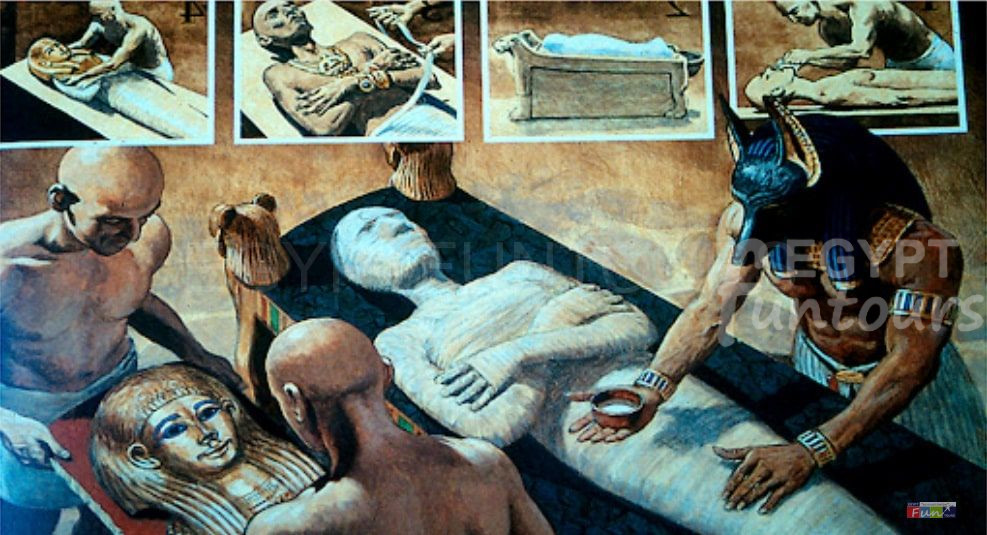
body wrapping ancient egyptian mummification

The complete mummification process for a wealthy individual was a fixed 70-day ritual. Here’s how the ancient Egyptian embalmer and his team preserved a body.

1. Purification & Brain Removal (Days 1-3)

First, the team took the body to the Ibu (“Place of Purification”) and washed it with blessed water from the Nile and palm wine.

Then, the Hery-Seshta (the chief ancient Egyptian embalmer) began the first grim task: removing the brain. Since the Egyptians didn’t value the brain, he unceremoniously pulled it out through the nostrils using long, metal hooks. He then rinsed out the skull.

2. How the Embalmer Removed Internal Organs (Days 4-15)

The chief ancient Egyptian embalmer made a sharp incision on the left side of the abdomen. Through this opening, he skillfully removed the stomach, intestines, liver, and lungs.

He almost always left the heart inside the body. Egyptians believed the deceased would need their heart for judgment in the afterlife.

3. The Canopic Jars (Sacred Storage)

The ancient Egyptian embalmer also preserved the removed organs. The team washed them, dried them in salt, and placed them into four special containers called canopic jars. One of the Four Sons of Horus protected each jar:

  • Imsety (human-headed): Guarded the liver.
  • Hapi (baboon-headed): Guarded the lungs.
  • Duamutef (jackal-headed): Guarded the stomach.
  • Qebehsenuef (falcon-headed): Guarded the intestines.

4. How the Ancient Egyptian Embalmer Used Natron (Days 16-50)

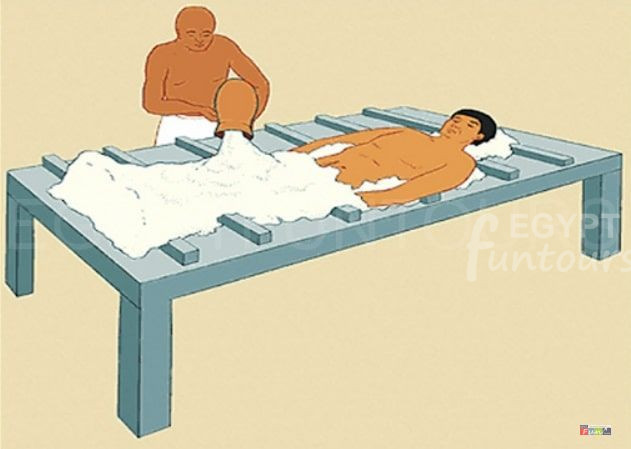
This was the most crucial stage for preservation. The ancient Egyptian embalmer cleaned the body cavity and temporarily stuffed it with linen to hold its shape.

Then, the team completely covered the entire body in natron, a natural salt compound. This powerful dehydrating agent pulled all the moisture from the tissues, stopping bacterial decay. The team left the body to dry for 40 days.

5. Restoration & Anointing the Body (Days 51-60)

After 40 days, the body was perfectly preserved and leathery. The embalmers removed the temporary stuffing and washed the body again.

The Hery-Seshta would then “restore” it. He packed the sunken body cavity with linen, sawdust, and spices to create a full, lifelike shape. The team rubbed the skin with sacred oils, perfumes, and resins (like myrrh) to make it supple and fragrant. Finally, they placed false eyes, often made of stone or glass, in the sockets.

6. The Final Wrapping by the Embalmer’s Team (Days 61-70)

This was the final, meticulous stage. The Hery-Tep recited spells while the bandagers (Wetyu) wrapped the body in hundreds of yards of high-quality linen.

  • The team placed Amulets (like the Ankh, the Eye of Horus, and the Djed pillar) between the linen layers to provide magical protection.
  • They often placed a special heart scarab beetle amulet over the heart with a spell urging it not to betray the deceased during judgment.

The bandagers wrapped a final shroud around the body and placed a painted portrait mask over the head and shoulders.

7. The Final Ritual: Opening of the Mouth

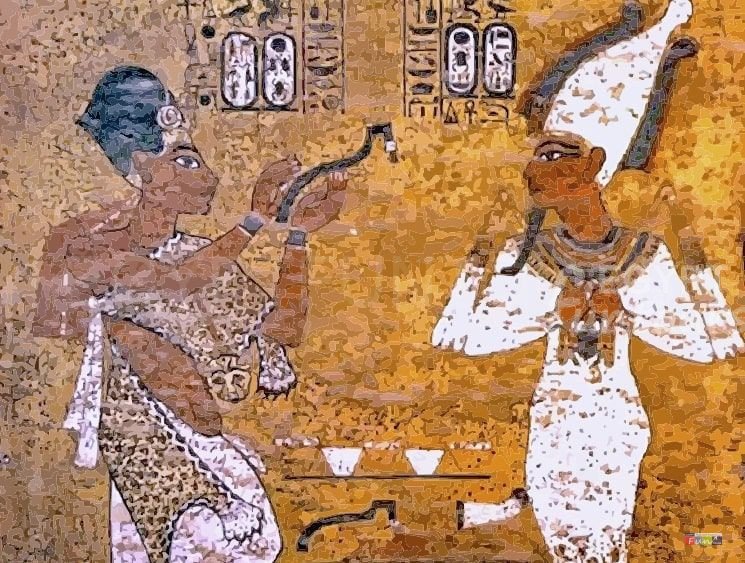
Just before the team placed the mummy in its coffin, the Hery-Tep (Lector Priest) performed the Opening of the Mouth ceremony. Using special tools, the priest would touch the mouth, eyes, nose, and ears of the mummy mask.

Egyptians believed this magical ritual reawakened the senses, allowing the deceased to see, hear, speak, and eat in the afterlife.
The Final Judgment: Weighing of the Heart and the Hall of Two Truths

The Final Judgment stands as the most critical event in the ancient Egyptian conception of...
Related post
FUN

The Ancient Egyptian Embalmer: Master of a Secret Art

using natron salt ancient egyptian mummification

The ancient Egyptian embalmer was far more than just an undertaker. He was a priest, a surgeon, and a chemist rolled into one.

The secret knowledge of the ancient Egyptian embalmer, combined with the sacred spells of the lector priest, was the single most important technology for securing an eternal afterlife. Though they lived on the fringes of society, their “unclean” hands were the very ones that opened the doors to eternity.

Ancient Egyptian Festivals: A Complete Guide to Sacred Celebrations

Discover the vibrant heart of ancient Egyptian culture through its sacred festivals. These massive celebrations...
Related post
FUN

Explore the Embalmer’s Eternal Legacy with Egypt Fun Tours

mummification in ancient egypt anubis

The ancient Egyptian embalmer’s sacred and secret work was designed to last for eternity. Today, you can witness the breathtaking results of their art firsthand. The magnificent tombs, golden sarcophagi, and even the mummies themselves wait in the valleys and museums of Egypt.

Egypt Fun Tours brings the ancient world to life. Let us guide you through the Valley of the Kings, the Egyptian Museum in Cairo, and the temples where these rituals were born. See for yourself the eternal homes the ancient embalmer worked so tirelessly to prepare.

Explore Giza pyramids, Egyptian museum, and Coptic Cairo in-depth...
Explore historical attractions in the land of pharaohs...

Very Considerate and Helpful

Guide and driver were on time, open to my requests and took care that I felt safe and saw the Pyramids and parts of old cairo during my less than 24 hour stay between flights. Office staff were great in communicating by email before and during the trip.

More »

Like two days of touring in one day!

I had a 12 hour stay in Cairo- and had made no plans on how to spend it until 8pm the night before departure. I emailed Egypt Fun Tours in a panic and they responded immediately. They made it incredibly easy to arrange a tour and we made arrangements via

More »
Egyptian western desert oases egypt fun tours

Jeep Safari in the Sahara

I contacted Hani two days before I went to Egypt and asked him if it was possible to combine two of their tours as we were short on time. We had planned to stay in Cairo but with the uprising we decided it would be safed outside of the hot

More »
Isis with wings

Top-rated Tour Packages

Isis with wings