Layout and Architectural Deep-Dive
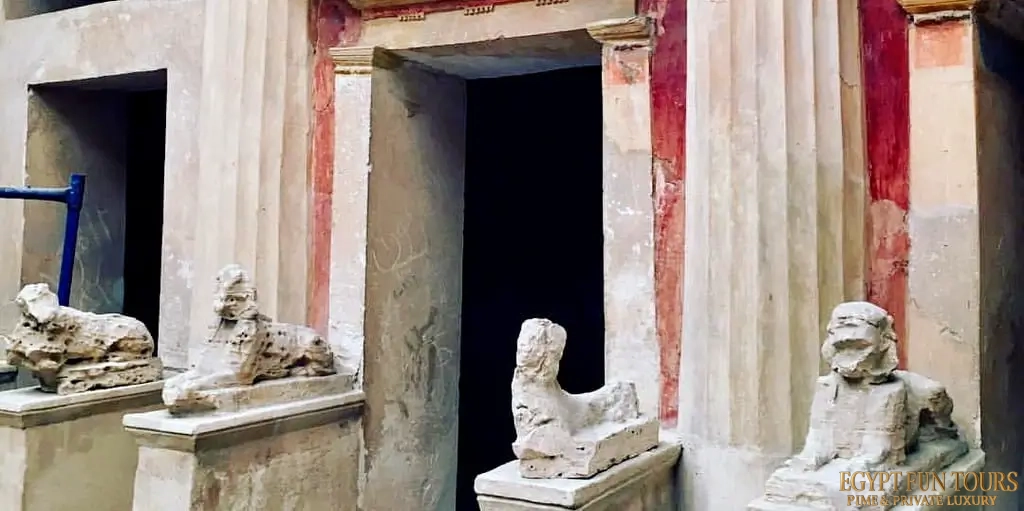
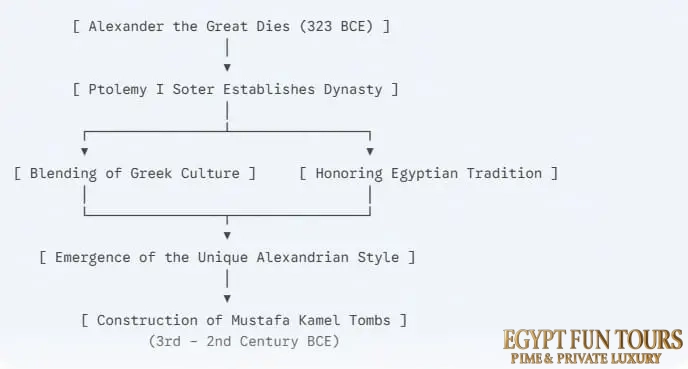
The Mustafa Kamel Tombs complex consists of four distinct underground tombs. What makes them architectural masterpieces is their layout. Specifically, they mimic the physical layouts of grand, contemporary Hellenistic palaces and elite private homes (oikoi). Therefore, they transformed houses for the living into eternal mansions for the dead.
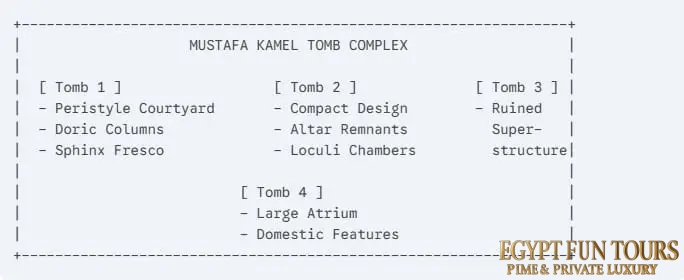
Tomb 1: The Masterpiece of the Complex
Tomb 1 is undisputedly the largest, most structurally intact, and artistically significant monument within the necropolis. Consequently, it serves as the textbook example of a peristyle tomb from the Hellenistic era.
The Dromos (Entrance Staircase)
Visitors descend into the tomb via a long, steep, rock-cut staircase known as a dromos. This spatial transition deliberately separates the bright world of the living from the quiet realm of the deceased.
The Peristyle Courtyard
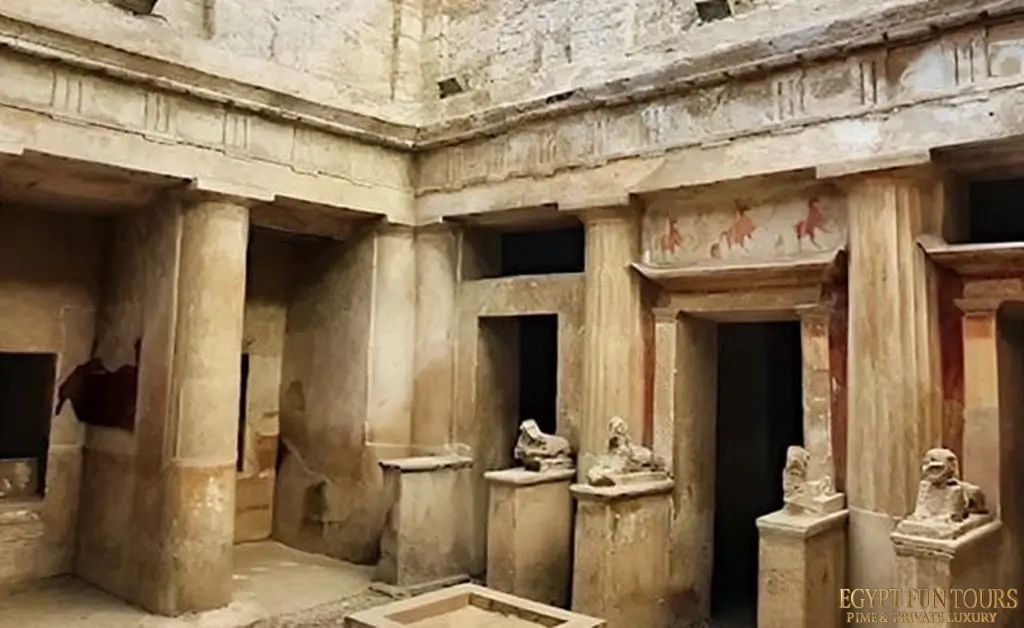
The staircase opens into a breathtaking, open-air rectangular courtyard. Fluted Doric columns surround this space, which ancient masons carved entirely out of the living limestone bedrock.
- The courtyard originally featured a total of ten columns. Specifically, it had three columns on the longer sides and two on the shorter sides.
- The walls of the courtyard are coated in fine stucco. Additionally, artists painted them in imitation of expensive, multicolored marble paneling, a design technique known as the Hellenistic First Style.
The Central Altar
In the center of this open courtyard sits a rock-cut ritual altar. Here, family members and priests gathered on specific anniversaries. Then, they performed libations, offered food, and burned incense to honor the deceased’s spirit (Agathodaimon).
The Oikos and Funerary Chamber
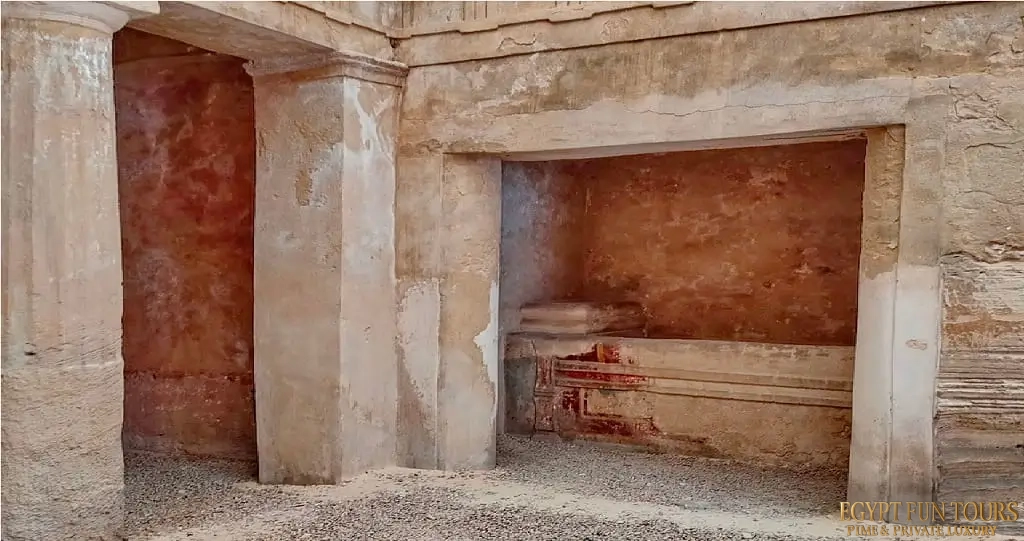
Directly facing the entrance of the courtyard is the main funerary chamber. Its design replicates the reception hall (oikos) of a wealthy Macedonian home.
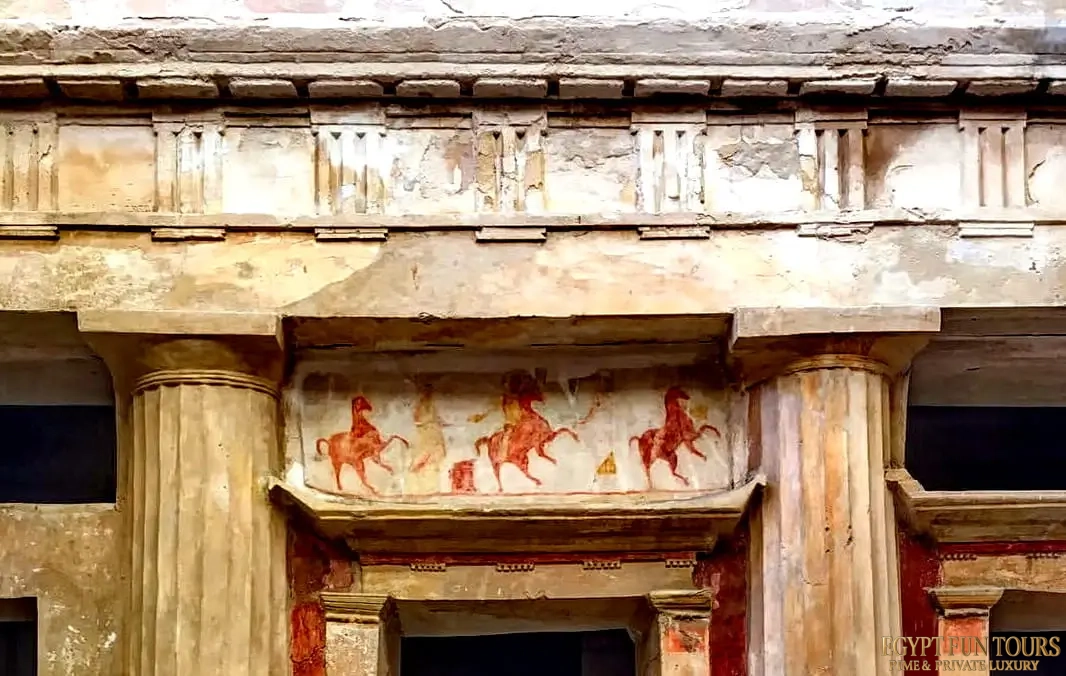
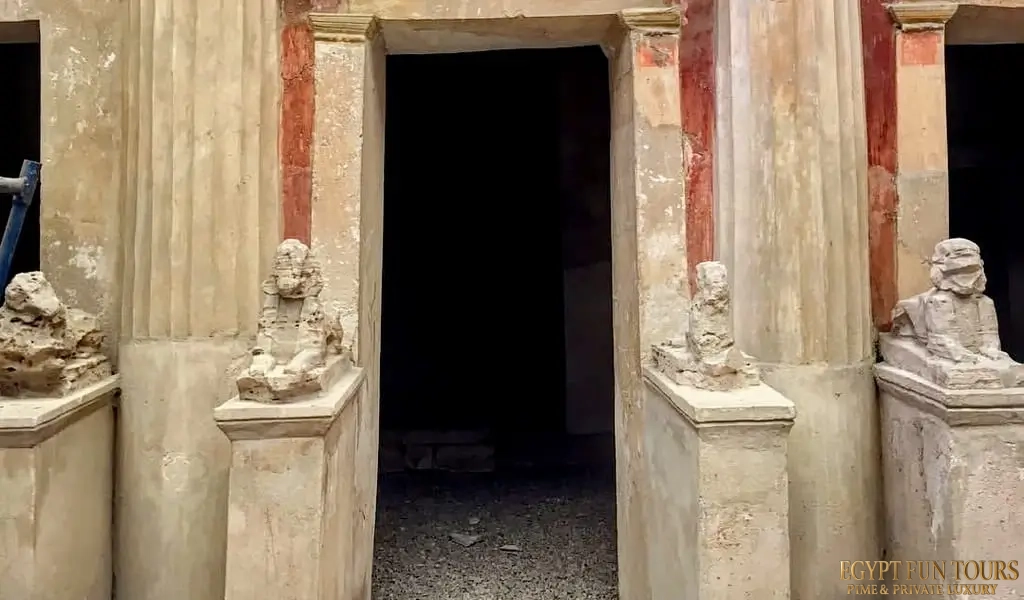
- Two beautifully carved semi-columns frame the entrance to this chamber and support a classical Doric entablature.
- Inside the chamber sits a massive, monumental rock-cut sarcophagus. Artisans carved it to resemble a grand ceremonial couch (kline), complete with sculpted pillows and mattresses.
The Famous Sphinx Fresco
One of the most celebrated features of Tomb 1 is a beautifully preserved fresco. It is located above the entrance to one of its side chambers. The painting depicts two symmetrically placed Sphinxes guarding a central doorway. Meanwhile, figures wearing traditional Macedonian military attire flank the scene. This painting perfectly encapsulates the dual identity of Ptolemaic Alexandria. It shows Greek soldiers under the protection of timeless Egyptian mythological guardians.
Tomb 2: The Ritual Core
Located adjacent to Tomb 1, Tomb 2 shares a similar chronological framework. However, it features a slightly more compact layout.
- The Courtyard and Altar: It features a smaller open court. Despite its size, its central altar remains exceptionally well-preserved. Traces of ancient ash and organic residue found during Adriani’s excavations confirm that people performed regular burnt offerings here.
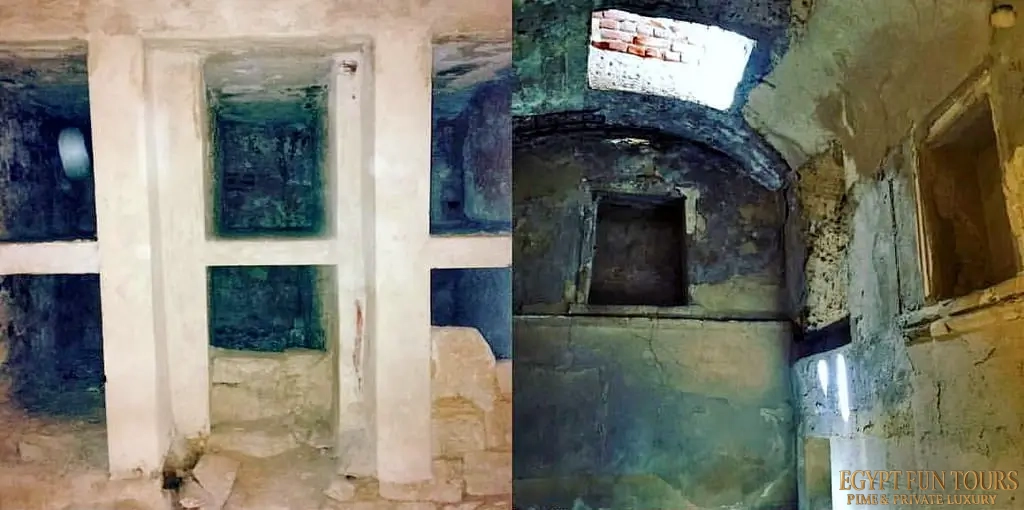
- The Loculi System: Multiple loculi surround the central courtyard. These are horizontal, rectangular burial niches cut deep into the rock walls. Once workers inserted a body or a limestone sarcophagus into the loculus, they sealed the opening with a stone slab. Often, they painted these slabs to look like stylized doors or inscribed them with the name and lineage of the deceased.
Tomb 3: The Fractured Monument
Environmental exposure, earthquake activity, and the rising water table of Alexandria have caused significant damage to Tomb 3 over the centuries.
- Because of this damage, its architectural layout is more difficult to discern than that of Tombs 1 and 2. Nevertheless, it remains highly valuable to archaeologists.
- The remaining foundations show clear evidence of a large, stepped superstructure (mausoleum). This structure once stood above ground level and acted as a prominent visual marker in the ancient landscape.
Tomb 4: The Domestic Underground
Tomb 4 is notable for its distinct domestic feel. Rather than focusing entirely on a grand central courtyard, its layout emphasizes interconnected rooms. As a result, it closely mirrors the floor plan of an affluent Alexandrian villa.
- Architectural Elements: It features highly detailed rock-cut cornices, pilasters, and doorways. These elements showcase the superb mastery of the local stonemasons.
- The Interplay of Light: The orientation of the lightwells in Tomb 4 allowed sunlight to penetrate deep into the subterranean chambers at specific times of the day. Consequently, this created a dramatic interplay of light and shadow during funerary rituals.