Thinis City: The Lost Cradle of Egyptian Kingship

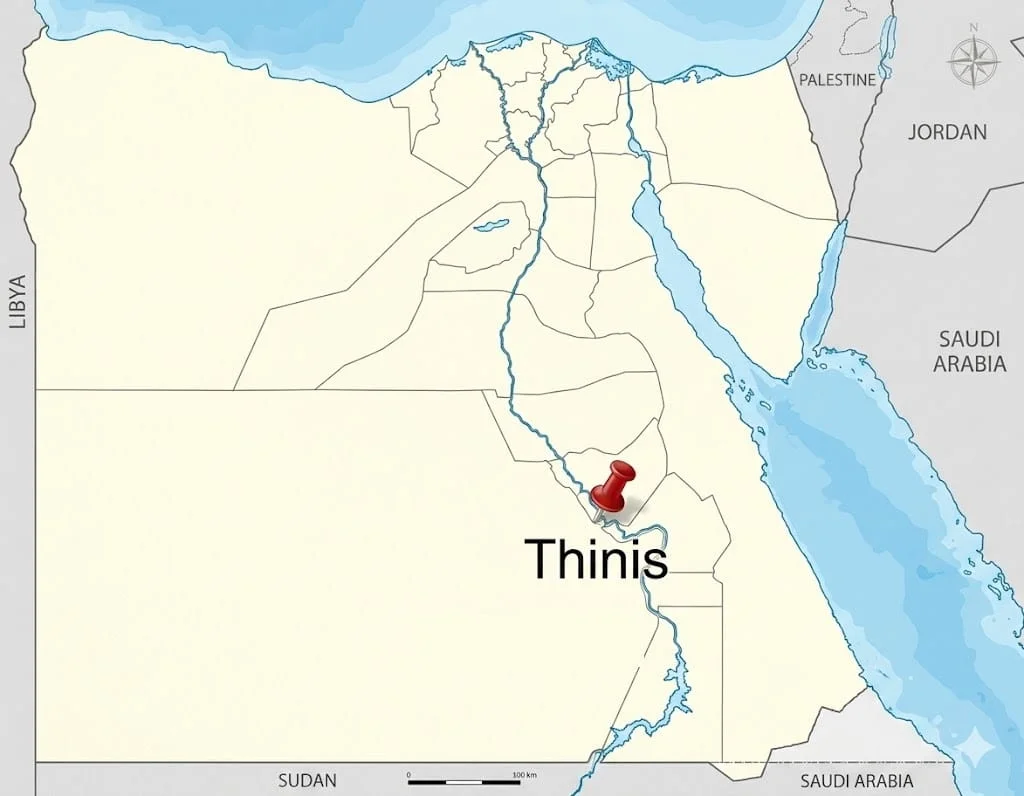
Thinis was the inaugural political capital and ancestral cradle of statehood for ancient Egypt, serving as the home of the First and Second Dynasty pharaohs (c. 3100–2686 BCE) following the country's unification. Technically a "lost city," its precise location in Upper Egypt near Abydos remains archaeologically elusive beneath the Nile’s silt. While it ceded national primacy to Memphis by the Third Dynasty, Thinis remained a vital religious center, known as the cult hub for the war god Onuris and recognized as a mythical, celestial realm in early Egyptian cosmology.
The eye of Horus
WhatsApp
Email
Print

Ancient Egypt still holds many secrets. While monumental pyramids and hidden tombs capture the world’s imagination, one of the most vital locations in Egyptian history remains lost beneath the Nile’s fertile silt. This city is Thinis City (known in Greek as Θίνις), or Tjeni to the ancient Egyptians. It was not merely an early settlement. Historically, Thinis served as the very first political capital of the unified Egyptian kingdom. Therefore, it is the true cradle of pharaonic statehood.

Furthermore, Thinis was the ancestral home of the pharaohs who ruled during the critical First and Second Dynasties. Despite its immense historical weight, Thinis is technically a “lost city.” Archaeologists have not yet definitively located its ruins. Consequently, our understanding of this birthplace of an empire relies heavily on written records and artifacts found elsewhere.
The eye of Horus

Thinis City: What Was in a Name?

Thinis City What Was in a Name

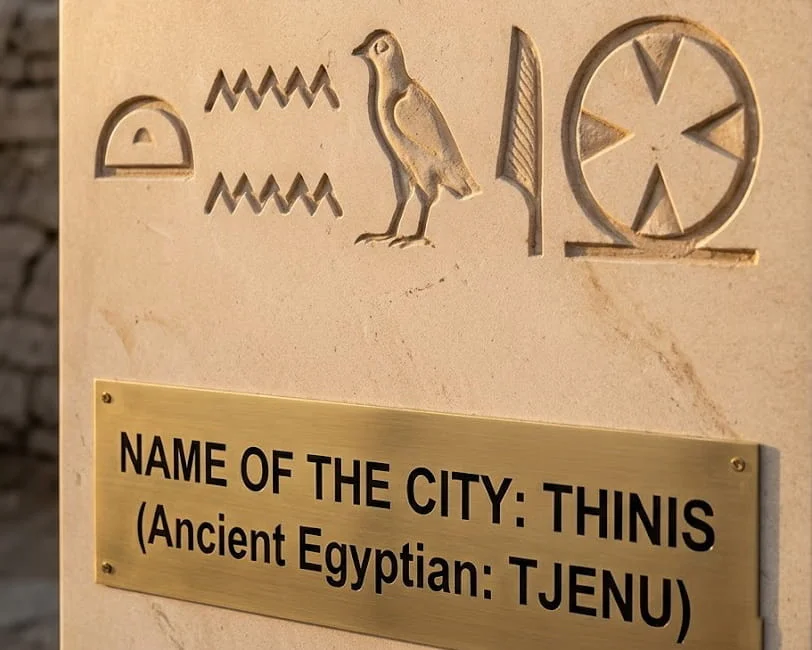
Before exploring the city’s history, we must understand its names. Names often reflect shifting cultural and linguistic powers over millennia.

  • Ancient Egyptian: They called it Tjeni or Tjenu. This is the original designation.
  • Greek: Later Greek historians, like Manetho, used the name Thinis. Sometimes they called it This.
  • Coptic: The city was known as Tin during the Coptic period.
  • Arabic: Historically, the city is strongly associated with the modern Egyptian town of Girga or Jirja.

Understanding these names helps historians trace references to the city across different historical texts.

Golden Scarab

Historical Geography: The Persistent Search for a Lost Capital (Thinis City)

Historical Geography The Persistent Search for a Lost Capital (Thinis City)

Thinis sat within the borders of Upper Egypt. Specifically, it functioned as the capital of the 8th Administrative Nome (district). This district bore the proud name Ta-Wer, which translates to “The Great Land.

Its geographical situation was undeniably pivotal for its early success. The city thrived within a vast, fertile alluvial plain. This location ensured reliable agricultural surplus, which was necessary to support a growing state. However, Thinis remains a “lost” city in archaeological terms. Exciting discoveries happen in Egypt frequently, yet no monumental remains, grand temples, or palaces definitively belonging to Thinis have surfaced.

The Spatial Relationship: Thinis and Abydos

The Dawn of Dynastic Egypt; Abydos Royal Tombs (Umm el-Qa'ab)

Historically, we must understand Thinis in relation to its powerful neighbor, Abydos. Abydos, or ancient Abdju, lies roughly 10 to 15 kilometers to the south. Together, these two cities formed a crucial, complementary pair during Egypt’s formative centuries.

We can view this relationship through a secular and sacral lens:

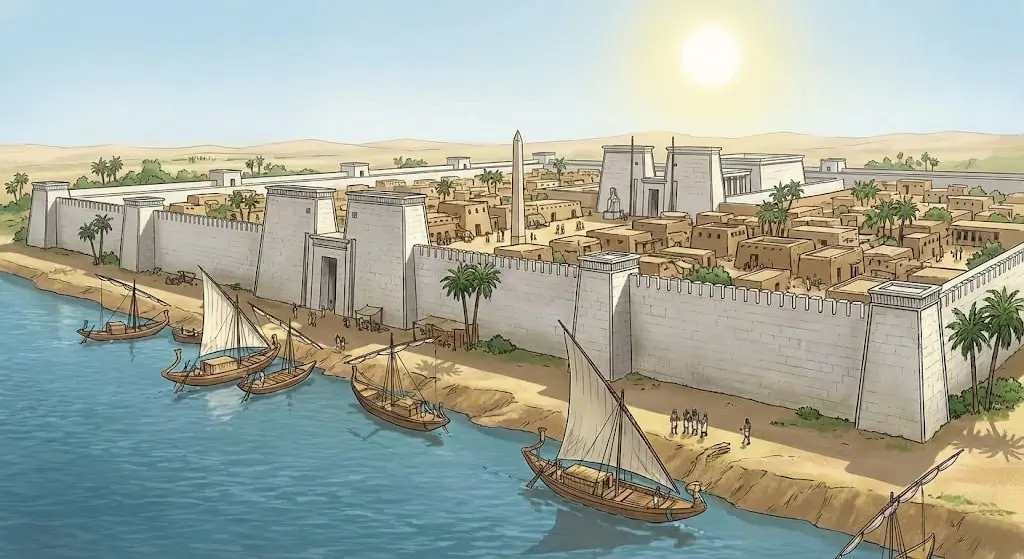
  1. Thinis (The Secular Capital): Thinis was the bustling headquarters for early rulers. Consequently, it functioned as the political, military, and administrative heart of the new state. It was the dynamic center of living governance.
  2. Abydos (The Sacral Necropolis): Conversely, Abydos served as the regional cemetery and royal burial ground for these early Thinite pharaohs. Thus, it was the “dead” center of religious cult and eternal life, ensuring the kings’ transition into the afterlife.

This partnership made the region the most important location in Egypt for centuries.

Hypotheses on the Location of Thinis City

Where exactly is Thinis today? The main challenge facing archaeologists is the Nile itself. Centuries of annual floods have deposited deep layers of silt across the valley floor. Moreover, modern settlements likely cover much of the ancient site.

Scholars generally agree that Thinis city lay on the west bank of the Nile. Today, several hypotheses exist regarding its precise location:

  • The Case for Modern Girga: This is the most common hypothesis. Girga is located precisely where ancient itineraries suggest Thinis should be. Additionally, it is very close to Abydos.
  • Other Possibilities: However, other scholars have suggested sites near el-Birba, Naga ed-Deir, or sites closer to the town of Al-Balyana.

Until excavations reveal definitive proof, the search continues.

The eye of Horus

History and Significance: The Thinite Ascent

Mentuhotep II Ending the Age of Chaos

The peak of Thinis’s importance occurred during the formative stage of Egyptian civilization. It was the driving force behind a crucial transition in human history.

Thinis City: Predynastic Emergence

Thinis began its ascent long before Egypt became a unified nation. During the fourth millennium BCE, it emerged as a significant power center in Upper Egypt. Thinis became a key leader within the so-called Thinite Confederacy. This tribal alliance aggressively championed the cause of Upper Egyptian dominance. Alongside powerful neighbors like Hierakonpolis and Naqada, Thinis actively pushed for social complexity and the creation of a centralized proto-state.

The Archaic/Early Dynastic Period (c. 3100–2686 BCE)

Historians call this entire era, which includes the First and Second Dynasties, the “Thinite Period.” Manetho, the 3rd-century BCE Egyptian priest who compiled the definitive list of pharaohs, provided the reason for this name. He explicitly designated these first two dynasties as Thinite because they originated from this city.

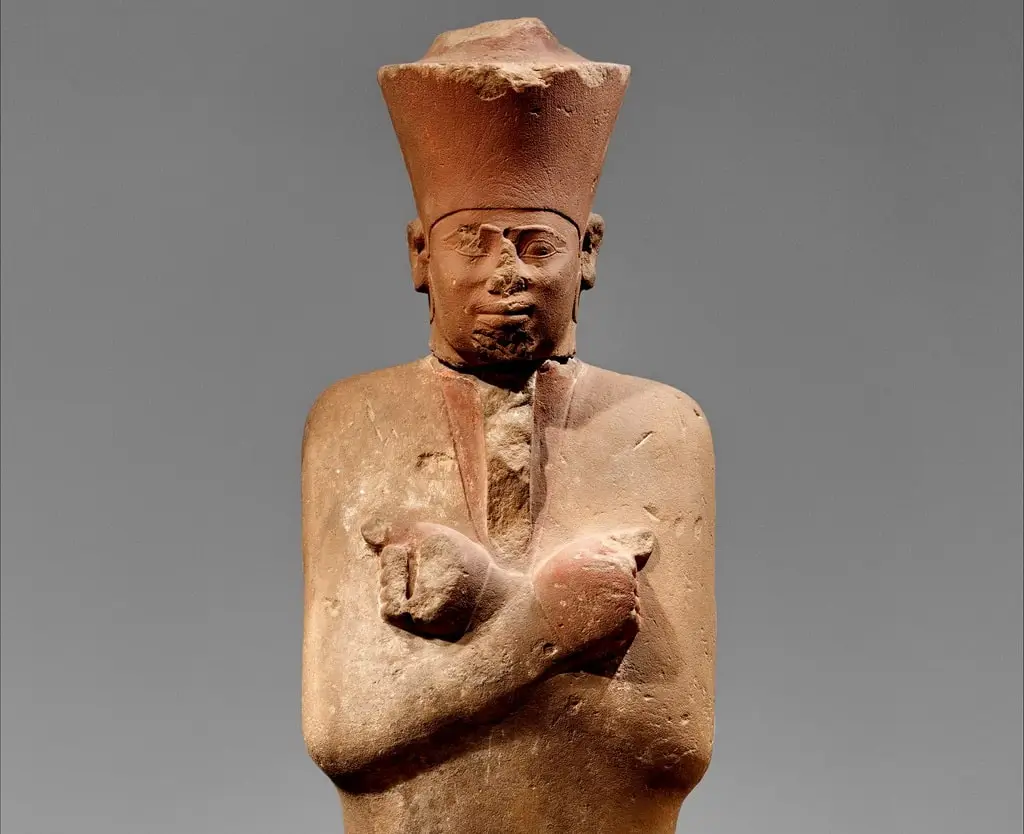
Great leaders, such as Narmer (the legendary unifier of Upper and Lower Egypt), are believed to have been citizens or chiefs of Thinis. After unification around 3100 BCE, Thinis reigned as the heart of this new empire for nearly five centuries.

During this time, the city coordinated vital state functions:

  • State Formation: It managed the crystallization of legal systems and the birth of governmental institutions.
  • Military Power: It acted as a military stronghold to project authority northward into the Delta and safeguard unification.
  • Economy: Thinis flourished as a commercial hub. Tax records from later periods, specifically from the reign of Thutmose III, prove this enduring wealth. Even centuries after its peak, Thinis paid significantly higher annual taxes than Abydos.

Relocation to Memphis and Political Decline

Memphis; The Founding (The White House)

Despite this wealth, the demise of Thinis as a national capital became a political necessity. After consolidation, pharaohs of the Third Dynasty (starting with Djoser) required a more central location to govern effectively. The existing capital, Thinis, was too far south. Therefore, they founded a brand new capital named Memphis. They placed Memphis strategically at the apex of the Nile Delta.

Consequently, Thinis entered a period of steady political decline. It retained regional importance as the seat of the nome capital and the “Overseer of Upper Egypt” for centuries. Nevertheless, its days as the epicenter of national politics had ended.

However, its historical importance meant it was not forgotten. During the turbulent wars of the First Intermediate Period, Thinis became dangerous border territory. Competing dynasties from Heracleopolis and Thebes fought over the region. Eventually, Mentuhotep II brought Thinis back under unified Theban control.

Golden Scarab

Religion and Cosmology: The City of the War God and the Afterlife

Montu-Ra, The War God and the Imperial Mandate

Thinis maintained a crucial religious role long after its political sun had set. Its ancient heritage ensured its continued spiritual relevance.

Primary Cults and War Gods

The chief deity of Thinis was Onuris, known to the ancient Egyptians as Anhur. Onuris was a patron god of war and hunting, often associated with the Egyptian army itself. Sculptures usually portray him as a regal warrior wearing a distinctive four-plumed headdress. His most powerful title was “Bull of Thinis.” In addition, ancient sources suggest mock battles were staged during festivals held in his honor.

Worshippers honored him at Thinis alongside his female counterpart, the lioness goddess Mehit. According to popular myth, Onuris retrieved Mehit from Nubia, bringing her back to Egypt to become his consort.

Before Osiris became the undisputed god of the dead at Abydos, a proto-type deity named Khenti-Amentiu dominated the region. This jackal-headed god, whose name means “First of the Dead,” was also prioritized by the local inhabitants of the Thinite district.

Thinis City: An Eternal Role in the Book of the Dead

The Book of the Dead in Color

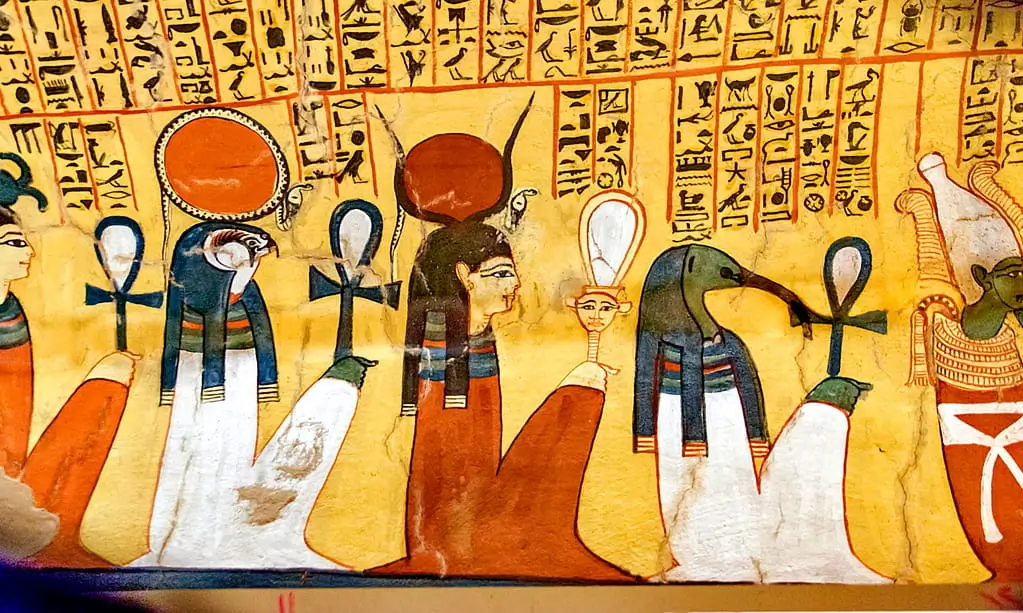
Furthermore, Thinis achieved a unique esoteric legacy within Egyptian religious cosmology. The sacred text known as the Book of the Dead elevates Thinis beyond the earthly realm. It describes Thinis as a mythical or celestial city rather than just a physical location on the Nile. In this context, it is profoundly associated with the netherworld and heaven. Consequently, it is viewed as a place of spiritual joy and Osiris’s ultimate triumph.

The eye of Horus

The Evidence: Why We Know the Thinis City Existed

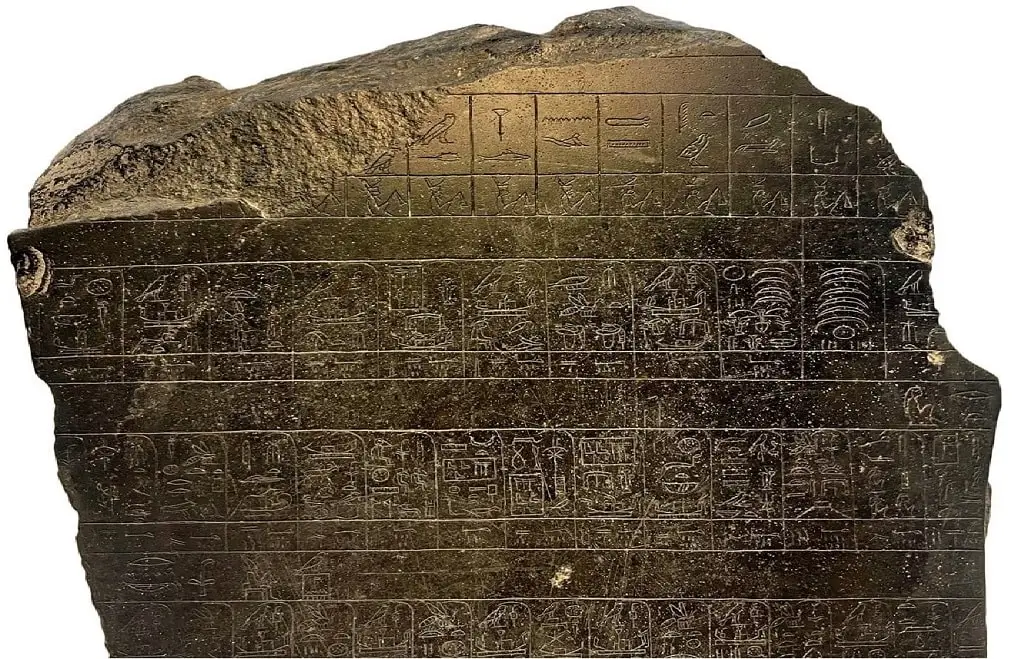
The Palermo Stone-Ancient Egypt King Lists

We have established that direct monumental evidence of the city is lacking. How, then, can we speak so confidently about its existence and role? Fortunately, the city is well-attested by ancient writers and through extensive indirect archaeological findings.

Written Sources and Inscriptions:

  • The Palermo Stone: This vital ancient Egyptian king list specifically mentions the city.
  • Manetho: He is our primary source for designating the first two dynasties as Thinite.
  • Book of the Dead: It provided the religious and celestial context.
  • Ptolemy’s Geography: This 2nd-century CE work still accurately locates “This” in the eighth Upper Egyptian nome.

Indirect Artifacts and Evidence:

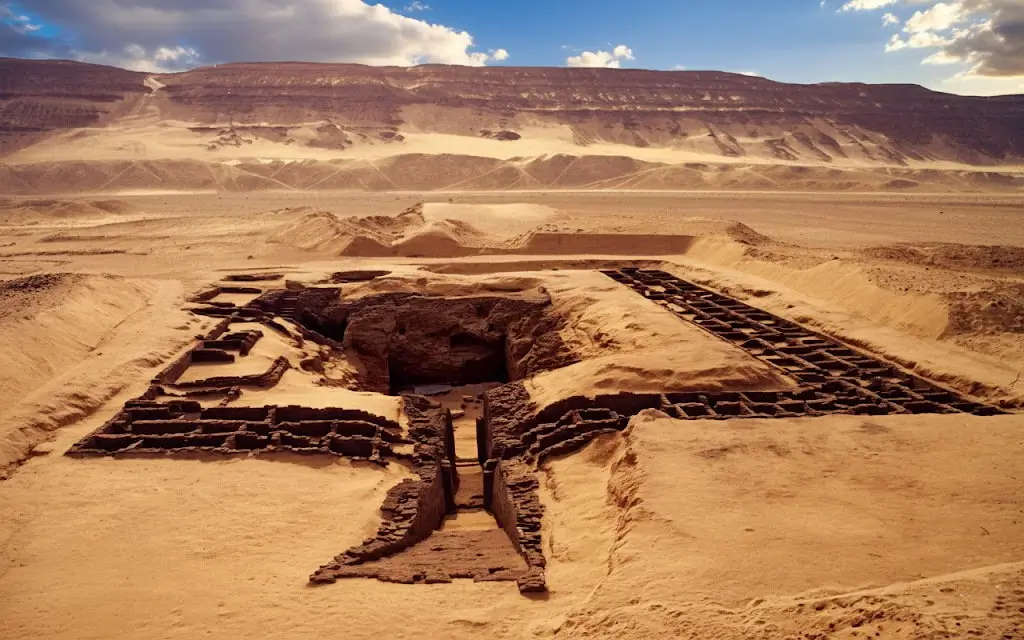
  • Umm el-Gaab at Abydos: The elite cemetery containing the actual tombs of First and Second Dynasty kings (such as Den, Djer, and Narmer) provides irrefutable proof. Their burial location strongly implies their living power base must have been nearby. That base was Thinis.
  • Ivory Labels and Jar Sealings: Archaeologists have discovered numerous small artifacts from Dynasties 1-2 at Abydos and Saqqara. These carry early hieroglyphic inscriptions explicitly mentioning Thinis. Crucially, they detail administrative tasks, construction projects, and building management all directed from the city.
  • Cylinder Seals: Clay jar-sealings have been recovered belonging to high-ranking Thinite officials, which detail their extensive responsibilities.

While the stones of Thinis are hidden, the historical record speaks loudly.

God_Anubis_Icon

A great day!!!!

Thank you Hamada for an incredible day! Thank you for the stories and the history, you are so knowledgeable and we didn’t feel rushed at all or like we missed out on things, will definitely be recommending this tour to everyone 🙂

More »

Great Walking Tours!

My husband & I were very very happy with the walking tour we took with Egypt Fun on Nov 26. Our guide (Manal) was amazing & very very knowledgeable. Thanks to Manal, we were able to really get a very good understanding of the city, its history & its great

More »

The best holiday ever!

The Nile cruise, Luxor, and Aswan were amazing sites to see, especially when you have the best tour guide in Egypt. Hamada was absolutely fantastic, lots of information, and some of it not spoken by others. This guy was not only a simple tour guide for us, but he also

More »

Amazing tour to the pyramids of Sakkara and Dahshur

This week we had a great tour with Mohamed to the pyramids of Sakkara and Dahshur, as well as Memphis. He tailored the tour to our preferences, took a lot of time with us, and gave us detailed background information on everything. It was also great that he never tired

More »

Tour of Cairo

Despite a late start due to car trouble, Mohamed more than made up for it with his incredible knowledge and dedication. His explanations were detailed and thoughtful, and he went above and beyond to make sure we had a great experience. A memorable and informative tour, thanks to Mohamed’s hard

More »
God_Anubis_Icon

Top-rated Tour Packages

God_Anubis_Icon
WhatsApp
Email
Print