The Temples of Tanis: An Architectural Guide to Egypt’s Recycled Sanctuaries

The Tanis temples represent a monumental feat of architectural adaptation and religious ambition during Egypt’s Third Intermediate Period. Built to replicate the sacred topography of Thebes, this sprawling northern sanctuary was constructed almost entirely by recycling massive pink granite obelisks, colossal statues, and structural columns from the abandoned New Kingdom capital of Pi-Ramesses. The resulting complex features the Great Temple of Amun-Ra, dedicated secondary shrines for Mut and Khonsu, and an unprecedented subterranean Royal Necropolis built directly within the sacred enclosure walls for maximum security. Today, the monumental ruins of the Tanis temples stand as a unique, open-air archive of pharaonic engineering, showcasing how ancient builders ingeniously repurposed the stone monuments of their predecessors to preserve the divine legacy of the Delta capital.

Tanis Temples Architectural Guide

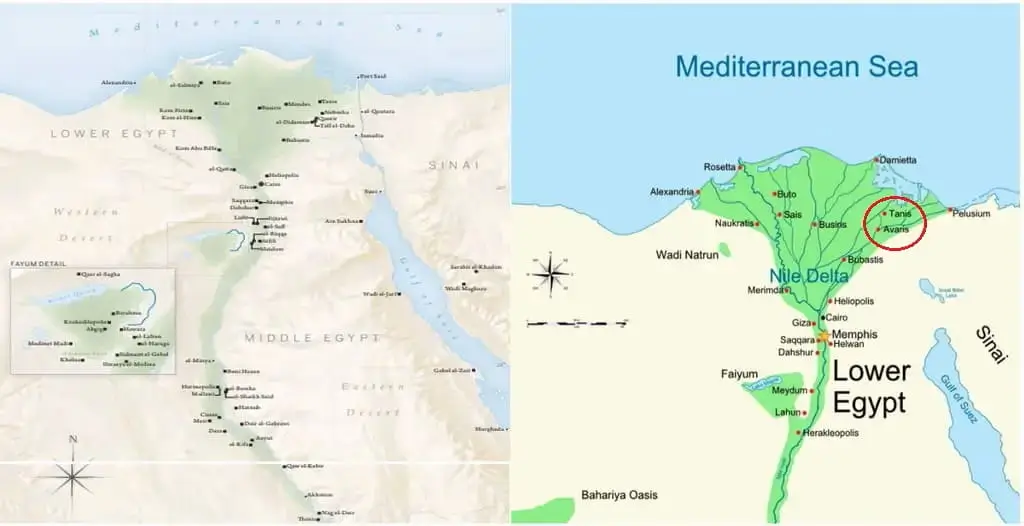
Hidden deep within the flat, wind-swept landscapes of the northeastern Nile Delta lies San el-Hagar. Today, this remote archaeological site looks like a chaotic field of weathered mud-brick mounds and fractured pink granite colossi. However, this historic location actually holds the ancient metropolis of Tanis. In ancient times, the Egyptians called this city Djanet, while the Bible refers to it as Zoan. During the Third Intermediate Period, specifically the 21st and 22nd Dynasties (c. 1069–715 BCE), Tanis served as a magnificent northern capital of Egypt. Pharaohs deliberately designed this grand city to mirror the architectural splendor of Thebes in Upper Egypt. Because these northern rulers lacked easy access to the southern stone quarries of Aswan, they built their grand city by dismantling older monuments. They targeted the nearby city of Pi-Ramesses for this purpose. Consequently, the Tanis temples stand today as a monumental, complex historical puzzle.

Archaeologists view this sacred complex as a fascinating tapestry woven entirely from recycled pharaonic history. This comprehensive, long-form guide provides an in-depth examination of the sacred architecture, history, and theology of the famous Tanis temples.

FUN

The History Behind the Tanis Temples

The History Behind the Tanis Temples

To understand why rulers built the Tanis temples, you must first examine the dramatic environmental and political shifts at the end of the New Kingdom.

Tanis Temples: The Shifting Nile Forces a New Capital

During the prosperous 19th Dynasty, Pharaoh Ramesses II constructed a glittering capital named Pi-Ramesses in the eastern Delta. It served as a strategic military hub and a testament to imperial power. However, environmental changes soon forced Egypt’s hand. The Pelusiac branch of the Nile began to silt up over decades. This natural disaster choked the city’s vital harbors and left the massive capital completely landlocked.

Therefore, Pharaoh Smendes chose a new site roughly 20 kilometers to the north. This new location sat on the navigable Tanitic branch of the Nile. This river branch connected directly to the Mediterranean Sea, preserving Egypt’s trade routes. The Egyptians named this capital Djanet, which the Greeks later pronounced as Tanis.

Tanis Temples: Creating the Thebes of the North

The founding of Tanis coincided with a unique political division within Egypt. While the High Priests of Amun ruled the south from the safety of Thebes, the pharaohs controlled international commerce and the military from the north.

To legitimize their royal authority, the Tanite pharaohs decided to recreate the sacred landscape of Luxor in the Delta. They proudly declared Tanis “Thebes of the North.” To fulfill this grand theological ambition, they constructed the magnificent Tanis temples to honor the divine Theban Triad: Amun-Ra, Mut, and Khonsu.

FUN

The Great Recycling Strategy of the Tanis Temples
The Great Recycling Strategy of the Tanis Temples

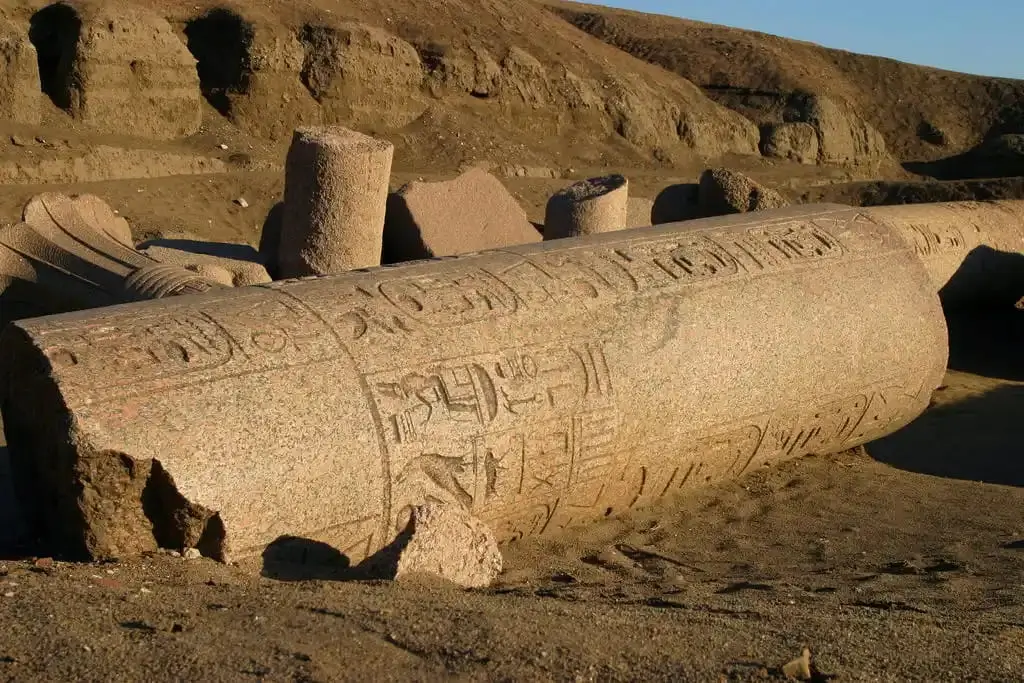
The construction of the Tanis temples represents one of the largest recycling operations in architectural history. Because the Delta region completely lacks natural stone quarries, transporting massive blocks of granite from Upper Egypt presented a major logistical challenge for a divided kingdom.

Consequently, the Tanite pharaohs used the abandoned ruins of Pi-Ramesses as an open-air stone quarry. Over several decades, workers dismantled the temples, palaces, and public plazas of Ramesses II. They transported thousands of tons of carved stone downriver to build the new sacred complex.

Tanis Temples: Decoding the Ramesside Inscriptions

When you walk through the Tanis temples today, almost every major stone block bears the cartouche of Ramesses II, Merneptah, or Osorkon II. This extensive reuse initially created immense confusion for early European explorers. In fact, early archaeologists believed that Ramesses II had built the city himself during the New Kingdom.

However, modern epigraphic analysis reveals a different truth. The 21st Dynasty rulers took Ramesside columns, obelisks, and architraves and re-erected them in entirely new configurations. Furthermore, they occasionally added their own small inscriptions next to the older royal names. Therefore, these structures combine older New Kingdom materials with a distinctly Third Intermediate Period architectural plan.

Inside the Great Temple of Amun-Ra
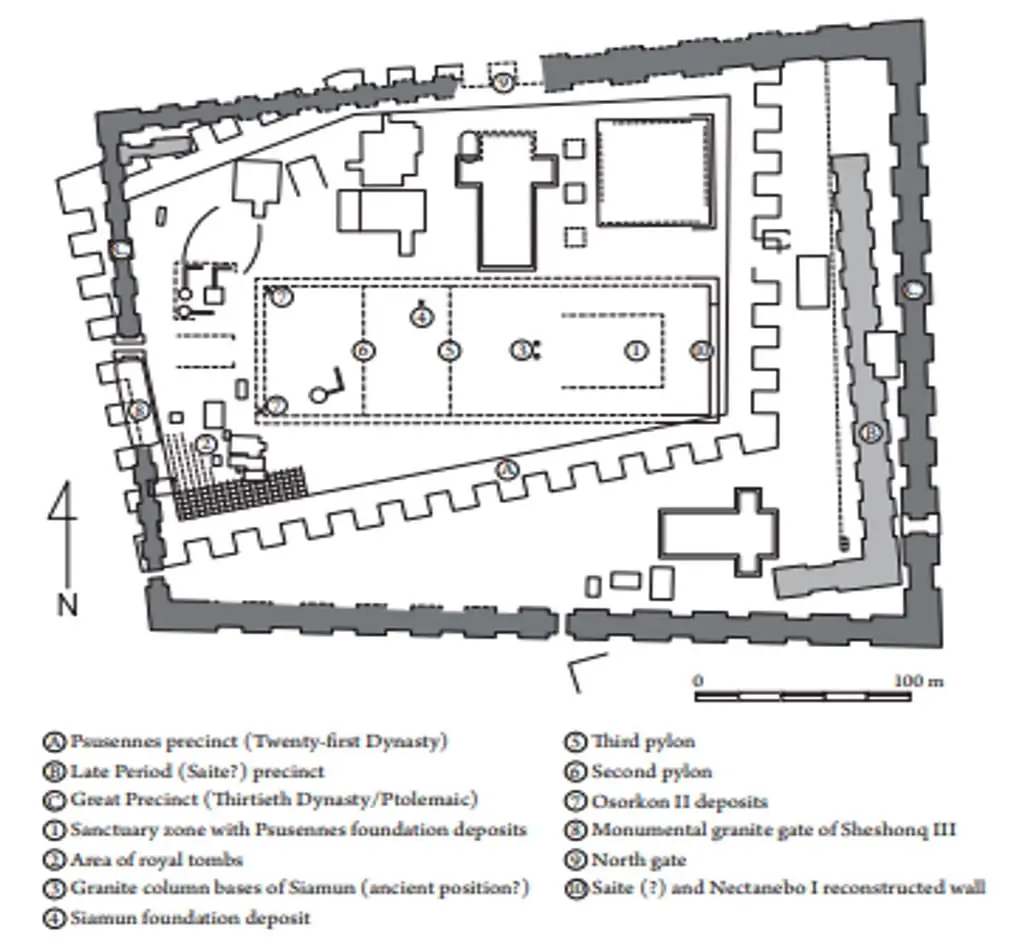
Inside the Great Temple of Amun-Ra

The spiritual and physical heart of the city is the Great Temple of Amun-Ra. This sanctuary remains the largest and most famous of the Tanis temples. Architects enclosed this area with a monumental wall to mimic the layout of Karnak Temple.

[Main Gateway & Pylon] ---> [Avenue of Obelisks] ---> [Sacred Purification Lake]

The Massive Enclosure Walls

Pharaoh Psusennes I built an immense mud-brick wall to protect the sacred precinct. Later, Shoshenq III reinforced this structure. This wall was not merely defensive; it also held deep religious meaning. In Egyptian cosmology, a temple enclosure wall represented the boundary of the organized universe. It held back the chaotic forces of Nun, the primeval waters. The wall at Tanis measured up to 15 meters in width and 10 meters in height, effectively isolating the sacred ground from the bustling commercial city outside.

The Monumental Gateway and First Pylon

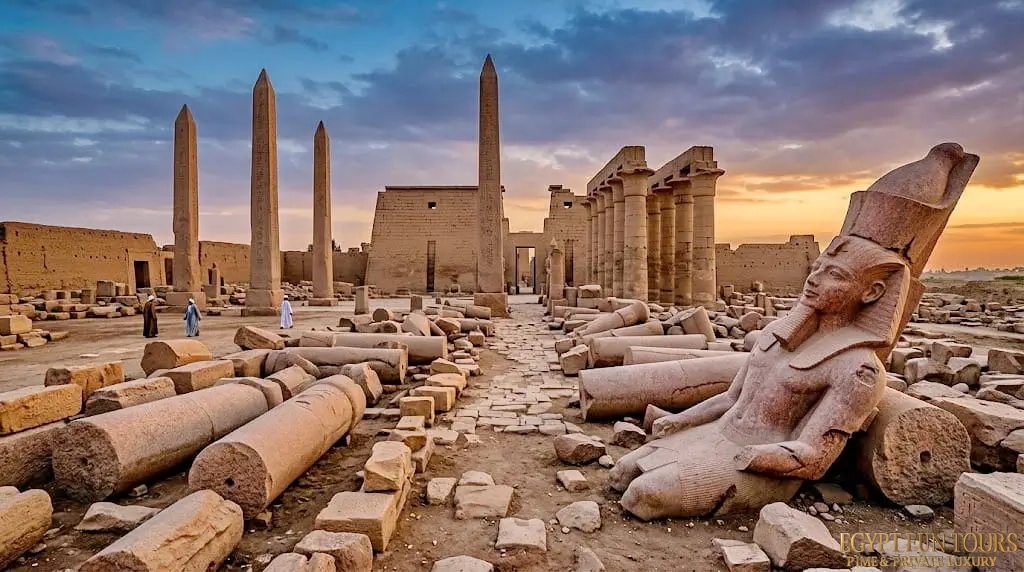
The main entrance to the Great Temple faced the west, pointing toward the ancient Nile branch. Visitors originally greeted a massive pylon gateway constructed by Shoshenq III. Fronting this gateway stood colossal statues of Ramesses II in red granite. Workers had carefully transported these monoliths from Pi-Ramesses. One of these monoliths, famously known as the “Colossus of Tanis,” originally stood over 14 meters tall. Today, its colossal torso and fractured crown lie prostrate near the entrance, showcasing the sheer scale of the recycled monuments.

The Sacred Avenue of Obelisks

Beyond the main gateway lay an expansive courtyard that featured an unparalleled concentration of stone pillars. Today, the site boasts more obelisks than almost any other single location in Egypt, with fragments of over two dozen distinct pillars scattered across the terrain.

Workers originally arranged these pink granite obelisks in pairs along the central axis of the temple. They served as solar fingers reaching toward the sky, channeling divine power down into the dark sanctuary. Interspersed between these obelisks were palmiform and papyriform columns, creating a dense stone forest that led directly to the inner chambers.

The Sacred Lake

To the north of the main temple axis lies the Sacred Lake. Workers lined this large rectangular basin with dressed limestone blocks. Groundwater from the Nile naturally filled the basin. The lake served two essential purposes for the priesthood:

  • Ritual Purification: The priests of Amun bathed here multiple times a day before entering the inner sanctuary.
  • Cosmological Drama: It represented the primeval waters from which the primordial mound of creation first emerged.

Tanis Temples: Exploring the Temples of Mut and Khonsu

To complement the Great Temple of Amun-Ra, builders constructed secondary Tanis temples within the enclosure to honor the rest of the Theban Triad.

The Temple of Mut

Situated to the south of the main Amun precinct, the Temple of Mut was constructed by Pharaoh Siamun and later embellished by Apries during the 26th Dynasty. Mut represented the sky, motherhood, and the protective aspect of the divine eye.

The architecture of this temple is notable for incorporating Hathoric columns. These unique pillars feature the dual-faced visage of the goddess Hathor, sporting cow ears. This architectural choice underscored the syncretism between Mut and Hathor as cosmic mothers. Furthermore, excavations in this area yielded numerous statues of the lioness-headed goddess Sekhmet, who embodied the fierce aspect of the divine feminine.

The Temple of Khonsu

Khonsu, the moon god and child of Amun and Mut, also had a dedicated sacred space among the Tanis temples. Although smaller than the temples of his divine parents, this structure played a critical role during lunar festivals. The building featured a hypostyle hall with columns bearing detailed reliefs of the moon god in both his human and falcon-headed manifestations. The architectural placement of this temple allowed for processionals that connected the child god to the main temple of Amun during specific astronomical alignments.


Ain Sokhna: Your Quick Guide to Cairo’s Red Sea Paradise

Discover Ain Sokhna, Cairo's closest Red Sea paradise, located just 1.5 hours away. This stunning...
Related post
FUN

The Royal Necropolis Inside the Sacred Ground

The Royal Necropolis Inside the Sacred Ground

One extraordinary feature of the Tanis temples is the location of the Royal Necropolis. This arrangement sets the city completely apart from the traditions of Upper Egypt.

+-------------------------------------------------------------+
|              FUNERARY ARCHITECTURE COMPARISON              |
+------------------------------------+------------------------+
| THEBES (Southern Egypt)            | TANIS (Northern Egypt) |
+------------------------------------+------------------------+
| Separated Spheres:                 | Integrated Spheres:    |
| Tombs hidden in remote valleys;    | Tombs built directly   |
| Mortuary temples built miles away. | inside active temples. |
+------------------------------------+------------------------+

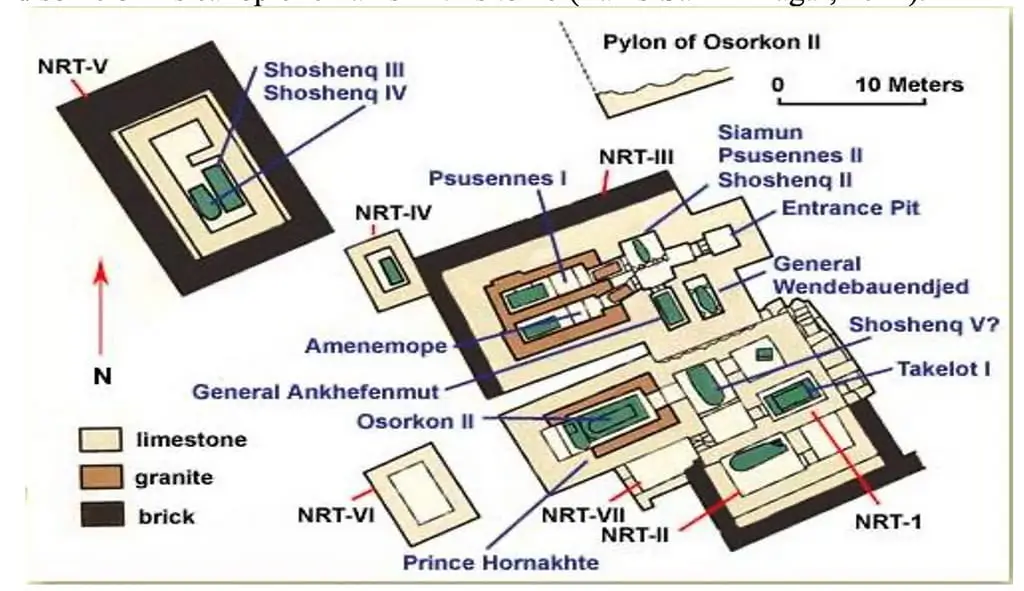
In Luxor, pharaohs hid their final resting places in the secluded Valley of the Kings. They built their mortuary temples miles away on the west bank of the Nile. In contrast, the Tanite kings built their tombs directly inside the Great Temple enclosure of Amun-Ra, just a short distance from the main sanctuary.

The Architecture of the Tombs

Discovered intact by French Egyptologist Pierre Montet between 1939 and 1940, these tombs were built underground using heavy limestone and granite blocks salvaged from older New Kingdom structures. Above ground, they were likely covered by small chapels or mud-brick structures that have long since eroded away. The subterranean architecture was compact but highly secure. It consisted of small stone-lined chambers decorated with low-relief carvings of scenes from the Book of the Dead, the Book of Gates, and the Amduat. These reliefs guided the pharaoh through the treacherous hours of the night.

Why Kings Chose the Temple Precinct

This radical shift in funerary architecture was driven by two practical and theological concerns:

  1. Security: The Third Intermediate Period was marked by political instability and rampant tomb-robbing. Burying kings within the heavily guarded, sacred walls of the temple precinct offered maximum physical protection.
  2. Divine Proximity: By placing their bodies within the physical structure of Amun’s earthly palace, the pharaohs ensured immediate closeness to the king of the gods. This arrangement allowed them to share in the daily offerings made by the temple priests for eternity.

The Lost City of Tanis: Capital of Northen Egypt in Delta

The Ancient Egyptian City of Tanis was the vital capital of the 21st and 22nd...
Related post
FUN

Discoveries and Treasures of the Tanis Temples

Discoveries and Treasures of the Tanis Temples

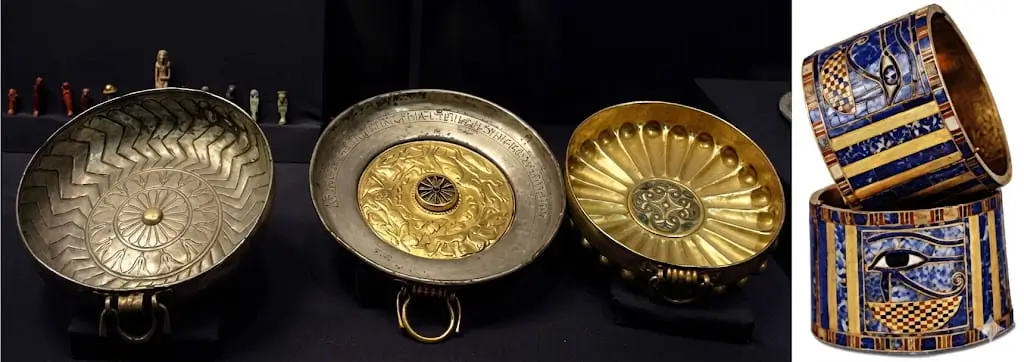
The portable architecture found inside these tombs reveals a high level of craftsmanship that rivals the famous treasures of Tutankhamun. Because the discovery occurred on the eve of World War II, it received significantly less global media attention. However, the artifacts found within the temple complex provide invaluable insights into the wealth of the northern pharaohs.

The Silver Coffin of Psusennes I

While gold was associated with the flesh of the gods in ancient Egypt, silver was considered their bones. Because silver had to be imported from abroad, it was exceedingly rare and highly valued during this era. Psusennes I was buried in a magnificent coffin crafted entirely from solid sheet silver. The coffin is a masterpiece of ancient metalwork, depicting the king as Osiris holding the sacred crook and flail, with his body wrapped in the protective wings of the vulture goddess Nekhbet and the falcon god Horus.

The Golden Burial Mask

Over the king’s mummified face lay a striking mask made of beaten gold, with inlaid glass paste and lapis lazuli for the eyes and eyebrows. Though stylistically different from Tutankhamun’s mask, the Tanis mask exhibits an extraordinary level of artistic refinement. It presents a serene, idealized portrait of the pharaoh that was designed to preserve his facial features for eternity, ensuring his successful transformation into a divine being.

The Epigraphic Record: Decoding the Walls

The blocks of Tanis serve as a vast historical archive. For epigraphers and historians, decoding the inscriptions carved into the recycled temple stones has provided a clearer picture of the shifting political currents of ancient Egypt.

The San Decree (The Stone of Tanis)

Discovered in 1866 by Karl Richard Lepsius, the San Decree (or Canopus Decree) is a monumental stela dating to 238 BCE during the Ptolemaic Period. Like the Rosetta Stone, it features a single decree inscribed in three distinct scripts: Egyptian Hieroglyphs, Demotic, and Ancient Greek. The text honors Ptolemy III Euergetes and introduces a remarkably sophisticated calendar reform that included a leap year system. The discovery of this stone within the Tanis temple ruins provided early scholars with crucial validation of their ability to decipher hieroglyphs, cementing Tanis’s status as a premier site for linguistic and historical research.

The Shoshenq III Triumphal Reliefs

On the remnants of the First Pylon, Shoshenq III carved extensive campaign reliefs celebrating his military achievements and devotion to Amun. Although heavily eroded, these inscriptions echo the classic New Kingdom tradition of portraying the pharaoh as a giant figure smiting enemies before the god. This imagery served as potent propaganda aimed at projecting an illusion of imperial dominance during an era of fragmenting domestic power.

Qasr Qarun: Fayoum’s Labyrinth Temple and Its Winter Solstice Miracle

Explore Qasr Qarun, a 2,000-year-old Ptolemaic temple on the remote edge of Fayoum's Lake Qarun....
Related post
FUN

Archaeological Exploration: Past to Present

Archaeological Exploration Past to Present

The rediscovery of Tanis is a dramatic chapter in the history of Egyptology, marked by shifting interpretations and astonishing, unexpected finds.

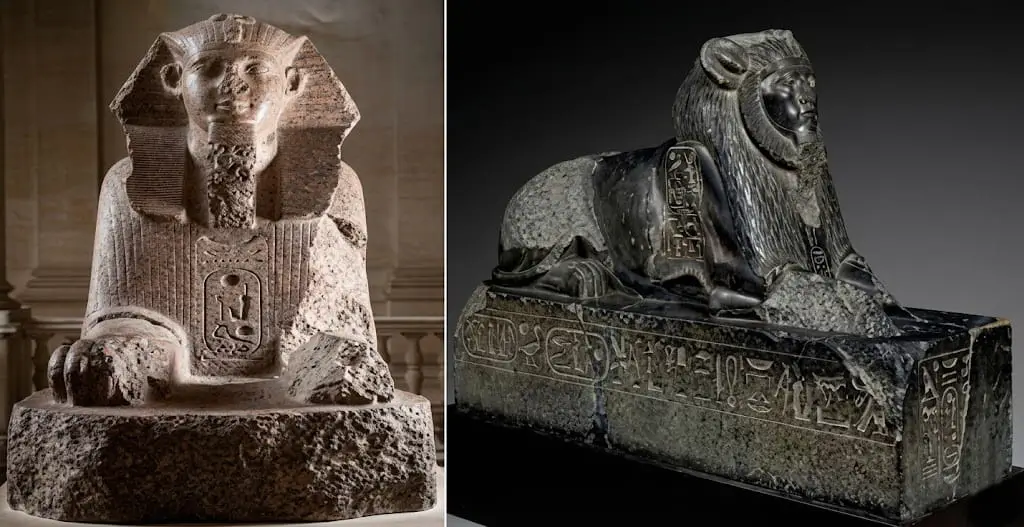
  • 1825: Jean-Jacques Rifaud discovers the twin pink granite sphinxes (now prominently displayed in the Louvre Museum).
  • 1860s: Auguste Mariette conducts initial excavations, uncovering the vast fields of obelisks and identifying Ramesside blocks.
  • 1883–1884: Sir Flinders Petrie systematically maps the Great Temple enclosure, documenting its complex architectural reuse.
  • 1939–1940: Pierre Montet discovers the intact Royal Tombs inside the Amun-Ra enclosure on the eve of World War II.

Modern Excavations and Conservation

Today, Tanis remains an active and vital archaeological site. Modern missions focus less on searching for spectacular treasures and more on conservation, documentation, and environmental management.

The high water table of the Nile Delta presents a continuous challenge for conservationists. Rising moisture carries destructive salts up into the porous granite and limestone blocks, causing them to flake and degrade. Current archaeological efforts utilize ground-penetrating radar (GPR) and satellite imaging to map out the unexcavated portions of the vast mud-brick city surrounding the temples. These advanced technologies are helping scholars learn more about the domestic quarters, administrative buildings, and industrial workshops that once supported the sacred spaces of Tanis.

Visiting the Tanis Temples Today

Visiting the Tanis Temples Today

For modern travelers and history enthusiasts, visiting the ruins of the Tanis temples offers a raw, evocative experience. The site contrasts sharply with the heavily restored monuments of Luxor or Aswan.

What to Expect on Site

  • The Monument Fields: The site is essentially a massive open-air museum where you can walk among dozens of toppled obelisks and colossal statues resting precisely where they fell centuries ago.
  • The Royal Tombs: Visitors can descend into the concrete structures built to protect the underground limestone chambers of Psusennes I and Shoshenq III, giving them a firsthand look at the low-relief funerary carvings that decorate the walls.
  • The Sacred Lakes: The grand outlines of the ancient purification pools remain clearly visible, offering a striking testament to the scale of the original architecture.

The Tanis temples remain a monument to human ingenuity and cultural adaptability. Built during a time of environmental disruption, these structures stand as a testament to the enduring power of Egyptian religious traditions. By repurposing the stones of the past, the pharaohs of Tanis managed to construct a magnificent capital that successfully preserved the divine legacy of Egypt for generations to come.

Private guided Sightseeing tour package features all Cairo iconic attractions. Private tour guiding, entrance fees,...
Witness the best attractions of Cairo, Luxor, & Hurghada....
FUN
God_Anubis_Icon

11 Wonderful Hours in Cairo

I had an 11 hour layover in Cairo, and it couldn’t have been better spent than with Manal from Egypt Fun Tours. I was able to adjust my tour once we left the airport and Manal had some really great suggestions when I told her what it was I wanted

More »

What an amazing day!

I had a 12 hour layover on my way to Dar es Salaam and wanted to take full advantage of my time in Cairo. After researching for many hours, I came across Egypt Fun Tours and emailed for more information. I received a prompt reply with full details of several

More »

My Dream Came True

I had waited 60 years to get to Egypt; in fact, it was my 60th birthday gift to myself. I went with my oldest daughter, and the experience was excellent. It was meticulously planned by the tour company and was designed for me and my daughter. I never had a

More »

7 night Egypt Experience Cairo, Aswan, Luxor

Trip of a lifetime!! COVID SAFE!! Knowledgeable guide who loves to share the magic of Egypt with tourists. Friendly and accommodating. This company goes to the extreme to make clients feel welcome and help them. A family company that takes good care of its support staff. Must book the 7-night

More »
God_Anubis_Icon

Top-rated Tour Packages

God_Anubis_Icon