
Rock-Cut Nave of the Church of the Blessed Virgin Mary, Gebel el-Teir
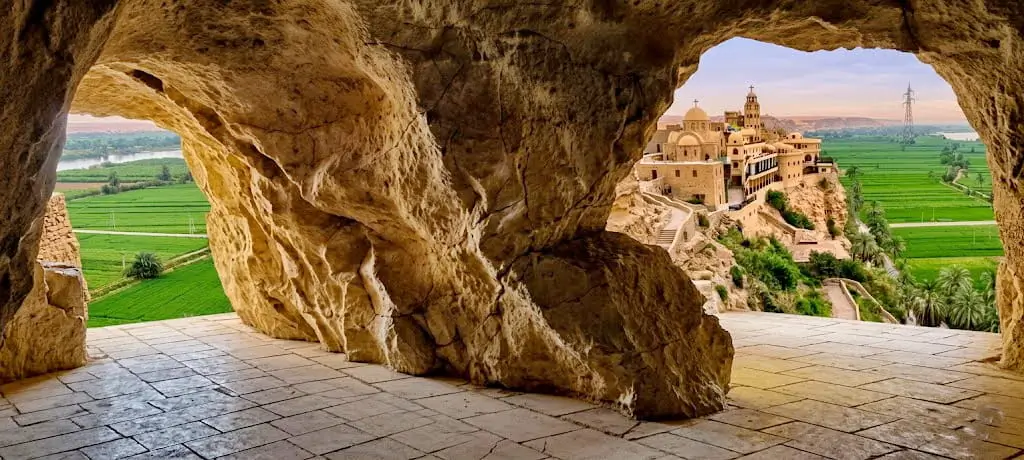
Empress Helena’s builders created a masterpiece of rock-cut engineering. Specifically, they carved the entire main nave from the solid limestone cliff. The church features ten massive columns. These pillars are actually part of the original mountain bedrock. Consequently, they support the roof without any external materials. This monolithic design demonstrates the incredible skill of 4th-century craftsmen. Furthermore, the Church of the Blessed Virgin Mary Gebel el-Teir reflects the classic Byzantine basilican plan.
The interior layout serves both a symbolic and functional purpose. For instance, the rock-cut columns divide the space into three distinct aisles. This arrangement guides the eyes of the pilgrims toward the sanctuary. Because the walls are solid stone, the church remains cool even in the desert heat. Therefore, the Church of the Blessed Virgin Mary Gebel el-Teir acts as a physical refuge. Moreover, the stone surfaces create perfect acoustics for traditional Coptic chanting. For this reason, the religious services here feel exceptionally powerful and ancient.
The Symbolic Layout of the Sanctuary
The architects designed every detail of the Church of the Blessed Virgin Mary Gebel el-Teir with care. Specifically, they placed the most sacred areas at the eastern end of the building. This orientation follows the standard practice of early Christian churches.
- The Stone Iconostasis: A solid screen separates the nave from the altar area.
- The Ancient Baptistery: Workers carved a deep basin into the floor at the western end.
- The Sanctuary Arch: A beautiful arch frames the entrance to the holy altar.
Therefore, the structure of the Church of the Blessed Virgin Mary Gebel el-Teir is both simple and profound. It uses the mountain itself to create a house of prayer. Furthermore, the absence of modern additions preserves the original 4th-century atmosphere. Consequently, visitors feel as though they have stepped back in time. This makes the site a primary destination for those studying early Christian architecture.