Nephthys: The Egyptian Goddess of Funerals, Night, and Protection

Nephthys (meaning "Mistress of the House" or "Lady of the Enclosure") is an essential ancient Egyptian goddess of the Duat (underworld), Night, Service, and Funerary Rites. She belongs to the Ennead, as the daughter of Geb and Nut and the sister-wife of Set. Despite her marriage to the chaotic god, she served as the faithful, constant helper of her sister, Isis, aiding her in the resurrection of Osiris. Her primary role was to protect the dead, acting as a crucial mourner, weaver of bandages, and guide for the deceased soul.

Nephthys: The Mistress of the House

Nephthys (meaning “Mistress of the House” or “Lady of the Enclosure”) stands as an essential ancient Egyptian goddess of the Duat (underworld), Night, Service, and crucial Funerary Rites. She belongs to the influential Ennead, born as the daughter of Geb and Nut and destined to be the sister-wife of Set, the chaotic god. Despite her troubled marriage to Set, she acts as the faithful, constant helper of her sister, Isis. She aids Isis in the most important task: the resurrection of Osiris. Her primary role involves protecting the dead, acting as a compassionate mourner, a weaver of the first protective bandages, and a crucial guide for the deceased soul as it navigates the dangers of the afterlife.

This video provides an overview of the goddess Nephthys. Goddes Of Protection (Nephthys) | All Scenes Powers | Gods Of Egypt

FUN

Origin, Title, and Early Identity

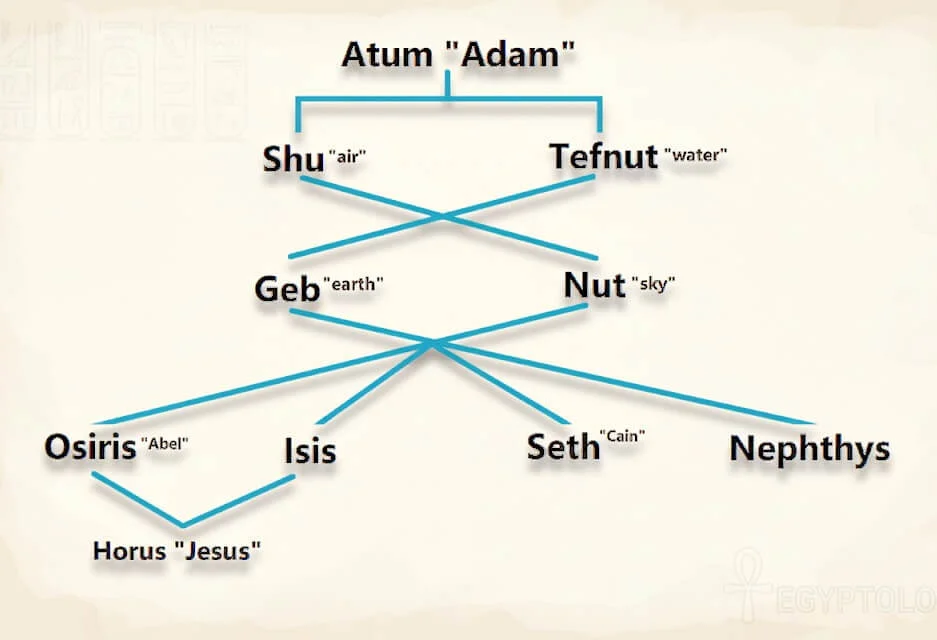
Holy ennead of ancient egypt

Nephthys’s identity is defined by her birthright within the foundational divine family and her unique, protective title.

Her Place in the Ennead: Nephthys belongs to the core mythological group known as the Ennead, the nine original deities who established cosmic order. Geb, the earth god, and Nut, the sky goddess, bore her. She was the younger sister of Osiris and Isis, and the sister-wife of Set, the god of chaos. This family relationship placed her at the very center of the myth of death and resurrection that shaped all of Egyptian theology.

The Meaning of “Mistress of the House”

Her name, “Nephthys,” translates as “Mistress of the House” or “Lady of the Enclosure.” This title holds deep symbolic weight. It did not refer to an ordinary domestic dwelling. Instead, the “House” referred to the sacred structures of the temple, the sky, and most crucially, the tomb or the funerary enclosure. She served as the divine mistress who guarded and protected these crucial, liminal spaces—the doorways between the worlds. She ensured that the sacred enclosure of the deceased remained magically secure.

The Contrast of Her Marriage

Nephthys’s marriage to the violent, chaotic god Set remains one of the greatest paradoxes in Egyptian religion. While Set embodies destruction and Isfet (chaos), Nephthys consistently operates in the service of Ma’at (order). Scholars interpret this union as her representing the boundary or the safe edge that surrounds chaos. Her presence ensures that the destructive power of Set is contained and does not completely overwhelm creation.

FUN

The Osiris Myth: Fidelity and Mourning

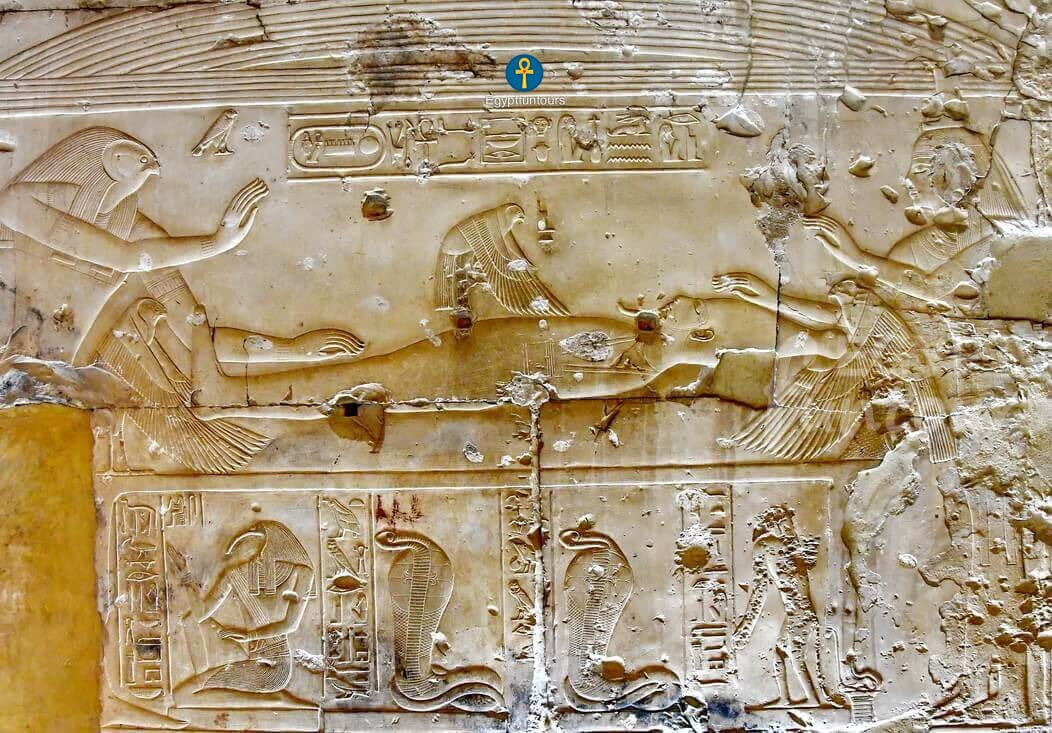
legend osiris abydos temple - 4-day luxor tour

Despite being married to the murderer Set, Nephthys’s defining role in the Osiris myth is one of profound compassion, loyalty, and vital service to her sister, Isis. Her actions ensured that the concept of resurrection could take hold.

The Faithful Companion of Isis

When Set brutally murdered and dismembered his brother Osiris, Nephthys chose loyalty to her sister and the principles of order (Ma’at) over her husband. She deserted Set and joined Isis in the arduous quest to find and reassemble Osiris’s scattered body parts.

  • The Role of the Divine Mourner: Nephthys stood alongside Isis as one of the Two Kite-Hawks (or Merty Sisters). They collectively performed intense lamentation and protective magic for the deceased Osiris. They transformed themselves into wailing birds of prey, circling over the body. Their piercing, rhythmic cries were not just expressions of grief; their sonic magic helped bring Osiris back to life. Their performance of ritual weeping became the divine model for all funerary rites thereafter.

  • Helper in Resurrection: Nephthys’s hands directly aided in the preparations for resurrection. She helped her sister gather the scattered pieces of Osiris’s body. Crucially, she wove the first protective linen bandages used to wrap the divine body. This action directly links her to the foundational practices of embalming and funerary rites, making her a patron of the sacred arts of preservation.

The Conception of Anubis

Nephthys’s most mysterious and profound action was her role in the birth of the god of embalming, Anubis. This event further cemented her necessary role in the afterlife.

  • The Deception: The myth states that Nephthys desperately craved a child but could not conceive with the barren or destructive Set. She reportedly disguised herself as her beautiful sister, Isis, and seduced Osiris while he was intoxicated. This union resulted in the conception of Anubis.

  • Birth of the Embalmer: Fearful of Set’s wrath, Nephthys abandoned the infant Anubis in the marshlands, where Isis later discovered and raised him. The significance of this act is immense: Nephthys, by conceiving Anubis, gave birth to the God of the Dead and Embalming, ensuring the deceased had a divine guide ready to perform the very rituals necessary for resurrection.

The Contrast of the Sisters

While Isis embodied the life-giving, maternal force at the center of the kingdom, Nephthys represented the forces of transition, service, and protection at the periphery and in the darkness. They were two halves of the necessary cosmic balance. Isis provided life; Nephthys provided the safe passage through death.

Ma’at: Harmony, Order, and Cosmic Balance in Ancient Egypt

To stand amidst the wonders of Egypt is to encounter an entire civilization rooted in...
Related post
FUN

Roles in the Afterlife and Protection

Goddess Nephthys - Goddesses of ancient Egypt - Egypt Fun Tours

Nephthys’s role extended far beyond mourning. She served as an active, magical guardian, ensuring the deceased successfully navigated the perilous journey through the Duat (underworld).

The Protector of the Dead

Nephthys operated as a constant protective force, both physically within the tomb and magically throughout the journey.

  • Guarding the Canopic Jars: The Egyptians placed the vital organs of the deceased into four Canopic Jars, each protected by one of the four Sons of Horus and one corresponding goddess. Nephthys held the crucial role as the protector of the jar guarded by the god Hapy, which contained the deceased’s lungs. This solidified her connection to the physical breath of life and the transition from the earthly world.

  • The Sarcophagus Shield: Texts often invoke Nephthys in spells painted on coffins and tombs. Artists typically painted her figure on the corners of the sarcophagus (opposite Isis), acting as a magical shield. She provided a crucial line of defense against the demons and threats that sought to destroy the body and the soul’s integrity.

Goddess of Night and Liminal Spaces

Nephthys also commanded the spaces and times associated with transition and mystery.

  • The Liminal Authority: Her association with the periphery, the darkness, and the transitional hours (dusk, midnight) gave her authority over liminal spaces—the places between defined states. The tomb itself was the ultimate liminal space.

  • Guiding Through the Duat: She played an important role in the Duat, the underworld. While Osiris ruled the Duat and Ra traveled through it, Nephthys acted as a guide and protective presence in its darker, more confusing sections. She ensured the deceased soul found its way safely through the hostile terrain toward judgment and eventual rebirth.

The Weaver and Preparer

Beyond her divine protection, Nephthys held a practical, ritualistic role in the physical preparation of the body.

  • Patron of Bandages: As the goddess who wove the first linen strips for Osiris, she became the patron of the weavers and the preparation of the fine linen used for wrapping the mummy. This crucial function gave the mummy both physical integrity and magical protection, ensuring the body remained a viable vessel for the Ba and the Ka.
  • Provider of Comfort: Nephthys’s presence in the burial chamber provided comfort and service. She was the one who offered the deceased sustenance and companionship, transforming the terrifying reality of death into an orderly, protected transition.

Goddess Mut: Divine Mother, Queen of Thebes, and Consort of Amun

Mut is a major ancient Egyptian goddess whose name literally means "Mother." She rose to...
Related post
FUN

Iconography and Symbolic Depiction

Nefertari tomb qv66 valley queens luxor 26 min min

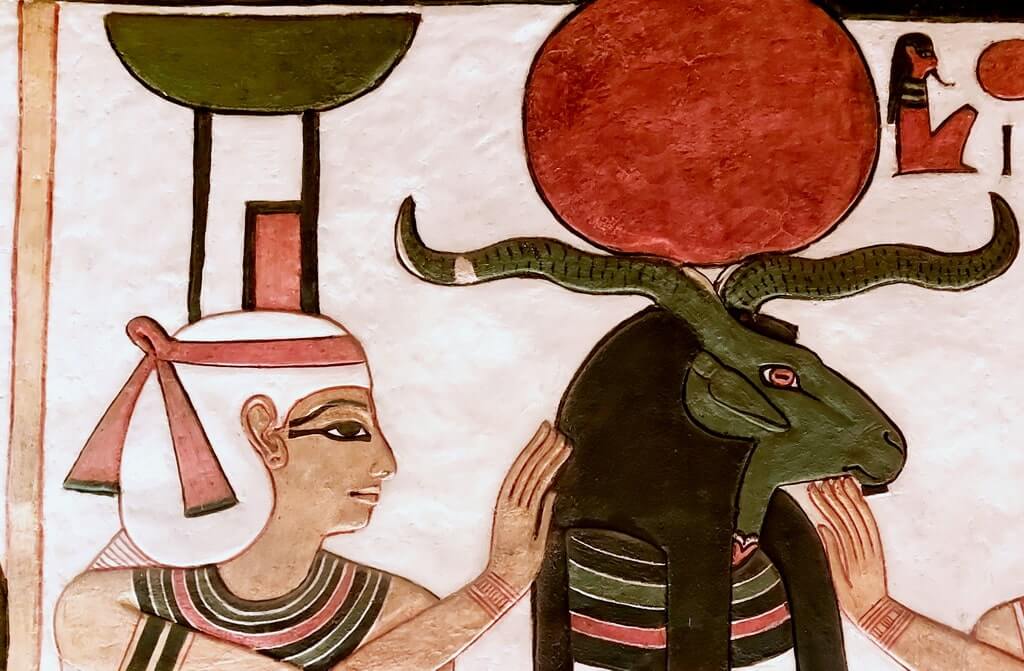
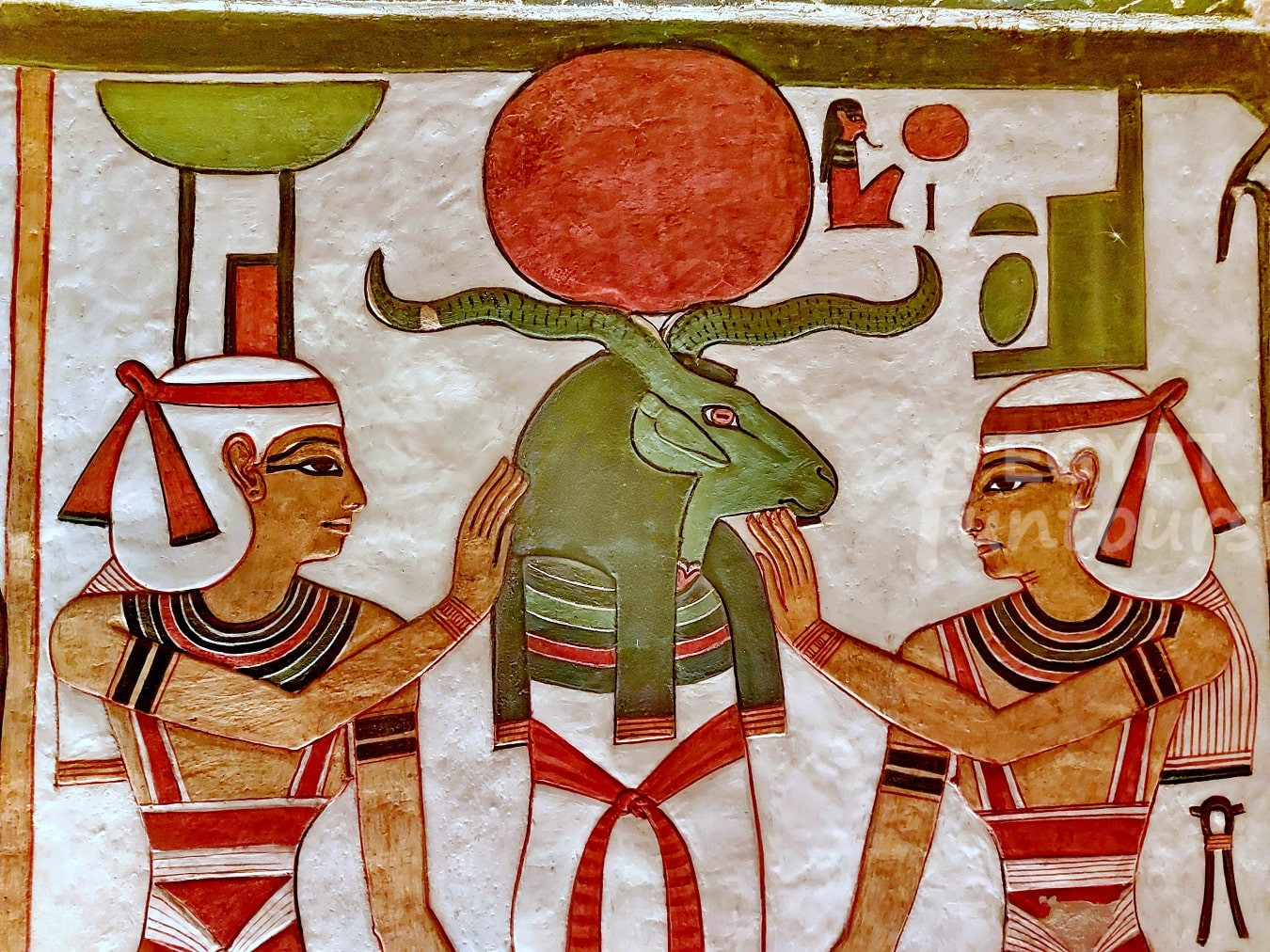
Nephthys’s visual identity consistently reinforced her name and her function. She did not wear the crowns of kingship but the powerful symbols of enclosure and protection.

Visual Identity and Unique Headdress

Unlike goddesses who wore cosmic crowns (like the sun disk of Hathor or the double crown of Mut), Nephthys wore a unique identifier on her head.

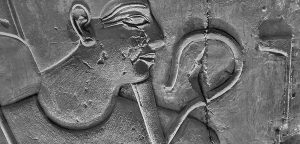
  • The Hieroglyphic Headdress: Her most common and unique depiction shows her as a woman wearing a hieroglyphic symbol atop her head. This symbol represents the House/Enclosure (a rectangle) and the Basket (a semicircle). This permanent feature visually represents the exact translation of her name, “Mistress of the House/Enclosure,” confirming her role as the magical guardian of sacred space.
  • The Protective Gesture: Artists often showed her with her arms outstretched, sometimes embracing or hovering over the deceased figure. This gesture was one of eternal protection and magical defense.

The Kite-Hawk and the Funeral Rites

Nephthys often took the form of a bird to perform her most vital funerary duties.

  • The Kite-Hawk Form: She frequently appeared in the form of a kite-hawk (djeret), a species of raptor known for its mournful, piercing cry. This bird’s wail symbolized the ritual lamentation of the mourning women during human funerals. It was in this form that she and Isis performed their powerful magical wails over Osiris.
  • Symbolism of Mourning: Her association with the kite-hawk and ritualistic weeping established her as the patron of all mourners, ensuring that human acts of grief and protection followed the divine model set by the goddess herself.

The Contrast with her sister Isis: The Necessary Balance

Nephthys is rarely depicted alone; she is almost always shown in complementary symmetry with her sister, Isis. This pairing defined the necessary balance of the cosmos.

Characteristic Goddess Isis Goddess Nephthys
Domain Life, Birth, Restoration Death, Transition, Protection
Space The Fertile Center (Kemet) The Periphery, The Enclosure
Cosmic State Light, Visibility Night, Shadow
Headdress Throne (symbolizing Kingship) House and Basket (symbolizing Sanctuary)

They represent two halves of a whole. Isis provided the energy of new life and the means for resurrection. Nephthys provided the necessary structure, service, and protection required for the soul to reach that point.

Goddess Mut: Divine Mother, Queen of Thebes, and Consort of Amun

Mut is a major ancient Egyptian goddess whose name literally means "Mother." She rose to...
Related post
FUN

Legacy of Nephthys

Nephthys’s quiet, indispensable service made her one of the most widely invoked goddesses in Egyptian funerary religion. Her legacy endures not through great temples but through every coffin and burial spell.

Nephthys’s Widespread Cult

Nephthys did not command the massive, independent cult complexes of deities like Mut or Amun. However, her inclusion in countless spells and texts made her cult ubiquitous and essential.

  • Funerary Spells: She appears extensively in the Pyramid Texts, the Coffin Texts, and the Book of the Dead. These spells constantly invoke her name to ensure safe passage and resurrection. This continuous presence in the literature confirms that every Egyptian, regardless of class, relied on her protection.
  • The Enduring Protector: Her lasting significance remains her identity as the indispensable protector who prepared and guarded the deceased for the final resurrection.

Nephthys, The Necessary Shadow

Ultimately, Goddess Nephthys emerges as a profoundly important and complex deity whose service ensured the smooth functioning of the afterlife. She was not a queen of the living, but the faithful, necessary guardian of the dead. Her compassion for her brother and her pivotal role in protecting the body and soul transformed the fear of death into the promise of a protected journey. Nephthys, the necessary shadow, stands as the epitome of loyal service, providing compassionate support and unyielding defense in the transition from life to the eternal next world.

A Magical Journey through the marvels of Egypt...
Tour package to make your vacation a reality....
Premium Cairo Tour Package Egypt Fun Tours

THE MOST AMAZING TRIP

Hi Hamada! Sorry, we were so quick to say goodbye—my mom was fading 🙂 I just wanted to say thank you for THE MOST AMAZING trip… You thought of every detail, improvised, adapted, overcame every challenge, multitasked personalities, and did it all with grace, intelligence, and kindness. From the bottom

More »

Tour of Cairo

Despite a late start due to car trouble, Mohamed more than made up for it with his incredible knowledge and dedication. His explanations were detailed and thoughtful, and he went above and beyond to make sure we had a great experience. A memorable and informative tour, thanks to Mohamed’s hard

More »

Great Walking Tours!

My husband & I were very very happy with the walking tour we took with Egypt Fun on Nov 26. Our guide (Manal) was amazing & very very knowledgeable. Thanks to Manal, we were able to really get a very good understanding of the city, its history & its great

More »

Great layover Tour!!

I had an excellent layover tour with Hani. He is knowledgable, fun, and passionate about his city. I went for a tour of the pyramids, sphinx, and to a papyrus factory which were all great. Ask him any question about Egyptian history and he will surely know the answer! Also

More »
Isis with wings

Top-rated Tour Packages

Isis with wings