
Khafre Enthroned: The Story of Egypt’s Iconic Diorite Statue

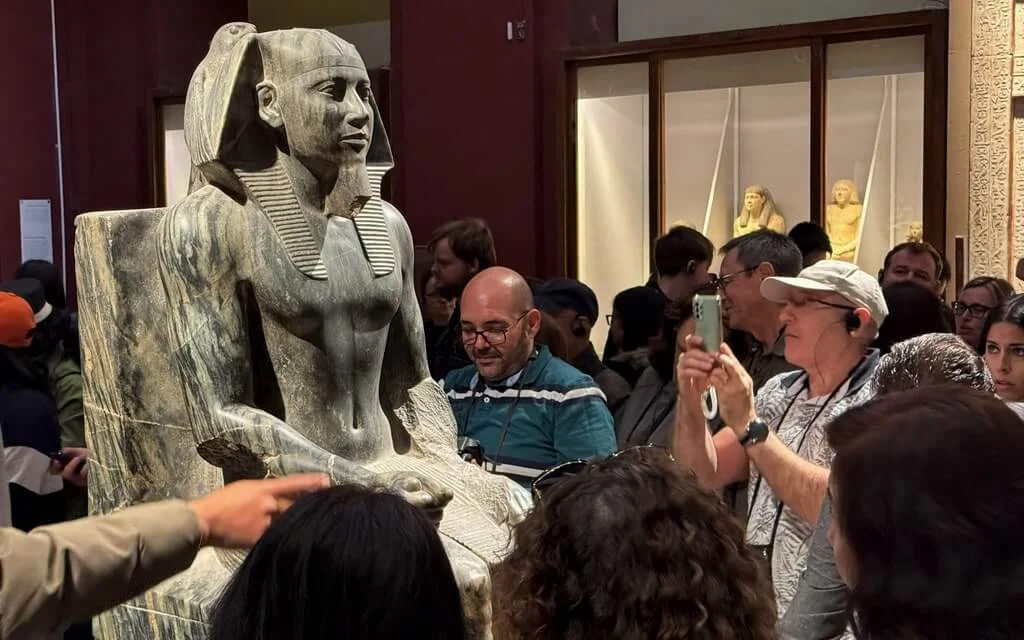
The diorite statue of Khafre is a masterpiece of ancient Egyptian art, famously displayed in the Egyptian Museum. Carved from incredibly hard stone, it depicts the enthroned pharaoh under the divine protection of the falcon god Horus. This iconic sculpture served as a vessel for the king's eternal spirit, or Ka, symbolizing his divine right to rule and his permanent, indestructible nature.

Deep within the sands of Giza, a masterpiece of art and divine power sat hidden for millennia. This was no ordinary sculpture. It was the magnificent diorite statue of Khafre. This statue is more than just a portrait of a pharaoh (King Khafre). In fact, it’s a profound statement about kingship, eternity, and the very gods themselves.

This article explores the incredible story of this statue. You will learn about its dramatic discovery, its powerful symbolism, and its sacred purpose, revealing why the diorite statue of Khafre is one of the greatest treasures of the ancient world.
FUN

The Discovery of the Diorite Statue of Khafre

The Discovery of the Diorite Statue of Khafre

First, let’s travel back to 1860. The French archaeologist Auguste Mariette was excavating at Giza. He was working inside the ruins of Khafre’s Valley Temple, a building near the Sphinx. There, at the bottom of a deep pit, his team made an incredible find. They uncovered this nearly flawless statue. The discovery of the diorite statue of Khafre immediately sent waves of excitement through the world. A masterpiece, hidden for over 4,000 years, had finally returned to the light.

A Closer Look at the Diorite Statue of Khafre

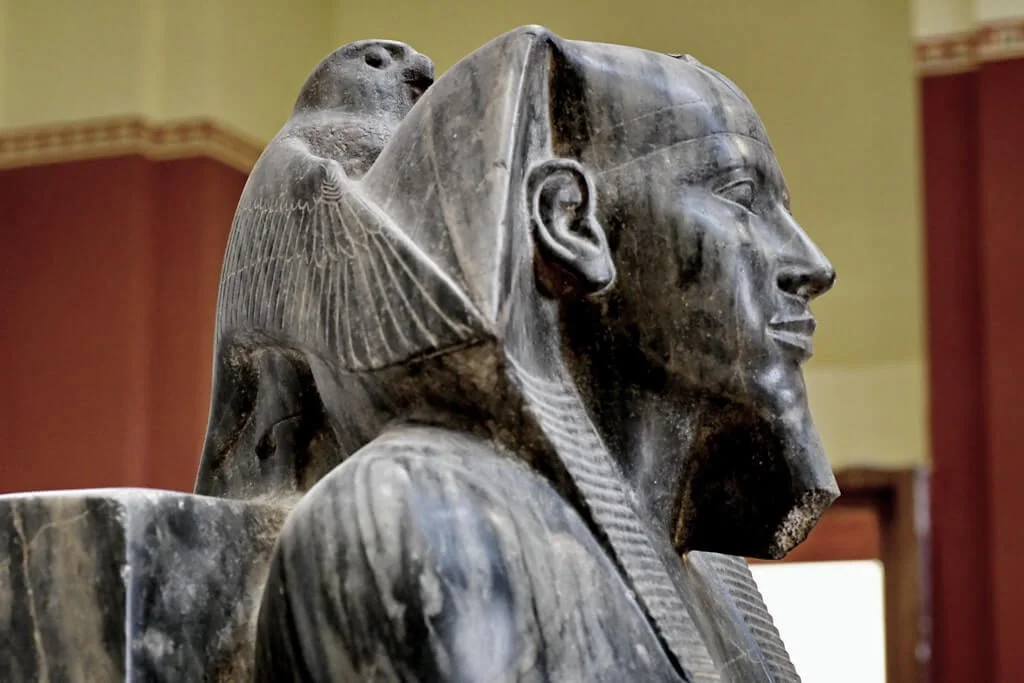
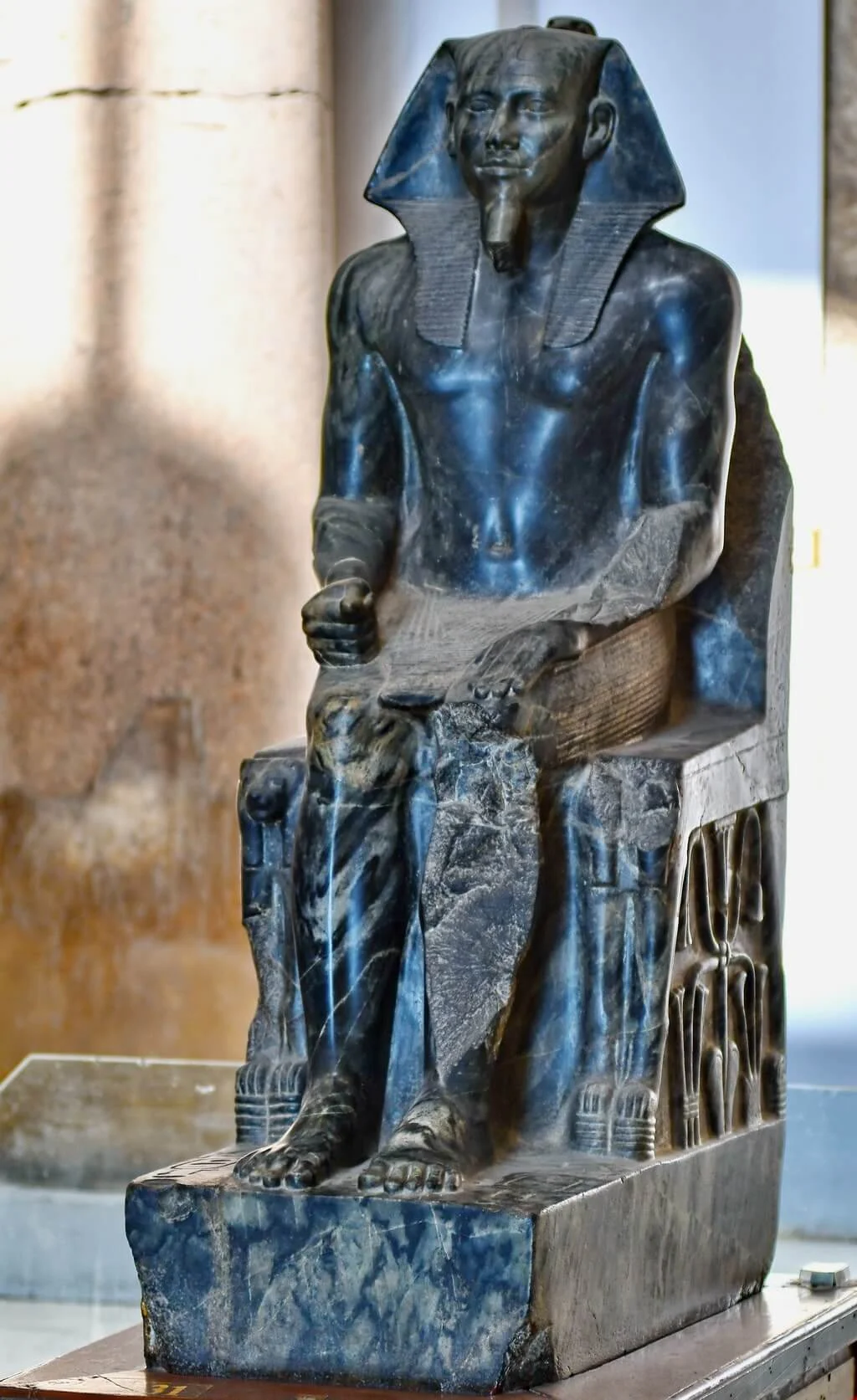
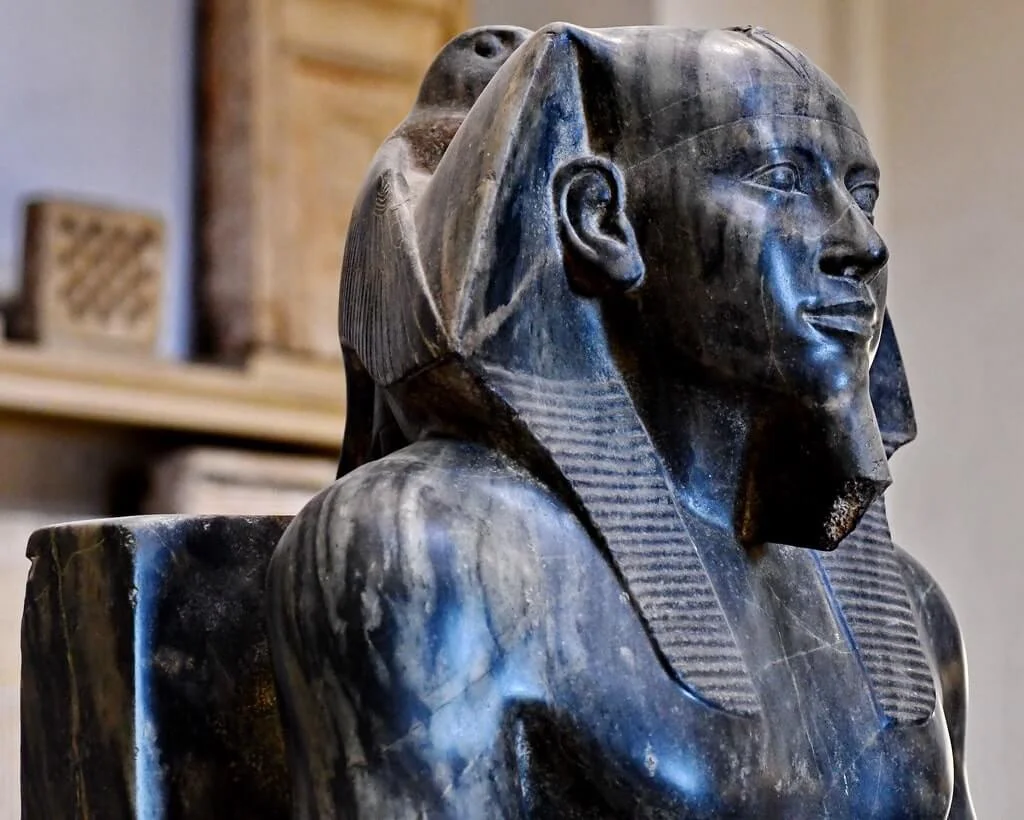
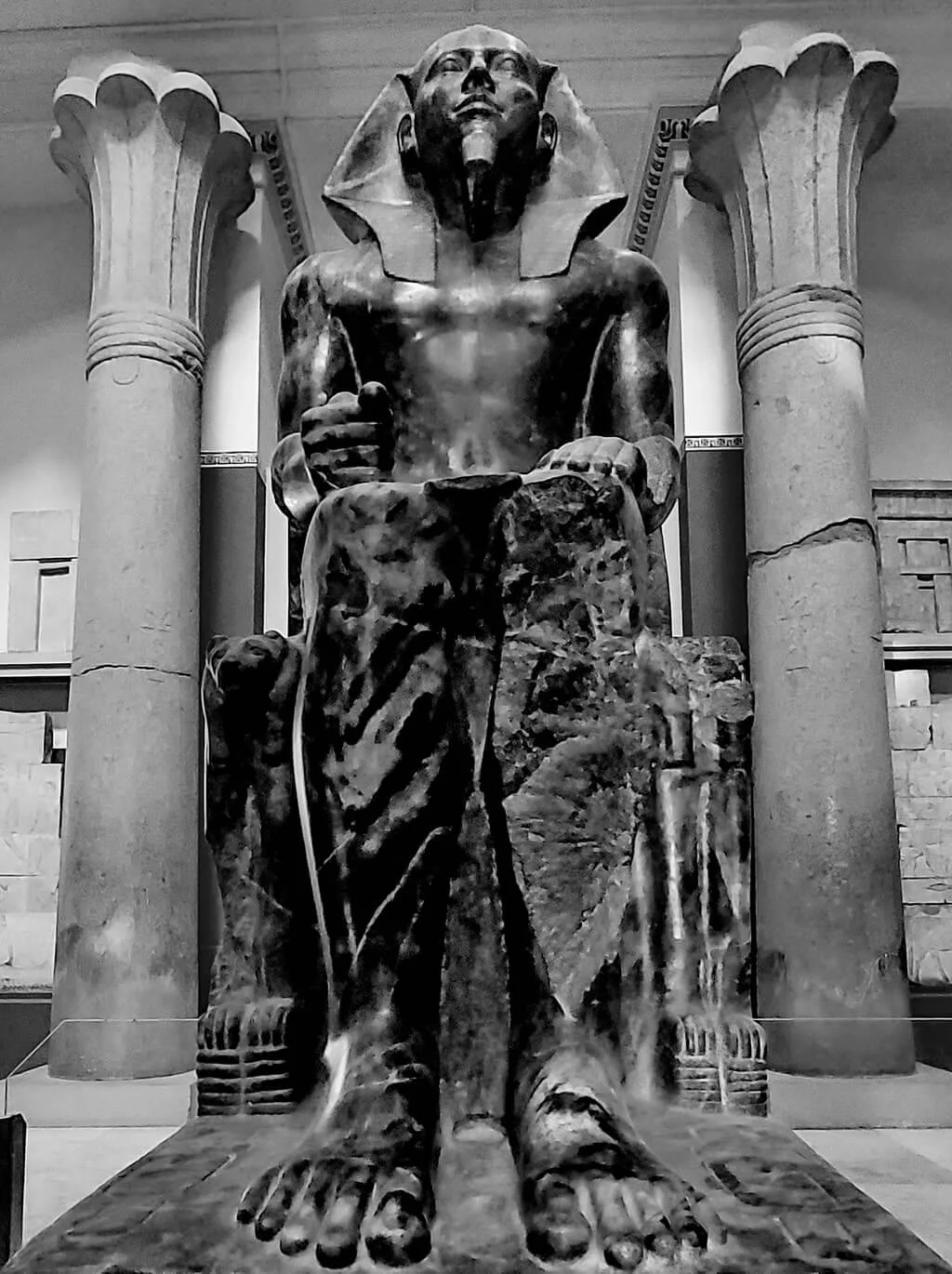
When you see the diorite statue of Khafre, you feel a sense of calm and immense power. The pharaoh sits rigidly on a royal throne. His face is serene and idealized, showing no emotion. It is the perfect face of a god-king. In addition, his body is athletic and flawless, representing the ideal human form. He wears the traditional royal kilt and the nemes headdress, with a cobra, or uraeus, on his brow to symbolize his authority. Every detail is carved with incredible precision, creating a feeling of perfect order.

FUN

The Powerful Symbolism of the Diorite Statue of Khafre

The Powerful Symbolism of the Diorite Statue of Khafre

This statue is a masterclass in symbolism. Every single element has a deep meaning. Therefore, to truly understand the diorite statue of Khafre, you must learn to read its stone language. It tells the story of the holy family.

Isis, the Royal Throne

First, look at the throne itself. The throne was a powerful symbol of the goddess Isis. In fact, her name in hieroglyphs is the very sign for a throne. Therefore, by sitting on the throne, Khafre is cradled by the mother goddess herself. She is the source of his royal authority.

Horus, the Divine Protector

Next, notice the falcon god Horus perched behind Khafre’s head. He wraps his wings around the pharaoh in a gesture of divine protection. This shows that the king is the living embodiment of Horus on Earth. Horus protects both the king’s physical body and this statue, which was the eternal vessel for the king’s spirit.

Osiris, the Risen King

Finally, the king himself represents Osiris. After death, the pharaoh was believed to merge with Osiris, the god of the afterlife, to be reborn eternally. This statue, therefore, captures Khafre as a living man, protected by Horus, who is destined to become Osiris.

Together, these three elements complete the divine family. The throne (Isis), the king (Osiris), and the falcon (their son, Horus) are all present. This makes the diorite statue of Khafre an incredibly powerful magical object, ensuring divine protection and rebirth for the king.

The Unification Battle by King Narmer

The Unification Battle by King Narmer The unification battle of King Narmer is shown on...

Related post
FUN

The Sacred Purpose of Khafre’s Statue

The Sacred Purpose of Khafre's Statue

The diorite statue of Khafre was not just a piece of art. It had a vital, sacred purpose. The ancient Egyptians believed it was a vessel for the king’s Ka, or life force. If the pharaoh’s actual mummy were ever damaged or destroyed, his Ka could inhabit this statue instead. As a result, this beautiful object guaranteed Khafre’s survival in the afterlife. It was his backup body for eternity.

Valley Temple of King Khafre: A Gateway to the Afterlife at Giza

The Valley Temple of Khafre, built around 2570 BC on the Giza Plateau, served as...
Related post
FUN

The Lasting Legacy of the Diorite Statue of Khafre

Today, the diorite statue of Khafre is a centerpiece of the Egyptian Museum in Cairo. It is considered the pinnacle of Old Kingdom sculpture. Visitors from around the world stand in awe of its perfection and power. The statue has survived for over four and a half millennia, a timeless testament to the genius of ancient Egyptian artists and their profound vision of eternal life.

Slavery in Ancient Egypt: Roles, Reality, and the Lowest Social Tier

Explore the complex realities of slavery in ancient Egypt. Discover how people entered bondage, primarily...
Related post
FUN

Diorite Statue of Khafre (FAQs)

Diorite Statue of Khafre (FAQs)

1. Where is the diorite statue of Khafre located today? The statue is one of the main attractions at the Egyptian Museum in Cairo, Egypt.

2. How big is the statue? The statue is slightly larger than life-size, standing at 168 cm (or 5 feet 6 inches) tall.

3. Why does the stone look almost black? The statue is carved from anorthosite gneiss, a type of diorite. It’s a very hard igneous rock that, when polished, takes on a deep, dark, almost black appearance with a subtle glow.

4. Is the falcon behind his head a crown? No, it is not a crown. It is a representation of the god Horus, who is shown protecting the king. This is a powerful symbol of divine kingship, indicating that the pharaoh is under the direct protection of the gods.

Discover the breathtaking tourist attractions in the land of pharaohs....
Heavenly essential Egypt Group journey awaits every traveler....

Day trip to Wadi el Hitan and Wadi el Rayan

We went on a full-day trip to Wadi el Hitan and Wadi el Rayan with Mohamed (Hamada). Mohamed was a wonderful guide, always making sure we had plenty of water and enough to eat, and providing us with information about the area and Egypt more generally. He also gave us

More »

Amazing one day tour

Fantastic tour. We were picked up at the airport early in the morning (6 am), and were dropped off in the evening after discovering amazing Cairo. The guide was knowledgeable and took us to many hidden places, which we wouldn’t have found without him. Thank you!

More »
9-day tour package - Egypt Fun Tours

You’re in “GREAT HANDS” with Egypt Fun Tours!

We first went to Egypt in July 2010. We were to pass through Cairo on our way to Africa, and we had arranged to be picked up from the Cairo airport and shown around the city during our 6-hour layover. This was arranged through emails with Hamada, of Egypt Fun

More »
hani ahmed 1

Hani Was our Awesome Tour Guide!

We had an 11-hour layover in Cairo on 12/15/2011. We wanted to go to see the Pyramids, Tahrir Square, and possibly the museum. We were so lucky to have a guide, Hani from Egypt Fun Tour, who made it possible to see all the above, plus the Bazaar, and time

More »
Tailored Services for Corporate Business Transportation Needs

On time, adaptable, and fun!

My friend and I planned a whirlwind trip to Dubai, the Dead Sea, Petra, Cairo, Luxor, and Sharm el Sheikh for early November 2011 – 6 cities in 10 days! We allotted one afternoon and evening for Cairo, and we wanted to see as much as we could! We drove

More »
Isis with wings

Top-rated Tour Packages

Isis with wings