
The Tomb of Ptahemwia: A “Dream Discovery” at Saqqara
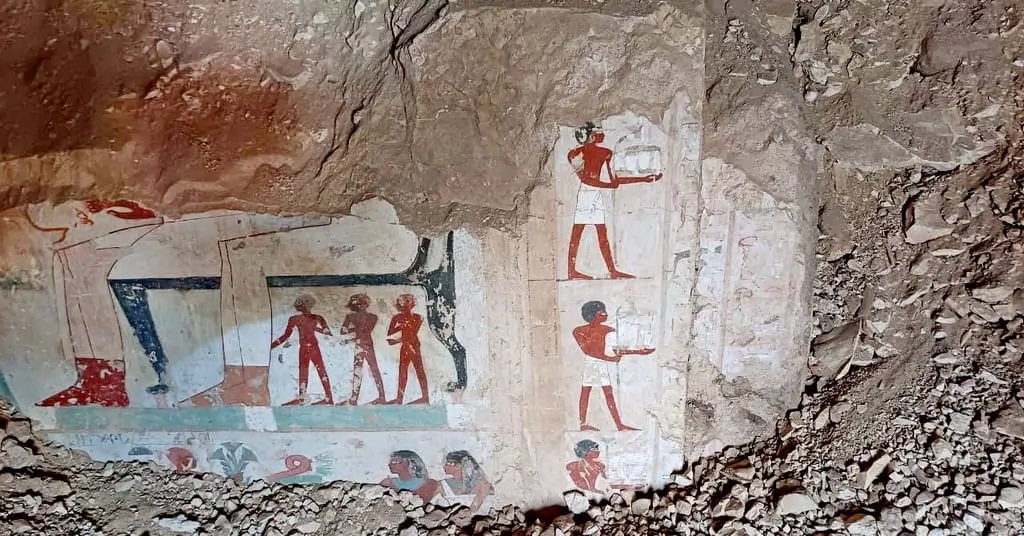
The Tomb of Ptahemwia at Saqqara is a significant 19th Dynasty discovery belonging to the Royal Treasurer of Ramesses II. Unearthed in 2022 by a Cairo University mission led by Dr. Ola El Aguizy, the site is most famous for its massive pink granite sarcophagus found at the bottom of an 8-meter shaft. This “temple-tomb” provides a rare look at the high-ranking administration and artistic prestige of the Ramesside era.
The Tomb of Ankhmahor: The “Physician’s Tomb” of Saqqara
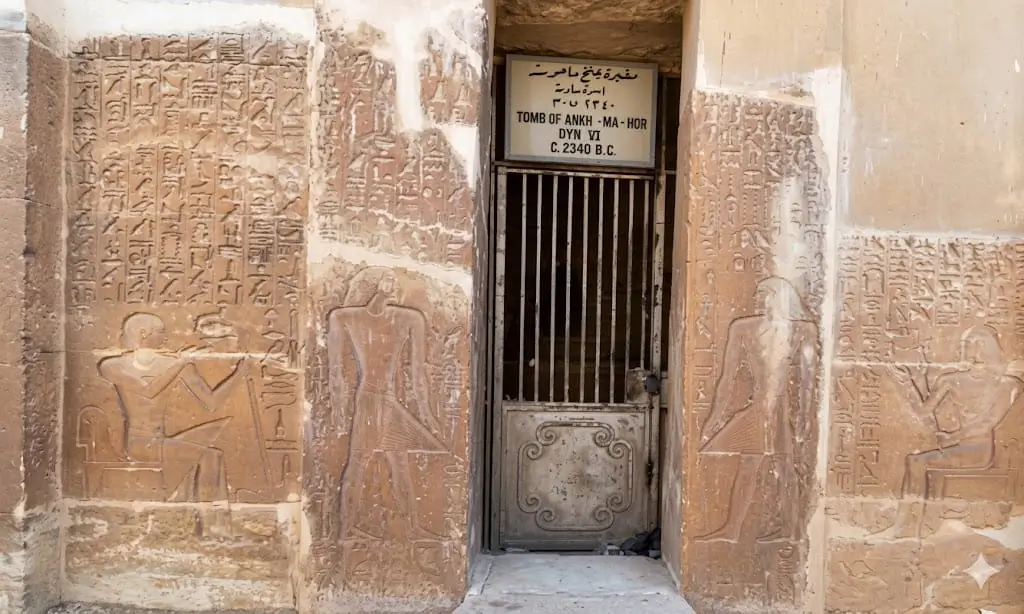
The Tomb of Ankhmahor in Saqqara is a 6th Dynasty masterpiece famously known as the “Physician’s Tomb.” While built for Pharaoh Teti’s powerful Vizier, it is globally celebrated for housing the world’s oldest medical reliefs, including detailed surgical and orthopedic procedures. These scientific scenes are balanced by evocative artistic depictions of professional mourners and ritual dancers, providing a unique dual perspective on the clinical knowledge and spiritual traditions that defined Egypt’s Old Kingdom.
The Tomb of Mehu: A Masterpiece of Old Kingdom Color
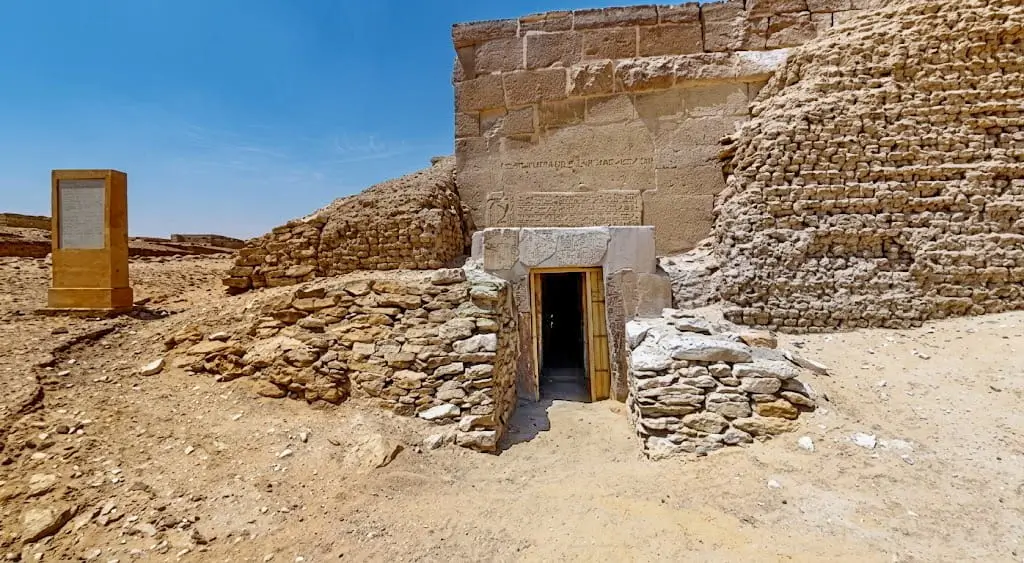
The Tomb of Mehu in Saqqara is an Old Kingdom masterpiece celebrated as the most colorful burial in the necropolis. Serving as the final resting place for Pharaoh Teti’s powerful Vizier, the mastaba features remarkably preserved 6th Dynasty reliefs that retain their vibrant original pigments. Its walls offer a vivid look at ancient life, showcasing bustling harvest rituals alongside rare wildlife scenes, such as the famous mating crocodiles, providing an unparalleled window into Egypt’s artistic and administrative peak.
The Tomb of Meryneith: A Bridge Between Gods in Saqqara
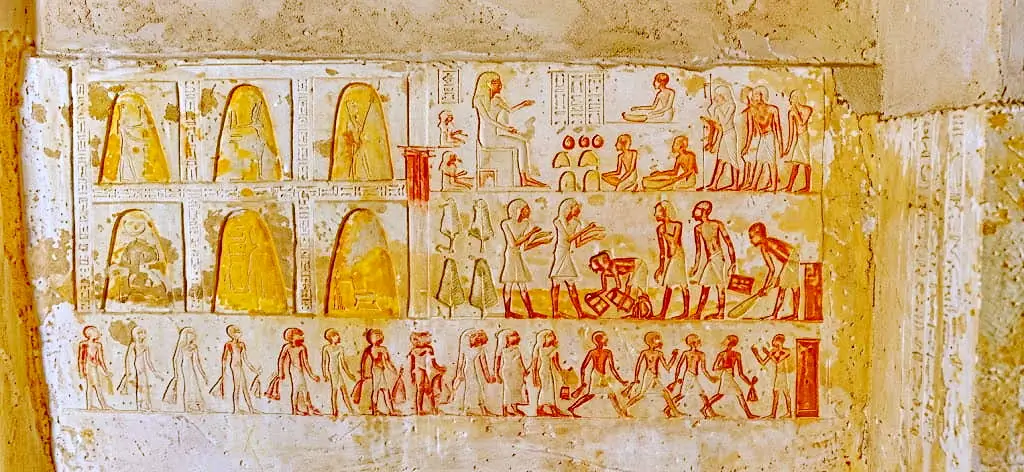
The Tomb of Meryneith (also referred to as Meryre) at Saqqara is one of the most historically significant private burials in Egypt. It serves as a physical record of the country’s return to tradition following the “Amarna Revolution.”
The Tomb of Qar at Saqqara: Home of the World’s Oldest Surgery
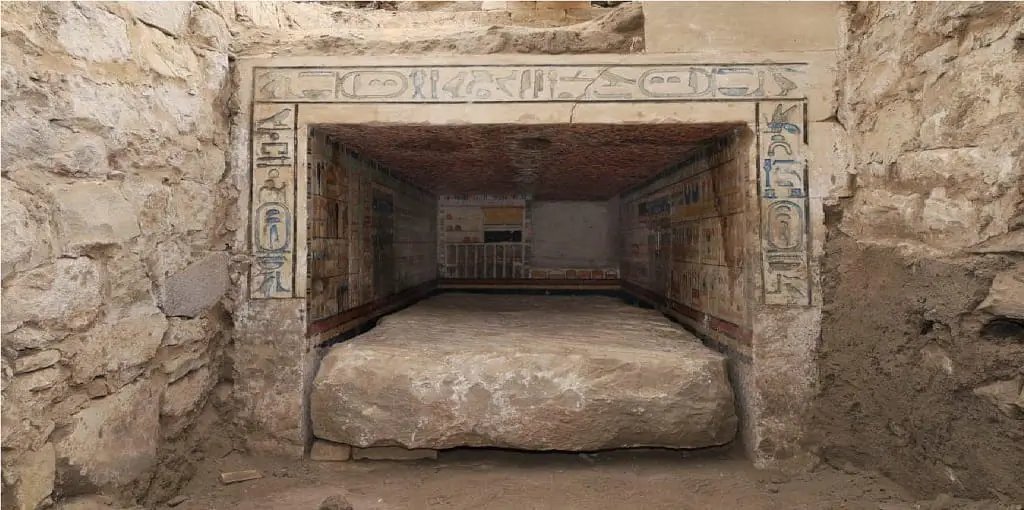
The discovery of the world’s oldest surgical kit within the Tomb of Qar in Saqqara solidifies its place as a cornerstone of Egyptian heritage. From the “wide-eyed” artistic style of its reliefs to the deep rock-cut burial shaft that protected its treasures for four millennia, this tomb is a testament to the sophistication of the Sixth Dynasty. For the modern visitor, it remains an essential stop on any journey through the sands of time.
The Tomb of Khnumhotep and Niankhkhnum: The “Eternal Embrace” of Saqqara
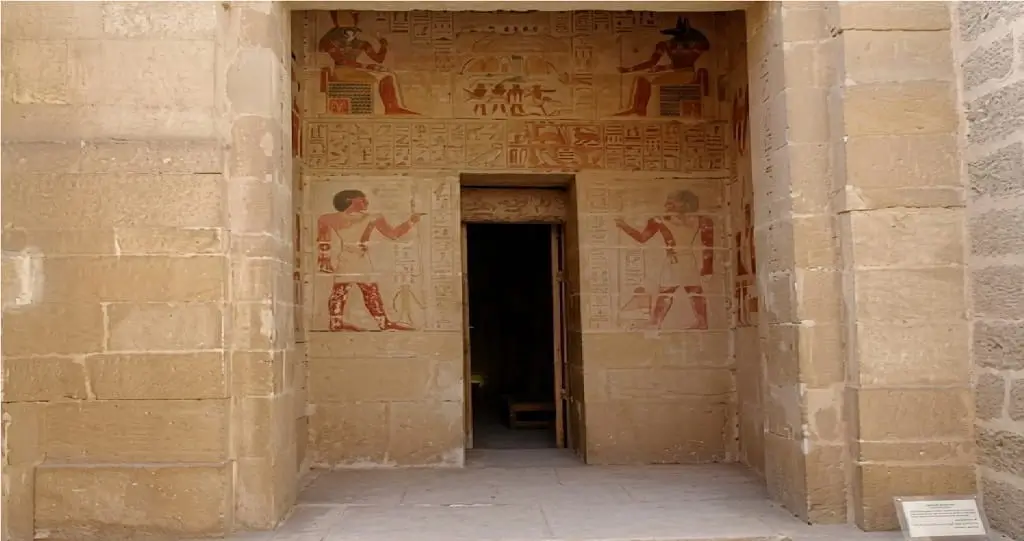
The Tomb of Khnumhotep and Niankhkhnum is a premier Fifth Dynasty monument in Saqqara, famous for honoring two royal officials who served as “Overseers of the Manicurists.” This mastaba features rare marketplace scenes and intimate depictions of the two men embracing, fueling debates over whether they were brothers or a same-sex couple. Its vivid reliefs and shared funerary cult make it an essential site for understanding Old Kingdom social life and elite traditions.
The Tomb of Neferseshemptah: Guardian of Teti’s Pyramid
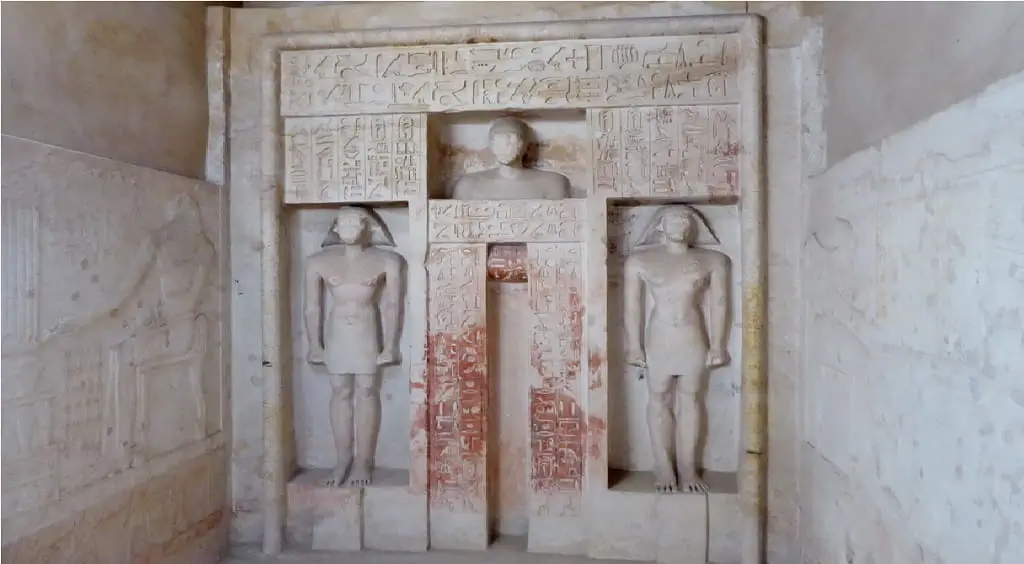
The Tomb of Neferseshemptah at Saqqara is a 6th Dynasty masterpiece. As the Steward of Teti’s Pyramid and husband to Princess Sesheshet, Neferseshemptah held immense power. The mastaba is famous for its architectural innovation, featuring a False Door with a unique 3D bust. Additionally, the interior preserves vibrant reliefs of daily life, including detailed poultry-feeding and bird-netting scenes. Since its 1899 discovery by Victor Loret, the tomb has served as a vital record of the social status and artistic brilliance of the Old Kingdom elite.
The Tomb of Tia and Tia at Saqqara: The Royal Sister of Ramesses II
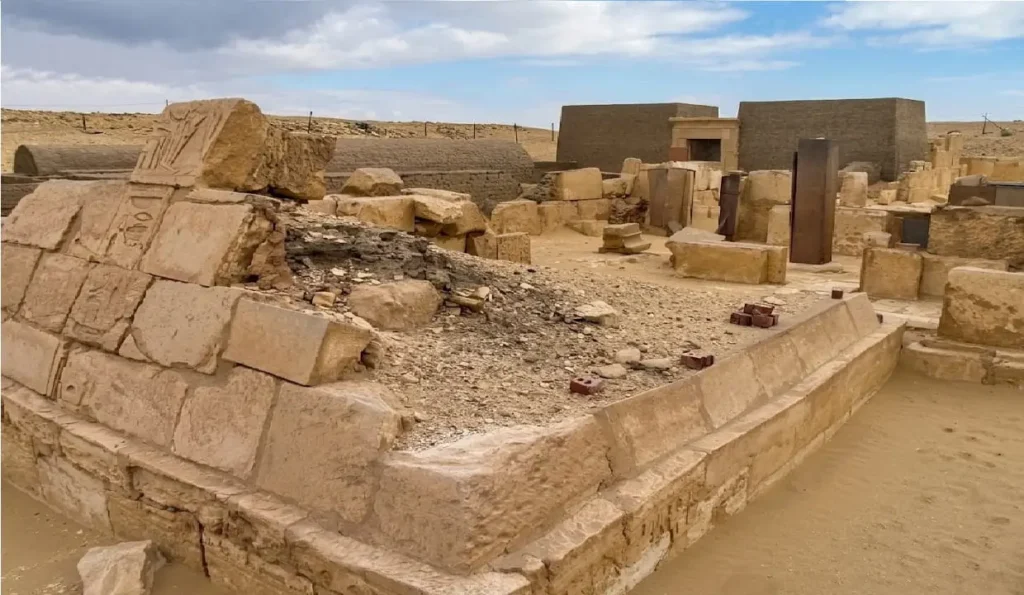
The Tomb of Tia and Tia in Saqqara is a 19th Dynasty masterpiece. It belonged to Princess Tia, sister of Ramesses II, and her husband, the royal treasurer. This unique “temple-tomb” features a rare stone pyramid at the rear. Lost for centuries, it was rediscovered in 1982 by an Anglo-Dutch mission. Its vibrant reliefs include precious images of Queen Tuya. Today, it remains a vital link to the royal family of the Ramesside era.
The Tomb of Maya and Meryt at Saqqara: A Masterpiece of Egypt’s Golden Age
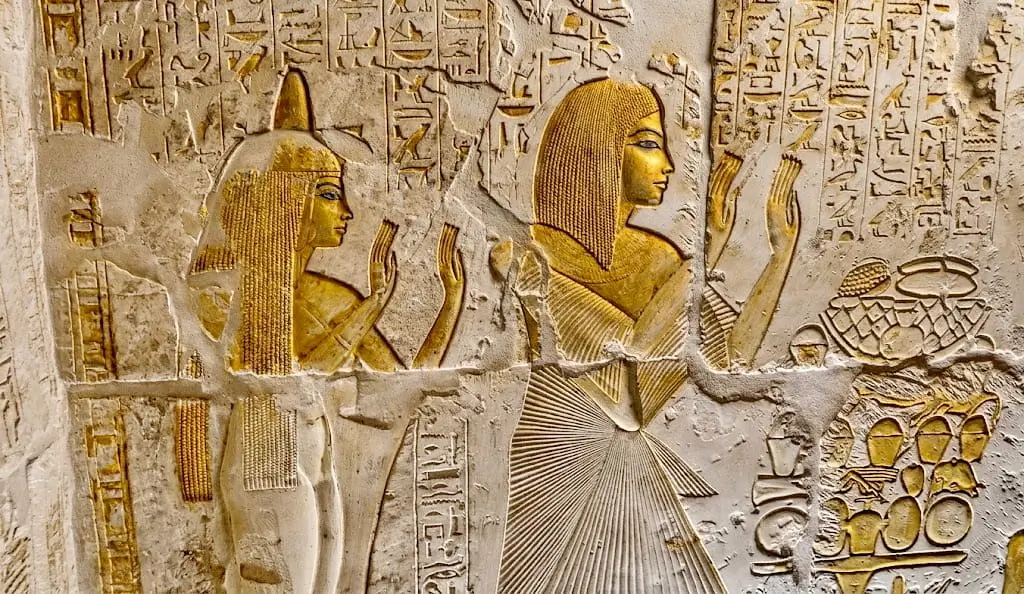
The Tomb of Maya and Meryt stands as a pinnacle of New Kingdom artistry and a testament to archaeological perseverance. Located in the Saqqara necropolis, this “temple-tomb” belongs to Tutankhamun’s treasurer and his wife, a high-ranking songstress. Its history is defined by a dramatic double discovery: first documented in 1843, then lost to the shifting desert sands for over a century, and finally rediscovered in 1986. Beyond its historical narrative, the tomb is famous for its unique subterranean reliefs painted in a vibrant monochrome yellow, symbolizing a golden, divine eternity. Today, it remains a critical link to the post-Amarna restoration period, offering a rare glimpse into the lives of the elite officials who rebuilt the Egyptian empire.
The Tomb of Horemheb in Saqqara: The Temple-Tomb of Egypt’s Greatest General
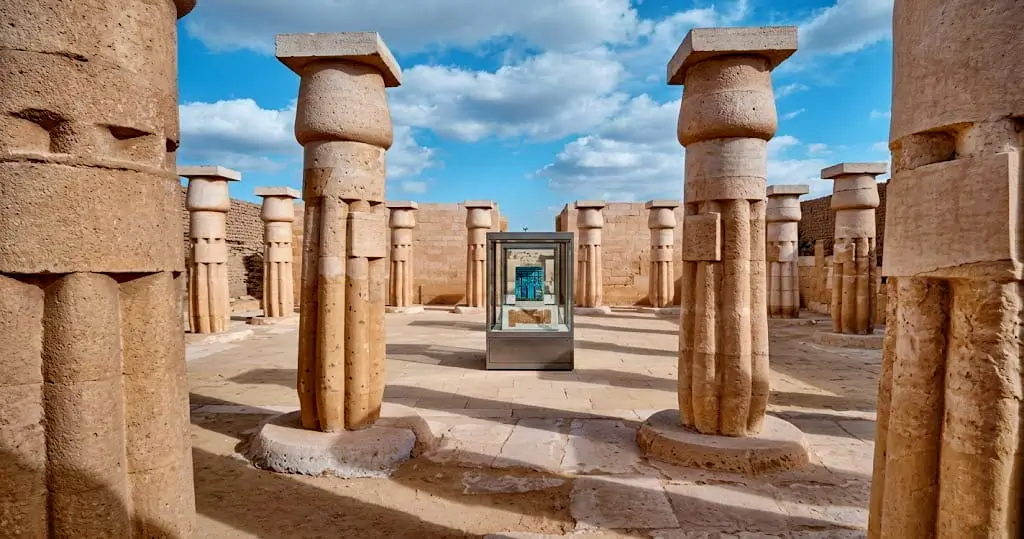
The Tomb of Horemheb in Saqqara is a pre-royal masterpiece that reflects the General’s immense power before he became Pharaoh. This “temple-tomb” is famous for its sophisticated architecture and realistic military reliefs, including the iconic “Gold of Honor” ceremony and detailed depictions of foreign captives. Transitioning between the Amarna and Ramesside styles, it remains the most significant New Kingdom monument in the Saqqara necropolis.
The Southern Tomb of King Djoser: The Mystery of Saqqara’s Blue Chambers
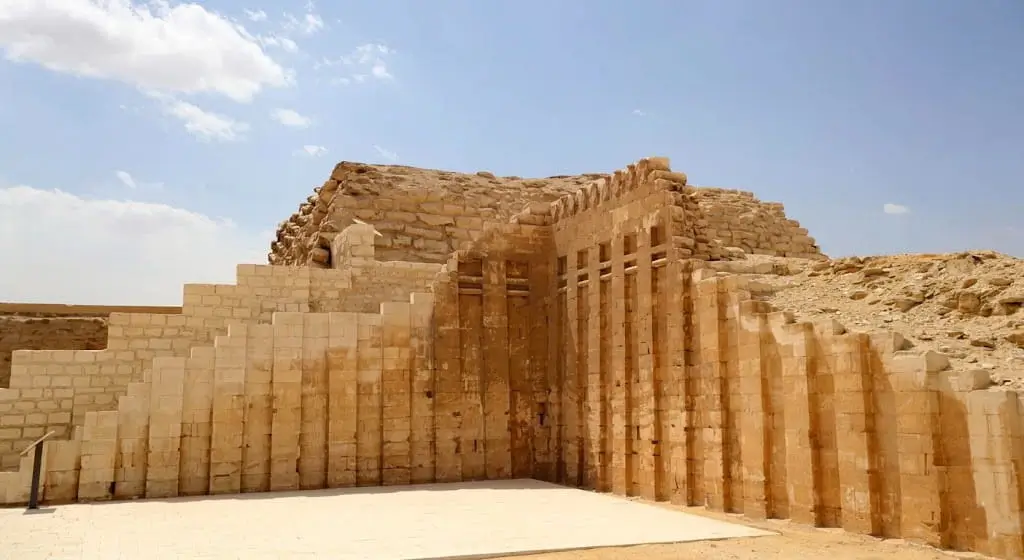
The Southern Tomb of King Djoser at Saqqara is a 3rd Dynasty subterranean marvel that mirrors the Step Pyramid’s underground layout. Recently restored and reopened, it features a 30-meter shaft descending to a symbolic granite burial vault. The tomb is most famous for its “Blue Palace,” where galleries are covered in vibrant turquoise faience tiles and exquisite limestone reliefs depicting the King’s ritual Heb-Sed jubilee.
The Tomb of Ptahhotep: The Masterpiece of Old Kingdom Sculpture in Saqqara
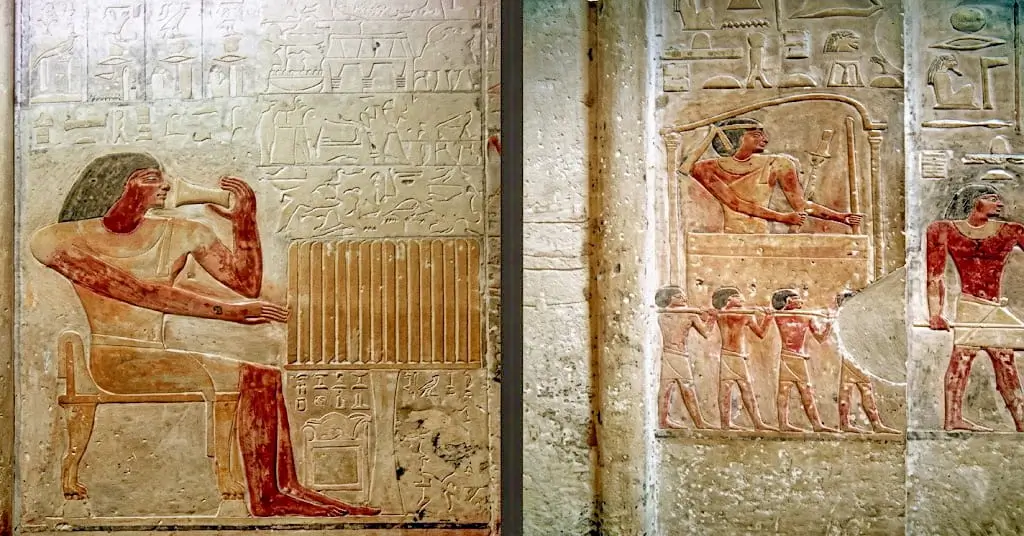
The Tomb of Ptahhotep stands as a crowning achievement of 5th Dynasty craftsmanship. As a dual mastaba shared with his son, Akhethotep, the structure showcases a unique family legacy within the Saqqara Necropolis. While Ptahhotep is famous for his philosophical Maxims, his final resting place is equally renowned for its technical “Saqqara School” reliefs. These unpainted limestone carvings reach a level of anatomical precision and daily-life realism—ranging from athletic games to personal grooming—that remains unmatched. For any visitor or historian, the tomb serves as a definitive pillar for understanding the sophisticated aesthetic and intellectual depth of the Old Kingdom elite.