
The Legend of the Shipwrecked Sailor: Ancient Egypt’s First Great Masterpiece

The Legend of the Shipwrecked Sailor is a Middle Kingdom masterpiece that follows a lone survivor cast upon the mythical Island of the Ka after a catastrophic storm destroys his ship and crew. In this lush, liminal paradise, the sailor encounters a colossal, benevolent serpent with golden scales and lapis lazuli eyebrows who, instead of harming him, offers divine wisdom and comfort by sharing his own tragic history of loss. The story serves as a profound meditation on resilience and the power of eloquence, concluding with the serpent’s prophecy of the sailor’s safe return to Egypt before the magical island vanishes forever beneath the waves.
Neith: The Primordial Creator and Warrior Goddess of Ancient Egypt

Neith is one of the most ancient and formidable deities in the Egyptian pantheon, serving as the “Mother of the Gods” and the “Self-Created” source of the universe. Existing long before the pyramids, she was worshipped at her cult center in Sais as a fierce warrior goddess of hunting and the “Mistress of the Bow,” as well as a cosmic creator who wove the world into existence on her divine loom. Her complex nature allowed her to be both the mother of the sun god Ra and the source of the chaos-serpent Apophis, embodying the bridge between Maat (order) and Isfet (chaos). Whether she was guarding the canopic jars of the dead or mediating disputes between major gods like Horus and Set, Neith remained an unrivaled authority whose mystery was captured in her famous temple inscription: “I am all that has been, and is, and shall be.”
Apophis: The Egyptian Lord of Chaos and the Eternal Serpent

Apophis, the primordial serpent of ancient Egyptian mythology, serves as the ultimate embodiment of Isfet (chaos) and the eternal adversary of Ma’at (divine order). Residing in the darkness of the Duat, he wages a nightly war against the Solar Barque of the sun god Ra, attempting to swallow the sun and dissolve creation back into the void of non-existence. This cosmic struggle was so vital to the Egyptian worldview that it required daily ritual intervention by priests to ensure the sun’s rebirth, a legacy of existential dread that survives today in the naming of the “God of Chaos” asteroid, 99942 Apophis.
Amarna Letters: A Guide to Ancient Diplomacy and the Bronze Age Archive

The Amarna Letters serve as history’s most profound diplomatic time capsule, offering an unfiltered look into the sophisticated “Great Powers Club” of the 14th century BCE. This authoritative guide explores how 382 cuneiform tablets, discovered in the ruins of Pharaoh Akhenaten’s capital, reveal a globalized world defined by high-stakes marriage alliances, the desperate pleas of Levantine vassals, and the standardized use of Akkadian as an international lingua franca. By synthesizing archaeological discovery with modern petrographic science and the sociopolitical mystery of the Habiru, this pillar illustrates a vibrant, interdependent Bronze Age civilization that flourished just before the systemic collapse of the ancient world, providing essential context for the roots of modern diplomacy and Near Eastern history.
The Architecture of the Gods: Unlocking the Ancient Egyptian Engineering Secrets

The Great Pyramid of Giza stands as the ultimate testament to Ancient Egyptian engineering secrets, proving that “primitive” tools never meant primitive minds. By mastering the physics of wet sand, the fluid dynamics of the Nile, and the astronomical precision of stellar alignment, the Old Kingdom architects built more than just tombs; they engineered a 3,000-word story of human ingenuity in stone. From the social bureaucracy that fed a nation of builders with bread and beer to the mechanical security systems designed to lock out eternity, the Giza plateau remains a masterclass in structural density and religious ambition. Today, we view these monuments not as archaeological mysteries, but as the world’s first “hard drives of the soul”—structures so perfectly aligned and durable that they continue to defy the limits of modern replication.
The Secrets of Ancient Egyptian Mummification: Engineering the Afterlife
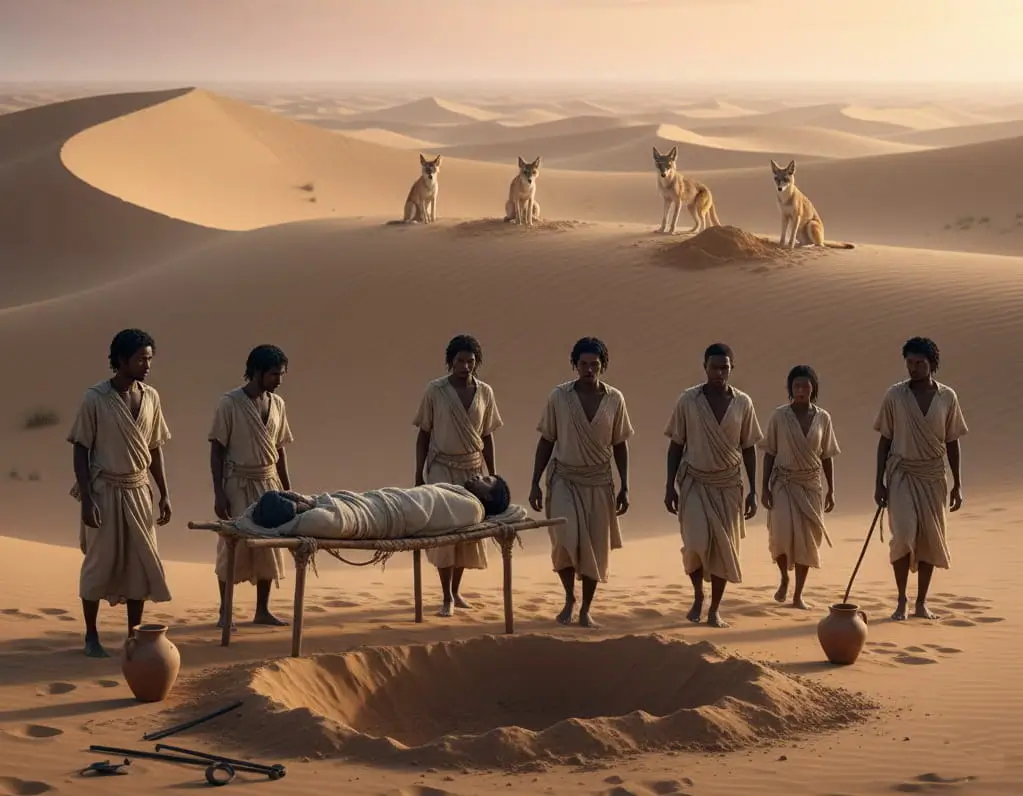
Forget the Hollywood myths of cursed scrolls and magical incantations; the true story of mummification is a masterclass in ancient forensic science and biological engineering. In this authoritative deep dive, we strip away the bandages to reveal how the early inhabitants of the Nile transformed a terrifying observation of desert scavengers into a multi-generational quest for immortality. You will discover how a primitive understanding of the sun’s energy birthed the concept of the human “Soul,” and how the “Alchemy of the Wabet” turned chemical desiccation into a sophisticated technology for vacuum-sealing the human spirit. This is not just a history of the dead—it is an exploration of how the first great civilization engineered a way to bypass biological decay and build a permanent bridge to eternity.
The First Nation-State: How Ancient Egypt Invented Modern Government

The concept of the first nation-state marks the pivotal moment in human history when scattered, tribal societies consolidated into a single, unified political entity. Emerging in the Nile Valley around 3100 BCE, Ancient Egypt broke the mold of the ancient world by establishing a centralized government that exerted authority over a vast geographic territory. Unlike the isolated city-states of Mesopotamia, this first nation-state utilized a shared language, a divine monarchy (the Pharaoh), and a sophisticated bureaucracy to create a sense of national identity. It pioneered the administrative “source code” we still use today—including systematic taxation, a professional judiciary, and large-scale national infrastructure—proving that millions could be organized under one laws and a single vision of order.
The Ultimate Guide to the Greco-Roman Museum in Alexandria
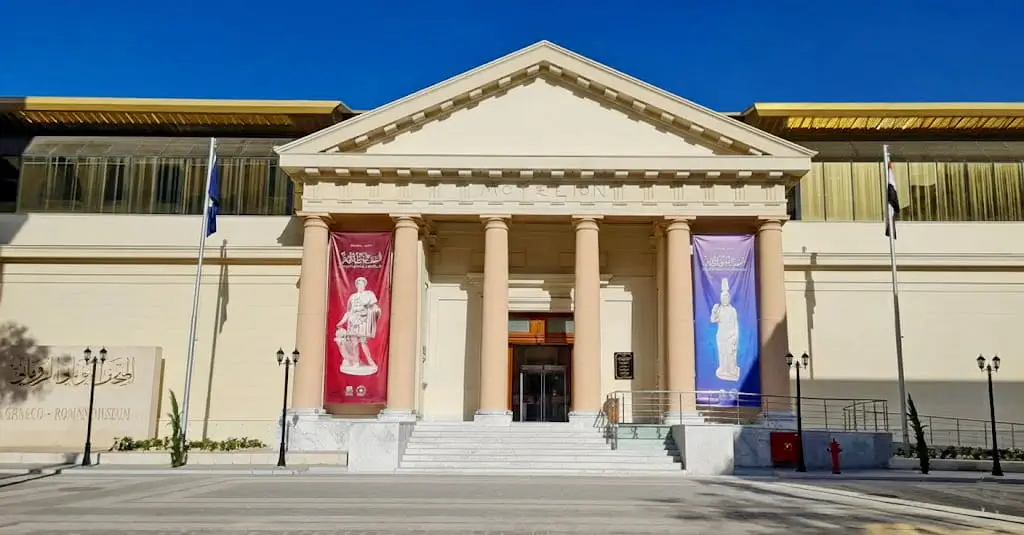
The Greco-Roman Museum in Alexandria stands as a vital gateway to Egypt’s multicultural past. Founded to protect the city’s Hellenistic heritage from urban sprawl, it houses a vast collection that chronicles the fusion of Pharaonic, Greek, and Roman civilizations. From the reign of Alexander the Great to the rise of the Byzantine era, the museum showcases the artistic and religious evolution that paved the way for modern Egyptian identity.
The Pharaohs’ Shadow: 10 Ways Ancient Egypt Influenced Modern Islam
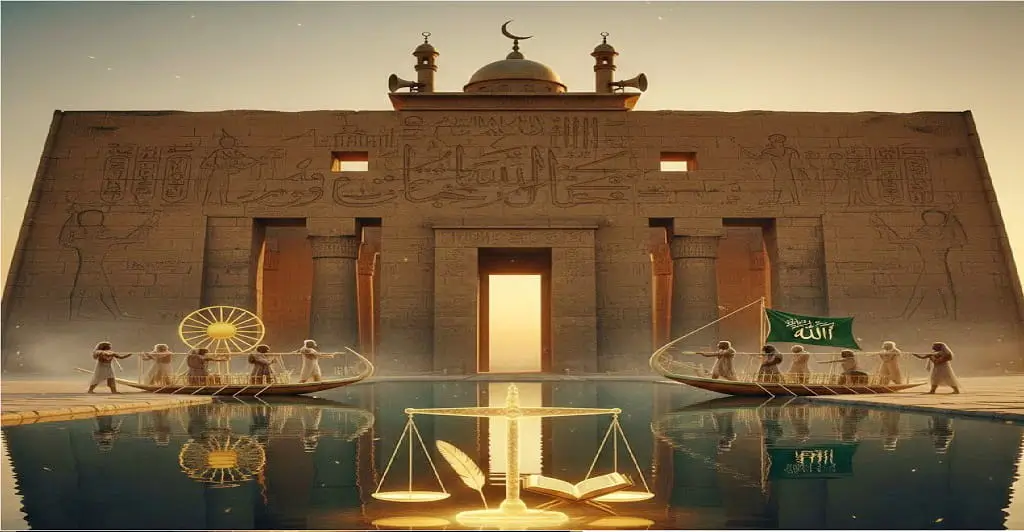
This guide explores the hidden “source code” of Egyptian spirituality, revealing how Ancient Egyptian traditions in Islam form the true foundation of modern faith. We move beyond traditional history to uncover how the Pharaonic “Ma’at” became Islamic justice and how the Abrahamic prophets mirror the ancient archetypes of Isis, Horus, and Thoth. If you have ever wondered why Egyptian Islam feels distinct from the rest of the world, this exploration provides a deep dive into the “living antiquity” that still breathes along the Nile today.
The Divine Bureaucracy: The Overlapping Functions of Egyptian Gods
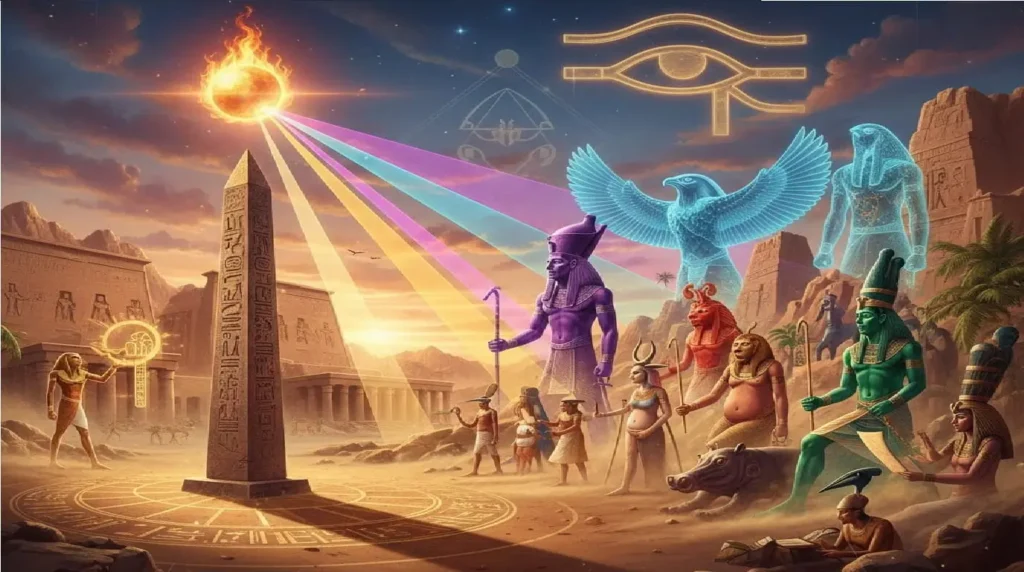
Step into the sophisticated “Divine Bureaucracy” of Ancient Egypt, a world where mythology meets a logical system designed to govern the universe. By exploring the functions of Ancient Egyptian gods, we uncover the concept of Functional Multiplicity—a strategic use of overlapping roles and divine redundancy to ensure that the sun always rose and the Nile always flooded. This journey traces the evolution of these figures from the dawn of human self-consciousness—where the mysteries of attraction and birth were seen as the “Holy Decisions” of goddesses like Isis and Hathor—to a centralized solar model where every deity acts as a specialized messenger of the Sun. Organized by “Divine Departments,” this deep dive decodes the “Why” behind the worship, providing a comprehensive map of how these overlapping powers managed the cycle of life, the fertility of the land, and the complex journey of the soul.
The Greco-Roman Period of Egypt: The Ultimate Historical Guide
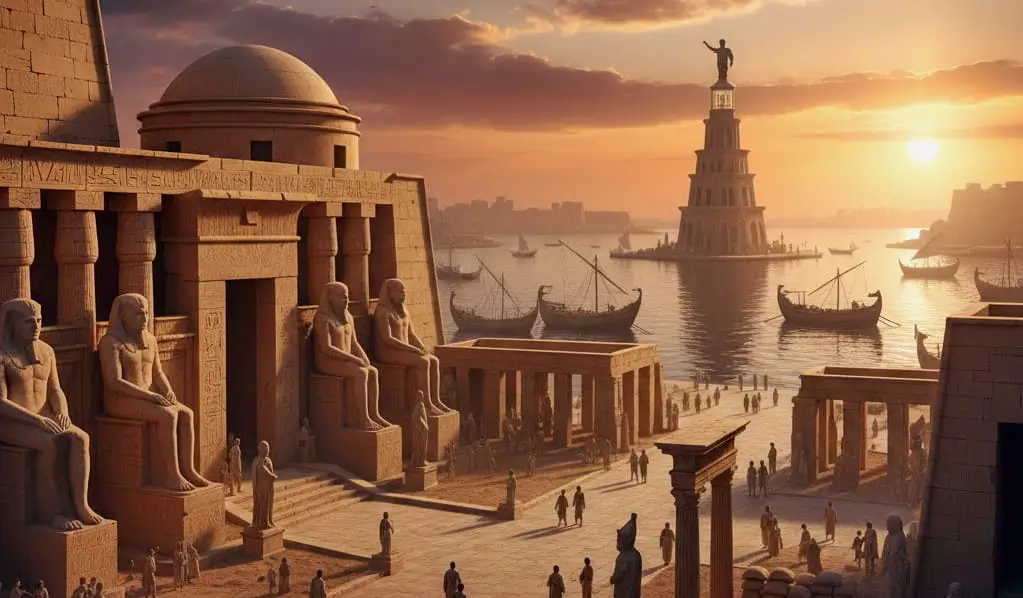
The Greco-Roman Period (332 BCE – 641 CE) represents the final, spectacular chapter of ancient Egyptian history, where the traditions of the Pharaohs merged with the emerging powers of the West. Initiated by the conquest of Alexander the Great and immortalized by the reign of Cleopatra VII, this era saw Egypt become the intellectual and economic heart of the Mediterranean. While the rulers were Greek and later Roman, they governed as Pharaohs, commissioning massive stone temples and blending classical philosophy with ancient Egyptian theology. Ultimately, the Greco-Roman Period was a time of unprecedented globalization, producing a unique cultural synthesis that forever changed the course of Western civilization.
The Late Period of Egypt: Final Renaissance and Struggle for Independence
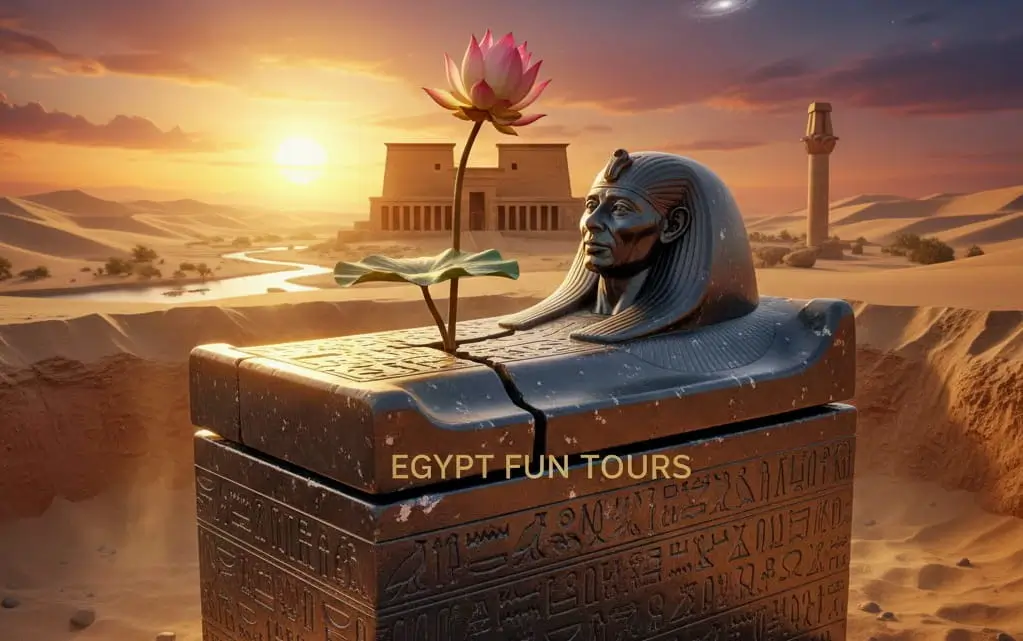
The Late Period of Egypt stands as a testament to the enduring strength of Egyptian identity in an age of rising global empires. Ranging from the restoration of native rule in the 26th Dynasty to the final transition under Alexander the Great, this era was defined by a sophisticated “Renaissance” that revived the art and language of the Old Kingdom. While Egypt frequently functioned as a battleground for the Persians and Greeks, its internal culture thrived through the construction of massive temples and the unprecedented expansion of animal cults. Ultimately, the Late Period of Egypt was not a slow decline, but a defiant and artistic final chapter that preserved the traditions of the Nile Valley for centuries to come.