
The Predynastic Period of Egypt: Guide to the Origins of Civilization
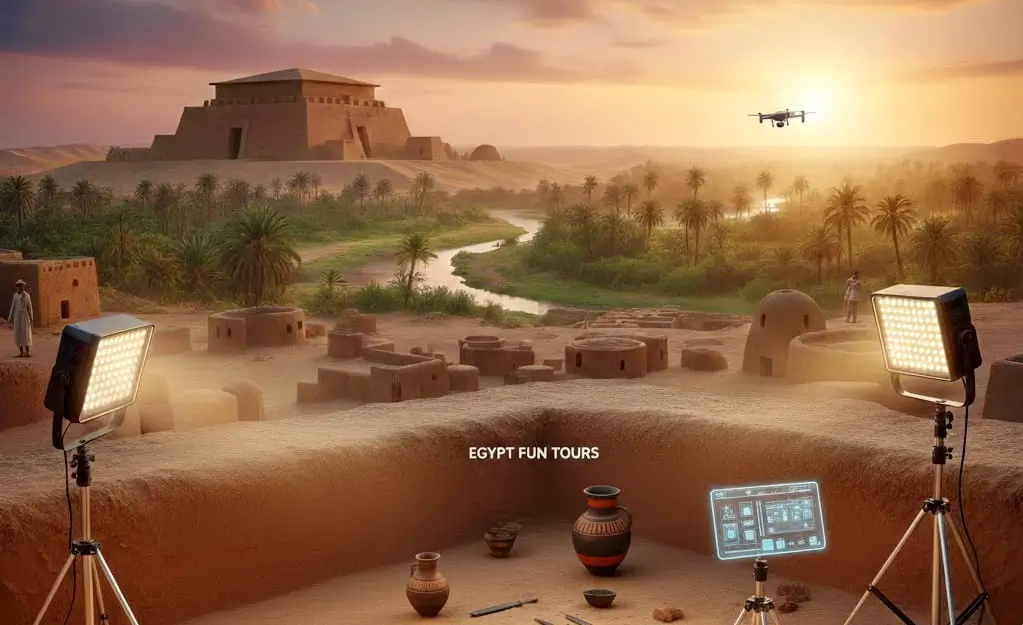
The Predynastic Period of Egypt represents the critical foundation upon which one of history’s greatest civilizations was built. Spanning from roughly 5000 BCE to 3100 BCE, this era saw the transformation of scattered Neolithic farming tribes into a sophisticated, unified nation-state. During these three millennia, ancient Egyptians pioneered the first irrigation systems, developed complex social hierarchies, and invented the world’s earliest known writing system at Abydos. By the time King Narmer formally united the “Two Lands,” the cultural, religious, and architectural blueprints for the Pharaonic Age were already firmly in place. Consequently, the Predynastic Period of Egypt is not merely a prelude to the Pyramids, but the essential era of innovation that made the glory of the Pharaohs possible.
Ancient Egyptian Mummies: From Pharaohs to Powdered Medicine

This article explores the dark, two-sided history of Ancient Egyptian Mummies. Discover the staggering scale of mummification—a practice involving tens of millions of people—and its profound religious significance. However, the focus shifts to the shocking betrayal of these sacred remains: their transformation into a vile, profitable commodity. Explore the 19th-century Mummy Trade, the macabre craze for Mummy Powder Medicine as a supposed cure-all, and the final degradation of the dead into common materials for industry and art.
Business of Immortality: Democratization of the Afterlife and the Market
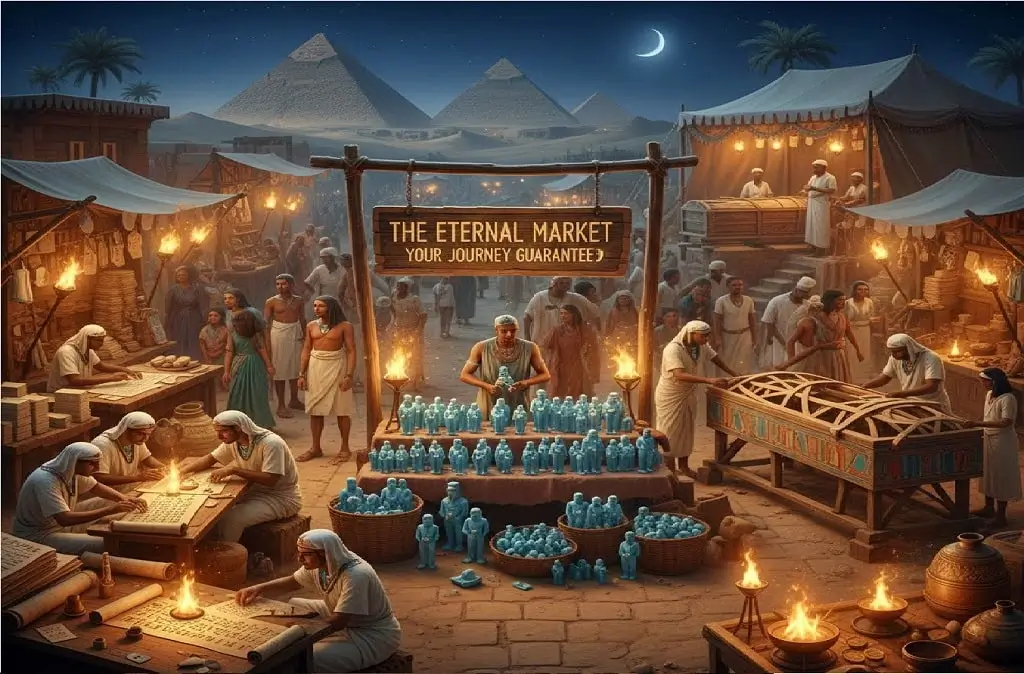
The Business of Immortality: Trace the incredible Democratization of the Afterlife in Ancient Egypt. Learn how eternal life became a mass-market commodity, shifting from a royal privilege to a purchasable service. Discover the tiered pricing structures and three major industries—from mummification services to Shabti factories—that fueled a massive, enduring funerary economy.
The Servants of Eternity: Shabtis and the Daily Labor of the Afterlife
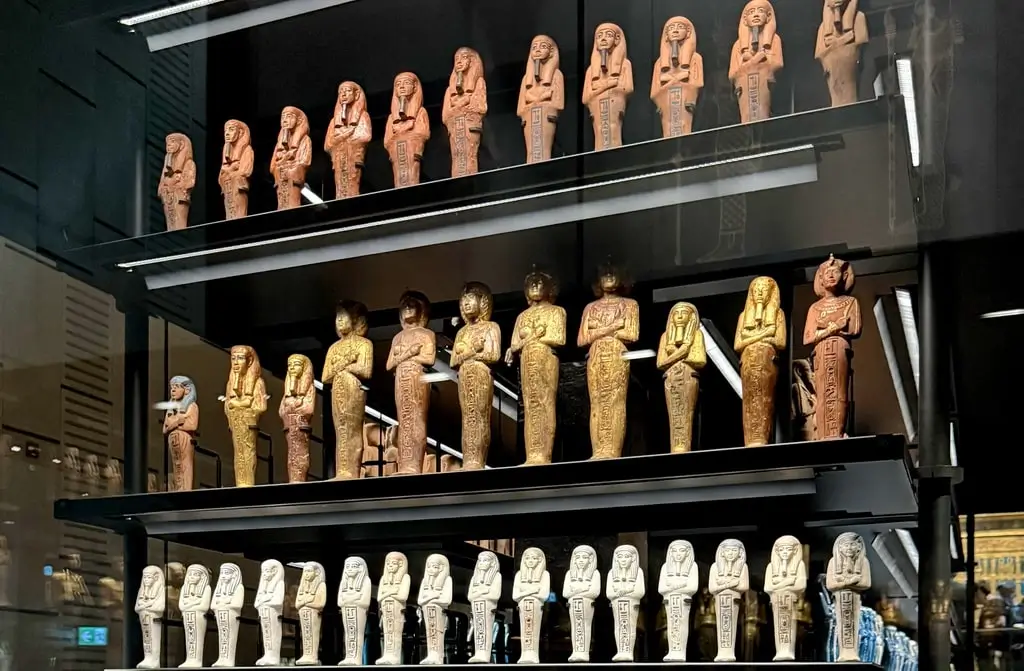
Escape eternal labor! Dive deep into the Egyptian Shabti figures—the magical mummiform servants that made paradise possible. Discover how Chapter 6 of the Book of the Dead animated these ceramic deputies, transforming them into a tireless workforce. Learn why the wealthy needed an army of 401 Shabtis to guarantee rest in the afterlife, confirming that ancient Egyptians even outsourced their eternity.
Phases of Eternity: The Pyramid Texts, Coffin Texts, and Book of the Dead
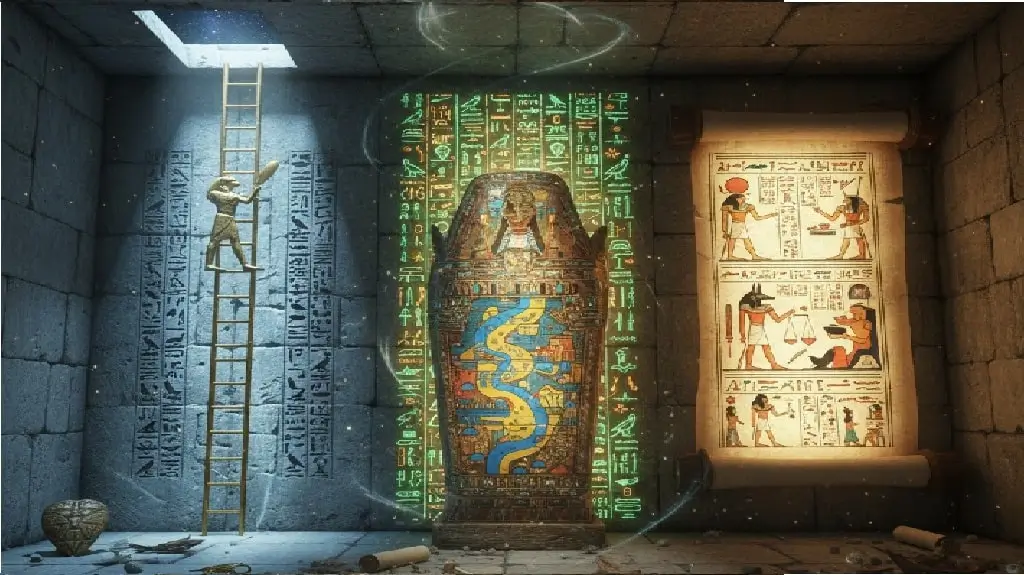
The Egyptian quest for eternal life was meticulously documented across 2,500 years. This pillar article provides a deep Egyptian Funerary Texts Comparison, charting the evolution of the sacred scripts through three distinct phases. Discover how the secret, exclusive spells carved on the stone walls of royal pyramids (Pyramid Texts) gave way to the personalized, underworld maps on wooden coffins (Coffin Texts). Finally, explore the emergence of the mass-produced, ethical guide on papyrus scrolls (Book of the Dead). This journey is the story of the democratization of immortality, moving the focus from the god-king’s stellar ascent to the individual’s moral accountability in the decisive Weighing of the Heart.
The Pyramid Texts: The Royal Protocol and the Logic of Exclusive Immortality
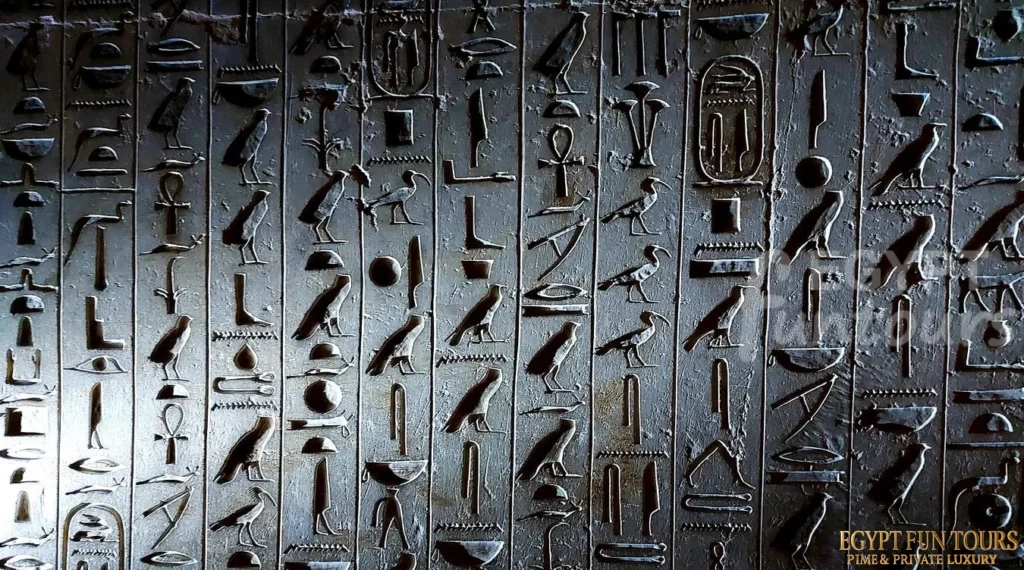
Uncover the Pyramid Texts, the world’s oldest religious writings, and the ultimate blueprint for the Egyptian afterlife. Dating to the Old Kingdom, these monumental inscriptions reveal a strict royal protocol carved directly onto the tomb walls of the Pharaohs. Explore the original logic of exclusion, where eternity was an exclusive political asset. Discover the celestial maps, the powerful transformation spells, and the aggressive “Cannibal Hymn” that guaranteed the King’s unique ascent to the circumpolar stars, securing his divinity and the stability of the entire cosmos. This is not mythology—it is the earliest technical manual for absolute power.
Decoding the Coffin Texts: Logic, the Soul’s Manual, and Democratization
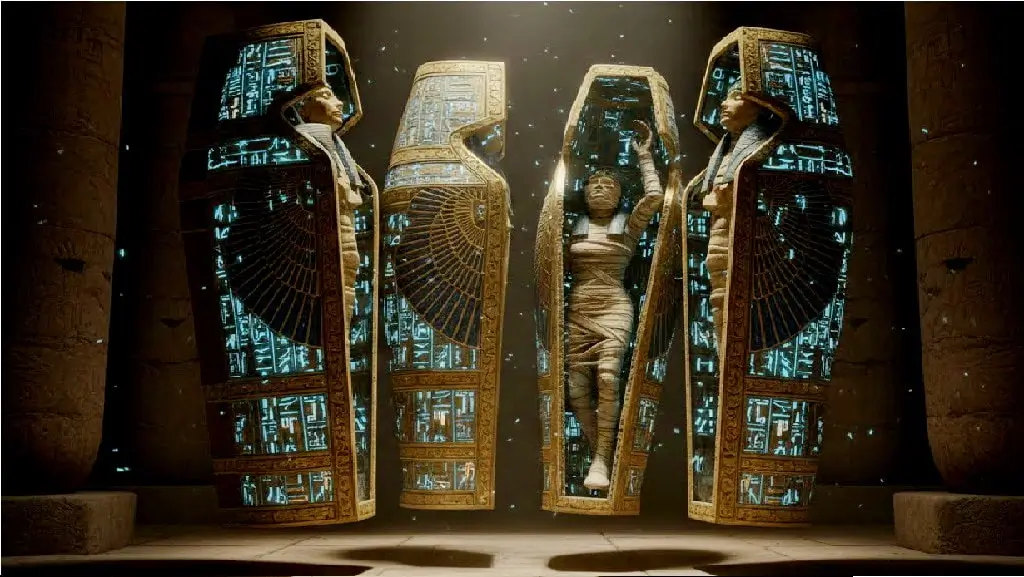
Discover the revolutionary logic of the Egyptian afterlife found in the Coffin Texts. Dating to the Middle Kingdom, these inscriptions marked the moment immortality was democratized, moving the secrets of resurrection from the Pharaoh’s stone walls to the coffins of the wealthy elite. Far from being random magic, the Texts are a comprehensive user manual—a logical system defining the soul’s mechanics, providing vital security protocols (like transformation spells), and including the world’s first illustrated map of the underworld. Learn how this shift turned the pursuit of eternal life from an act of blind faith into an act of practical, rational engineering.
The Logic of Immortality: The Evolution of Egyptian Afterlife Beliefs
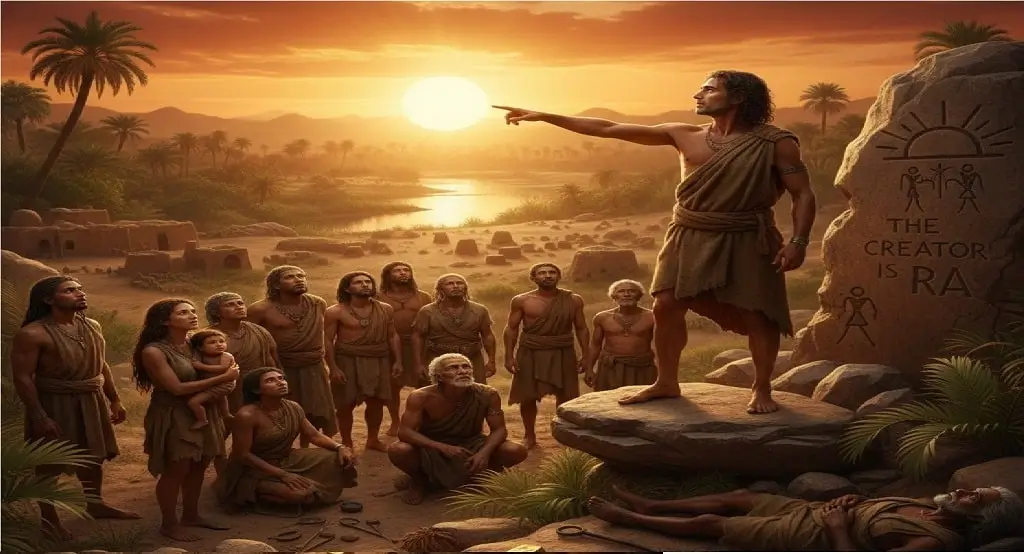
Interpretation by: Mr. Muhammed Hussein (Professional Egyptologist & Tour Guide). Uncover the logical, step-by-step evolution of Egyptian afterlife beliefs, starting with the core discovery by Atum (Adam): The Creator is the Sun, Ra. This simple truth led to a pragmatic system where sleep was death, and resurrection meant physically waking up everyday in the Nile Valley at sunrise. This guide strips away mythology to reveal how every complex Egyptian practice—from mummification and burying massive gold reserves to writing the Book of the Dead (“Spells for Coming Forth by Day”)—was a rational, architectural, and magical solution to the practical problem of securing an eternal life on Earth.
The Royal Mummies of Egypt: Pharaoh’s Journey to Immortality
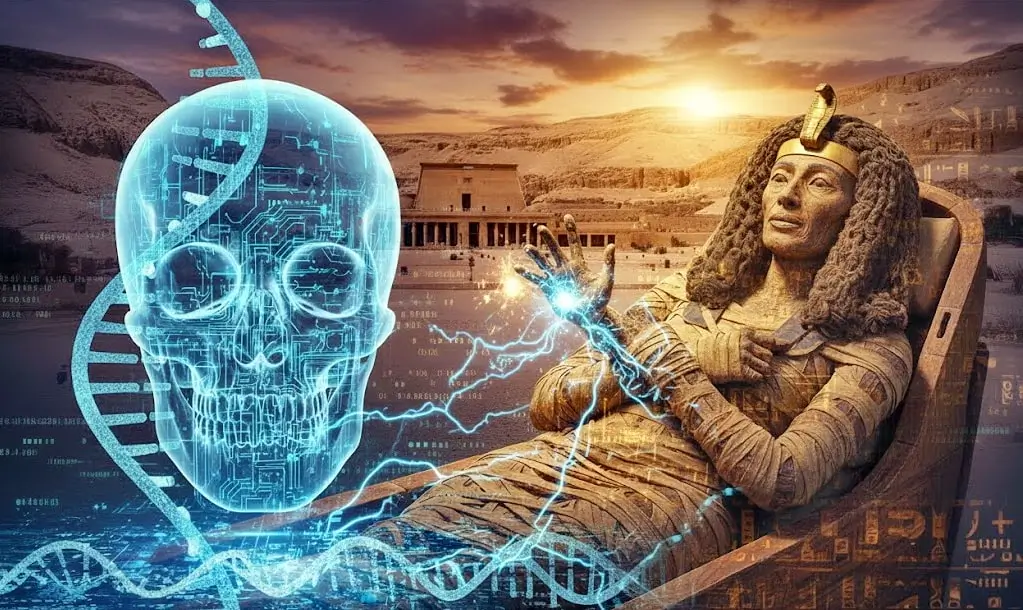
Journey into the secret history of the Royal Mummies. It starts with the elaborate, 70-day mummification ritual—a theological necessity for securing the pharaoh’s body (Khat) and ensuring eternal kingship. The adventure continues with the dramatic 19th-century uncovering of the Royal Caches (like DB 320), which protected giants such as Ramesses II from time and theft. The final chapter employs Modern Bioarchaeology, where CT scans and DNA analysis are used to settle ancient genealogical debates, ultimately unlocking the identities, health, and life stories of Egypt’s most legendary rulers.
Abydos: Royal Tombs, City of Osiris, and the Birthplace of Egyptian Kingship
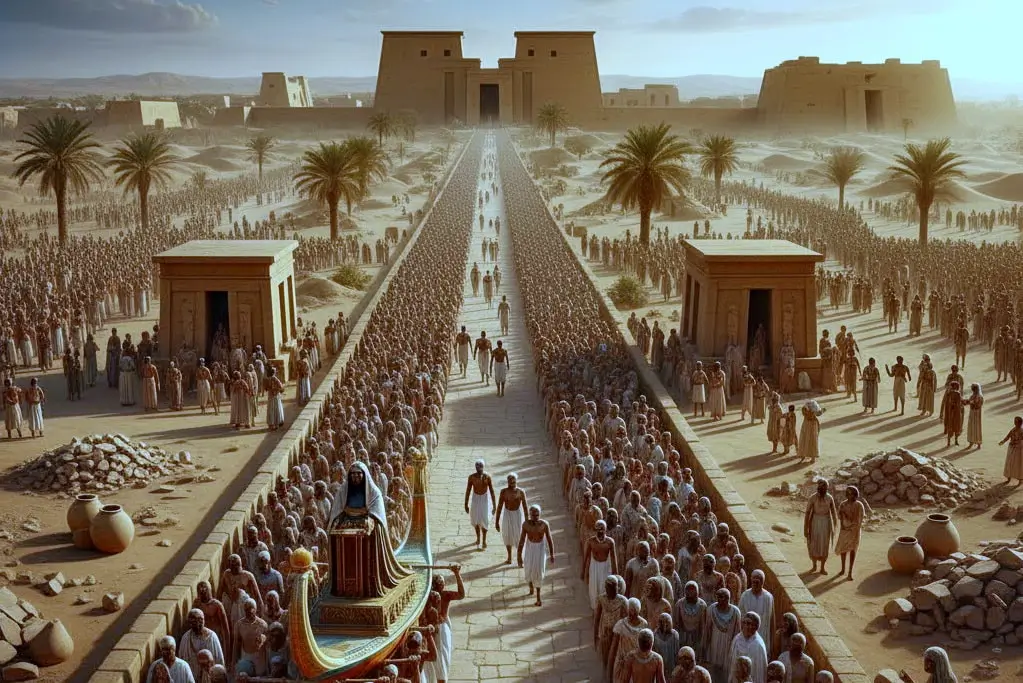
Abydos represents the sacred heart of ancient Egyptian identity, serving as the definitive birthplace of kingship and the earthly center of the Osiris cult. As one of the oldest and most significant archaeological sites in the world, it houses the royal tombs of the first pharaohs, marking the very dawn of the Egyptian state. Travelers primarily visit to witness the architectural perfection of the Temple of Seti I, famous for its exquisite high-relief carvings and the historical Abydos King List. Furthermore, the site’s connection to the “Mystery Plays” and the symbolic Osireion provides a deep, spiritual context for the ancient Egyptian concept of resurrection and eternal life. Ultimately, Abydos acts as an essential pilgrimage site, offering a profound look at the origins of royal power and the enduring legacy of the king of the afterlife.
Hathor, Sekhmet, and the Volatile Eye of Ra: Dual Power for Political Control
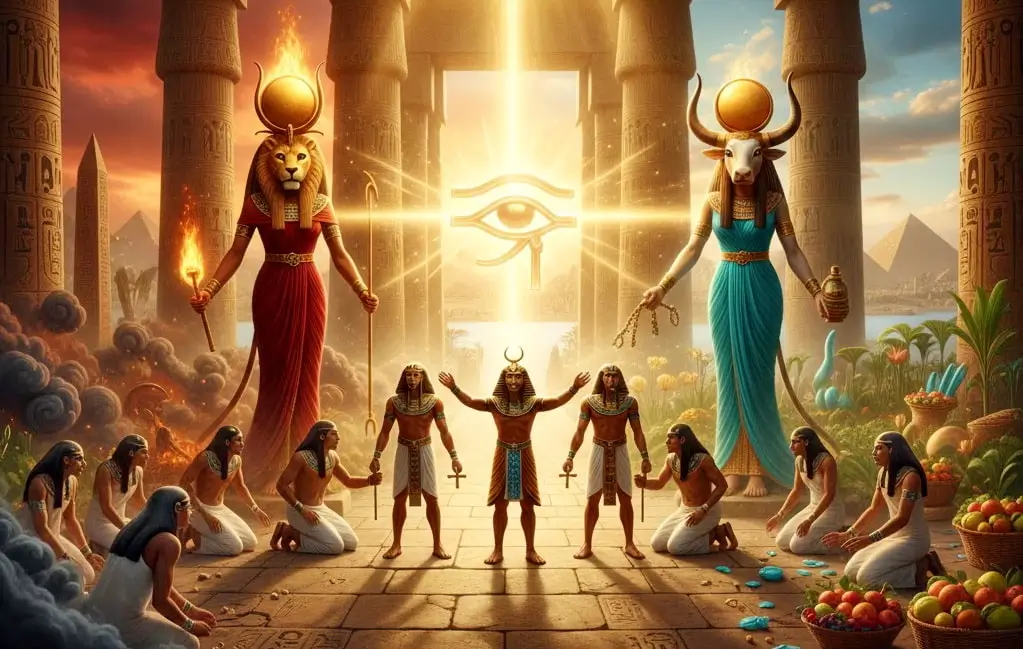
The pharaohs used the terrifying dual nature of the Volatile Eye of Ra as a central tool for political control. This single solar entity was managed by splitting it into the destructive plague goddess Sekhmet (used to justify divine punishment and maintain order) and the benevolent goddess Hathor (used to sanction prosperity and royal legitimacy). By controlling the transformation between these two figures, the state ensured that the ultimate power of the sun remained firmly aligned with the pharaoh’s central authority.
Sobek-Ra and Montu-Ra: How Local Gods Claimed Solar Legitimacy
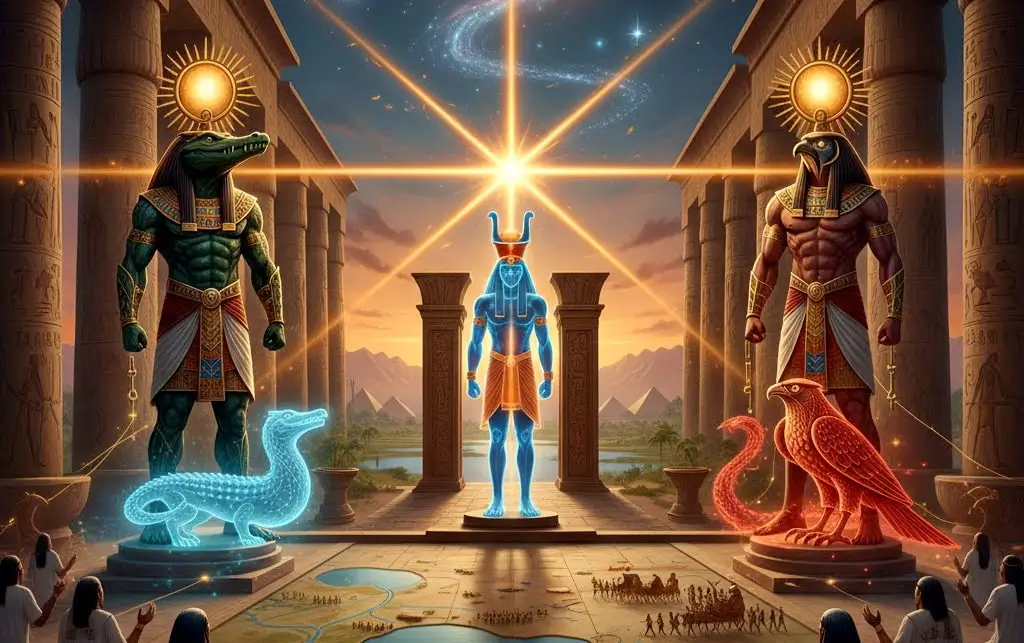
The political genius of the Egyptian Sun God (Ra) was its transferability. Pharaohs maintained centralized power by forcing powerful regional deities, like the crocodile god Sobek and the war god Montu, to merge with Ra, creating fusions like Sobek-Ra and Montu-Ra. This process, known as solar syncretism, legitimized local cults and their political influence, but only by subjecting them to the supreme, universal solar mandate, ensuring all power ultimately flowed from the pharaoh’s central authority.