
Goddess Nut: The Egyptian Sky, Mother of Stars, and Mistress of the Dead
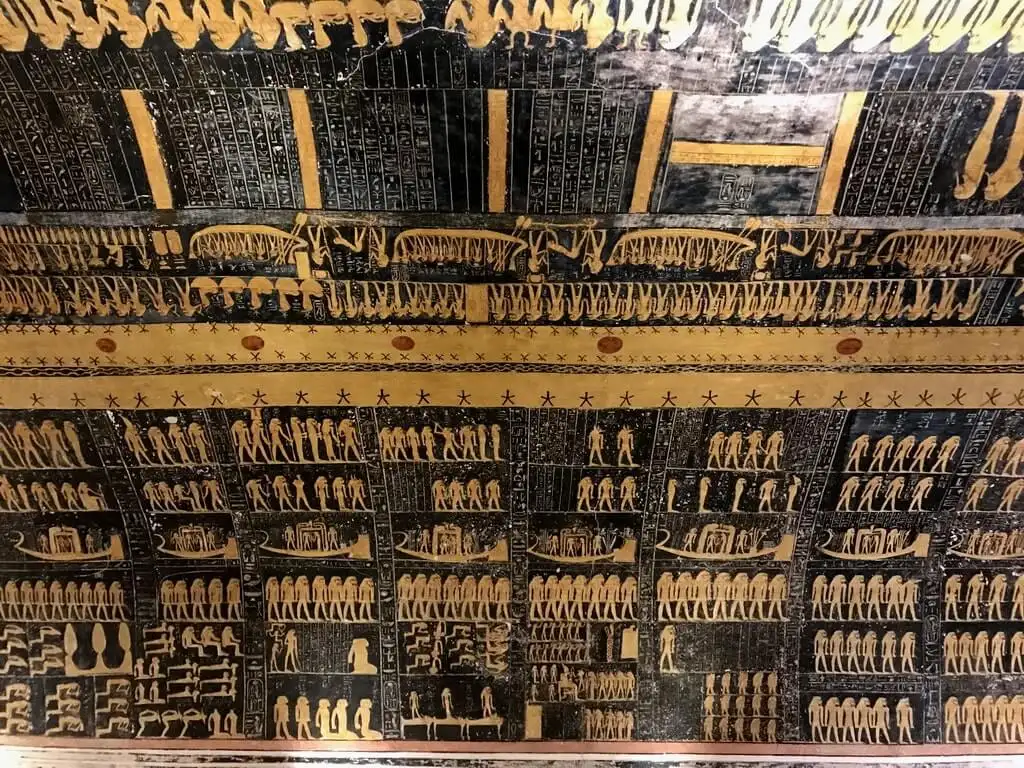
Step into a millennium of artistry. This comprehensive guide unveils the extraordinary legacy of Islamic Art in Egypt, starting with the earliest mosques built in Fustat. Journey through the centuries as you discover how the Fatimid rulers planned Cairo with geometric precision, how the Ayyubids fortified the Citadel, and why the Mamluks defined monumental architecture with breathtaking Muqarnas ceilings and spectacular calligraphy. We decode the core principles—from aniconism to the arabesque—and show you exactly where to find these masterpieces on Al-Moez Street and in the Museum of Islamic Art. Prepare to see Cairo as a living exhibition of divine pattern and light.
Ma’at Principles: The 42 Laws of Truth and the Principles of Cosmic Balance

Long before the Ten Commandments, the Ancient Egyptians lived by the 42 Principles of Ma’at. These were not a list of orders, but a declaration of innocence known as the “Negative Confessions.” Upon death, every soul stood before 42 judges and recited these truths, proclaiming, “I have not stolen,” “I have not lied,” and “I have not polluted the water.” These principles formed the ethical foundation of Egyptian society. Consequently, living by them was the only way to ensure your heart remained lighter than the Feather of Truth during the final judgment.
Goddess Sekhmet: The Complete Guide to the Lioness of War and Healing
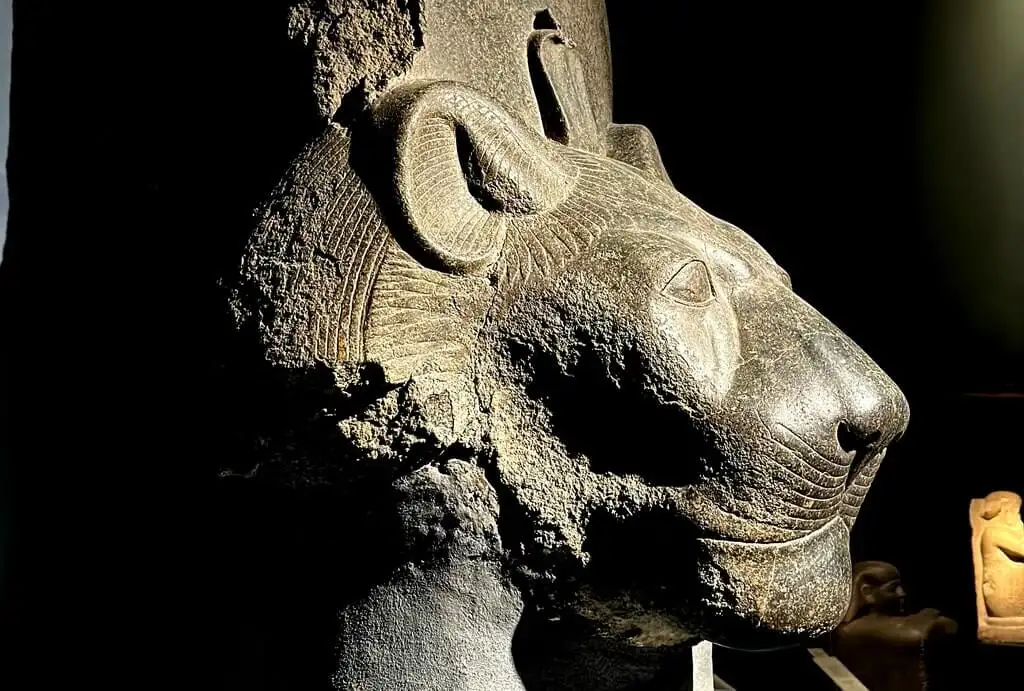
Goddess Sekhmet is the most terrifying figure in the Ancient Egyptian pantheon. Depicted as a woman with the head of a roaring lioness, she represents the scorching heat of the sun and the inevitability of war. Her name literally means “The Powerful One.” While mythology remembers her as the “Lady of Terror” who nearly wiped out humanity in a blood-drunk rage, history reveals a paradox. She was also the “Mistress of Life,” and her priests were the finest surgeons and doctors in Egypt, proving that the power to destroy is also the power to cure.
Bastet: The Ancient Egyptian Cat Goddess of Joy & Protection
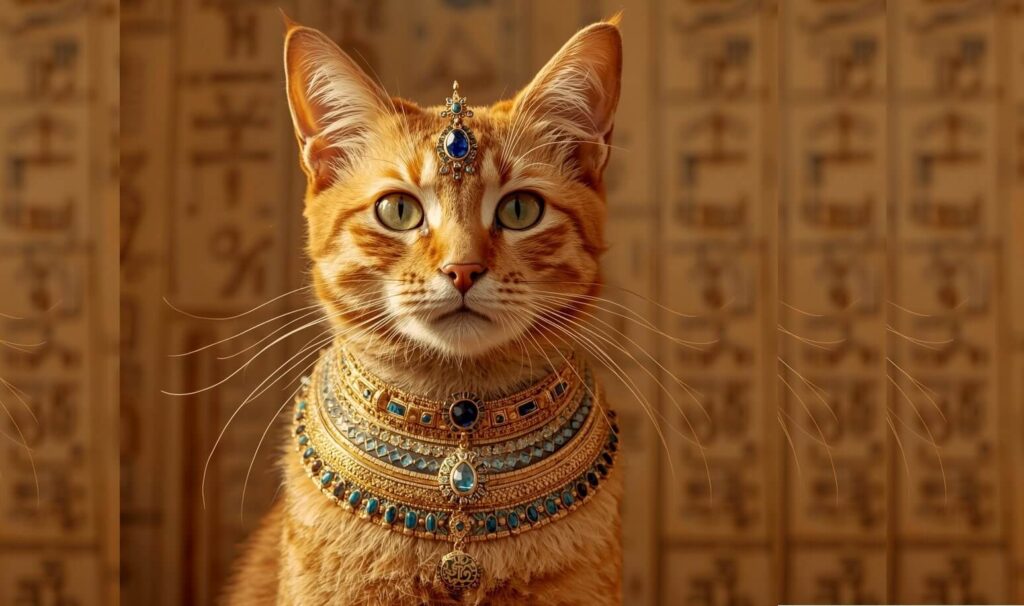
Bastet: Cat Goddess of Ancient Egypt The ancient Egyptian cat goddess Bastet holds a unique and revered place in history. She is one of the most recognizable and beloved deities from ancient Egypt. Known primarily as the Egyptian cat goddess, Bastet embodied protection, fertility, and joy. Her worship spanned thousands of years, leaving an indelible […]
Crowns of the Pharaohs: The Deshret, Hedjet, Pschent, and Khepresh
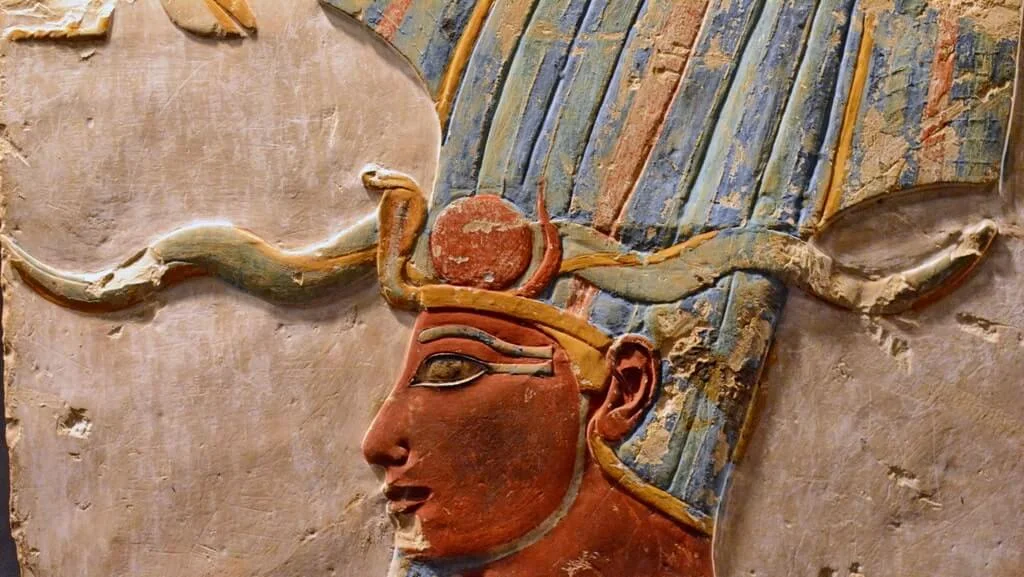
The Pschent, or the Double Crown of Egypt, served as the single most critical piece of royal regalia, acting as a powerful visual proclamation of the Pharaoh’s absolute authority over the entire unified nation. Formed by seamlessly combining the red Deshret (Crown of Lower Egypt, representing the Delta region) and the white Hedjet (Crown of Upper Egypt, representing the Nile Valley), the Pschent symbolized the foundational concept of Egyptian civilization: The Two Lands are One. This crown was not merely decorative; it was a potent religious and political tool, signifying that the Pharaoh was the sole legitimate ruler capable of maintaining the crucial balance of Ma’at (cosmic order) across all of Egypt.
A Visitor’s Guide to Al-Hakim Mosque in Islamic Cairo
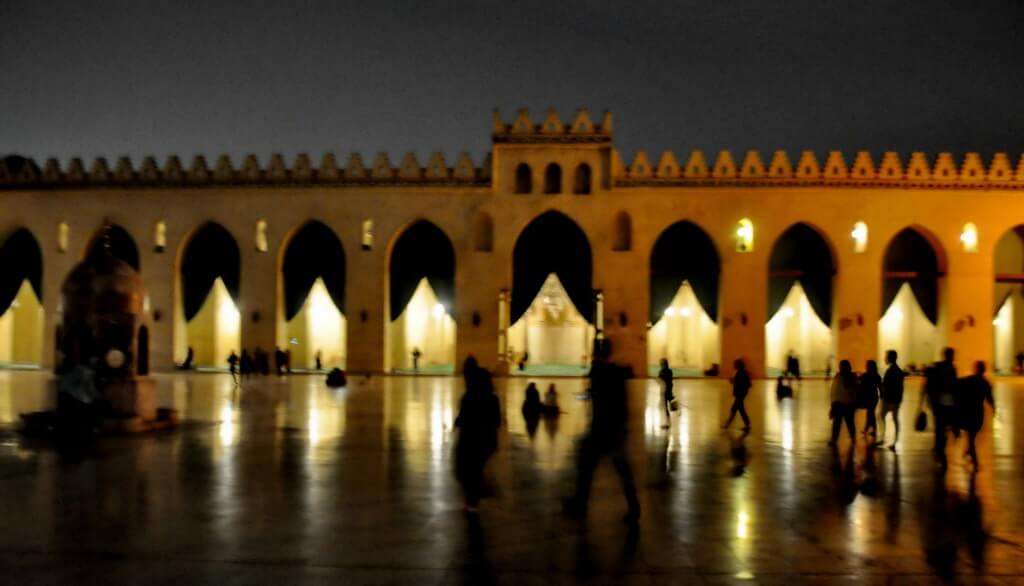
Explore the Al-Hakim Mosque, a monumental Fatimid masterpiece in Islamic Cairo. Built in 1013 AD, this fortress-like mosque is famous for its unique minarets encased in massive stone towers. Discover its dramatic history, from its use as a Crusader prison and Napoleonic fortress to its stunning restoration by the Dawoodi Bohra community, which returned the 1,000-year-old structure to its former glory.
Al-Rifa’i Mosque: A Visitor’s Guide to Cairo’s Royal Mausoleum
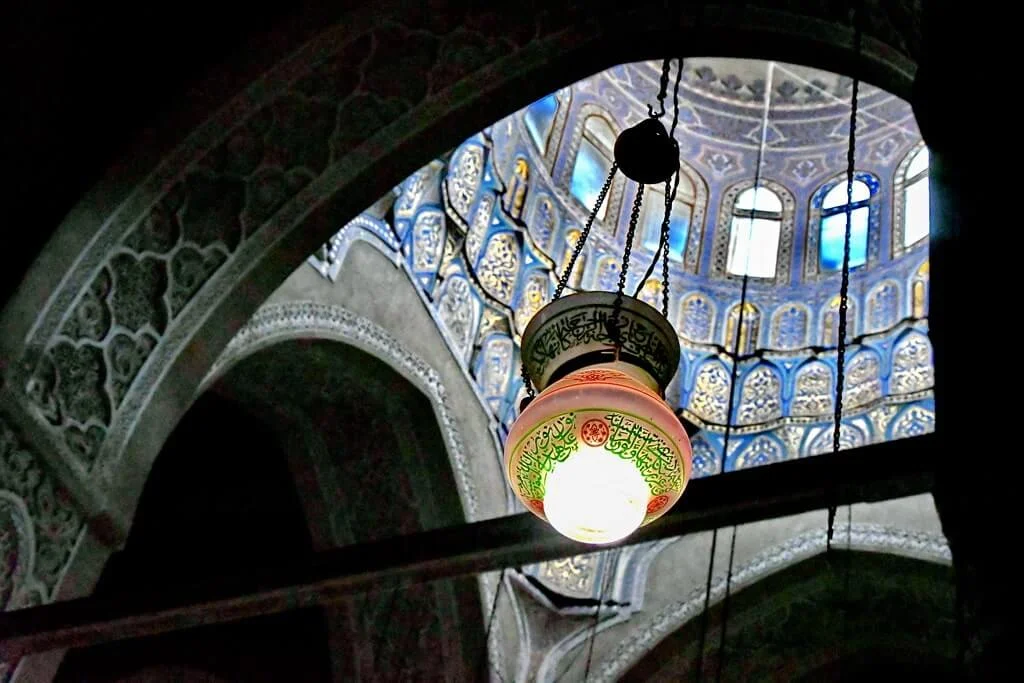
Discover the Al-Rifa’i Mosque, a 19th-century architectural marvel in Cairo built to rival the adjacent, medieval Sultan Hassan Mosque. This guide explores its grand Mamluk-revival style, its ornate interior, and its unique role as the royal mausoleum for Egypt’s modern dynasty, including Khedive Ismail and King Farouk, as well as the final resting place of Mohammad Reza Pahlavi, the last Shah of Iran.
Sultan Hassan Mosque & Madrasa: A Mamluk-Era Masterpiece
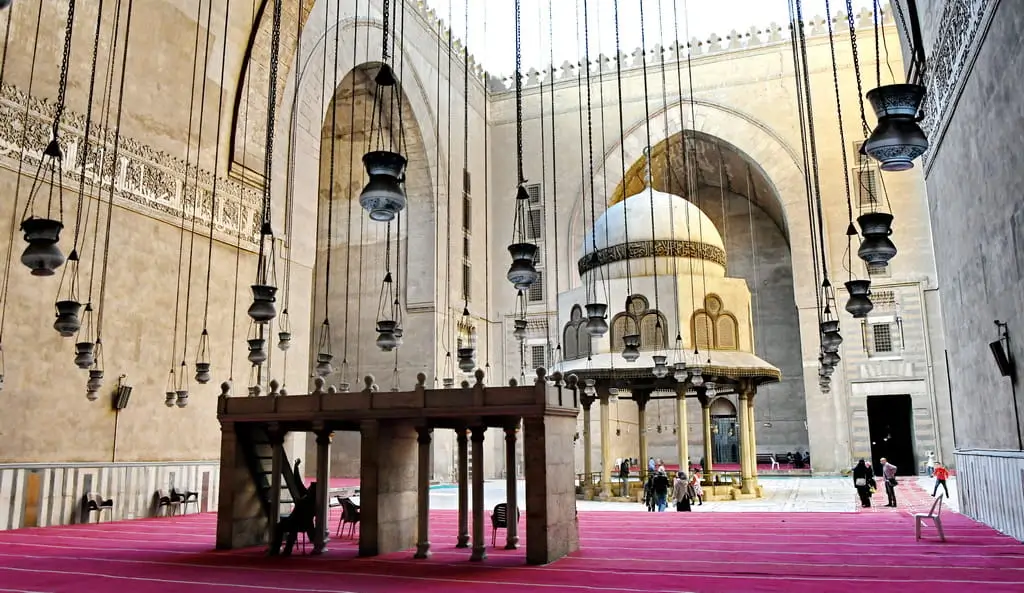
Explore the Sultan Hassan Mosque and Madrasa, a 14th-century masterpiece of Islamic Cairo located near the Citadel. Commissioned by the Sultan an-Nasir Hassan, this complex is renowned for its sheer scale and exceptional Mamluk architecture. We detail its grand, projecting entrance, its four massive iwans (halls) dedicated to the four schools of Islamic jurisprudence, and the ornate mausoleum behind the prayer hall, which was intended as the Sultan’s final resting place.
A Millennium of Grandeur: The Islamic History of Cairo
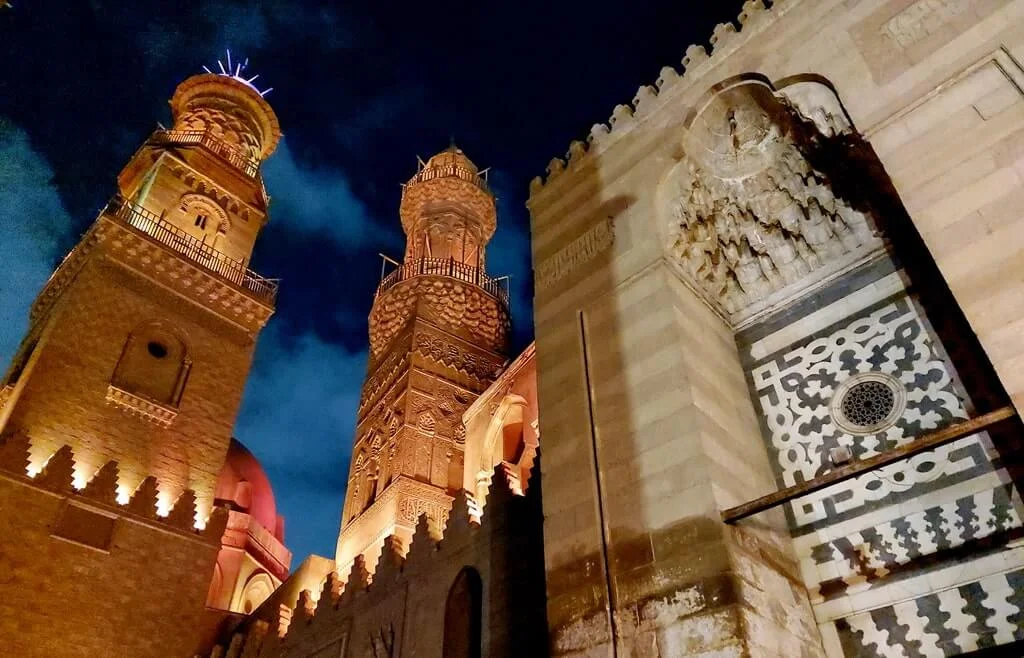
The Islamic history of Cairo began in 641 CE with the founding of Fustat, but the modern city was established as Al-Qahira (“The Victorious”) by the Fatimid dynasty in 969 CE. Under successive dynasties like the Ayyubids and the magnificent Mamluks, Cairo flourished into the largest, most powerful, and architecturally rich metropolis of the medieval Islamic world, earning the nickname “the city of a thousand minarets.
Al-Azhar: The Mosque and University That Shaped Islamic Thought
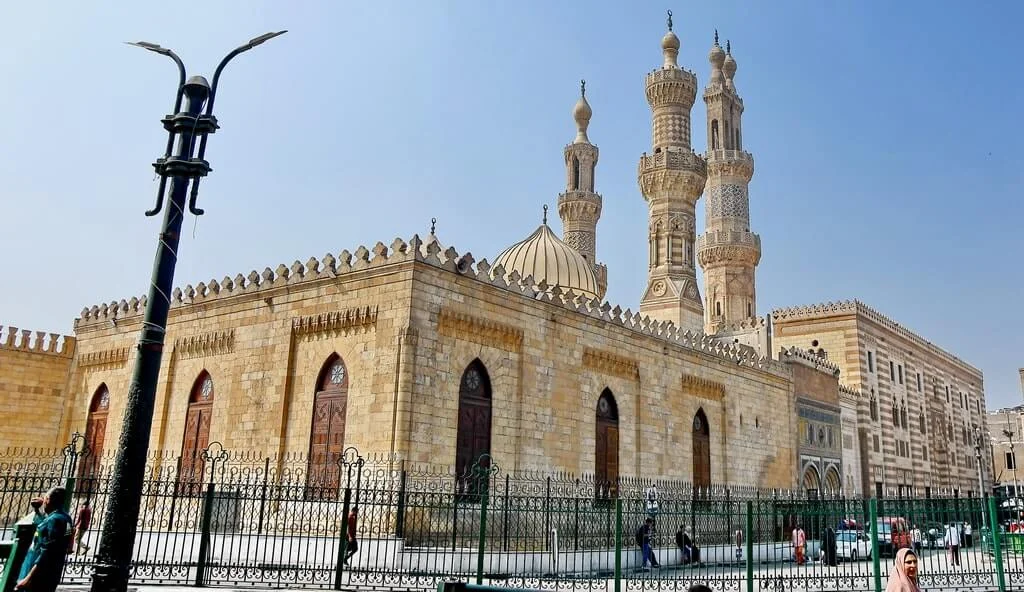
Discover Al-Azhar Mosque, the first Fatimid mosque of Cairo, which has evolved over a millennium into the most prestigious center of Sunni Islamic learning in the world. This guide explores its rich history since its founding in 970 AD, its stunning blend of architectural styles from Fatimid, Mamluk, and Ottoman eras, and its enduring role as both a place of worship and a leading global university.
Ibn Tulun Mosque: Cairo’s Oldest & Largest Mosque
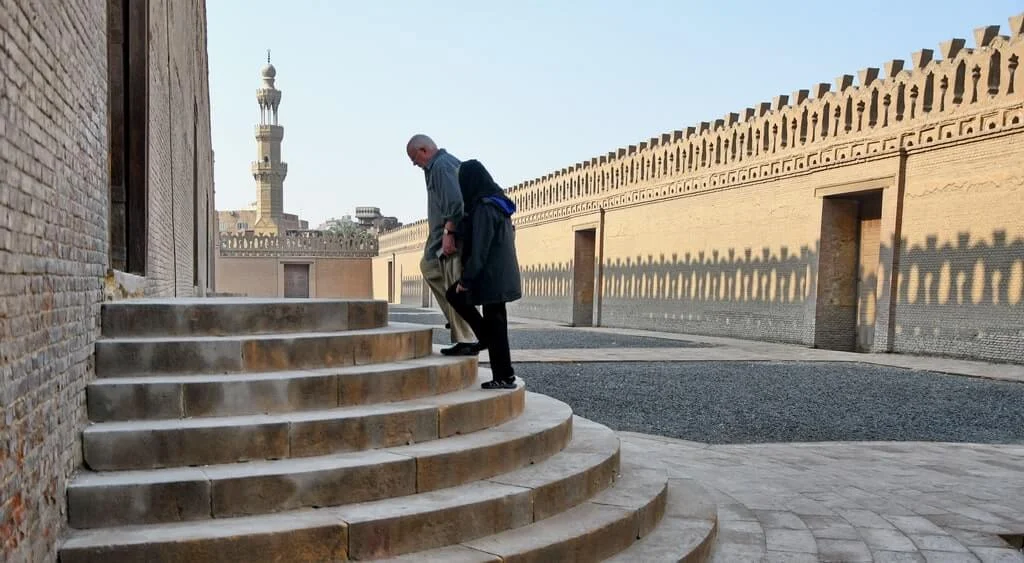
Explore the Ibn Tulun Mosque, a vast 9th-century complex that is a must-see for its historical and architectural significance. As the oldest and largest mosque in Cairo, it offers a rare glimpse into the Abbasid period. This article details its most famous features, including the massive central courtyard (sahn), the surrounding arcades with their original stucco work, and the iconic, one-of-a-kind minaret with an external spiral staircase that you can climb for stunning views of Old Cairo.
Abul Haggag Mosque: A Spiritual Jewel at the Heart of Luxor Temple
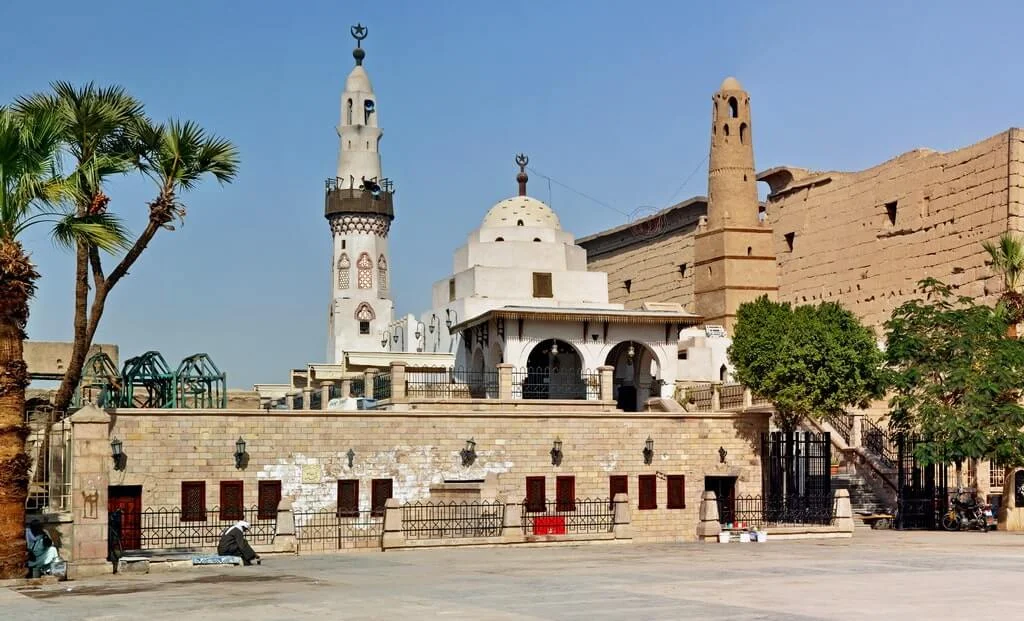
The Abul Haggag Mosque is a remarkable 13th-century landmark built directly on top of the ancient Luxor Temple, specifically within the court of Ramesses II. This unique location creates a striking fusion, where the mosque’s Islamic architecture stands against massive Pharaonic columns and hieroglyphs. Dedicated to the Sufi saint Sheikh Yusuf Abu al-Haggag, the site is a powerful symbol of 3,400 years of continuous worship, demonstrating the layering of ancient Egyptian, Coptic, and Islamic civilizations.