The Tomb of Rekhmire (TT100): An Authoritative Guide to 18th Dynasty Egypt

The Tomb of Rekhmire (TT100) is the definitive visual encyclopedia of 18th Dynasty Egyptian administration. Serving as a detailed "masterclass" in ancient governance, its wall scenes replace religious journeys with precise depictions of bureaucratic duty, legal protocol, and foreign tribute. Ultimately, TT100 offers irreplaceable evidence that the New Kingdom's power rested upon a sophisticated, data-driven civil state.

Discover the Secrets of Ancient Egyptian Governance and Duty

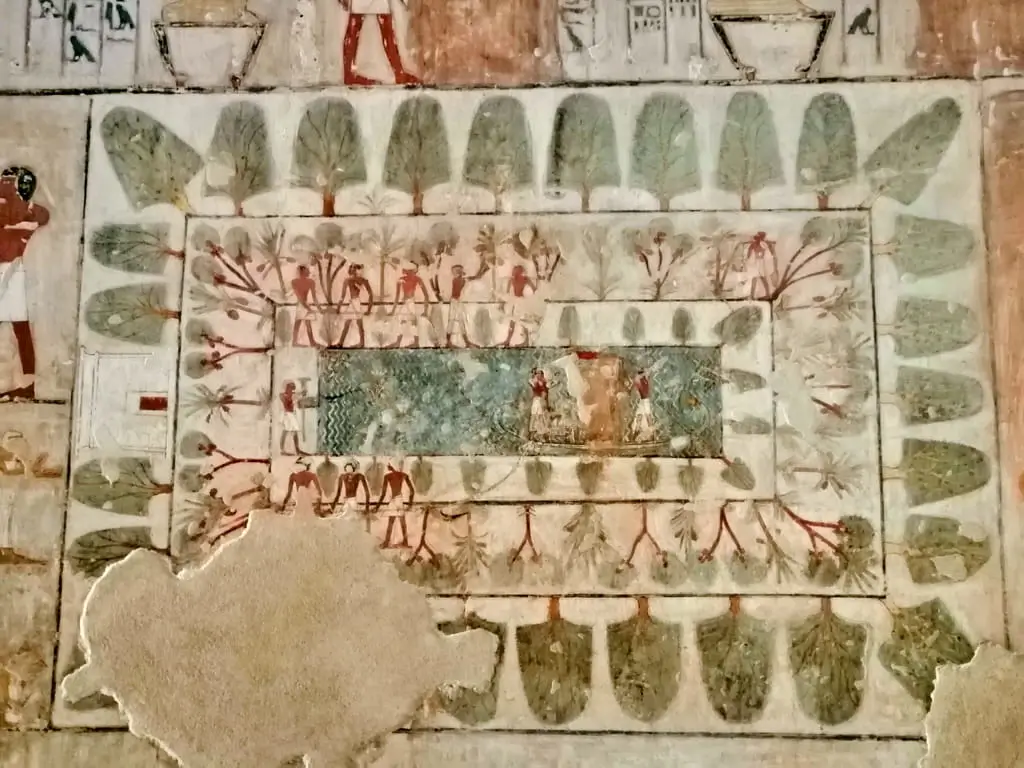
Imagine a handbook that details precisely how an ancient empire was managed. The Tomb of Rekhmire (commonly known by its identifier TT100) is not merely a final resting place; it is a vibrant, visual encyclopedia detailing the inner workings of the 18th Dynasty. While other tombs focus on mystical religious journeys, TT100 offers a unique, groundbreaking look at civic duty and bureaucratic precision.

Located in the hills of Sheikh Abd el-Qurna in Luxor, this spectacular monument reveals the career of Rekhmire, the powerful Vizier serving two of Egypt’s greatest kings: Thutmose III and Amenhotep II. This authoritative guide will decode the most famous scenes ever discovered in a non-royal tomb.

Why You Must Study the Tomb of Rekhmire

Rekhmire’s tomb is the quintessential source for understanding how Ancient Egyptian administration supported a thriving empire. It is irreplaceable for three core reasons:

  • The Vizier’s Job Description: The tomb preserves the singular best textual and visual “job description” ever found for a supreme court justice and head of government in antiquity.
  • The Foreign Tribute Scene: It showcases massive, detailed registers of delegates from Punt, Nubia, Syria, and even the Minoans (Keftiu) bearing incredible gifts.
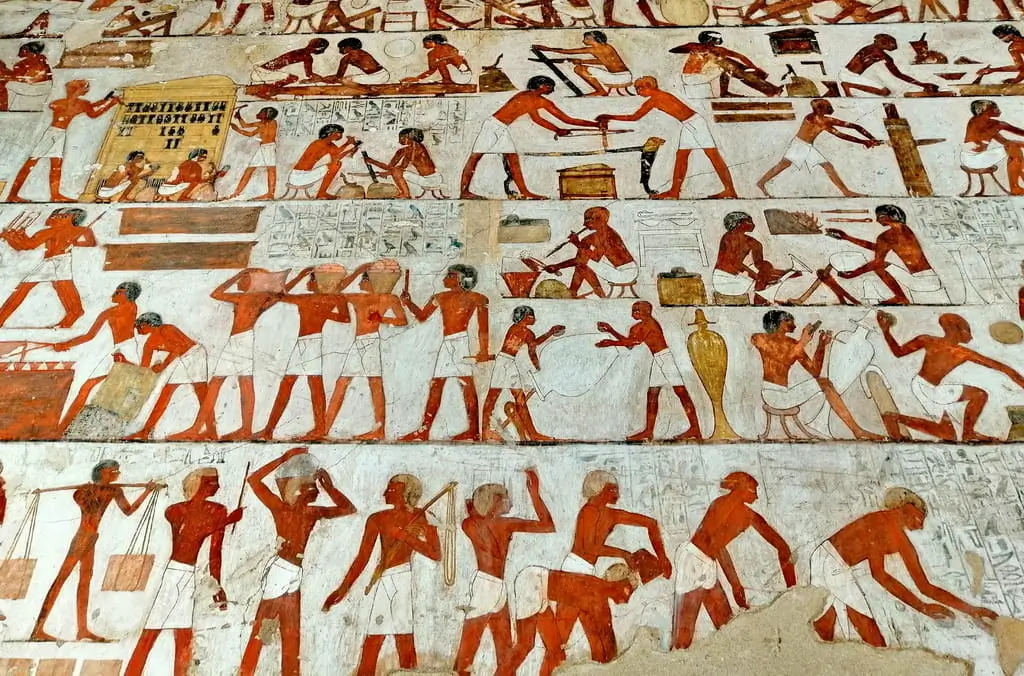
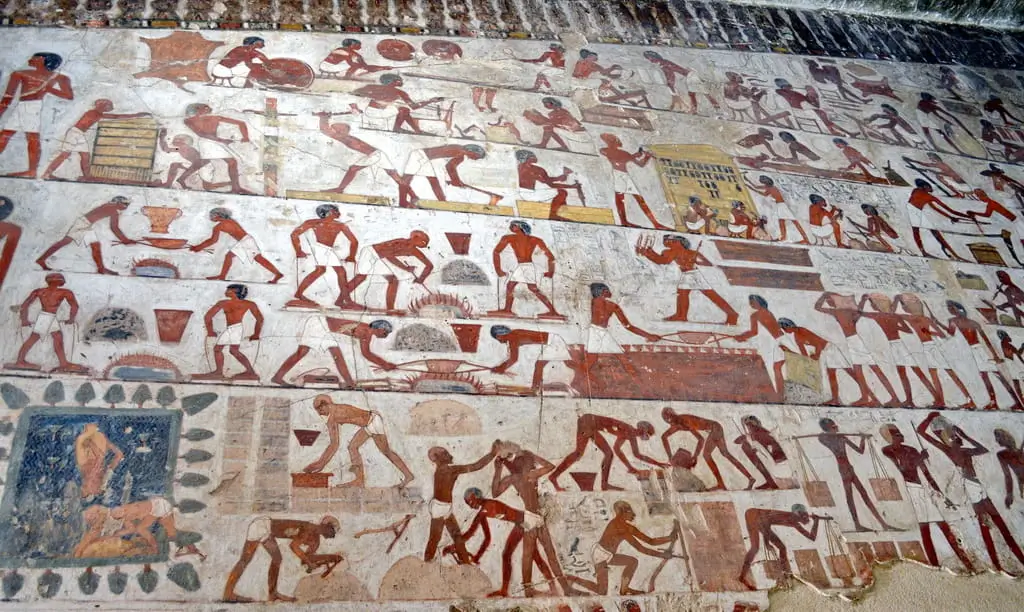
  • The State Workshops: It visualizes the chain of command, detailing how goldsmiths, sculptors, and craftsmen were managed on an economic scale.

If you want to move beyond the mythology of kings and gods and truly understand the society that built the pyramids, you must explore The Tomb of Rekhmire (TT100). Our masterclass guide will lead you through every significant scene, decoding the bureaucracy that defined a golden age.

Rekhmire: The Man Who Ran the Empire
Rekhmire The Man Who Ran the Empire

Meet the Vizier

Rekhmire was not simply a minor government official; he was the Tjaty—the Vizier of Egypt. In the intricate hierarchy of the 18th Dynasty, the Vizier ranked second only to the Pharaoh himself.

Modern historians often identify Rekhmire as the chief administrator of Thutmose III, Egypt’s great “Napoleon” pharaoh. Thutmose III expanded the Egyptian empire to its absolute greatest extent, and Rekhmire oversaw the complex internal mechanics that supported these massive military campaigns. Following Thutmose III, Rekhmire continued his supreme service under Amenhotep II.

The office of the Vizier demanded relentless activity. The ancient texts describe Rekhmire as the “eyes and ears of the King.” He managed everything from legal disputes to state economic output. In TT100, we do not simply see depictions of his power; we see evidence of his workload. He stands as the ultimate bureaucrat of the ancient world.

A Dynasty of Administration

Rekhmire did not attain this powerful office by chance. He belonged to an incredibly influential bureaucratic family that essentially monopolized the Vizierate in Upper Egypt during this era.

His grandfather, his father, and his uncles all preceded him in this exact role. This dynasty of administrators ensured stability for the throne but also consolidated immense power. When Rekhmire commissioned TT100, he did not just create a tomb; he built a final declaration of his family’s essential service to the Egyptian state.

The Location of the Monument

Rekhmire chose a prominent location for his massive, non-royal tomb. He selected the hills of Sheikh Abd el-Qurna, a section of the Theban Necropolis in Luxor. This specific hill served as the definitive “neighborhood” for high-ranking officials. By placing his tomb here, Rekhmire signaled his elite status for all eternity, ensuring his spirit would rest surrounded by his powerful peers and his family’s enduring legacy.

FUN

Inside the Masterpiece: Layout and Atmosphere

TT100 - Inside the Masterpiece Layout and Atmosphere

The physical layout of TT100 possesses surprising simplicity, especially when you consider the sheer detail of its content. Therefore, understanding the tomb’s architecture is essential for appreciating the sophisticated organization of its decorative program. The design intentionally centers on providing massive surface areas for the Vizier’s messages.

The Simple T-Shape Design

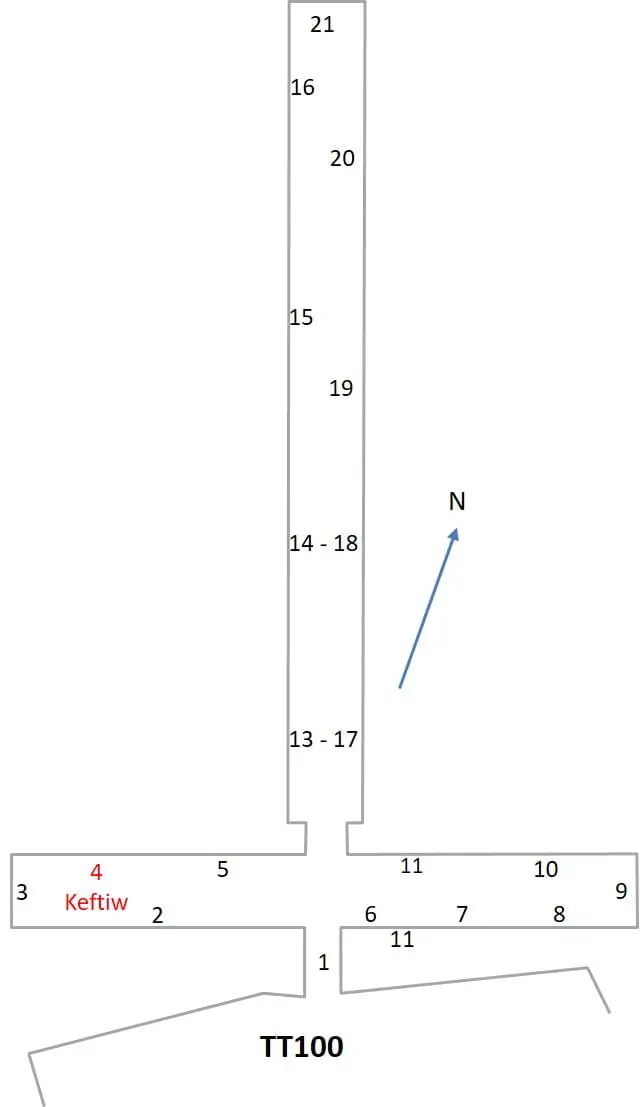
Unlike the convoluted passages of royal tombs, TT100 follows a traditional, linear “T-shape.” Consequently, the tomb consists only of a wide, transverse entry hall and a single, exceptionally long inner corridor. Initially, you cross a small courtyard to enter the transverse hall. This space immediately presents visitors with massive, brightly colored scenes. Following this, you proceed directly into the core of the monument: the corridor. This space is truly remarkable because it extends deeply into the mountain, yet never deviates in width. Because the tomb avoids complex pillared halls or multiple side chambers, the architects could maximize the usable wall space. Ultimately, they designed the tomb less as an intimate sacred space and more as a monumental art gallery—a dynamic, three-dimensional curriculum vitae.

The Vibrant Canvas: Condition and Light

While some colors naturally faded over thousands of years, the tomb remains remarkably vibrant. For this reason, the scenes in TT100 possess incredible detail that other tombs often lack. The outer transverse hall, unfortunately, sustained some damage. Nevertheless, the main administrative and tribute scenes still clearly convey their vital details. In contrast, the deeper corridor exhibits exceptional preservation. As a result, the intricate patterns on the ceiling, designed to mimic woven mats, remain incredibly sharp, and the rich palette of reds, blacks, and yellows retains its original punch.

Modern visitors will immediately notice the atmosphere. The spaces are tight and focused, encouraging you to step close to the walls. Furthermore, because of the high density of detailed scenes, navigating the tomb feels like exploring an illuminated manuscript. You must take your time; otherwise, you risk missing the vital, granular data that makes Rekhmire’s tomb unique.

The Masterclass: Administrative Life and Duty

The Masterclass Administrative Life and Duty

In the wide transverse hall, Rekhmire demonstrates the Vizier’s daily life with unprecedented clarity. Consequently, these scenes serve as the definitive handbook for New Kingdom governance. We observe Rekhmire not merely as a powerful figurehead, but as a deeply committed public servant executing intricate state duties. The visuals, therefore, do not simply depict power; they depict protocol.

Scene 1: The Installation of the Tjaty: The Perfect Job Description

Imagine opening an ancient document containing the absolute directives for running a nation. TT100 provides exactly this. One crucial scene portrays Rekhmire standing respectfully before Thutmose III (represented hieroglyphically, as the King frequently does not appear in the Vizier’s tomb). Crucially, a long, remarkable block of text accompanies this image: The Installation of the Tjaty.

This text does not contain simple praise. On the contrary, it delivers the King’s explicit instructions for the Vizier’s conduct. Thutmose III tells Rekhmire, “Act without prejudice” and “Show no favor.” As a result, this inscription provides the oldest written job description for a head of state in antiquity. It demands impartiality and transparency, emphasizing that Ma’at (divine order and justice) remains the core function of the state, not just a religious concept.

Scene 2: Receiving the Foreign Tribute

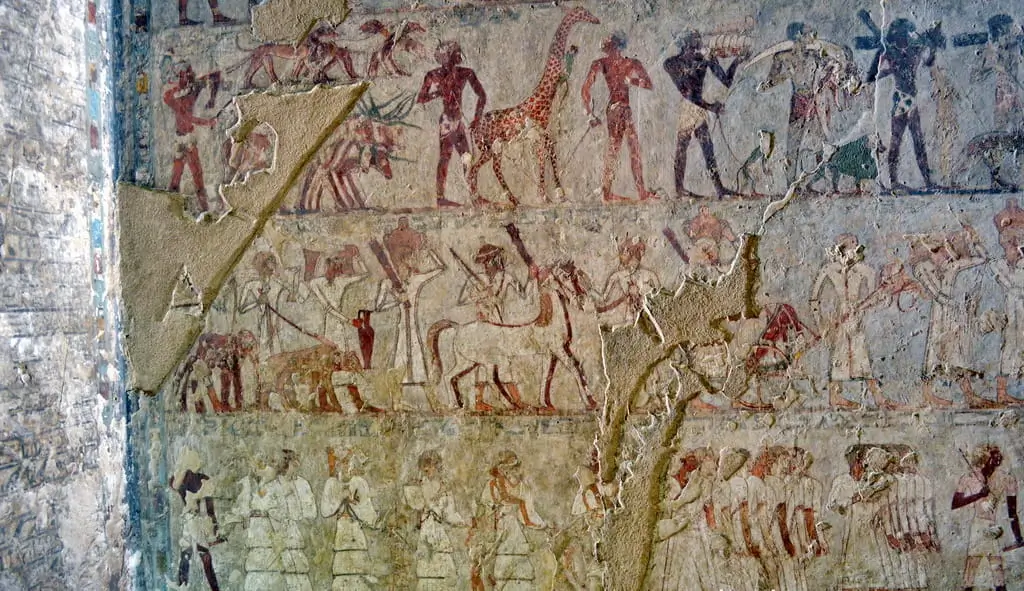
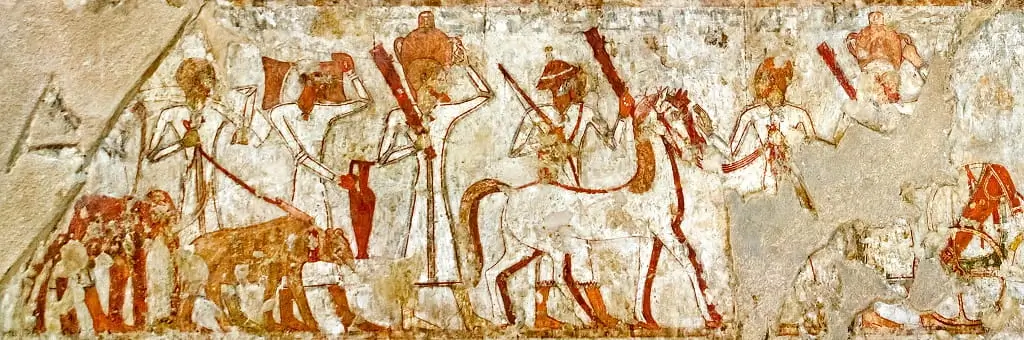
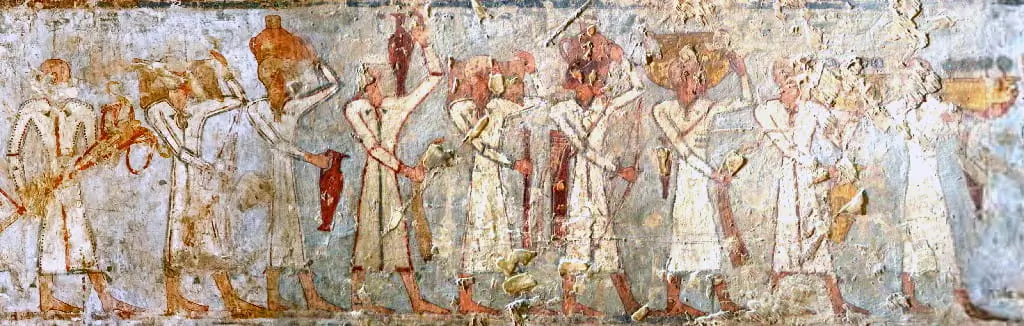
This next sequence constitutes perhaps the most famous non-royal scene ever discovered in Egypt. Over five distinct registers, vast processions of foreign delegates bring their offerings to Rekhmire, who presents them to the King. The sheer demographic detail is staggering. Furthermore, these scenes function as critical ethnographic data. You immediately notice the distinct appearances:

  • Puntites: Arriving with incense trees, incense piles, and sleek dogs from the fabled Land of Punt.
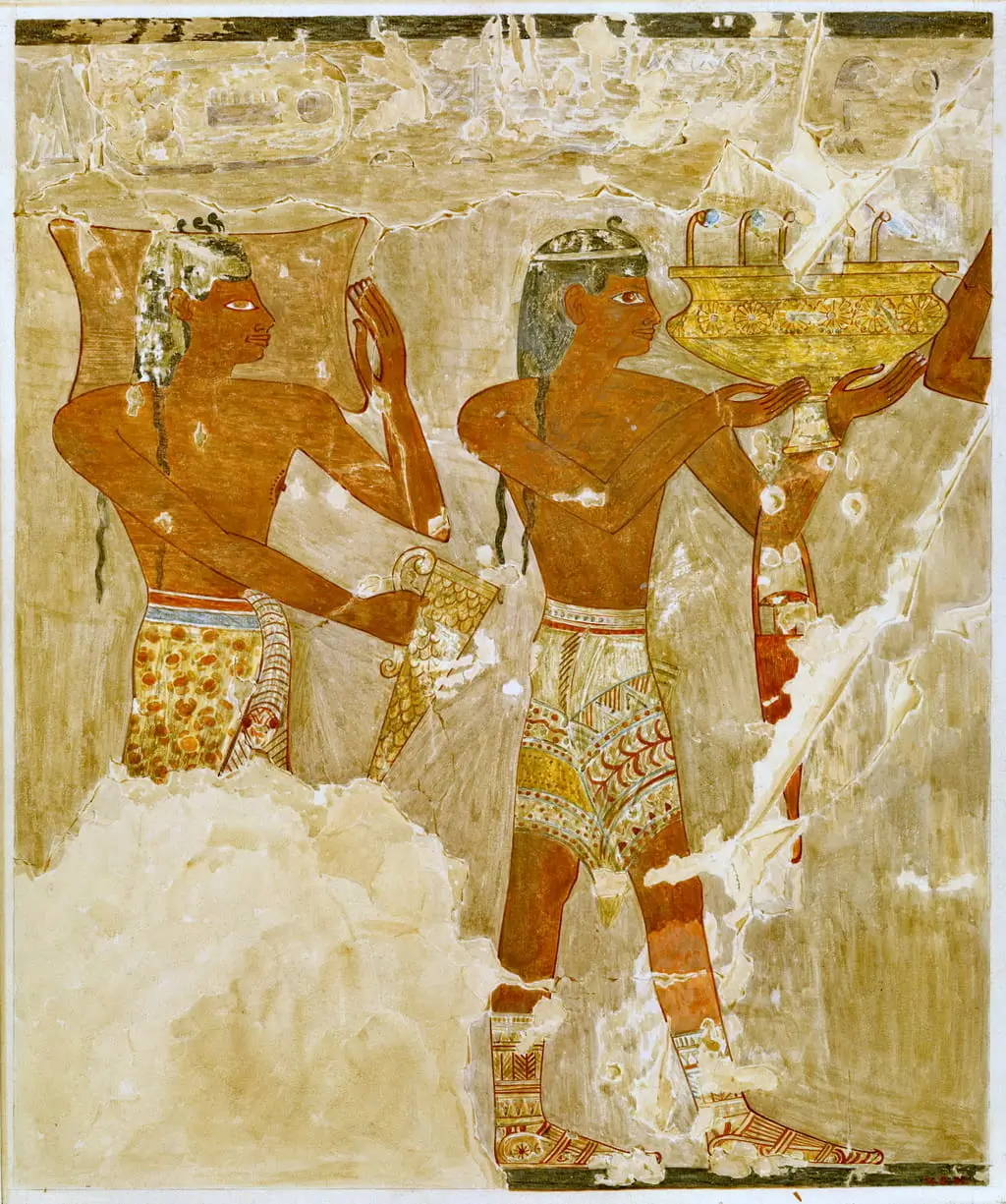
  • Keftiu (Minoans/Crete): This register remains intensely studied. We see them wearing intricately patterned kilts, holding fine, specific pottery (called rhyta) that historians recognize from actual archaeological finds in the Aegean. Therefore, this scene confirms direct diplomatic contact with the Greek islands.
  • Nubians: They present giraffe tails, panther skins, ivory, and vibrant gold rings, demonstrating the wealth from the south.
  • Syrians: They arrive with horses, detailed chariots, and specialized weaponry, illustrating the military materials from the Near East.

Ultimately, Rekhmire uses this massive spectacle to demonstrate not only his pharaoh’s dominance but also his own essential role as the manager of this dynamic imperial economy.

Scene 3: The Vizier as Chief Justice and Bureaucrat

Finally, we observe the core of the state’s internal operation. This scene visualizes the Vizier’s Court. Here, Rekhmire sits in his judicial office, surrounded by his clerks, scribes, and four stylized leather mats representing legal scrolls—the symbols of the state’s law.

Furthermore, this scene illustrates remarkable organization. We watch as precise queues of petitioners present their cases. Assistants then record the entire proceeding. Every item, every legal decision, every piece of data receives meticulous documentation. Because of these scenes, we know exactly how Rekhmire maintained order. He did not rule by whim; he ruled by bureaucracy. Consequently, TT100 proves that ancient Egypt did not function only on kingship and religion, but also on process and precision.

FUN

The Legacy of the Tomb of Rekhmire (TT100)

The Legacy of the Tomb of Rekhmire (TT100)

When you examine the full decorative program, it becomes clear that the Tomb of Rekhmire (TT100) was never intended merely for a burial. Instead, Rekhmire designed it as a permanent statement of his administrative mastery, his devotion to Ma’at (divine order), and his family’s indispensable service to the state.

The Unfinished Business of Vizier Rekhmire

Critically, the most fascinating detail concerning the Tomb of Rekhmire (TT100) is its ending. Despite the incredible effort spent detailing his life, Rekhmire was likely never actually buried there. In the final years of his career, during the early reign of Amenhotep II, Rekhmire suddenly vanishes from the historical record.

Evidence points to a swift political downfall. Consequently, work on the tomb halted, and later, political enemies attacked and damaged his name and image in some scenes. This ” unfinished business” highlights that even the most powerful bureaucrat, whose life was meticulously detailed on the walls of TT100, remained vulnerable to the whims of political favor and dynastic transition.

Decoding the True Significance of TT100

Ultimately, the significance of the Tomb of Rekhmire (TT100) far exceeds its artistic value. It proves, with overwhelming data, that Ancient Egyptian society was defined by a complex, regulated civil state, not just a mystical obsession with the afterlife. We observe thousands of moving parts: judges, brickmakers, foreign envoys, goldsmiths, and court clerks, all operating under a precise hierarchy managed by the Vizier.

TT100, therefore, remains the indispensable blueprint for understanding the true inner mechanics of the 18th Dynasty Empire. A deep study of this unparalleled monument moves beyond mythology, allowing you to meet the very man—Rekhmire—who organized the system that built a golden age.

The Catacombs of Kom Esh-Shokafa: Roman-Egyptian Underworld

Descend into one of the "Seven Wonders of the Middle Ages" at the Catacombs of...
Related post
FUN

Key Visual Scenes to Identify in the Tomb of Rekhmire (TT100)

Key Visual Scenes to Identify in the Tomb of Rekhmire (TT100)

When you explore the Tomb of Rekhmire (TT100), the massive decorative program can feel overwhelming. However, several specific scenes contain the critical data that defines this monument’s importance. If your time is limited, you must prioritize finding these unique visuals, which appear primarily in the wide transverse hall (Outer Hall).

Locating the Installation of the Tjaty

  • Where to Look: This crucial text and image block occupies the left-hand wall as you enter the transverse hall of TT100.
  • What to Identify: You will see a large, formal figure of Rekhmire (representing the Vizier) receiving his directives from the King (or a symbolic representation). Pay close attention to the sheer volume of perfectly aligned hieroglyphic text accompanying the image. This is the famous “job description.” Imagine thousands of eyes—future officials, modern scholars, and the gods themselves—reading this enduring definition of impartial justice and bureaucratic duty.

Spotting the World in Miniature: The Foreign Tribute Procession

Where to Look: This scene dominates the entire length of the front right wall (on your right as you enter the main hall of the Tomb of Rekhmire (TT100)).

What to Identify: Scan the wall from top to bottom, as the data is organized into five distinct horizontal registers.

  • Top Register: Identify the Minoans (Keftiu) by their colorful, patterned kilts and specialized pottery.
  • Middle Registers: Notice the darker skin tones, animal products (panther skins, giraffes, ivory), and rings of gold that distinguish the Nubian delegates. Also, look for the distinctly styled horses, chariots, and detailed clothing of the Syrian envoys.
  • Bottom Register: This register is often damaged; nevertheless, you can still distinguish the delegates from Punt bringing unfamiliar animals and valuable incense.

Witnessing the State Workshops

Where to Look: This dynamic sequence is located on the right-hand wall of the Tomb of Rekhmire (TT100), opposite the tribute scene.

What to Identify: Focus on the sheer variety of activity. Unlike the formal standing figures elsewhere, these tiny figures represent dynamic movement and industry.

  • Find the Brickmakers: You can literally count the steps in their manufacturing process.
  • Locate the Goldsmiths and Sculptors: Look for the precise tools they use to create fine art and royal statues.
  • Identify the Scribes: Look for the figures sitting calmly amid the chaos, meticulously recording every raw material and finished product. This is the bureaucratic management that Rekhmire controlled.

By focusing on these specific locations and details within the Tomb of Rekhmire (TT100), you will immediately unlock the primary historical and administrative data that makes this tomb the most significant monument in Sheikh Abd el-Qurna.

The Tomb of Sennefer (TT96): Inside the Legendary Vineyard Tomb

The Tomb of Sennefer (TT96), or the "Vineyard Tomb," is a masterpiece of 18th-century artistry...
Related post
FUN

Artistic Style and Architectural Evolution in TT100

Artistic Style and Architectural Evolution in TT100

The Tomb of Rekhmire (TT100) not only serves as an administrative archive but also represents a pivotal moment in the evolution of Ancient Egyptian art and tomb architecture. In fact, the tomb’s decorative style provides critical visual evidence of the transition occurring at the height of the 18th Dynasty.

Theban Tomb Style: A Reflection of Policy

While royal tombs generally adhere to rigid canon, private tombs like TT100 often display greater stylistic freedom. We can observe a clear distinction between the formal and the functional.

For instance, the formal scenes, such as the Installation of the Tjaty and the large figures of Rekhmire receiving praise, strictly follow the traditional “Theban style” established during Thutmose III’s reign. These figures possess muscularity, angular lines, and a rigid, commanding presence.

However, in the more active scenes—the tribute procession and the workshops—the artists introduced a remarkable new sense of dynamic realism. Notice how the figures do not just stand; they lean, they carry heavy loads, and they perform complex tasks. The artists expertly organized thousands of moving parts while maintaining a sense of lively chaos. Ultimately, this stylistic transition foreshadows the softer, more fluid artistic approach that would fully define the subsequent reign of Amenhotep II.

Innovations in Tomb Decoration within TT100

Furthermore, the Tomb of Rekhmire (TT100) introduced significant innovative decorative techniques. The artists did not rely solely on paint; instead, they pushed the boundaries of composition.

Specifically, look closely at the ceilings. The artists utilized intricate, vibrant geometric patterns that flawlessly mimic actual woven mats. This was not merely decoration; it was an innovative use of the tomb’s architecture to create an illusion of texture and domestic comfort.

Finally, consider the famous foreign tribute scene. This was perhaps the first time in private tomb art that a Vizier displayed his authority not through military dominance, but through the sophisticated bureaucratic management of a global trade network. This conceptual innovation—defining power through data and foreign diplomacy—is what makes the Tomb of Rekhmire (TT100) a true artistic and historical masterclass.

Glossary of Key Terms for Understanding TT100

Glossary of Key Terms for Understanding TT100

To fully grasp the intricate details presented within the Tomb of Rekhmire (TT100), you must familiarize yourself with a few key historical and geographic terms. An accurate interpretation of the Tomb of Rekhmire (TT100) hinges upon understanding these foundational concepts.

Foundational Historical and Geographic Terms

  • Tjaty (Vizier): This Ancient Egyptian title designates the highest state official under the Pharaoh. As the Tjaty, Rekhmire functioned essentially as the prime minister, chief justice, and head of the entire state bureaucracy. The scenes in TT100 provide the single most detailed visualization of this supreme office in antiquity.
  • 18th Dynasty: This era, spanning roughly 1550–1292 BCE, marks the height of Ancient Egypt’s imperial power, wealth, and international influence. The Tomb of Rekhmire (TT100) serves as the paramount archive for understanding how this golden age was organized and maintained administratively.
  • Thutmose III: Pharaoh of the 18th Dynasty, under whom Rekhmire served the majority of his career. Known as Egypt’s greatest warrior-king, Thutmose III’s vast empire directly influenced the incredible volume of foreign wealth and raw materials seen meticulously detailed in the Tomb of Rekhmire (TT100).
  • Sheikh Abd el-Qurna: This specific hill, located within the vast Theban Necropolis in Luxor, served as the definitive burial ground for high-ranking nobles, court officials, and viziers during the New Kingdom. Here, the Tomb of Rekhmire (TT100) occupies a central and prominent position among its elite peers.

Conceptual and Cultural Terms Found Within TT100

  • Ma’at: The central Ancient Egyptian concept of cosmic order, truth, justice, and balance. While essentially a divine principle, the texts in TT100 reveal that upholding Ma’at was, critically, the Vizier’s defining administrative and judicial duty.
  • Keftiu (Minoans): The ancient Egyptian term for the people of Crete and the Aegean islands. The Tomb of Rekhmire (TT100) contains one of the most significant and detailed visual depictions of these delegates, offering invaluable data concerning their distinct appearance, specific clothing (kilts), and precise pottery. This confirms direct diplomatic and trade connections managed by the 18th Dynasty bureaucracy.
  • Registers: The distinct horizontal bands used by Ancient Egyptian artists to organize complex visual narratives. By mastering the organization of thousands of figures across these levels, the artists of the Tomb of Rekhmire (TT100) successfully manage potentially chaotic scenes (like the tribute or workshops) while ensuring every piece of dynamic administrative data remains clear and systematic.

The Mastaba of Mereruka: A Guide to Saqqara’s Grandest Noble Tomb

The Mastaba of Mereruka is the largest and most complex noble tomb in Saqqara, featuring...
Related post
FUN

Practical Tips for Visiting the Tomb of Rekhmire (TT100)

Practical Tips for Visiting the Tomb of Rekhmire (TT100)

If you plan to experience the sheer detail of the Tomb of Rekhmire (TT100) in person, a little preparation will significantly enhance your visit. Because this monument contains an overwhelming amount of visual data, you must approach it strategically to get the most out of your time.

Securing Access to the Monument

First and foremost, the Tomb of Rekhmire (TT100) is not included in the standard West Bank “combination” ticket. Instead, you must purchase a specific ticket dedicated solely to this tomb and its close neighbor, the Tomb of Sennefer (TT96), which is often referred to as the “Tomb of the Vineyards.”

This specialized ticket guarantees access to two of the finest private tombs in the entire Theban Necropolis. Therefore, you should prioritize purchasing this ticket at the main West Bank ticket office before ascending the hill to Sheikh Abd el-Qurna. The extra cost is well worth the unique opportunity to study the meticulous bureaucratic details preserved in TT100.

Navigating and Viewing TT100 Effectively

Once you arrive at the entrance to the Tomb of Rekhmire (TT100), the challenge becomes managing the sheer quantity of information on the walls. Because the narrow interior corridor was not designed to accommodate crowds, a visit during early morning hours or late afternoon is highly recommended; otherwise, your view of key administrative details might be obstructed.

Furthermore, proper illumination is essential. While the main Outer Hall has some lighting, the deep Inner Corridor can be dark. Therefore, you should absolutely carry a reliable, bright flashlight. (Note: Many sites now allow non-flash phone photography, but you must strictly follow the current regulations displayed at the entrance.

Finally, do not hesitate to ask for assistance. The tomb guardian or an official guide can frequently help you locate subtle but vital visual data, such as the specific workshop activities (brickmakers or goldsmiths) or the exact register showing the Minoan (Keftiu) delegates, ensuring you do not miss the foundational historical evidence that makes the Tomb of Rekhmire (TT100) a true masterclass.

Why the Tomb of Rekhmire (TT100) Remains a Masterclass

In summary, the Tomb of Rekhmire (TT100) is perhaps the most significant non-royal monument from the entire New Kingdom. Its walls offer an unparalleled and highly detailed encyclopedia of 18th Dynasty life, governance, and international relations. While other tombs focus on religious transformation and the journey to the afterlife, TT100 provides indispensable visual and textual evidence of the sophisticated bureaucratic system that powered Ancient Egypt at its absolute peak.

Through the eyes of Vizier Rekhmire, we observe a world of incredible complexity. We witness the meticulous management of vast state workshops, the formal protocol for the global display of foreign tribute, and the foundational job description for impartial justice and dynamic bureaucratic duty.

Ultimately, the true significance of the Tomb of Rekhmire (TT100) lies in its power to humanize an ancient empire. It proves that behind the grand monuments, military campaigns, and religious myths existed a functioning, data-driven civil state led by dedicated administrators. For anyone seeking to move beyond mere spectacle and truly master the intricate, dynamic reality of 18th Dynasty Egypt, a deep study of the Tomb of Rekhmire (TT100) remains an essential, non-negotiable prerequisite.

Admire the Egyptian Marvels in 6 Days during Xmas and New Year Holidays....
Immerse yourself in local culture and unravel the hidden gems known only to the residents....
God_Anubis_Icon
Ancient Egyptian Sarcophagus - Egypt Fun Tours

Unforgettable experience with Fun Tours – Highly recommended!

Hello everyone! We would like to share our extremely positive experience with Fun Tours. Our tour was a complete success thanks to our guide, Osama, and our driver Hassan. Osama proved to be an enthusiastic and knowledgeable guide who answered all of our questions and catered to our individual wishes

More »
Amir review, October, 2025

BEST EGYPT VISIT EVER

My entire family enjoyed every day of our EGYPT 🇪🇬 vacation.. Our tour guide helped us set up the entire trip from beginning to end .. He helped us in every way .. Transportation, meals , shopping , museum , history , just everything .. and my kids love him

More »

Excellent Adventure

These guys put together an amazing itinerary that allowed me see the sunrise at the sun festival in Abu Simbel, King Tut’s tomb, and mask! That was just the tip of the iceberg. Aswan, Kom Ombo, Edfu and Luxor. So much visited with plenty of rest time. An amazing trip

More »
group tour of wonders

Solid Tour Company

Last year (2010) my wife and I did a 20 day trip in Egypt, mostly Do-It-Yourself. However, one of the first things we did was a trip to Bahariya oasis and to the White Desert — not so easy to do yourself, so we needed an agency. After e-mail back-and-forths

More »
Tailored Services for Corporate Business Transportation Needs

On time, adaptable, and fun!

My friend and I planned a whirlwind trip to Dubai, the Dead Sea, Petra, Cairo, Luxor, and Sharm el Sheikh for early November 2011 – 6 cities in 10 days! We allotted one afternoon and evening for Cairo, and we wanted to see as much as we could! We drove

More »
God_Anubis_Icon

Top-rated Tour Packages

God_Anubis_Icon