The Layout of the Tomb of Ramesses VI (KV9)
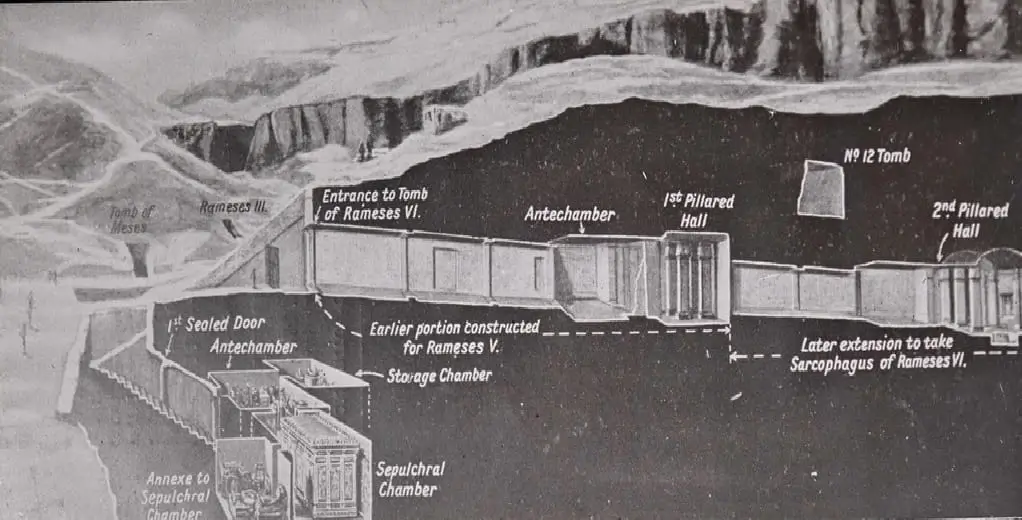
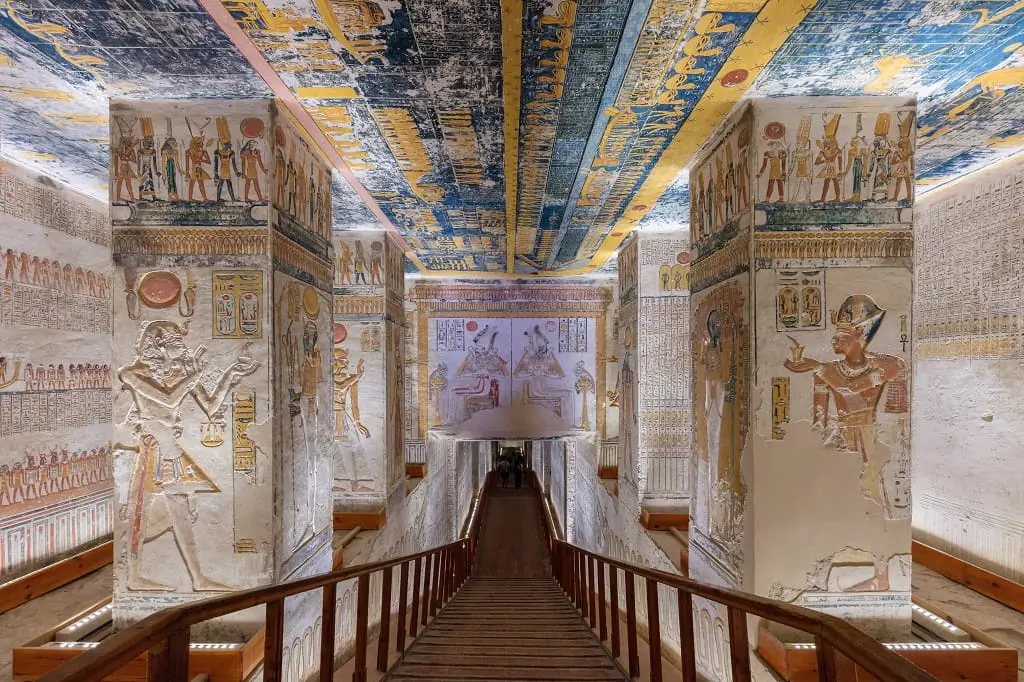
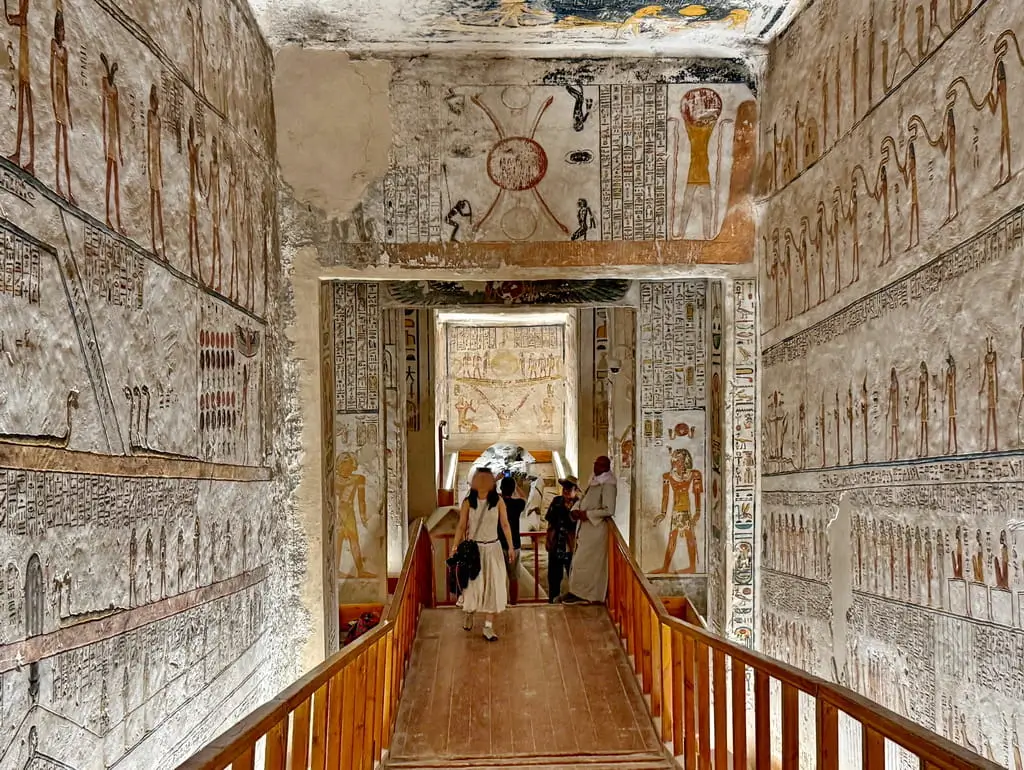
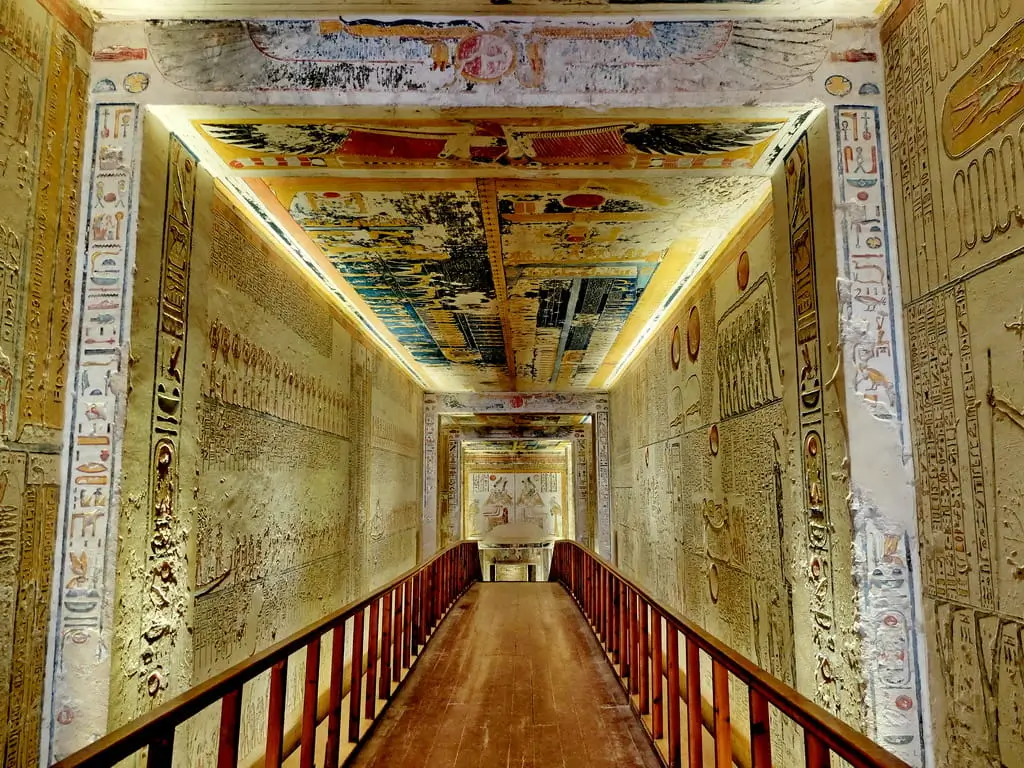
In addition to its historical significance, the architecture of KV9 reflects a shift in religious thought. Earlier tombs, such as that of Seti I, featured sharp turns and hidden shafts to confuse intruders. In contrast, the Tomb of Ramesses VI follows a “longitudinal axis”—a perfectly straight, wide corridor that plunges nearly 100 meters into the bedrock.
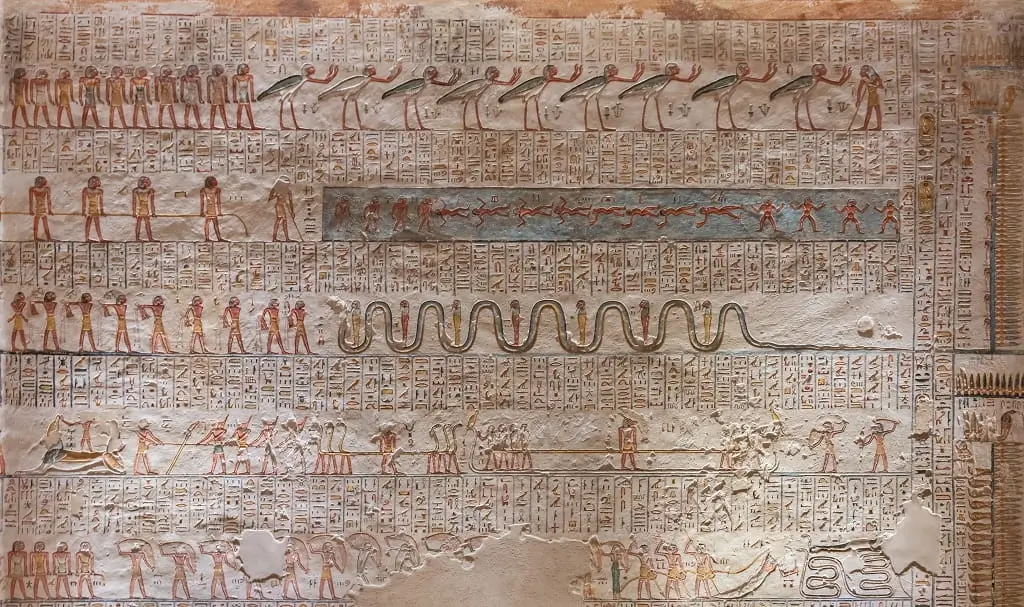
Moreover, this wide-open design served a specific purpose. It provided the artists with massive, flat “canvases” to display an entire library of religious texts. Consequently, as you walk down the ramp, you aren’t just moving through a hallway; you are physically traveling through the pages of ancient Egyptian theology.
Ancient “Tourists” and the History of Travel
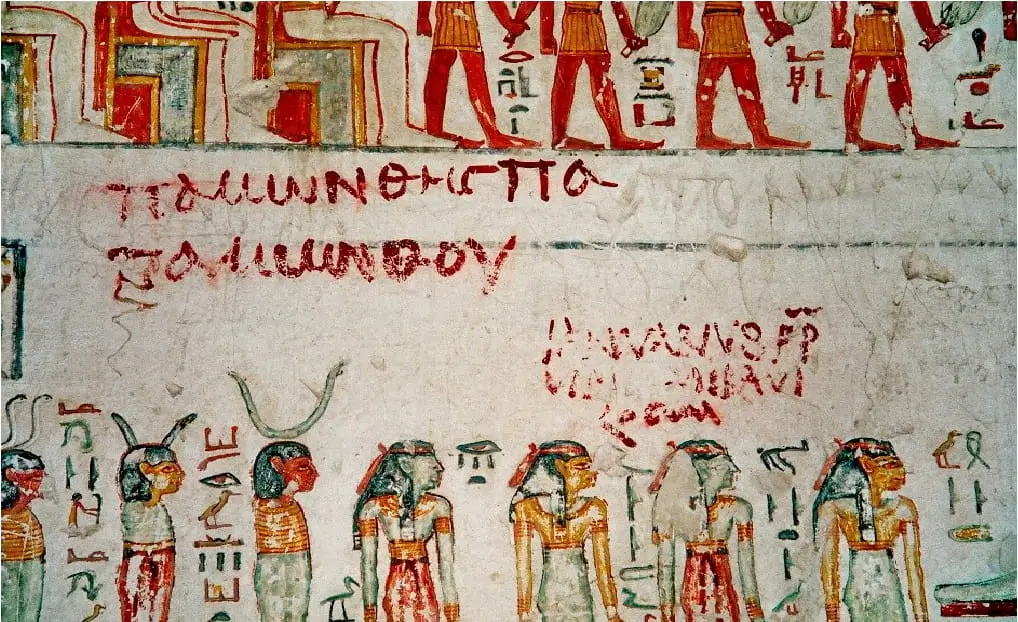
Notably, KV9 has been open and famous since antiquity. Unlike many tombs that remained sealed until the 19th century, this tomb was a “must-see” destination for Greek and Roman travelers.
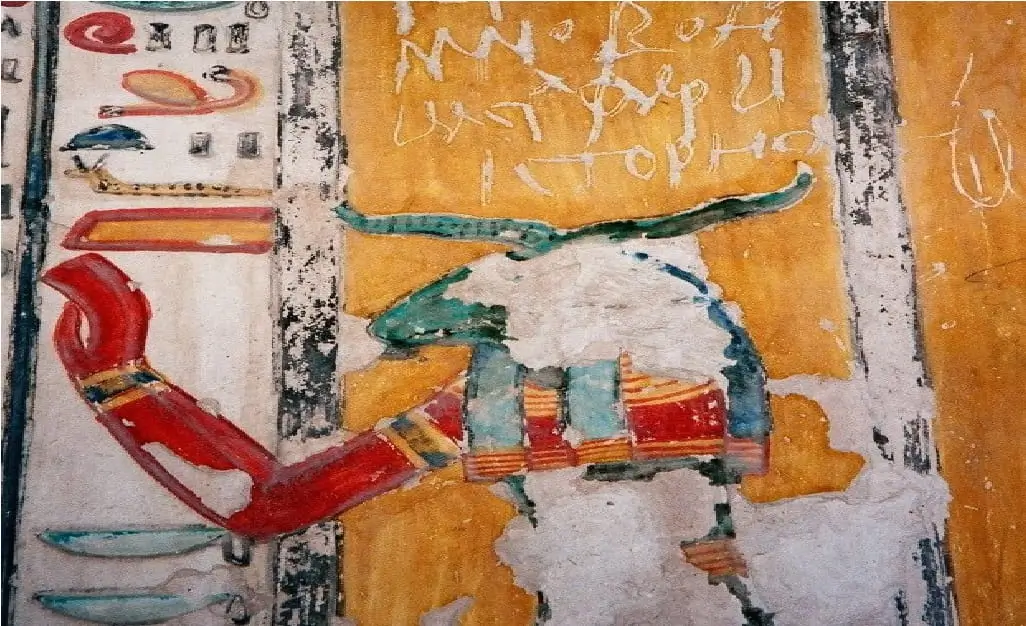
For example, there are over 1,000 instances of ancient graffiti etched into the walls, dating back as far as the Ptolemaic period. While we usually discourage such marks today, these ancient inscriptions provide fascinating evidence that visitors have been traveling with “tour guides” to see these paintings for over 2,000 years. Therefore, when you visit Egypt Fun Tours, you are participating in a tradition that spans the history of civilization itself.
The Masterpiece of the Heavens: Deciphering the Ceiling
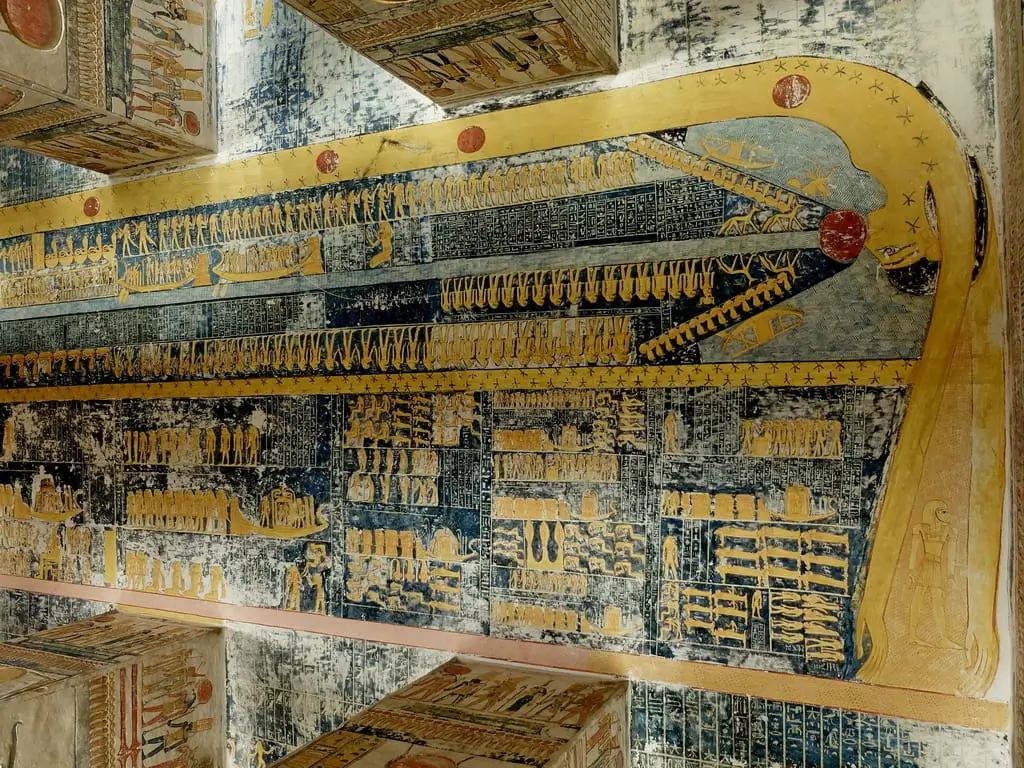
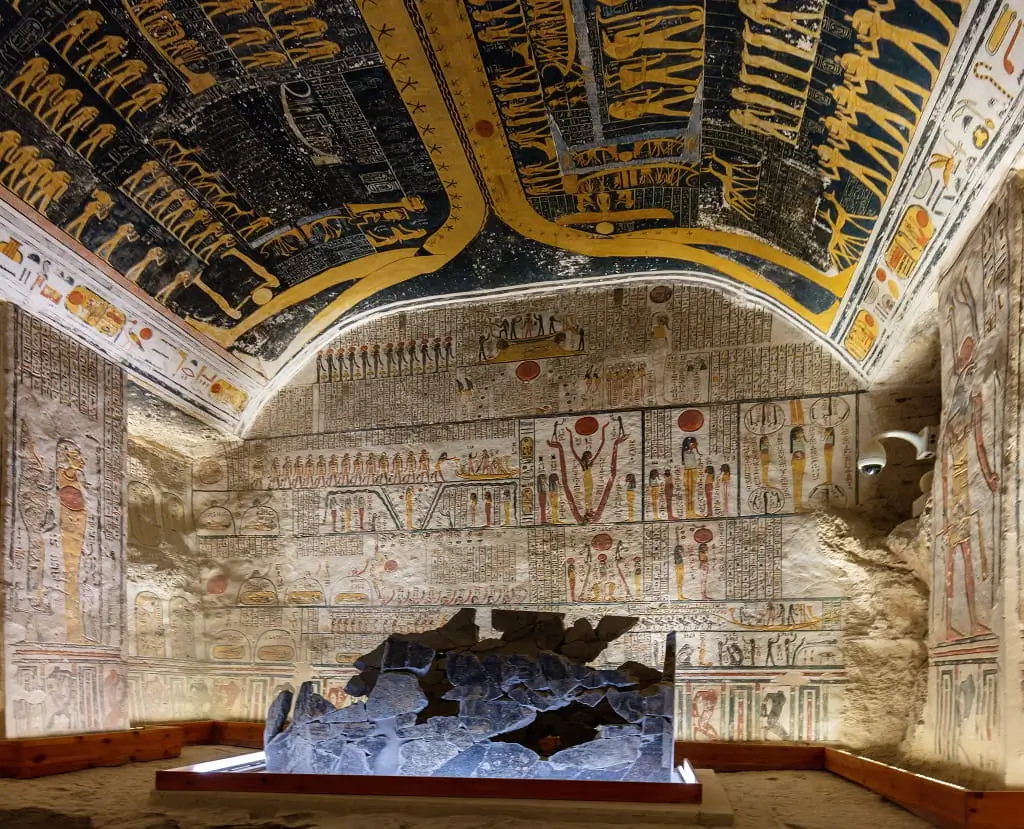
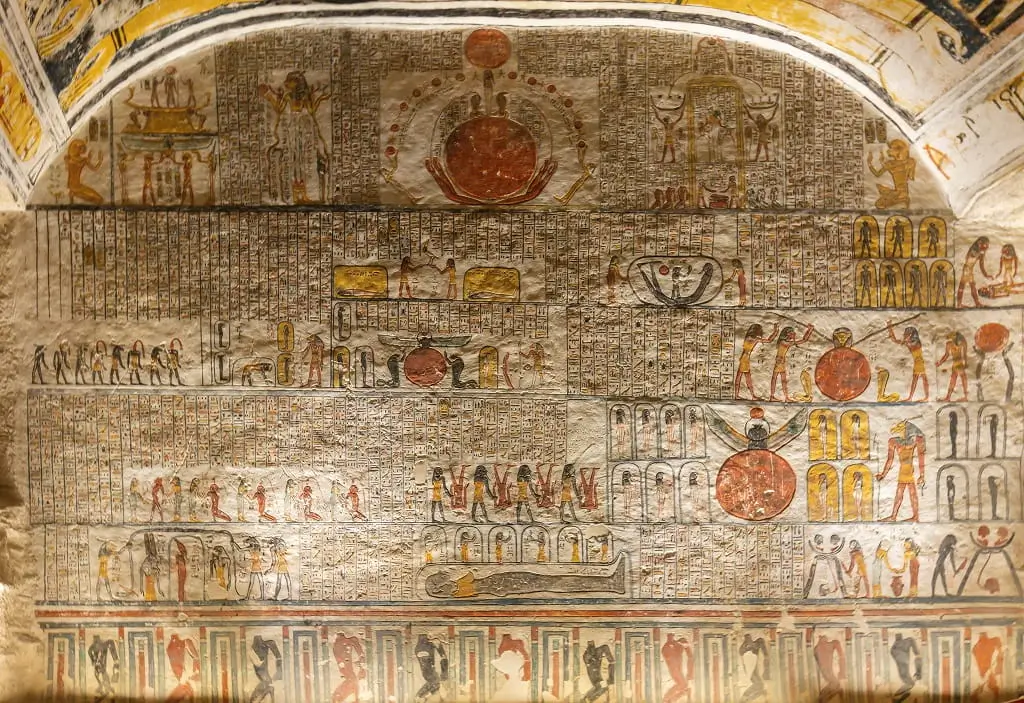
While the corridors of KV9 provide a stunning introduction, the true climax of the experience awaits you in the burial chamber. Upon entering, your eyes will immediately draw upward to the vaulted ceiling. Here, you encounter the “Book of Day” and the “Book of Night”—a complex, dual narrative that explains the ancient Egyptian conception of time and the universe.
The Goddess Nut: The Sky as a Living Being
At the center of this display, the sky goddess Nut stretches across the ceiling in two mirrored poses. In the first half, representing the night, she swallows the sun as it sets in the west. Subsequently, the sun travels through her body—the starry vault of heaven—during the twelve hours of darkness. Finally, in the second half of the painting, she gives birth to the sun once again at dawn, symbolizing the eternal cycle of rebirth.
Notably, this is not merely a pretty picture; it is a functioning map of the cosmos. In addition to the central figure of Nut, the ceiling is crowded with stars, constellations, and the “Barque of Ra,” the celestial boat that carries the Sun God on his journey.