


Discover the wonders of Egypt
Ancient Egyptian Temples: The Gateway to the Divine
Welcome to the ultimate guide to Ancient Egyptian Temples. This landing page serves as your comprehensive portal to the “Houses of Eternity”—sacred structures that have stood for millennia as the physical bridge between the mortal realm and the divine gods of the Nile. Recently, exploring these temples has entered a new era. With the recent completion of major restoration projects in Luxor and the integration of new technologies at the Grand Egyptian Museum, there has never been a better time to delve into the architectural and spiritual heart of the Pharaohs.
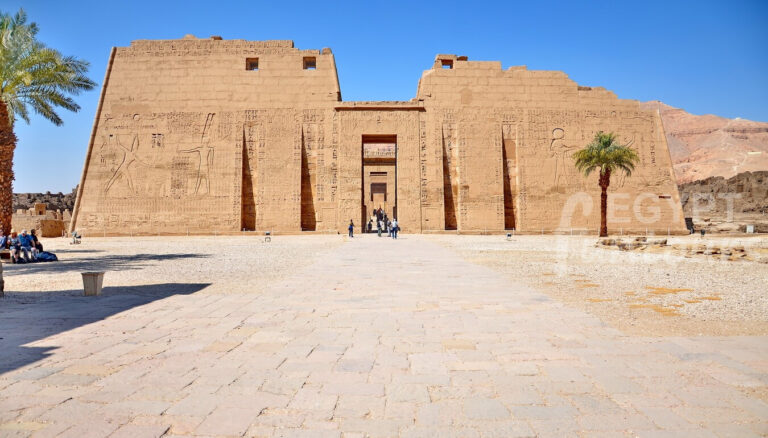
In Ancient Egypt, a temple was known as Hwt-Netjer (Mansion of the God). Unlike modern places of worship, these were not designed for large congregations. Instead, they were exclusive residences where priests performed secret daily rituals to maintain Maat—the divine order of the universe.
When you explore the monuments listed here, you are not just looking at ruins; you are looking at:
This page organizes the most significant archaeological sites in Egypt into a navigable directory. Whether you are looking for the massive sun-drenched pylons of Upper Egypt or the mysterious shrines of the South, our guide covers:
To make the most of your visit to these attractions in 2026, keep these expert tips in mind:
Browse our curated list of ancient Egyptian temples to find detailed visitor information, historical facts, and the best tour packages for each site.
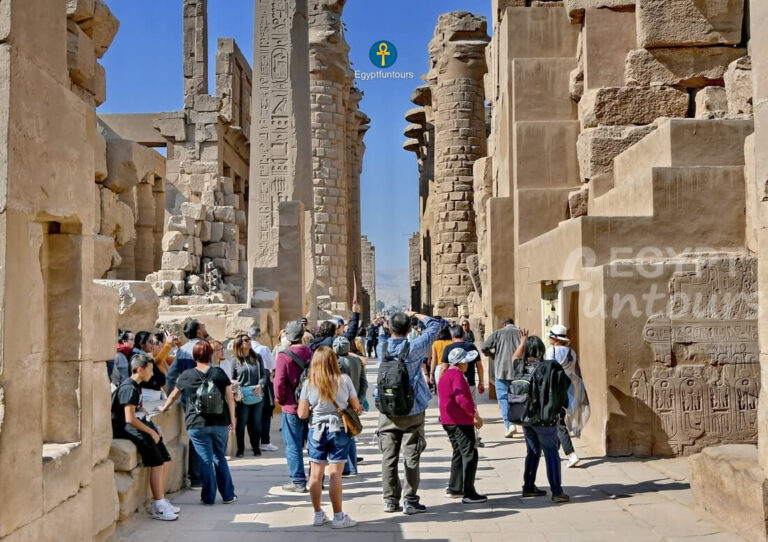
This temple is the largest among all the ancient Egyptian temples. Karnak is much more than a temple; it is a sprawling city of gods. In fact, it remains the largest religious complex ever built by man. Dozens of Pharaohs constructed this site over 1,500 years, and its massive scale truly boggles the mind. First, you will discover the Great Hypostyle Hall. Here, 134 sandstone columns rise like a stone forest. These pillars still bear traces of their original 3,000-year-old paint. Additionally, in 2026, visitors can explore newly restored sections of the Mut Precinct. You can also walk around the sacred lake where priests once performed purification rituals. Ultimately, as the primary worship center for the sun god Amun-Ra, Karnak stands as the definitive masterpiece of New Kingdom architecture. It is an essential stop for every traveler in Luxor.
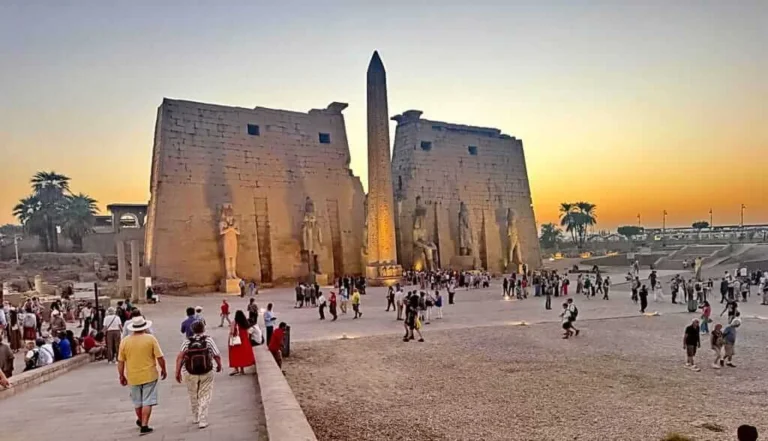
Luxor Temple sits in the bustling heart of a modern city. It offers an atmospheric journey through three millennia of history. Historically, the Egyptians called it the “Southern Sanctuary.” It served as the main stage for the annual Opet Festival. During this event, priests paraded statues of the gods from Karnak along the legendary Avenue of Sphinxes. Furthermore, Luxor Temple is unique because it features layers of continuous worship. Within these Pharaonic walls, you will find a Roman fresco, a Coptic church, and a 13th-century mosque. For the most magical experience in 2026, we recommend visiting at sunset. At this time, the massive statues of Ramses II and the towering colonnades light up against the night sky. This creates a breathtaking silhouette along the Nile.
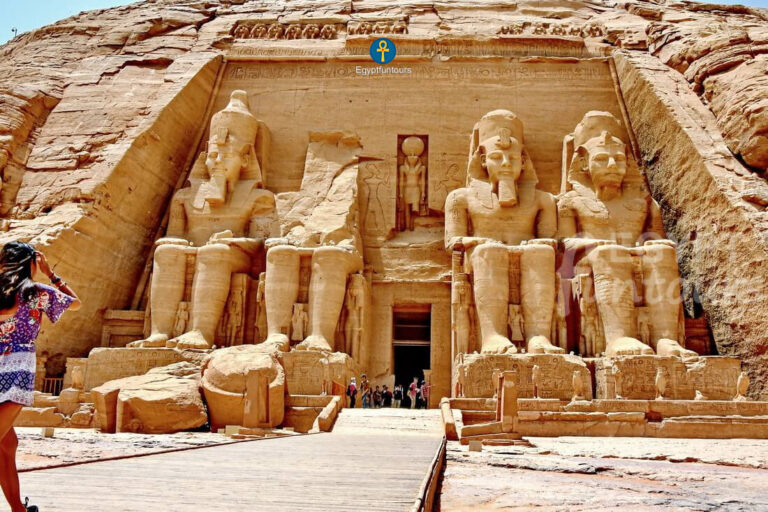
Ramses the Great carved Abu Simbel directly into the sandstone cliffs of the deep south. This site represents perhaps the most awe-inspiring display of royal ego in history. Four 20-meter colossal statues guard the Great Temple. Moreover, ancient architects engineered the site with incredible precision. Twice a year, the sun’s rays penetrate the darkness of the inner sanctuary to light up the gods within. Beside it sits the elegant Temple of Nefertari. This serves as a rare tribute to a Queen’s divine status. Beyond its ancient wonder, Abu Simbel is a modern miracle of engineering. In the 1960s, workers cut the entire complex into 2,000 massive blocks. They moved them to higher ground to save them from the rising Nile. This massive effort preserved this desert icon for future generations.
Travelers often call Philae “The Pearl of Egypt.” It is a romantic island sanctuary dedicated to the goddess Isis, the mother of magic and healing. First, you must take a short boat ride across the shimmering Nile waters in Aswan to reach it. Consequently, the temple’s setting is just as beautiful as its architecture. It also holds a poignant place in history. Philae served as the very last bastion of ancient Egyptian religion. In fact, a priest carved the final hieroglyphic inscription here in 394 AD. After that, the site became a church. As you walk through the majestic pylons, you can see the transition from Pharaonic to Greco-Roman styles. In 2026, the nightly Sound and Light show remains the best way to hear the myths of Isis and Osiris.
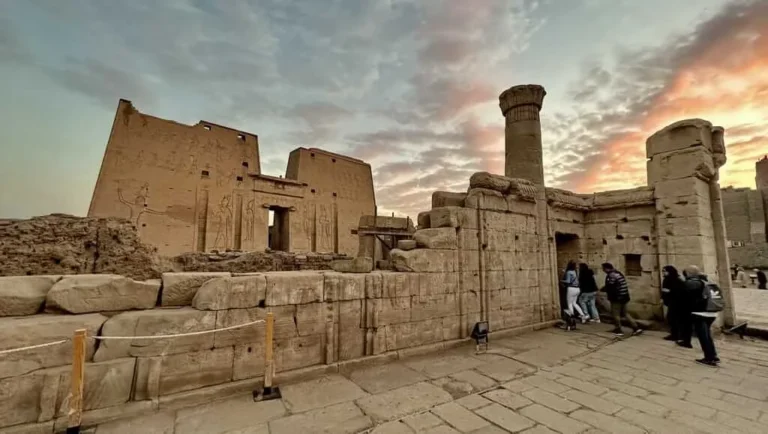
Ancient builders dedicated the Temple of Edfu to the falcon-headed god, Horus. Most experts consider it the most perfectly preserved cult temple in all of Egypt. Because the desert sands buried it for nearly 2,000 years, its massive 36-meter entrance pylon remains almost entirely intact. Therefore, it offers the best “time-travel” experience in the country. Additionally, the walls act as a stone encyclopedia. They feature detailed reliefs that show the legendary battle between Horus and his uncle, Seth. In 2026, travelers arriving by Nile cruise can take a traditional horse-drawn carriage to the temple gates. You will step into a world of narrow corridors and shadowy sanctuaries. These rooms look exactly as they did when the last Ptolemaic priests walked through them.

How far in advance should I book my tour? We recommend booking as early as possible, especially for peak seasons, to ensure availability and secure the best price. Many tours can be booked up to 12 months in advance.
What is the typical group size for your tours? Our Top speciality is Private Tours. As for groups, group size vary by tour, but we generally keep them small to ensure a personal and high-quality experience. The average is typically between 10-16 guests.
Are your tours private or shared group tours? We offer a mix of both. You can find this information clearly indicated on each individual tour page. Group tours are marked as such, and private options are always available.
How do I know if a specific departure date is available? For Private Tours, you do not need to, as they are available everyday. For group tours, you need to contact us.
What is included in the tour price? Inclusions vary per tour but often cover accommodation, transportation, professional guiding, and certain meals/activities & entrance fees. Detailed inclusions are listed on the itinerary section of each tour page.
Do I need to pay a deposit, and what payment methods do you accept? Yes, a deposit (25%) is required to confirm your booking. We accept major credit/debit cards (Visa, Mastercard, etc.) and bank transfers. Full details are in our Terms and Conditions.
Are there any hidden fees or surcharges? No. The price listed on the tour page is the final price, which is inclusive of all mandatory local taxes and fees. Any optional extras will be clearly noted.
What is your cancellation and refund policy? Our policy is clearly detailed in our Terms & Conditions. The amount refunded depends on how far in advance of the start date you cancel. We recommend travel insurance for maximum protection.
Is the destination safe for tourists? Travel safety is our top priority. We closely monitor government advisories and take all necessary precautions. We only operate in areas deemed safe and utilize experienced local guides for maximum security and peace of mind.
Do I need a visa to travel to the destination? Visa requirements vary based on your nationality and the destination. We advise all travelers to check with their country’s embassy or consulate for the most current entry requirements well before departure.
What sort of hotels/accommodation are used? We generally use high-quality, centrally located 4- or 5-star hotels (or the local equivalent). Specific hotel names or classification examples are listed on the individual tour pages.
What should I pack for my tour? A detailed packing list, specific to the tour’s climate and activities, is provided upon booking. Generally, comfortable walking shoes, layers of clothing, and sun protection are a must.
Can I customize a tour or create my own itinerary? Absolutely. If our packages don’t fit your needs, you can work with our travel experts to customize any tour or build a fully private, custom itinerary. Contact us to start planning.
What support is available if I have a problem during the tour? You will have 24/7 access to our dedicated local support team and your tour guide for any emergencies, changes, or issues that may arise during your trip.