Mentuhotep II: Egypt’s Unifier and Founder of a Golden Age

Discover Pharaoh Mentuhotep II, the warrior king who ended a century of civil war. He reunified the nation, launched a new golden age known as the Middle Kingdom, and built a revolutionary terraced temple at Deir el-Bahari, cementing his legacy as one of Egypt's greatest unifiers.

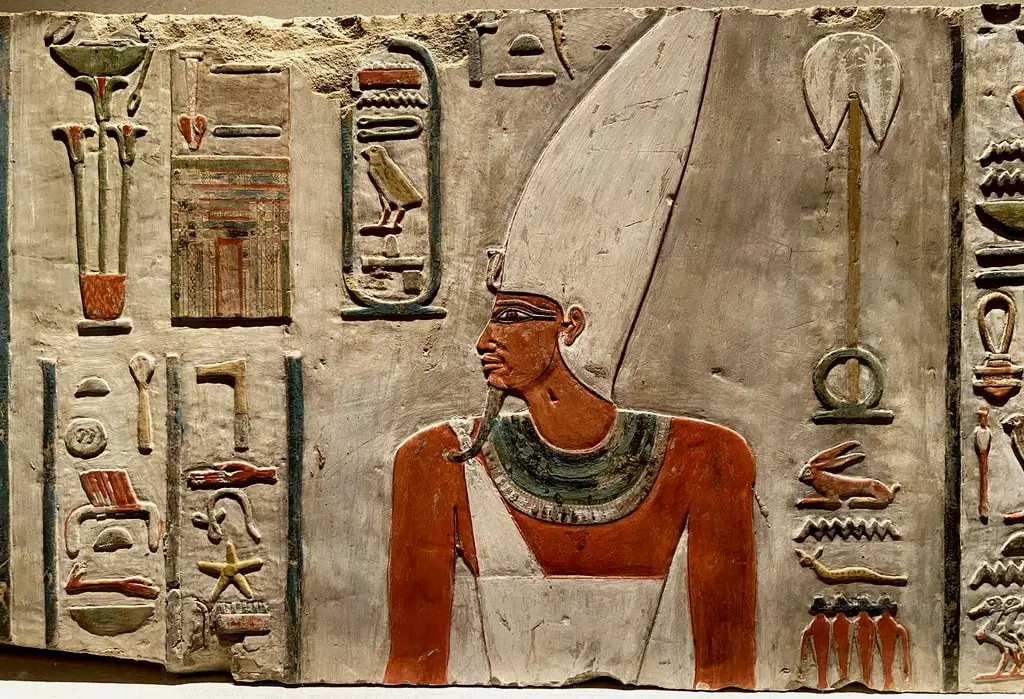
Pharaoh Nebhepetre Mentuhotep II, whose reign spanned from approximately 2061 to 2010 BCE, stands as one of the most significant figures in ancient Egyptian history. He ascended to the Theban throne during the final, turbulent decades of the First Intermediate Period, an era defined by political fragmentation and internal conflict. Through strategic military prowess and unwavering determination, Mentuhotep II successfully concluded over a century of civil strife by forcibly reunifying Upper and Lower Egypt around 2055 BCE.

This singular achievement, which he commemorated by adopting the Horus name Sematawy (“He Who Unifies the Two Lands”), officially inaugurated a new golden age of stability and cultural renaissance known as the Middle Kingdom. His impactful 51-year reign not only restored national unity but also laid a new foundation for the state through profound administrative reforms and revolutionary architectural projects, chief among them his mortuary complex at Deir el-Bahari. Consequently, he is rightfully celebrated as the great unifier who restored order and propelled Egypt into a new era of prosperity.
FUN

Mentuhotep II: Ending the Age of Chaos

Mentuhotep II Ending the Age of Chaos

Before Mentuhotep II, Egypt suffered. The country fractured during the First Intermediate Period, a time of civil war that lasted over a century. Rival kings from Herakleopolis in the north fought the powerful princes of Thebes in the south. This division weakened the land and stopped its progress.

Mentuhotep II rose to the Theban throne around 2061 BCE. His very name, meaning “The god Montu is satisfied,” signaled his destiny as a warrior king. He did not wait for his enemies to act. He launched a brilliant and relentless military campaign against the northern rulers. For years, he fought to bring all of Egypt under his control. Finally, around his 39th year as pharaoh, he achieved the ultimate victory. He crushed his rivals and triumphantly reunified the Two Lands of Upper and Lower Egypt.

To mark this incredible achievement, he took a new Horus name: Sematawy. This means “He Who Unifies the Two Lands.” Egypt was whole again, and Thebes became its grand new capital. This moment officially began the Middle Kingdom, a period of immense stability, wealth, and cultural renaissance.

FUN

How Mentuhotep II Secured Egypt’s Future

How Mentuhotep II Secured Egypt's Future

Mentuhotep II reigned for an impressive 51 years. He used this time to implement reforms that would ensure Egypt never collapsed into chaos again.

  • A New Central Government: He completely reorganized the state. He broke the power of the regional governors (nomarchs) who had caused so much trouble. He appointed loyal Theban officials to run the country, ensuring all power flowed from the pharaoh.
  • A Renaissance in Art: Peace brought a new wave of creativity. Mentuhotep II’s reign sparked an artistic revival. Artists blended the classic, formal style of the Old Kingdom with a new, subtle realism. The reliefs in his temple show this unique style, capturing both divine majesty and human detail.
  • Elevating the Theban Gods: His victory brought new prominence to Theban deities. The war god Montu, his personal patron, gained kingdom-wide importance. This era also set the stage for another Theban god, Amun, to eventually merge with the sun god Ra and become the supreme state deity, Amun-Ra. He also strengthened the cult of Osiris, the god of the afterlife. Mentuhotep II deeply identified with Osiris, a belief that defined the pharaoh’s role for the rest of Egyptian history.

Alexander the Great: Travel the Path of a Pharaoh-King

Alexander the Great became Pharaoh in Egypt (332 BC). He founded Alexandria, a world capital,...
Related post
FUN

A Revolutionary Temple at Deir el-Bahari

A Revolutionary Temple at Deir el-Bahari

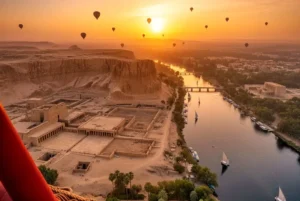
Mentuhotep II was not just a conqueror; he was a brilliant builder. On the West Bank of Luxor, he commissioned a revolutionary mortuary complex at Deir el-Bahari. This sacred, cliff-lined bay in the Theban Necropolis would become famous. His temple was unlike anything Egypt had seen before.

Instead of a pyramid, Mentuhotep II’s architects designed a stunning terraced structure. A long, open causeway led to a large courtyard. From there, a central ramp climbed to an upper terrace lined with striking columns. This design masterfully blended the temple with the surrounding cliffs. It created a powerful and dramatic effect. At its center, some Egyptologists believe a structure representing the primeval mound of creation once stood.

This temple was the first great monument built on the site. It directly inspired another masterpiece built 500 years later: the famous mortuary temple of Queen Hatshepsut, located right next door. On your Luxor West Bank tour, you can see both temples and witness the evolution of Egyptian architecture firsthand!

The Black Pharaohs: The Kushite Kings of Nubia’s 25th Dynasty

For nearly a century, the Kushite Kings from Nubia, known as the Black Pharaohs, established...
Related post
FUN

Amazing Discoveries at His Temple

Amazing Discoveries at His Temple - Mentohotep II

Mentuhotep II’s complex has revealed some of ancient Egypt’s most fascinating secrets.

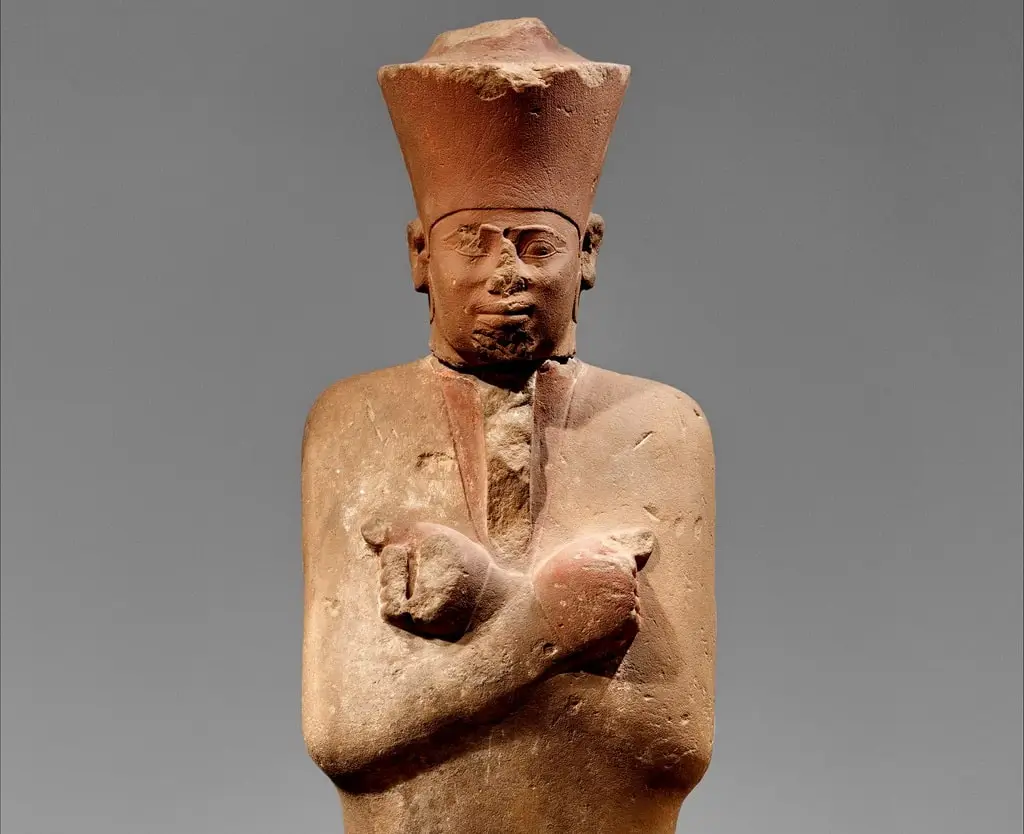
  • The Stumble of a Horse: In 1900, the famous archaeologist Howard Carter (who would later discover Tutankhamun) was riding across the site. His horse stumbled, revealing a hidden tomb entrance. This tomb, called Bab el-Hosan (“Gate of the Horse”), was a cenotaph, or symbolic tomb. Inside, Carter discovered a magnificent seated statue of the king painted in dark colors, representing his connection to Osiris. The statue was strangely wrapped in linen, like a mummy. You can see this masterpiece today in the Egyptian Museum in Cairo!
  • Tombs of the Royal Women: Archaeologists also discovered the tombs of six of Mentuhotep II’s royal wives and priestesses. The beautifully decorated sarcophagi of women like Ashayet and Kawit provide an intimate look into the lives and high status of royal women during the Middle Kingdom.
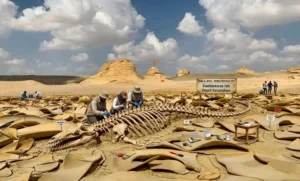
  • A Warrior’s Grave: A poignant discovery was the mass grave of sixty soldiers. Archaeologists found their bodies carefully wrapped in linen shrouds. These men were the brave warriors who died for their king during the wars of unification. Mentuhotep II buried them with honor in his own sacred complex, a final tribute to their loyalty.

Ptolemy I Soter: From Macedonian General to Pharaoh of Egypt

Ptolemy I Soter was one of Alexander the Great's generals who founded the Ptolemaic Dynasty...
Related post
FUN

Walk in the Footsteps of a Great Pharaoh!

Let Egypt Fun Tours guide you through the world of Mentuhotep II. Our expert Egyptologist guides will bring his story to life as you explore his groundbreaking temple at Deir el-Bahari. You won’t just see ruins; you will understand the vision of the warrior king who healed a broken nation.

Book your adventure today and witness the legacy of the great unifier!

Designed to immerse you in the Wonders of Egypt...
Enjoy 2 days Aswan and Abu Simbel tour from Luxor with accommodation...

Great shore excursion of Cairo & Giza

We are glad that we arranged our private shore excursion with Egypt Fun tours in last week of October 2012. Booking process was very easy with Hamada and she took care of all our questions promptly just via E-mail. Our group was little worried about safety in Egypt especially because

More »

Like two days of touring in one day!

I had a 12 hour stay in Cairo- and had made no plans on how to spend it until 8pm the night before departure. I emailed Egypt Fun Tours in a panic and they responded immediately. They made it incredibly easy to arrange a tour and we made arrangements via

More »

Amazing one day tour

Fantastic tour. We were picked up at the airport early in the morning (6 am), and were dropped off in the evening after discovering amazing Cairo. The guide was knowledgeable and took us to many hidden places, which we wouldn’t have found without him. Thank you!

More »

Layover Tour in Cairo

This August, my boyfriend and I had quite a long layover in Cairo, 9 hours to be exact. Instead of wasting our time at the airport, we decided to do a layover tour of the city. I had been before, but my boyfriend hadn’t, so we wanted to hit the

More »
Isis with wings

Top-rated Tour Packages

Isis with wings