
The Pinnacle of 6th Dynasty Artistry
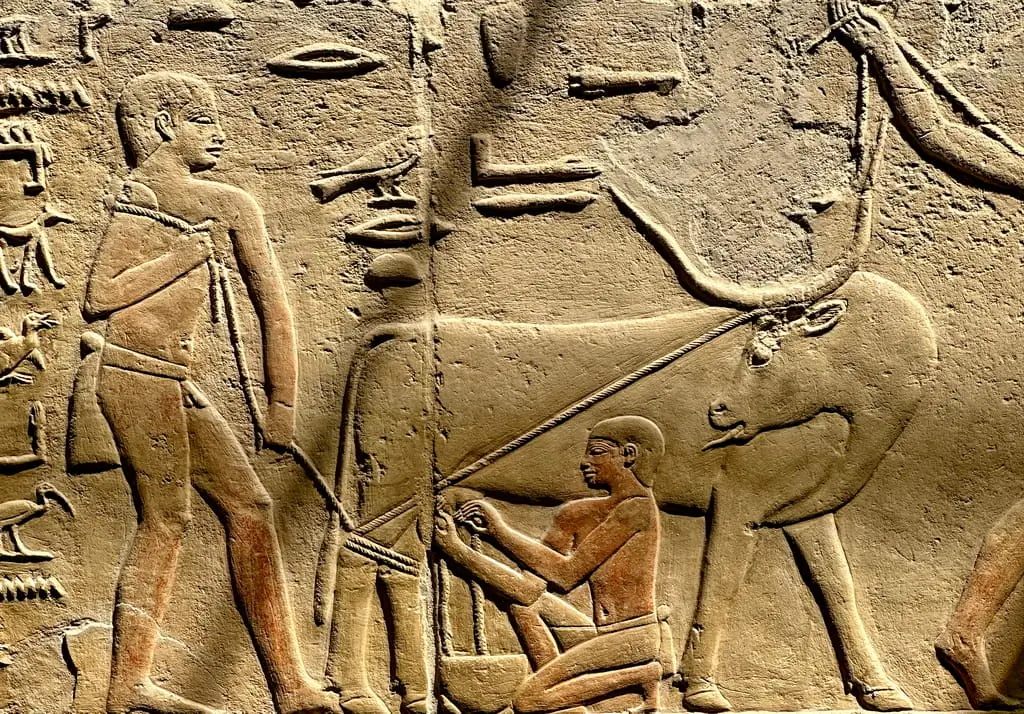
The Mastaba of Kagemni stands as the most visually stunning private tomb in the Saqqara necropolis. Located immediately north of the Pyramid of Teti, this funerary complex serves as a vivid window into the height of the 6th Dynasty. While royal pyramids often focus on the king’s celestial journey, the Mastaba of Kagemni provides a rich record of the earthly world through the finest high-relief carvings in Egypt.
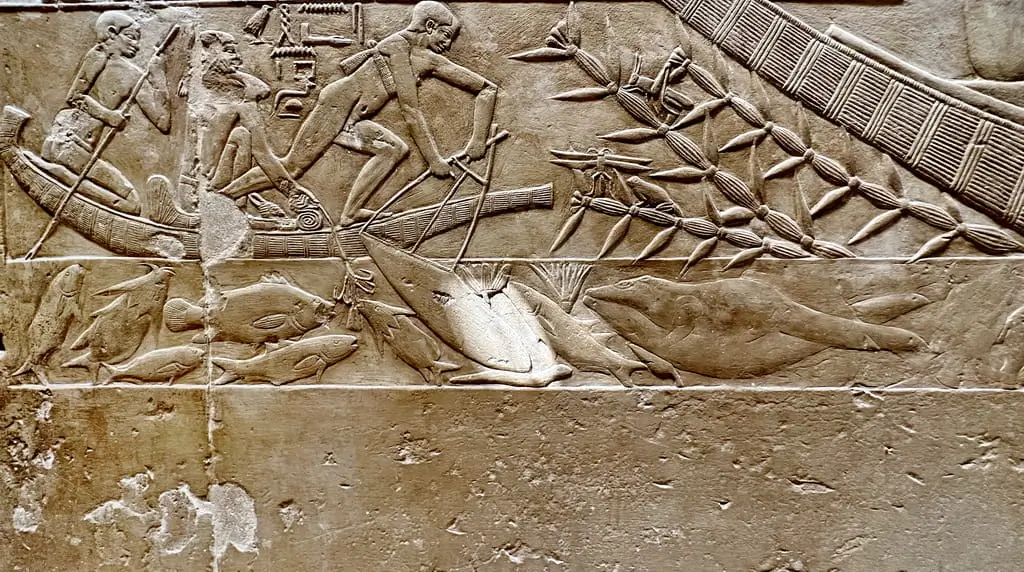
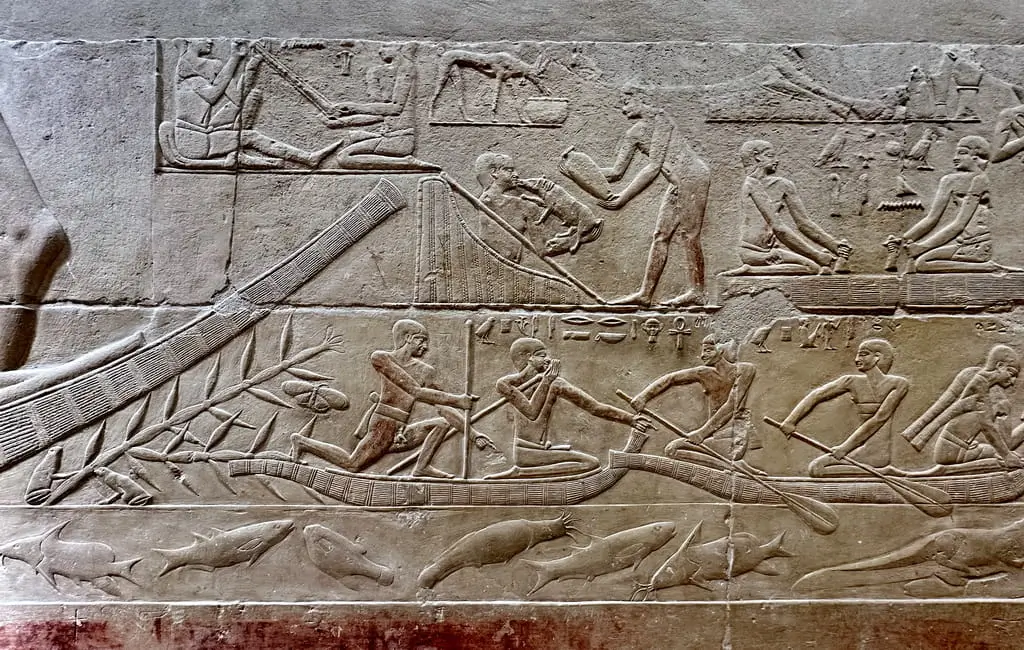
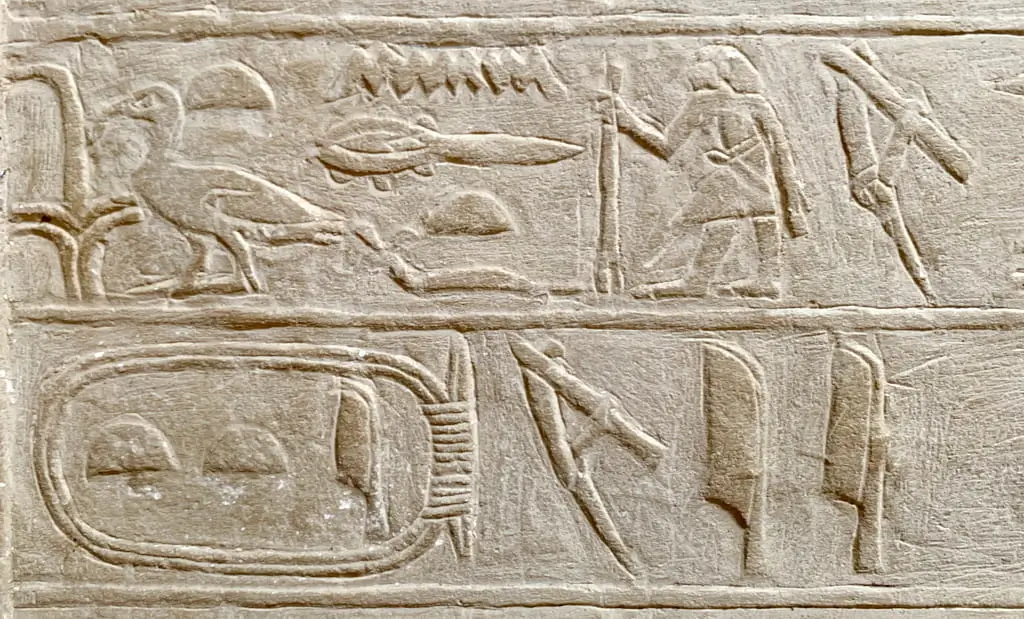
Kagemni occupied the most powerful position in the land beneath the Pharaoh: the Vizier. As the Chief Justice and Overseer of the King’s Works, he commanded the empire’s finest craftsmen to build his “House of Eternity.” Consequently, the tomb demonstrates both his immense political influence and the artistic maturity of the era. The walls do not merely depict static scenes; instead, they pulsate with the energy of the Nile, showing hippopotami fighting and birds taking flight with remarkable realism.
In this authoritative guide, we analyze the architectural layout of this massive 32-room complex. Furthermore, we examine Kagemni’s unique relationship with King Teti and why this tomb remains a cornerstone for understanding Old Kingdom social structures. Whether you are a researcher or a traveler visiting, the Mastaba of Kagemni offers an unparalleled encounter with the elegance of ancient Egyptian life.
The Man Behind the Tomb: Vizier Kagemni’s Rise to Power
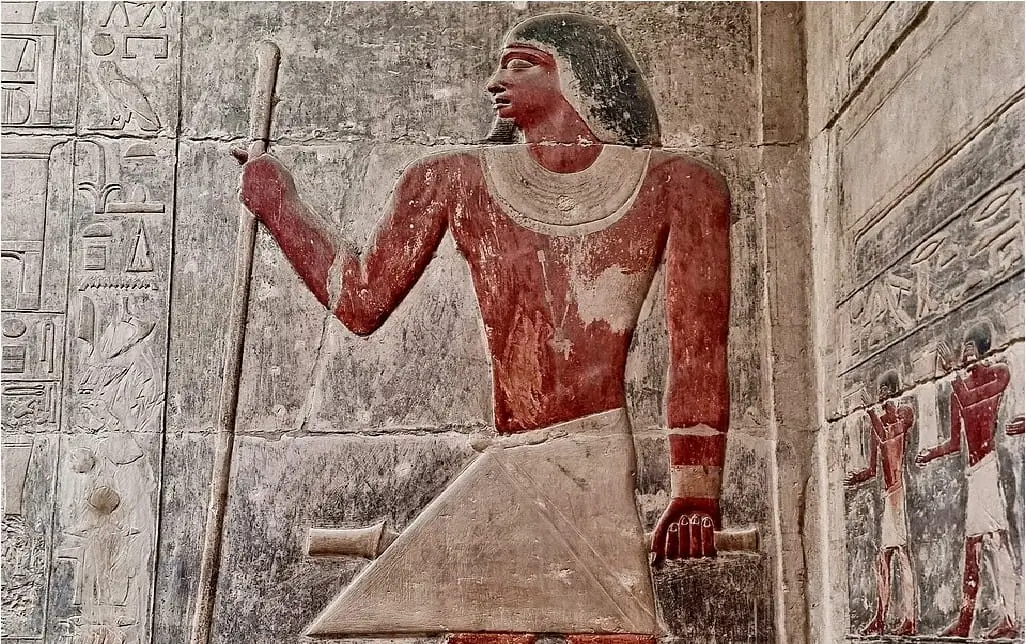
Understanding the magnificence of the site requires a closer look at the man who commissioned it. Kagemni was not merely an official; he was the highest-ranking administrator during the reign of King Teti. Because he held the titles of “Chief Justice” and “Vizier,” he oversaw the entire judicial and executive branches of the Egyptian state.
Initially, Kagemni served under previous monarchs, but he reached the zenith of his career at the start of the 6th Dynasty. His marriage to Nebty-nubkhet, likely a daughter of King Teti, solidified his bond with the royal family. Therefore, his tomb’s proximity to the King’s pyramid reflects his status as a trusted member of the inner circle. This political proximity allowed him the resources to construct a mastaba that rivals royal structures in its complexity.