The White Pyramid of Amenemhat II: A Middle Kingdom Revival

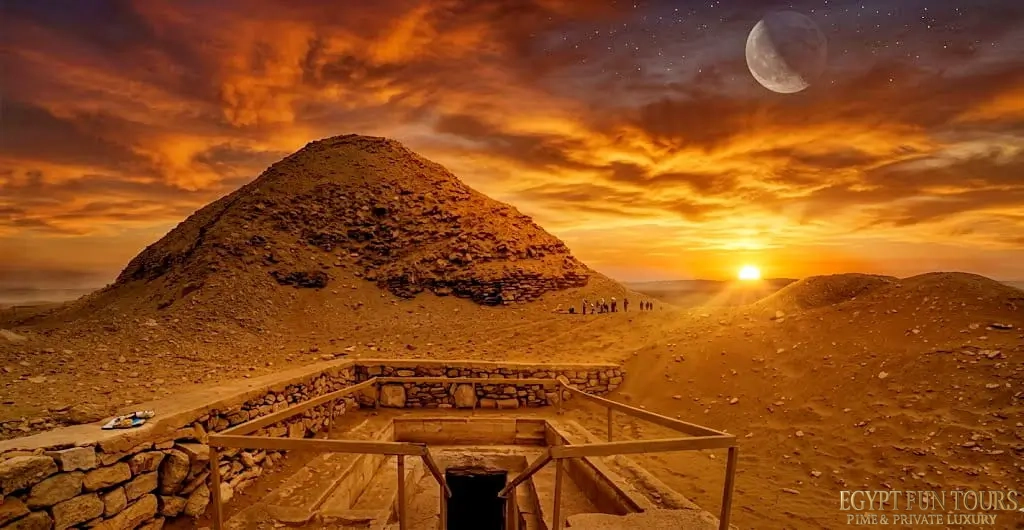
Amenemhat II, a ruler of the 12th Dynasty, broke with the precedent set by his immediate predecessors by moving his pyramid complex to Dahshur, near Giza. Though it was likely known to the ancient Egyptians as "Sekhem Amenemhat" ("Amenemhat is Power"), its modern title, the "White Pyramid," stems from its construction. While some sources suggest it was cased in gleaming Tura limestone that robbers later stripped, revealing limestone rubble, other details mention a core framework of radiating limestone walls filled with sand or cheaper stone, finished with polished casing that left distinct piles of debris around its base. Today, the monument is heavily ruined, appearing as a eroded mound of mudbrick and rubble, as much of its stone was quarried for later buildings. Its subterranean structure featured a false gabled ceiling made of limestone slabs, unique four-niched walls in the burial chamber, and a quartzite sarcophagus placed against the western wall. Significantly, its surrounding enclosure wall protected a collection of royal family tombs, whose excavation yielded invaluable treasures of jewellery and funerary items.
The eye of Horus
WhatsApp
Email
Print

The White Pyramid of Amenemhat II stands as a fascinating bridge between the grand stone eras of the Old Kingdom and the innovative Middle Kingdom. King Amenemhat II, the third ruler of the Twelfth Dynasty, chose to site his tomb in Dahshur. Specifically, he placed it northeast of the Bent Pyramid. By returning to this ancient necropolis, the king physically linked his reign to the legacy of Sneferu. Consequently, the White Pyramid of Amenemhat II is a testament to the enduring sanctity of the Dahshur plateau. Therefore, it remains a critical site for understanding the political and religious motivations of the Middle Kingdom pharaohs.

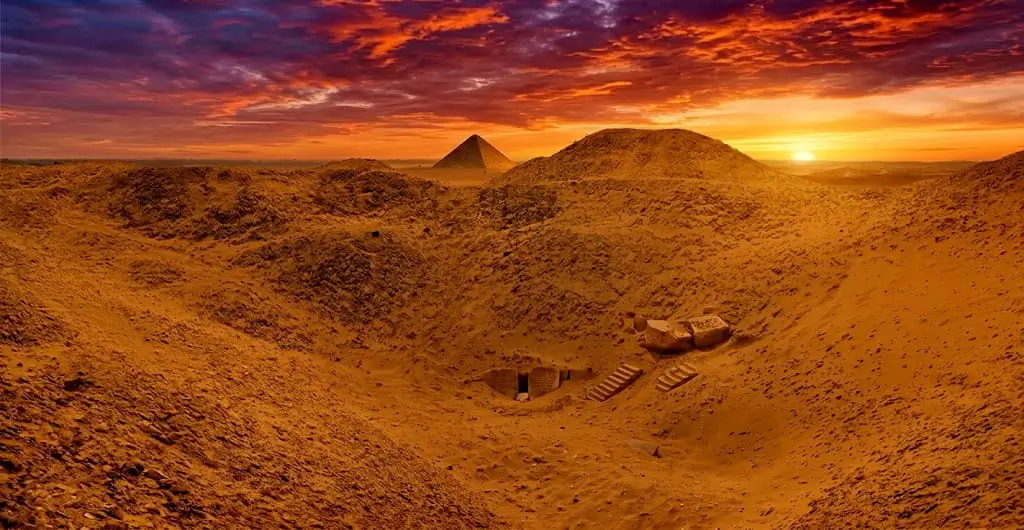
The monument earned its name from the high-quality Tura limestone used for its original casing. Because the core was built with a framework of limestone walls, it appeared as a solid white mountain in antiquity. However, centuries of stone robbing have reduced the structure to a mound of limestone rubble. Specifically, the removal of the casing stones left behind piles of white chippings around the base. Consequently, modern visitors see a “white” landscape that gives the pyramid its modern name. For this reason, the White Pyramid of Amenemhat II is a silent witness to the cycle of construction and decay in Egyptian history.
Divider

The “Treasure of Dahshur”: Royal Burials and Jewelry

The Treasure of Dahshur Royal Burials and Jewelry

The White Pyramid Amenemhat II is perhaps most famous for the spectacular jewelry discovered within its enclosure. In 1894, archaeologist Jacques de Morgan explored the area behind the western face of the pyramid. Specifically, he discovered the intact burials of several royal ladies. These included the tombs of Princess Ita, Princess Itaweret, and Queen Khnemet. Because these tombs remained hidden from grave robbers, they contained a wealth of exquisite artifacts. Consequently, the “Treasure of Dahshur” became a global sensation.

The jewelry found at the White Pyramid of Amenemhat II represents the peak of Middle Kingdom goldsmithing.

  • Intricate Crowns: Gold and lapis lazuli diadems belonging to the princesses.
  • Golden Daggers: Found in the tomb of Princess Ita, featuring incredible craftsmanship.
  • Jeweled Pectorals: Specifically, those of Queen Khnemet, which utilized cloisonné techniques.

Therefore, the White Pyramid of Amenemhat II provided the world with its most detailed look at royal 12th Dynasty fashion. Furthermore, these treasures are now on display in the Egyptian Museum in Cairo. For this reason, the pyramid is an essential chapter in the history of Egyptian art. By studying these finds, we understand the immense wealth and international trade connections of Amenemhat II’s court.

Architectural Innovation and the “Amenemhat Provides” Complex

The ancient name for the White Pyramid of Amenemhat II was “Amenemhat Provides.” Specifically, the complex was designed to be a massive center for religious and administrative life. Unlike the solid stone pyramids of the 4th Dynasty, this structure utilized a cellular construction technique. Architects built a framework of stone walls and then filled the spaces with sand and limestone rubble. Consequently, the White Pyramid of Amenemhat II was faster and more economical to build. Moreover, the entire complex was surrounded by a massive rectangular enclosure wall.

The subterranean architecture is equally impressive. Specifically, a straight descending passage on the north side leads to a burial chamber. Because the chamber was cut deep into the limestone bedrock, it was protected by two massive granite slabs. Furthermore, the chamber features a quartzite sarcophagus set into the floor. Consequently, the White Pyramid of Amenemhat II combines traditional security measures with new structural ideas. Therefore, it serves as a “missing link” in the evolution of tomb design.

Golden Scarab

The White Pyramid: The Treasures of Queen Khnemet and the Princesses

The White Pyramid The Treasures of Queen Khnemet and the Princesses

The White Pyramid of Amenemhat II is famous for containing some of the most sophisticated jewelry in human history. Specifically, the burials found within the enclosure wall belonged to the king’s daughters and his queen. Because these tombs were located deep in the ground beneath the pyramid’s courtyard, they escaped the notice of ancient thieves. Consequently, when Jacques de Morgan opened them in 1894, he found the royal ladies still adorned with their funerary finery. Therefore, the White Pyramid of Amenemhat II provides a rare, undisturbed look at the wealth of the Twelfth Dynasty.

The collection belonging to Queen Khnemet is particularly remarkable. Specifically, her jewelry demonstrates a mastery of “cloisonné” inlay that has rarely been equaled.

  • The Floral Crown: A delicate diadem made of gold wire, adorned with tiny flowers of lapis lazuli, carnelian, and turquoise.
  • The Eagle Pectoral: A large chest ornament featuring the vulture goddess Nekhbet, crafted from solid gold and precious stones.
  • Gold Chains: Extremely fine, hand-woven gold chains that look almost modern in their flexibility and detail.

Furthermore, the “Treasure of Dahshur” includes the personal items of Princess Ita. Specifically, her burial contained a magnificent bronze dagger with a hilt of solid gold and lapis lazuli. Because these items were buried with the royals, they were intended for use in the afterlife. Consequently, they reveal the high status and religious importance of the women in Amenemhat II’s court. For this reason, the White Pyramid of Amenemhat II is considered the “Jewel Box” of the Dahshur plateau.

The White Pyramid: The Discovery and Preservation of the Dahshur Hoard

The story of how these treasures were found is as dramatic as the artifacts themselves. Specifically, Jacques de Morgan had to dig through layers of compact mud and limestone rubble. Because the White Pyramid of Amenemhat II was so badly eroded, identifying the location of the satellite tombs was difficult. However, his persistence led to the discovery of the hidden shafts. Consequently, the artifacts were transported to Cairo, where they became the centerpiece of the Middle Kingdom collection.

For travelers in 2026, seeing these treasures in person is a vital part of the Dahshur experience. Specifically, the majority of the collection is housed in the Egyptian Museum. By viewing the jewelry, you can better visualize the original splendor of the White Pyramid Amenemhat II.

  1. Artistic Influence: The designs show trade links with the Levant and the Aegean.
  2. Technological Skill: The soldering and casting techniques used are incredibly advanced for 1900 BC.
  3. Symbolism: Every piece of jewelry carries protective symbols, such as the ankh or the wedjat eye.

Therefore, the White Pyramid Amenemhat II serves as a bridge between archaeological ruins and artistic mastery. While the pyramid itself may appear as a mound of stone today, its internal secrets have rewritten the history of ancient craftsmanship. Furthermore, these finds remind us that the pyramids were more than just stone mountains. They were sacred vaults designed to protect the most beautiful creations of the Egyptian state.

The eye of Horus

The Hypogeum: Exploring the Interior of the White Pyramid Amenemhat II

The internal structure of the White Pyramid of Amenemhat II is a masterpiece of Middle Kingdom engineering. Specifically, the entrance is located in the center of the northern face. From here, a limestone-lined corridor descends steeply into the bedrock. Because the architects prioritized security, they installed two massive granite portcullis slabs to block the passage. Consequently, the White Pyramid of Amenemhat II represents a significant effort to protect the royal remains from tomb robbers. Therefore, studying the layout of this hypogeum provides vital clues about the burial traditions of the Twelfth Dynasty.

The burial chamber itself is located directly beneath the vertical axis of the pyramid. Specifically, it is oriented east-west and features a unique gabled ceiling. This “false” ceiling consists of large limestone slabs leaning against each other. Because this design effectively spreads the weight of the structure above, the chamber has survived for nearly 4,000 years. Furthermore, the room contains a large quartzite sarcophagus set into the floor. Consequently, the White Pyramid of Amenemhat II’s internal design remains a subject of intense study for archaeologists. For this reason, the site is a hidden gem for those interested in the evolution of subterranean tomb architecture.

Divider

Traveler’s Blueprint: Navigating the White Pyramid Site

For travelers, visiting the White Pyramid of Amenemhat II offers a quiet and contemplative experience. Because the pyramid is located northeast of the famous Bent Pyramid, it remains off the main tourist track. Specifically, the site is about 40 to 50 kilometers south of central Cairo. Consequently, most visitors choose to include it as part of a larger Dahshur and Saqqara day trip. Furthermore, the 2026 infrastructure in Dahshur has improved, providing better access for private vehicles and tour groups.

Essential Visit Tips

  • Transportation: Hire a private driver from October Gardens or Cairo. Specifically, expect to pay approximately 4,000 EGP for a full-day private tour including lunch and entrance fees.
  • Admission: A single Dahshur ticket (200 EGP as of 2026) covers the entire necropolis. Note that many sites in Egypt now prioritize cashless payments for tickets.
  • Photography: The morning hours are the best time to photograph the limestone ruins. Specifically, the early sun highlights the white color of the scattered chips against the desert floor.
  • Physical Preparation: Wear high-quality hiking boots. Because the ground around the White Pyramid of Amenemhat II is covered in loose stone rubble, the terrain can be challenging to navigate.

Therefore, the White Pyramid of Amenemhat II is a mandatory stop for any serious history enthusiast in 2026. While you cannot enter the internal chambers today, walking the site allows you to appreciate the scale of the original Middle Kingdom complex. Moreover, the proximity to the Red and Bent pyramids makes it an easy addition to your Dahshur itinerary. Consequently, you can experience the full timeline of Egyptian pyramid building in a single morning.

The eye of Horus

The Enduring Legacy of “Amenemhat is Provided”

The White Pyramid of Amenemhat II remains a symbol of the Middle Kingdom’s cultural and artistic revival. Specifically, it proves that the 12th Dynasty pharaohs sought to honor their 4th Dynasty ancestors by returning to Dahshur. Because of the incredible treasures found within its enclosure, the pyramid has earned a permanent place in the history of archaeology. Furthermore, the ongoing research and laser scanning projects in 2026 continue to reveal new data points about its original height and slope. Consequently, our understanding of the site is constantly evolving.

In summary, the White Pyramid of Amenemhat II is a monument that bridges the gap between different eras of Egyptian power. It reminds us that even a “ruined” site can contain world-shaking discoveries. Therefore, as you explore the Dahshur plateau, take a moment to stand among the white limestone chips of this ancient tomb. Witness the resilience of the Middle Kingdom and the timeless allure of the desert. Consequently, your visit to the White Pyramid of Amenemhat II will be a highlight of your 2026 journey through the land of the pharaohs.


Divider

Egypt Fun Tours makes the most out of your layover!

I had a really short layover in Cairo and didn’t want to be stuck in the Cairo Airport for several hours. It was like Mission Impossible: Egypt Fun Tours’ mission was to show me around Cairo during my short 5 hour layover which was made even shorter because my plane

More »
Premium Cairo Tour Package Egypt Fun Tours

THE MOST AMAZING TRIP

Hi Hamada! Sorry, we were so quick to say goodbye—my mom was fading 🙂 I just wanted to say thank you for THE MOST AMAZING trip… You thought of every detail, improvised, adapted, overcame every challenge, multitasked personalities, and did it all with grace, intelligence, and kindness. From the bottom

More »

Egypt Fun Tours – Does it All!

My husband and I visited Egypt in March 2013. First, let me say, ‘Go, go, go!’ – it’s safer and definitely friendlier than many places we’ve visited. Tourism is drastically down – thanks mostly to media misinformation – so it’s a great time to visit to avoid line-ups and crowds

More »

Amazing tour to the pyramids of Sakkara and Dahshur

This week we had a great tour with Mohamed to the pyramids of Sakkara and Dahshur, as well as Memphis. He tailored the tour to our preferences, took a lot of time with us, and gave us detailed background information on everything. It was also great that he never tired

More »

Early Layover Tour in Cairo

My husband, 2 sons – aged 9 & 11 – and I landed in Cairo at 5:15am on Saturday 12 January 2013. We had booked an early layover tour with Egypt Fun Tours after reading the great reviews in TripAdvisor. As promised he and his driver awaited us in a

More »
God_Anubis_Icon

Top-rated Tour Packages

God_Anubis_Icon
WhatsApp
Email
Print