The Legacy of the Beni Hasan Tombs, Middle Kingdom
The Beni Hasan Tombs Middle Kingdom site stands as one of the most significant archaeological treasures in all of Egypt. Specifically, these rock-cut structures served as the final resting places for the powerful provincial governors, known as nomarchs, of the 11th and 12th Dynasties. Unlike the limestone pyramids found in the north, these monuments were carved directly into the high cliffs on the East Bank of the Nile. Consequently, they offer a completely different perspective on funerary architecture and local governance. Therefore, studying the Beni Hasan Tombs is essential for anyone seeking to understand the “Golden Age” of Egyptian culture.
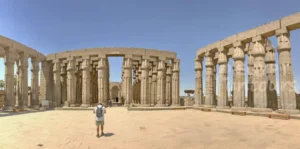
The transition into the Middle Kingdom was a period of intense rebuilding and artistic flourishing. During this time, the governors of the “Oryx Nome” wielded immense influence over their territory. Because they controlled vast resources, they commissioned some of the most detailed wall paintings ever discovered. These scenes do not just focus on the afterlife; instead, they provide a vibrant record of daily life, military training, and athletic competition. Furthermore, the architecture of the site features unique “Proto-Doric” columns that predate Greek design by over a thousand years. For this reason, the site remains a vital link in the history of global engineering.