Tomb of Shuroy (TT13): Guide to Dra’ Abu el-Naga’s Hidden Gem

The Tomb of Shuroy (TT13) is a standout archaeological site in the Dra’ Abu el-Naga necropolis, dating to the Ramesside Period. As the "Head of the Brazier-bearers of Amun," Shuroy held a vital ritual role, which he commemorated through unique, high-contrast artistry. Unlike many contemporary tombs that used yellow backgrounds, TT13 features luminous white-washed walls that make its polychrome religious vignettes—such as the "Weighing of the Heart" and scenes from the "Book of Gates"—extraordinarily clear. This "hidden gem" offers a rare, well-preserved look at the spiritual journey and professional pride of a high-ranking New Kingdom official.

Explore the Tomb of Shuroy (TT13)

The grand temples of Karnak and the golden shafts of the Valley of the Kings often capture the world’s attention. However, the true spirit of the New Kingdom lives in the quiet hills of the Theban West Bank. You will find the Tomb of Shuroy (TT13) tucked into the rocky slopes of Dra’ Abu el-Naga. This site serves as a stunning example of art and religion during the Ramesside Period. While royal tombs often feel dark and mysterious, TT13 offers incredible clarity. The artists used brilliant white-washed walls to create a bright canvas. Consequently, this tomb contains some of the most detailed religious paintings in the entire Theban Necropolis.

Who Was Shuroy?

You must understand the man to truly appreciate his tomb. Shuroy did not rule as a pharaoh, but he performed a vital job for the Egyptian state. He held the official title of “Head of the Brazier-bearers of Amun.” This role connected him to the daily rituals at the Temple of Amun-Ra in Karnak. Shuroy managed the teams that carried sacred fire and incense during holy processions.

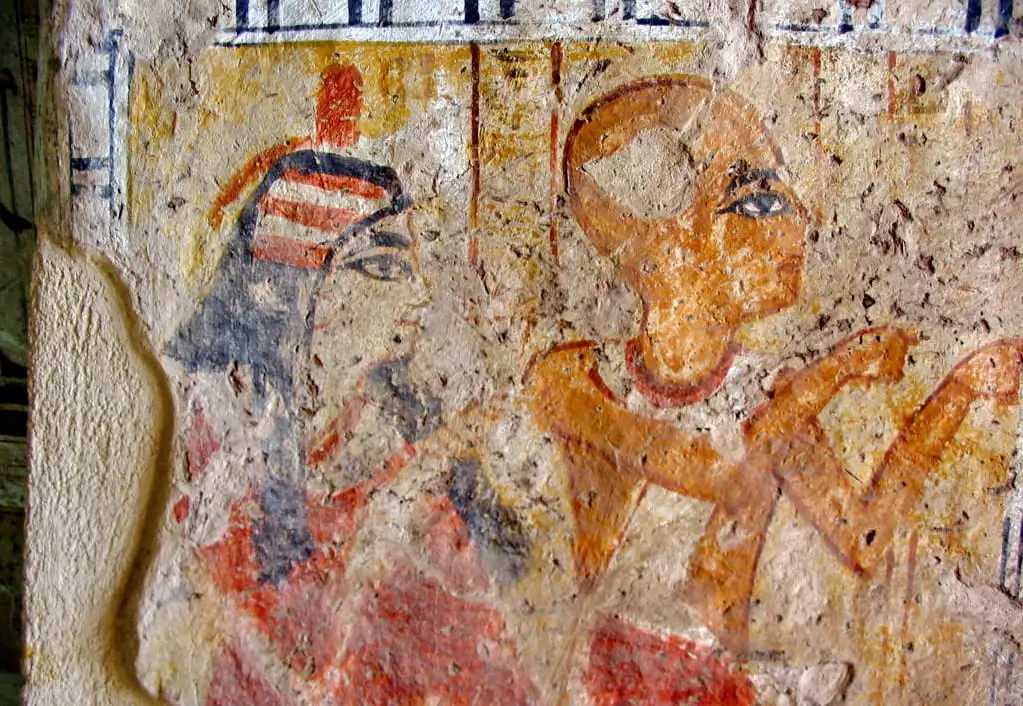
Ancient Egyptians believed that smoke acted as a bridge between humans and the gods. It purified the air and carried prayers to the heavens. Therefore, Shuroy dedicated his entire life to these sacred scents. His tomb decorations proudly reflect this professional identity. Furthermore, his wife Wernefer appears beside him in many scenes. Her presence shows that the Egyptians viewed the afterlife as a journey for the whole family.

The Importance of Dra’ Abu el-Naga

The location of TT13 is just as important as the art inside. Dra’ Abu el-Naga sits at the northern end of the West Bank in Luxor. This area served as a burial ground for kings long before the Valley of the Kings existed. By the time Shuroy built his tomb, the area had become an elite neighborhood for temple officials.

Most tombs from this era use a yellow or “golden” background to represent the sun. In contrast, Shuroy chose a luminous white background. This bold choice makes the colors pop with a modern feel. The white walls highlight every detail of the vibrant paintings. As a result, the tomb feels open, clean, and deeply sacred.

Why You Should Visit TT13

Today, researchers and travelers view TT13 as a masterclass in ancient belief. It functions like a survival guide for the soul. The walls display famous scenes from the Book of the Dead and the Book of Gates. You can see the dramatic “Weighing of the Heart” and peaceful garden scenes. These images show the hopes and pride of a man who served the king of the gods.

In the next sections, we explore the tomb’s unique architecture. We will also examine the deep meaning behind the rare religious scenes. Finally, we look at the restoration work that keeps these 3,000-year-old walls looking fresh today.

FUN

The Architecture of TT13: A Journey Through Stone

The Architecture of TT13 A Journey Through Stone

The Tomb of Shuroy follows a classic “T-shaped” plan. This layout was the standard for high-ranking officials during the New Kingdom. It divides the tomb into two distinct areas: a public space for the living and a private space for the dead. Because Shuroy chose a simple design, the architecture emphasizes the beauty of his wall paintings.

The Entrance and Courtyard

Your journey begins at the sun court. This open-air space acted as a transition zone. It moved visitors from the bright, busy world of Luxor into the quiet necropolis. Today, you enter through a modern doorway that protects the fragile interior.

The Transverse Hall (The Broad Hall)

Once you step inside, you enter the Transverse Hall. This room runs crosswise to the entrance. It serves as the main gallery for the tomb’s famous art.

  • The Background: The artists covered these walls with smooth, white plaster. This white base makes the colorful figures of Shuroy and the gods stand out.
  • The Narratives: You can read the walls like a story. One side shows Shuroy’s life and family. The other side displays his transition into the afterlife through the Book of Gates.
  • Visual Clarity: Because the room is wide and shallow, you can easily view the large religious scenes.

The Inner Corridor (The Long Hall)

A central doorway leads you deeper into the hillside. This Inner Corridor represents the path to the “West,” or the land of the dead.

  • The Sacred Path: The scenes here become more serious and focused on the journey of the soul.
  • The Statue Niche: At the very end of the hall, you will find a small niche. This space originally held statues of Shuroy and his wife, Wernefer. These statues allowed their spirits to “receive” the offerings brought by priests.

The Burial Shaft

Finally, the most private part of the tomb lies beneath your feet. A vertical burial shaft drops down into the bedrock.

  • The Location: This shaft usually begins in the floor of the inner corridor or the transverse hall.
  • The Purpose: It leads to the actual burial chamber where the mummies once rested. After the funeral, workers sealed this shaft with rubble to protect Shuroy from tomb robbers.
FUN

The Religious Vignettes: A Guide to the Afterlife

The Religious Vignettes A Guide to the Afterlife - Tomb of Shuroy

The paintings inside the Tomb of Shuroy serve a functional purpose. They act as a map and a set of instructions to help Shuroy reach the Field of Reeds. Because the artists used white-washed walls, the details of these spells remain incredibly clear.

The Weighing of the Heart (The Hall of Ma’at)

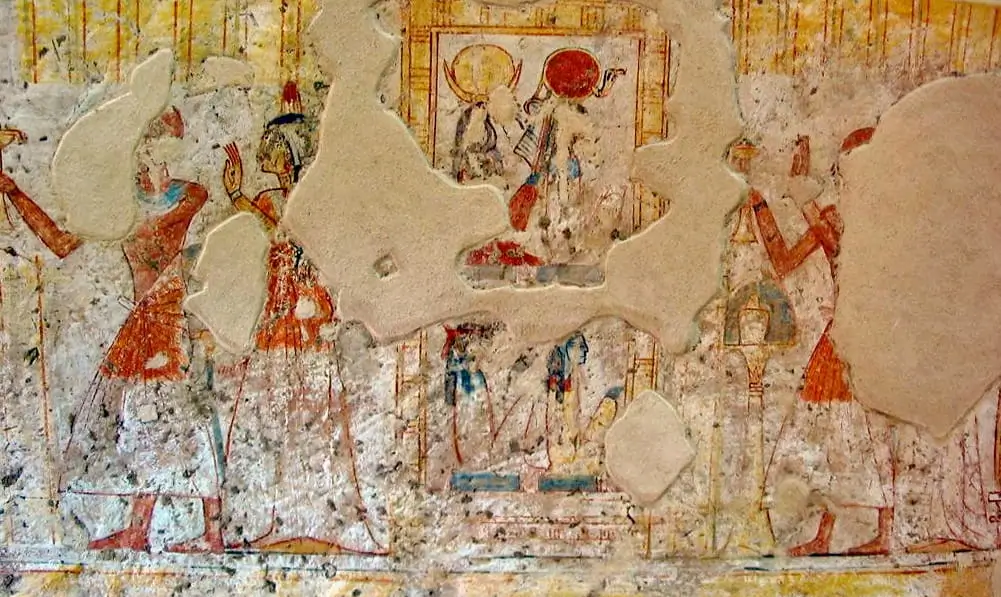
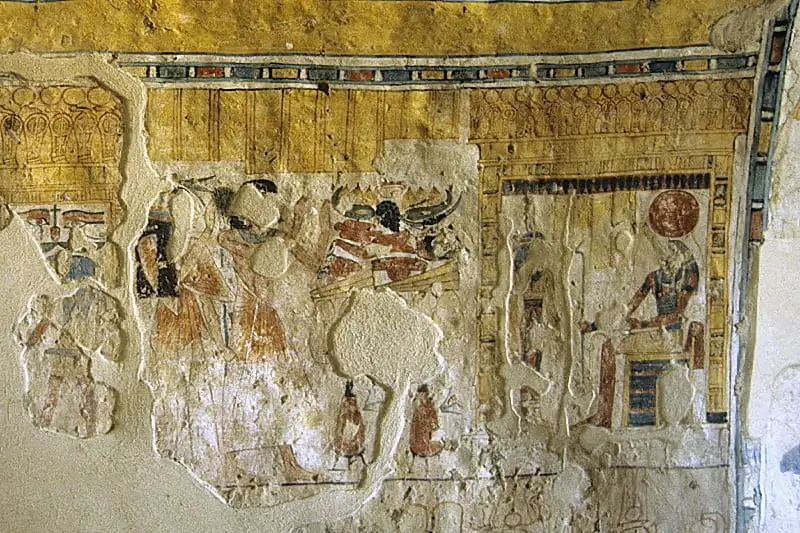
The most famous scene in TT13 is the Psychostasia, or the Weighing of the Heart. This moment determined if a person was worthy of eternal life.

  • The Scale: You can see Shuroy and Wernefer standing humbly before a large scale.
  • The Balance: On one side sits Shuroy’s heart, representing his life’s deeds. On the other side sits the feather of Ma’at, the goddess of truth and justice.
  • The Witness: The god Anubis often adjusts the scales, while Thoth, the scribe of the gods, stands ready to record the result.

Scenes from the Book of Gates

Shuroy’s tomb features rare depictions from the Book of Gates. This sacred text describes the sun god’s journey through the twelve hours of the night.

  • The Gates: Each “hour” is guarded by a specific gate and a fire-breathing serpent.
  • The Meaning: Shuroy included these scenes to ensure his soul could pass through these dangerous portals safely. Consequently, the tomb becomes a physical version of the protective spells found in papyrus scrolls.

The Tree Goddess Ritual

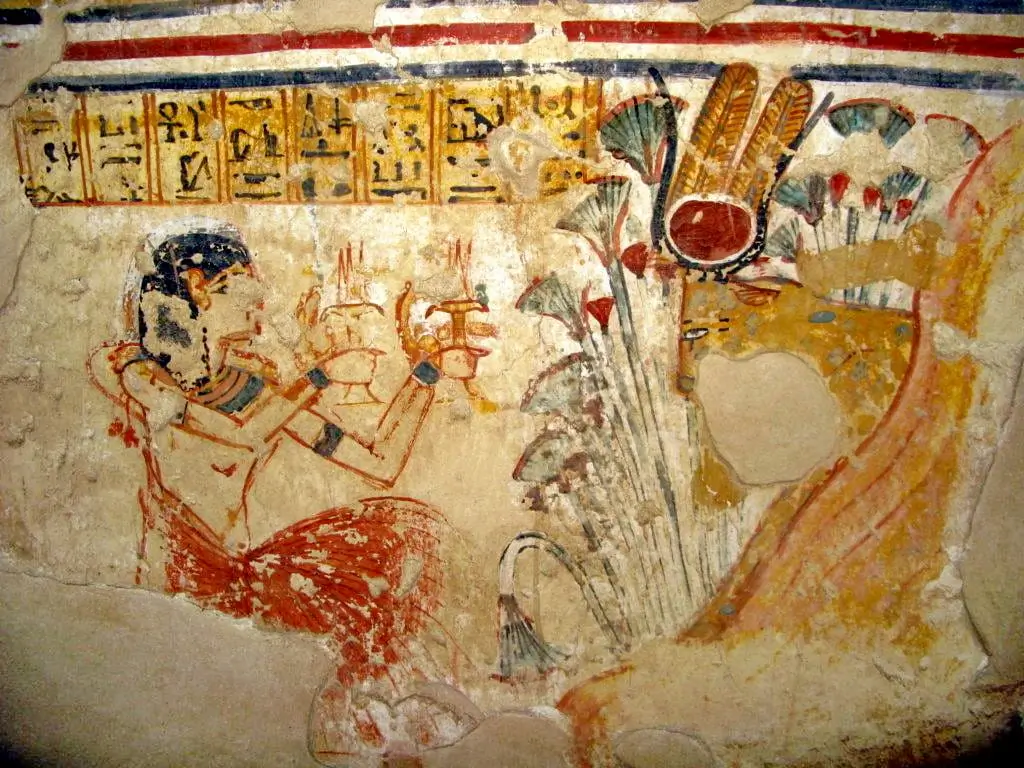
Another highlight of the tomb is the “Tree Goddess” vignette. This scene provides a peaceful contrast to the judgment of the heart.

  • The Image: A goddess, usually Nut or Hathor, emerges from the trunk of a sycamore tree.
  • The Action: She pours cool water into the hands of Shuroy and his wife. She also offers them trays of bread and fruit.
  • The Symbolism: This scene represents eternal nourishment. In the hot Egyptian climate, the shade and water of the sycamore tree were the ultimate symbols of comfort in the afterlife.

The Catacombs of Kom Esh-Shokafa: Roman-Egyptian Underworld

Descend into one of the "Seven Wonders of the Middle Ages" at the Catacombs of...
Related post
FUN

Daily Life and Sacred Duties

Daily Life and Sacred Duties - Tomb of Shuroy

While most of the art is religious, we also see glimpses of Shuroy’s high status in the Temple of Amun.

The Sacred Braziers

Look closely at the offering scenes. You will notice small, smoking stands. These are the braziers that Shuroy managed during his life. By including them in his tomb, he proves his loyalty to the god Amun. He signals that he is ready to continue his service in the divine realm.

The Banquet and Music

Transition words help us move from the spiritual to the social. For instance, several walls depict Shuroy and his family at a funerary banquet.

  • Musicians: You can spot harpists and flute players entertaining the guests.
  • Style: The artists used thin, elegant lines to draw the guests’ elaborate wigs and pleated linen clothes. These details show the high fashion of the Ramesside elite.

Practical Visitor Guide: How to Visit TT13

Visiting the Tomb of Shuroy is a rewarding experience for those who enjoy “hidden gem” locations. Because it sits away from the main tourist hubs, you can often enjoy the art in silence. Use the following guide to plan your trip effectively.

Location and Accessibility

You will find TT13 in the Dra’ Abu el-Naga necropolis. This area is located on the northern end of the West Bank in Luxor.

  • The Hike: The path to the tomb involves a slight uphill walk. Wear comfortable walking shoes, as the ground is uneven and rocky.
  • The View: The hillside offers a spectacular view of the Nile Valley and, in the distance, the mortuary temple of Hatshepsut.

Tickets and Entry

The Ministry of Tourism and Antiquities usually bundles the ticket for TT13 with the neighboring Tomb of Roy (TT255).

  • Where to Buy: Purchase your tickets at the main West Bank Ticket Office (the Antiquities Inspectorate) before heading to the site. You cannot buy tickets at the tomb entrance.
  • Photography: You can usually take photos with a mobile phone for free, but using a professional camera may require an additional permit. Always check with the site guardian first.

Best Time to Visit

To get the best experience, aim for the early morning.

  • Lighting: The morning sun lights up the hillside, making the walk easier.
  • Temperature: Luxor can become extremely hot by midday. Visiting early ensures you stay cool while exploring the underground chambers.
  • Crowds: Most large tour groups visit the Valley of the Kings first. By starting at Dra’ Abu el-Naga at 8:00 AM, you will likely have the tomb to yourself.

TT13 vs. TT255: A Quick Comparison

Many visitors see Shuroy and Roy during the same trip. While both tombs date to the Ramesside Period, they offer different artistic vibes.

FeatureTomb of Shuroy (TT13)Tomb of Roy (TT255)
Background ColorBrilliant, luminous white.Warm, golden yellow.
Primary ThemeReligious vignettes and rituals.Agricultural scenes and banquets.
Owner’s RoleHead of Brazier-bearers.Royal Scribe.
VibeSpiritual and airy.Vibrant and earth-focused.

The Tomb of Roy (TT255): A Masterpiece of Late 18th Dynasty Art

The Tomb of Roy (TT255) is a vivid, single-room masterpiece from the late 18th Dynasty....
Related post
FUN

Preserving the Past: The Restoration of TT13

Preserving the Past The Restoration of TT13 - Tomb of Shuroy

To maintain the striking “white-washed” look of the Tomb of Shuroy, conservators must use specialized techniques. Because the tomb sits in the limestone cliffs of Dra’ Abu el-Naga, it faces unique environmental challenges.

  • Cleaning the Stucco: Experts use dry brushes and specialized sponges to remove dust. They avoid water because it can dissolve the ancient pigments.
  • Fixing the Plaster: Over time, the white stucco can peel away from the rock. Restorers inject a “consolidation” fluid behind the plaster to reattach it to the wall safely.
  • Salt Removal: Salt crystals can grow inside the stone and push the paint off. Consequently, the team uses chemical compresses to draw the salt out without harming the vignettes.

Final Checklist for Your Visit

Before you head to the Theban West Bank, keep these final details in mind to ensure a smooth trip:

  • Location: Northern end of the Theban Necropolis.
  • Ticket Name: “Dra’ Abu el-Naga: Shuroy and Roy.”
  • Key Art to See: The “Weighing of the Heart” on the left wall of the Transverse Hall.
  • Time Needed: Plan for about 20 to 30 minutes inside the tomb itself.

Guide to the Tomb of Ramesses VI (KV9): A Journey Through the Heavens

The Tomb of Ramesses VI (KV9) serves as a vibrant subterranean library and remains one...
Related post
FUN

A Masterpiece in White

The Tomb of Shuroy (TT13) remains one of the most elegant sites in Luxor. It proves that ancient art can feel modern and accessible. By choosing white walls, Shuroy ensured his journey to the afterlife would be seen in the clearest light possible. Whether you are a professional researcher or a first-time visitor, this tomb offers a quiet, powerful connection to the people of the Ramesside age. It stands as a bright beacon of history in the desert hills.

Why Shuroy’s Legacy Endures

The Tomb of Shuroy (TT13) is more than just an ancient burial site. It is a masterpiece of design that proves that size does not define greatness. Through its white-washed walls and precise artwork, we see the devotion of a man who spent his life serving the gods.

Shuroy’s tomb allows us to step back 3,000 years. We see the faces of his family, the tools of his trade, and the symbols of his faith. For any traveler or researcher visiting Luxor, this “hidden” tomb provides a clear, bright window into the eternal hopes of Ancient Egypt.

Let's have a fantastic journey to Cairo to view the most famous historical locations from the era of the Pharaohs. Also, we shall discover modern...
Explore Ancient Egypt: Cairo, Alexandria, and Wadi El Hitan Safari....
God_Anubis_Icon

Pyramids in the Mist, Egypt Adventure

Our long drive from Cairo turned into a terrifying flight through Alexandria’s impossibly crowded streets. Our minivan miraculously avoided hitting pedestrians, donkey carts, and old Lada cars. We arrived at the port gates with only 10 minutes to spare. But the guards ignored our U.S. passports, and they refused to

More »

Lenka Traverlers

Egypt Fun Tours was contracted by our travel agency, Lenka Travelers, to arrange and guide us through parts of Egypt and Jordon. They did a fabulous job. The hotels, restaurants, places we visited, and transportation were the best. Our guide in Egypt, Mohammad, was very knowledgeable, spoke perfect English, and

More »

7 night Egypt Experience Cairo, Aswan, Luxor

Trip of a lifetime!! COVID SAFE!! Knowledgeable guide who loves to share the magic of Egypt with tourists. Friendly and accommodating. This company goes to the extreme to make clients feel welcome and help them. A family company that takes good care of its support staff. Must book the 7-night

More »

Great layover tour

First things first…I was in Cairo about a week before the protests of 2011 started. As far as the tour was concerned, I was very pleased. I was met at the airport by a knowledgeable guide (Sara) who spoke great English and a driver. They took me to Giza first,

More »
God_Anubis_Icon

Top-rated Tour Packages

God_Anubis_Icon