God Ra: The Definitive Guide to the Supreme Sun God of Ancient Egypt

Ra is the supreme deity of the ancient Egyptian pantheon. As the self-created Sun God, he was the originator of the cosmos and the source of all life, light, and warmth. He ruled the sky, the Earth, and the underworld. Furthermore, Ra was the chief god of the Heliopolitan Ennead, the divine family who established the world's order. Every day, he journeyed across the sky in his Solar Barque, ensuring the cyclical renewal of time. Ultimately, the pharaohs derived their authority directly from Ra, making him the political and religious centerpiece of Egyptian civilization.

☀️ Welcome to the Cosmos of Ra: The Self-Created One

Ra reigns as the supreme deity of the ancient Egyptian pantheon. This self-created Sun God originated the cosmos and remains the constant source of all life, light, and warmth. He controls the sky, the Earth, and the mysterious underworld. Furthermore, Ra acted as the chief god of the Heliopolitan Ennead, the divine family who established the world’s original order. Every day, he makes his necessary journey across the sky in his Solar Barque, ensuring the cyclical renewal of time. Ultimately, the powerful pharaohs derived their authority directly from Ra, making him the political and religious centerpiece of Egyptian civilization for millennia.

FUN

Origin and Supremacy: The Role of Heliopolis

Legacy, Worship, and Enduring Influence - Ennead of Heliopolis

Ra’s power originated in the ancient city of Iunu, which the Greeks later called Heliopolis (“City of the Sun”). This city served as his primary cult center and theological headquarters. The priests of Heliopolis developed the most influential creation myth in Egyptian history. They established Ra not only as the greatest god but as the source from which all other gods emerged. The sun’s daily appearance over Heliopolis proved Ra’s power, cementing his identity as the constant force of life and order (Ma’at). The rising sun embodied the concept of cyclical renewal.

Therefore, the entire Egyptian religious system revolved around the worship of the sun, making Ra’s authority absolute. The people understood Ra’s daily presence as the direct engine of their existence. When the sun vanished at night, the entire world faced peril.

FUN

Creation Myth and Cosmology

Ennead of Heliopolis; Nine Deities at the Heart of Ancient Egyptian Creation

The Heliopolitan creation myth established Ra as the self-created source of all existence. This narrative provided the theological blueprint for the entire Egyptian cosmos.

Self-Creation from Nun

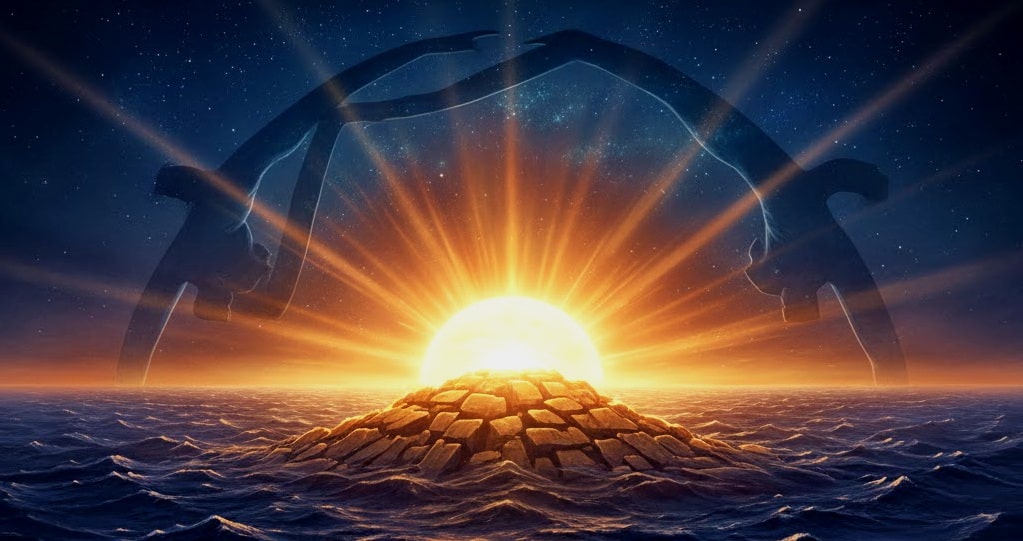
Before the world, only the watery chaos of Nun existed. This infinite, dark abyss held the potential for everything. Ra, in his primeval form as Atum-Ra, emerged from these primordial waters. He raised himself onto the primeval mound, called the Benben, which emerged from the chaos. This act of self-creation marked the beginning of time and order.

Ra stood alone. He was the only existing entity. Therefore, he generated all subsequent life from his own body. He performed the first act of creation by uniting with his own shadow.

Bringing Forth the Ennead

Ra’s subsequent creations formed the Ennead—the Great Nine. This divine family established the fundamental elements and governing structures of the world.

First, Ra created the twin deities Shu (Air) and Tefnut (Moisture). He did this by either spitting them out or by an act of masturbation. This forceful act represented the immense power needed to separate the air and the waters. Shu and Tefnut, in turn, produced Geb (Earth) and Nut (Sky). Geb and Nut then produced the final four core deities: Osiris, Isis, Set, and Nephthys.

Together, these nine gods formed the backbone of Egyptian theology. Ra created the environment (Shu, Tefnut, Geb, Nut), and Ra created the rulers who governed that environment (Osiris, Isis, Set, Nephthys).

The Creation of Humanity

Ra also created the human race. Specifically, he created people from his own tears. The myth states that Ra cried tears of joy or sadness upon seeing Shu and Tefnut return after they wandered into the darkness. These tears, called the Renu, touched the earth and became the first people. Thus, humanity derived its existence directly from the sun god’s emotion.

Egyptian Phoenix Bennu: Myth, Symbolism, and Legacy

Forget the fire. The original legend is even better. Meet the Bennu, the Egyptian Phoenix....
Related post
FUN

The Reign and Retreat of Ra

Eye of Ra Ancient Egyptian Symbols Egypt Fun Tours

After establishing the cosmos, Ra ruled Earth directly. He took the form of the first pharaoh, establishing the rule of Ma’at (cosmic order and justice). However, as Ra grew old, humanity grew rebellious.

The Secret Name and Isis’s Trick

Ra possessed a secret name that held the absolute source of his power. He kept this name hidden from all others. The clever goddess Isis sought this power. She mixed Ra’s saliva with earth, forming a magical serpent. The serpent bit the old god, causing him immense suffering. Consequently, Isis demanded Ra reveal his secret name as the price for the cure. Ra reluctantly surrendered his name to Isis. This moment symbolized the shift of magical power from the supreme male solar god to the cunning female goddess. Ra then retreated from Earth to rule the cosmos exclusively from the sky.

The Eye of Ra’s Fury

Before retreating, Ra used his powerful Eye to punish rebellious humanity. He tore the Eye from his face and sent it forth as the fierce goddess Sekhmet (or Hathor). She began the Destruction of human beings. Ra eventually stopped the carnage, but the event established the Eye of Ra as a distinct entity—a powerful, independent extension of Ra’s will, often representing solar fury.

The Solar Barque and the Night Journey

Egyptian Solar Barque Myth; Ra's Vessel and Cosmic Engine

Ra’s daily cycle was the engine of time. It represented the ultimate, necessary struggle of order (Ma’at) against chaos (Isfet). The Egyptians saw the sun’s passage as a boat carrying the god.

Ra’s Daily Cycle: The Engine of Time

Ra traveled in two different boats, collectively known as the Solar Barque. This journey was essential. It ensured the sun rose every morning, confirming the victory of light over darkness.

  • The Day Barque (Mandjet): Ra embarked upon the Mandjet at dawn. He sailed across the sky, bringing light, heat, and life to the world. Throughout the day, various deities and spirits accompanied him, representing the passage of the hours.
  • The Night Barque (Mesektet): As dusk arrived, Ra transferred to the Mesektet. This boat carried him through the perilous Duat—the dark underworld—where his most critical work took place.

Therefore, this celestial voyage guaranteed the cyclical renewal of time. If Ra failed to complete the journey, the world would plunge into permanent chaos and darkness.

The Battle in the Duat: Ra vs. Apep

The Duat was a realm of darkness and danger. Ra’s journey through this underworld was not passive; it was an eternal, nightly conflict.

The confrontation with Apep (or Apophis) formed the climax of the night journey. Apep was a massive serpent who embodied Isfet (Chaos) itself. Apep constantly sought to swallow the Solar Barque and halt the sun’s rebirth, plunging creation into eternal night.

  • The Eternal Conflict: Every night, Ra and Apep fought a decisive battle. Though Apep never truly died (as chaos can never be eliminated), Ra’s entourage always subdued him.
  • The Protectors: Several gods protected the Barque. The aggressive god Set, surprisingly, often stood at the bow of the boat. He used his spear to ward off Apep. Isis used her magic to ward off the serpent’s power. These efforts ensured Ra’s safe passage and guaranteed the sun would rise again.

The Rebirth at Dawn

Ra completed his journey in the darkest hours before dawn. This moment represented the ultimate triumph of life over death.

  • Fusion with Osiris: In the Duat, Ra, the living sun god, met Osiris, the deceased god of the underworld. They temporarily fused into a single entity. This union symbolized the unity of life and death, reinforcing the concept of eternal resurrection.
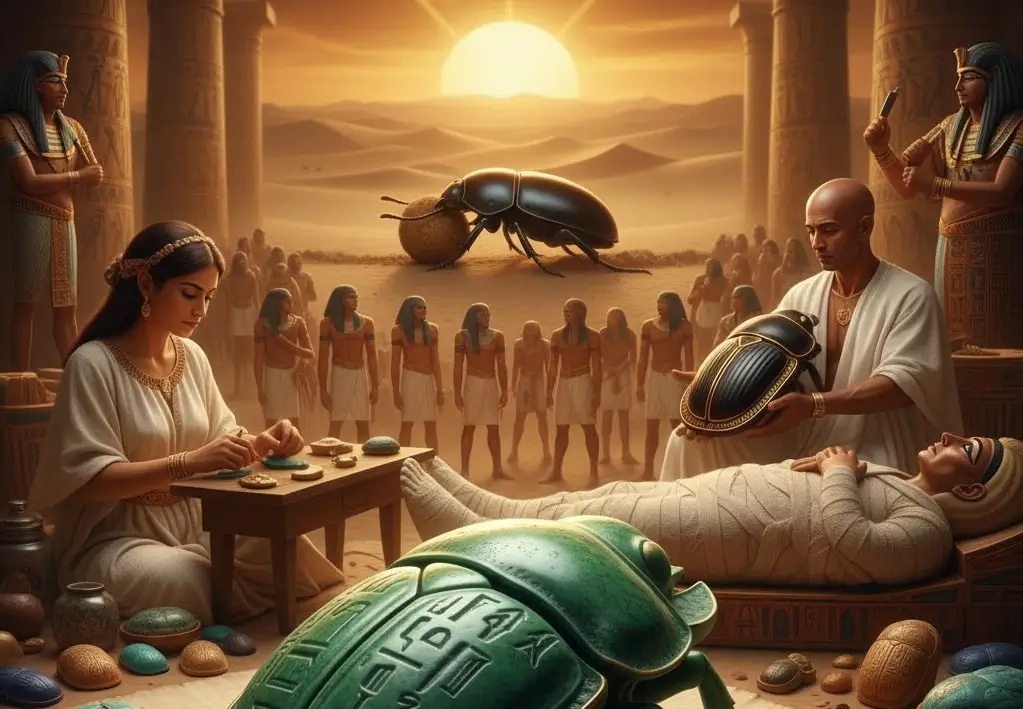
  • The Transformation: Ra did not emerge as the same god. He was reborn as Khepri, the scarab beetle god, who represented the self-created, dawning sun. Consequently, Khepri pushed the sun disk back up over the eastern horizon, initiating the cycle anew.

God Thoth: The Egyptian God of Wisdom, Writing, and the Moon

Thoth (or Djehuty) is one of the most important and powerful ancient Egyptian gods. He...
Related post
FUN

Forms, Names, and Syncretism

Significance of the Egyptian Scarab Beetle

Ra did not possess a single, static identity. As the sun traversed the heavens, he adopted three distinct forms, representing the cyclical nature of existence. Furthermore, his supremacy led him to absorb the power of other major gods.

The Many Faces of the Sun God

Ra’s theological journey followed the path of the sun itself, dividing his authority into three aspects:

  • Khepri (Dawn): Ra appeared at dawn as Khepri, the god of self-creation and the rising sun. Khepri took the form of a scarab beetle. Egyptians observed the scarab beetle rolling balls of dung across the ground, interpreting this as the insect pushing the sun disk across the horizon. This form symbolized self-generation and creation from nothingness.
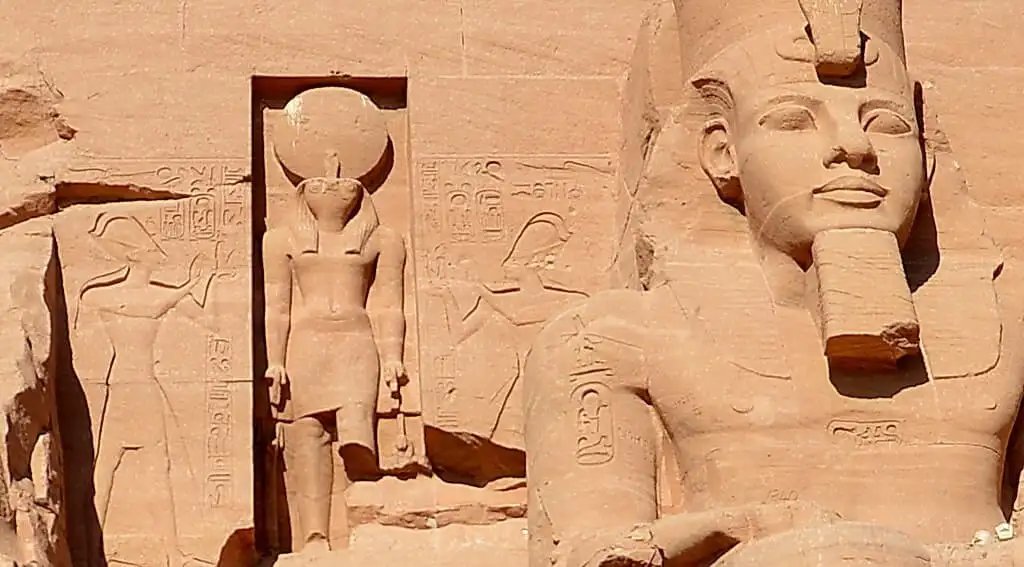
  • Ra (Noon): At the peak of his power, midday, Ra appeared in his most common form: a falcon-headed man wearing the sun disk encircled by the uraeus (the protective cobra). This powerful representation showed Ra at the height of his royal and solar authority.
  • Atum (Dusk): As the sun set, Ra became Atum, depicted as an old man. Atum represented the finished creation, the final form before the nightly descent into the Duat and the promise of renewal.

The Great Syncretic Forms

Ra’s preeminence meant that when a new political center or god rose to power, they often merged with Ra to gain universal authority.

Amun-Ra: The King of the Gods

The most significant merger occurred during the New Kingdom when Thebes became the capital. The local Theban god Amun (whose name means “The Hidden One”) merged with Ra. This created Amun-Ra, the ultimate state god and “King of the Gods.”

  • Political Power: The priests of Amun-Ra became the most powerful political force in Egypt.
  • Theological Synthesis: This merger combined Amun’s invisible, omnipresent force with Ra’s visible, solar power. Thus, Amun-Ra became the god of all things—seen and unseen.

Ra-Horakhty: Horus of the Two Horizons

God Ra Hor Akhty - Gods of ancient Egypt

Ra also combined with the sky god Horus. The resulting god, Ra-Horakhty, meant “Ra (who is) Horus of the Two Horizons.” This form specifically represented the sun’s passage across the entire sky, from its rising to its setting, emphasizing the seamless cycle of light and kingship.

The Eye of Ra: Power and Fury

The Eye of Ra existed as a distinct, powerful entity separate from the god’s main person. It was a potent instrument of solar fury and action.

  • Distinction: It is crucial to distinguish the Eye of Ra (the destructive, aggressive solar disk) from the Eye of Horus (Wadjet), which represented protection, healing, and order.
  • Myth of Destruction: As noted earlier, the Eye of Ra was sent forth as the goddess Sekhmet to punish humanity. This myth demonstrated the solar god’s terrifying capacity for rage and destruction. Therefore, the Eye of Ra represented the unpredictable, untamed power of the sun, while the Eye of Horus represented the controlled power of the pharaoh.

God Horus: The Definitive Guide to the Sky God of Ancient Egypt

Horus is arguably the most vital deity in the Egyptian pantheon. He is the ancient...
Related post
FUN

Kingship and Legacy

eye of ra in the mythology egypt fun tours

Ra’s theological dominance translated directly into the political structure of ancient Egypt. He provided the ultimate divine justification for the pharaohs’ rule.

Ra and the Pharaohs

Pharaohs were not merely rulers; they were Ra’s direct descendants and representatives on Earth.

  • The Title “Son of Ra”: Pharaohs adopted the title “Son of Ra” beginning with the Fourth Dynasty (c. 2613–2494 BCE). This title immediately established their divine lineage and cemented their legitimacy. They ruled by divine right, making them the living image of Ra.
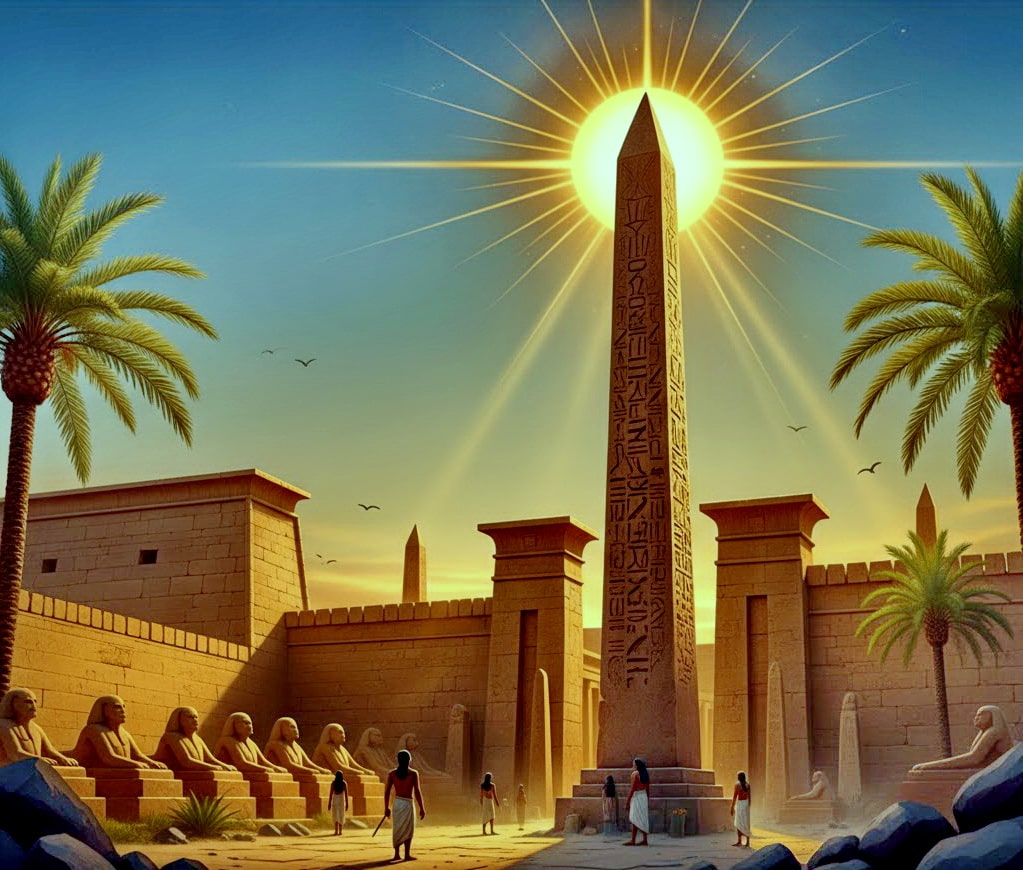
  • Monuments and Architecture: Egyptian monuments reflected Ra’s cosmic importance. The shape of the pyramids symbolized the Benben stone—the primeval mound—and the sun’s rays reaching down to Earth. The great Obelisks acted as monumental sun rays that terminated in a gilded capstone, offering daily worship to the sun god.

Conclusion: Ra, The Eternal Light of Egypt

Ultimately, God Ra was more than a deity; he was the cosmological framework for Egyptian existence. He created the world, structured time, defined kingship, and guaranteed the cyclical renewal of life. His daily, relentless struggle against Apep confirmed the triumph of order (Ma’at) and provided the unwavering promise that the sun would rise again. Therefore, Ra remains the most powerful and enduring symbol of creation, stability, and the eternal light of Egyptian civilization.

Current weather in Egypt

4 days Group tour across the treasures of Cairo...
Immerse yourself in local culture and unravel the hidden gems known only to the residents....

Valley of the Kings, Hepchepsut

I never had a more positive experience and educational time than this tours. Learning about a variety of kings and queens was amazing! The tour guide was super nice and helped me and my friend every step of the way! Including bargaining for a few souvenirs! I will never forget

More »
6 Days Luxury Tour {Egypt Treasures} - Cairo and Nile Cruise Affordable Tour Package

A trip of a lifetime in a 10 hour layover!

We recently scheduled a layover tour in Cairo through Egypt Fun Tours. Our layover was 10 hours and we scheduled the tour just about a day and a half before our arrival. When we arrived in Cairo we very easily made our way out of the airport (after getting our

More »

Egypt Fun Tours – Does it All!

My husband and I visited Egypt in March 2013. First, let me say, ‘Go, go, go!’ – it’s safer and definitely friendlier than many places we’ve visited. Tourism is drastically down – thanks mostly to media misinformation – so it’s a great time to visit to avoid line-ups and crowds

More »
3-day desert safari trip from Cairo—Egypt Fun Tours

Book with Egypt Fun Tours!!

In April 2011, my husband and I, after great debate, took a trip to Egypt. Because of the political situation, we decided to book a tour for our time in Cairo and Luxor. We are very happy that we did, since these are two cities that should not be missed.

More »
Isis with wings

Top-rated Tour Packages

Isis with wings