
The Breath of Creation: Shu, God of Air and Cosmic Separation
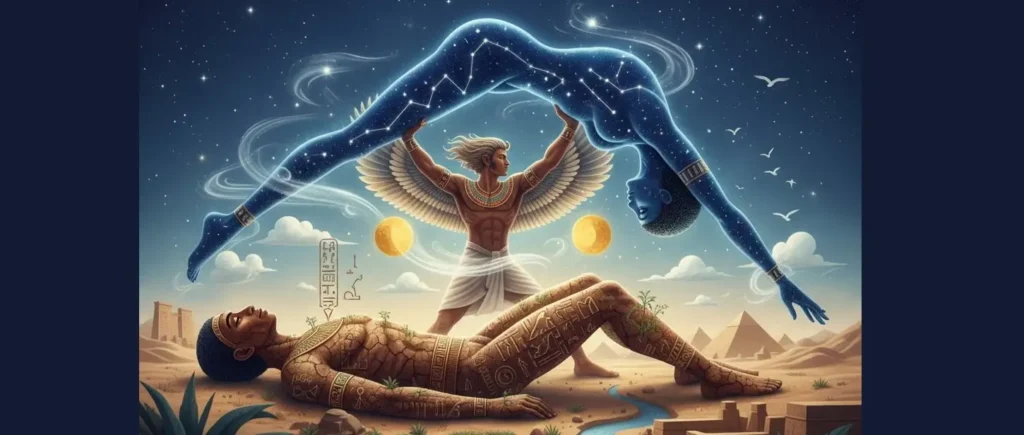
Unpack the essential role of Shu God of Air, the primordial deity who embodies the atmosphere and breath of life. Discover his pivotal mythological act: separating the embracing Earth god Geb and Sky goddess Nut. As the eternal cosmic pillar, Shu upholds the structure of the universe, ensuring that light, space, and order (Ma’at) are maintained against the forces of chaos.
The Great Divorce: Unpacking Geb and Nut Mythology of Earth and Sky
Unravel the essential Geb and Nut Mythology, which dictates the physical structure of the cosmos. Discover how the god of air, Shu, was commanded to separate his children—the embracing Earth god Geb and the Sky goddess Nut—to create the necessary space for life. This mythological divorce finalized the cosmic axes, moving the universe past the primordial chaos of Nun.
The First Form: Exploring Nun and Benben Mythology in Ancient Egypt
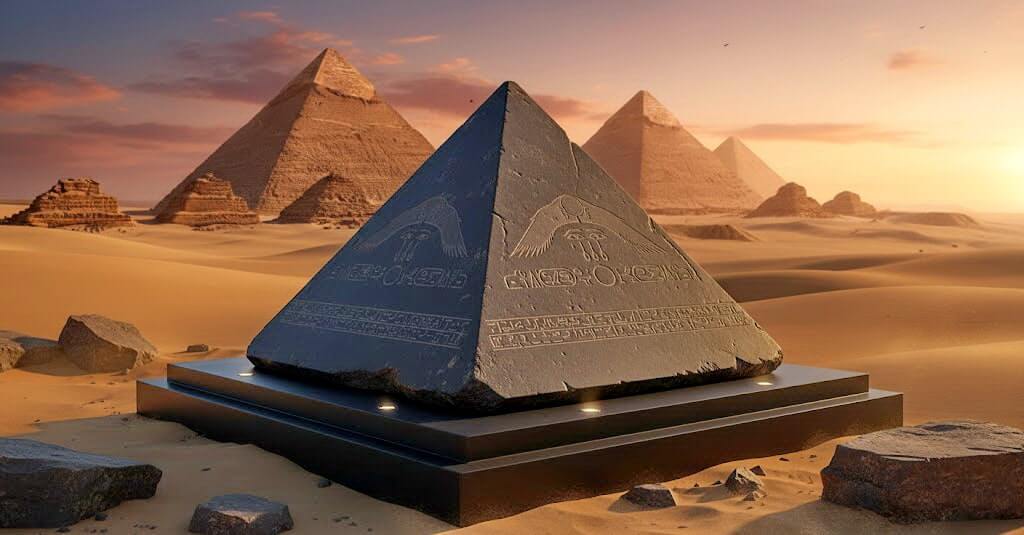
Uncover the powerful creation mythos of ancient Egypt, centered on the foundational concepts of Nun and Benben. Explore the absolute nothingness of the infinite, life-giving waters of Nun, from which the Benben, the first solid land, miraculously arose. This essential mound served as the birthplace of the sun god and the beginning of all order (Ma’at), providing a crucial framework for understanding Egyptian cosmology and religious belief.
Order from Chaos: Unpacking Ancient Egyptian Cosmology and Creation
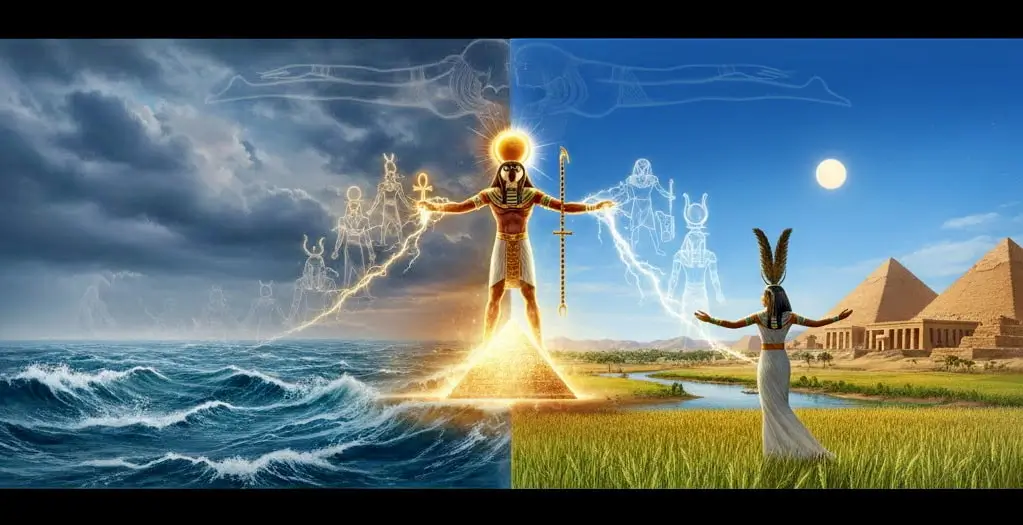
Unravel the structure of the Egyptian universe through Ancient Egyptian Cosmology, which explains how perfect order (Ma’at) was established from the infinite, chaotic void (Nun). Explore the three foundational models—Heliopolis (Atum and the Ennead), Hermopolis (the Ogdoad), and Memphis (Ptah’s divine thought)—and discover how the emergence of the first land, the Benben, provided the stable platform for creation and defined the ultimate duty of the Pharaoh.
From Nun to Ma’at: The Complete Guide to Ancient Egyptian Creation Myths
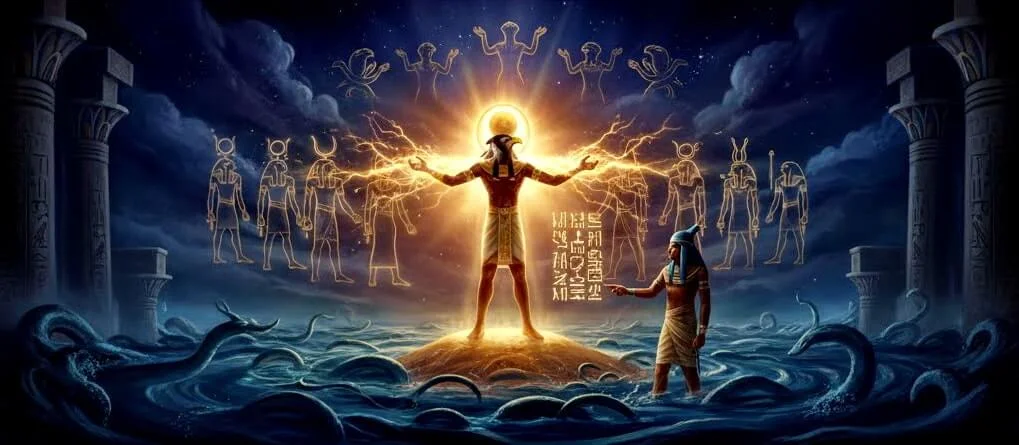
Dive into the profound origins of the world with the Ancient Egyptian Creation Myths. Discover how the sun god Ra/Atum spontaneously rose from the watery, chaotic abyss called Nun onto the primordial mound, the Benben. Explore the resulting lineage of the Ennead (including Shu, Tefnut, Geb, and Nut) from Heliopolis, the elemental chaos of the Ogdoad from Hermopolis, and the philosophical creation by thought and word of Ptah from Memphis. Ultimately, these stories all affirm the establishment of Ma’at, the sacred cosmic order that governed Egyptian life.
Ancient Egyptian Myths and Legends: The Complete Guide
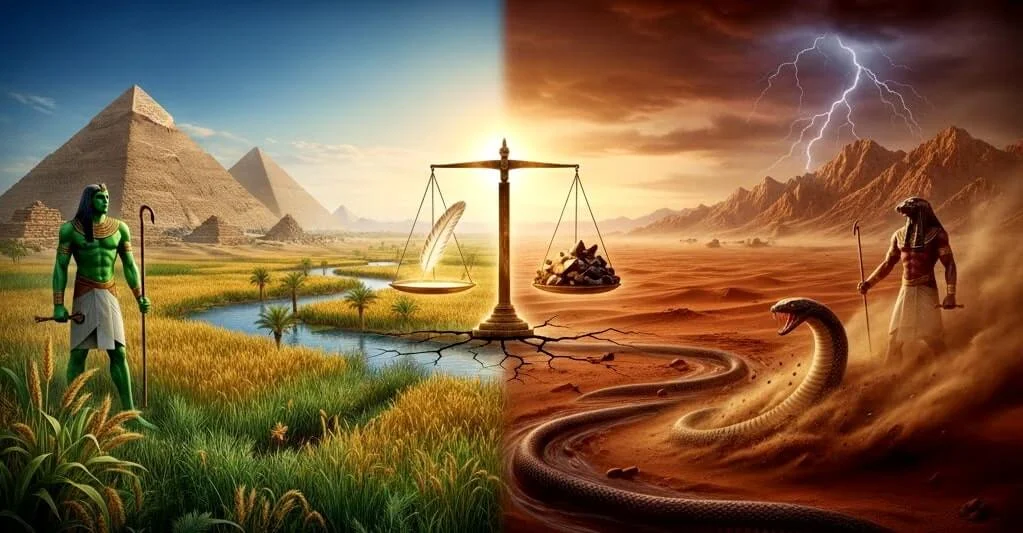
Explore the core narratives that defined the ancient world in this comprehensive guide to Ancient Egyptian Myths and Legends. Discover the creation story, where the sun god Ra emerged from primordial chaos (Nun) to establish cosmic order (Ma’at). Follow the epic tragedy of Osiris, murdered by his jealous brother Seth, and resurrected by the powerful magic of Isis to become the Lord of the Underworld. Finally, trace the journey of the soul through the Duat to the final judgment, where the heart is weighed against the Feather of Ma’at, revealing why these timeless stories were the operating system for a three-millennia empire.
Yuya and Thuya: The Powerful In-Laws of Pharaoh Amenhotep III
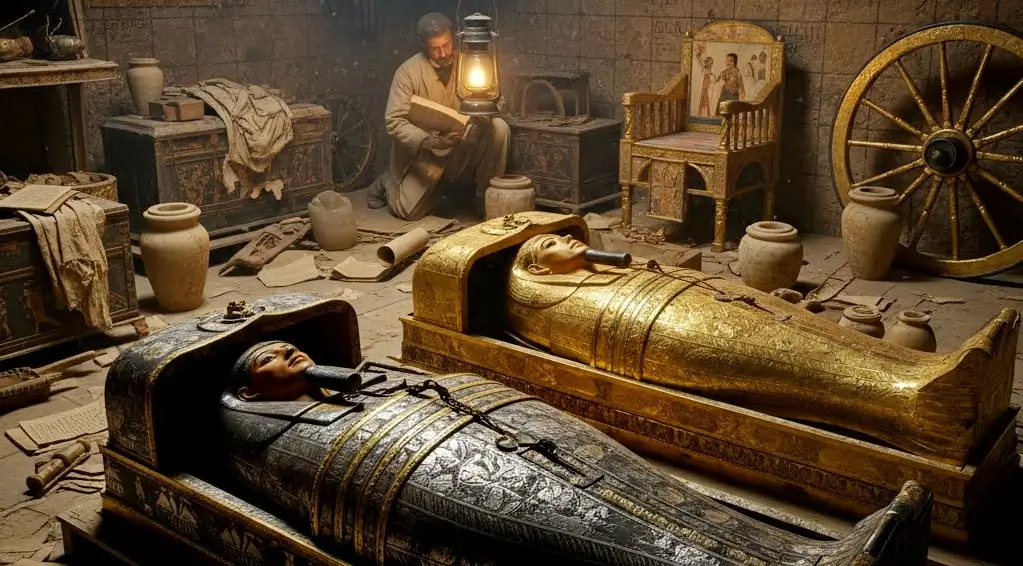
The Tomb of Yuya and Thuya (KV 46), discovered largely intact in 1905, represents the most significant archaeological find prior to Tutankhamun’s. Though non-royal, Yuya and Thuya were the exceptionally powerful in-laws of Pharaoh Amenhotep III and the parents of Queen Tiye, granting them an unprecedented burial spot in the Valley of the Kings. This article explores their incredible rise to power, details the 1905 discovery that yielded gilded coffins, chariots, and fine furniture, and explains why the tomb’s preservation provided the essential historical and material blueprint for understanding the opulence of their great-grandson, Tutankhamun (KV 62).
The Immortal Love and Tragedy: Unraveling the Osiris and Isis Myth
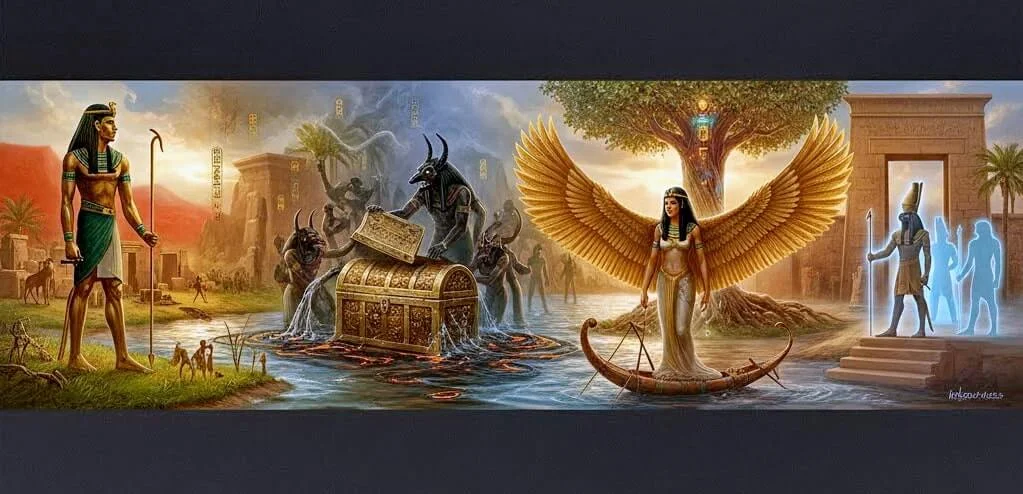
The Osiris and Isis Myth is the cornerstone of Ancient Egyptian religion, detailing the cosmic conflict between order and chaos. The story begins when the benevolent King Osiris, who civilized Egypt, is murdered and dismembered by his jealous brother, Set. His devoted wife, the magician-goddess Isis, embarks on a tireless quest to collect his scattered body parts, performing the world’s first act of mummification and magically conceiving their son, Horus. While Osiris descends to become the supreme Lord of the Dead in the Underworld, Horus avenges his father by defeating Set, thereby establishing the divine lineage and the legitimacy of the Pharaohs. This profound narrative shaped Egyptian beliefs regarding resurrection, the afterlife, and eternal life, resonating throughout the classical world and providing a blueprint for their spiritual system.
Ancient Egyptian Priests: Custodians of Ma’at and Power
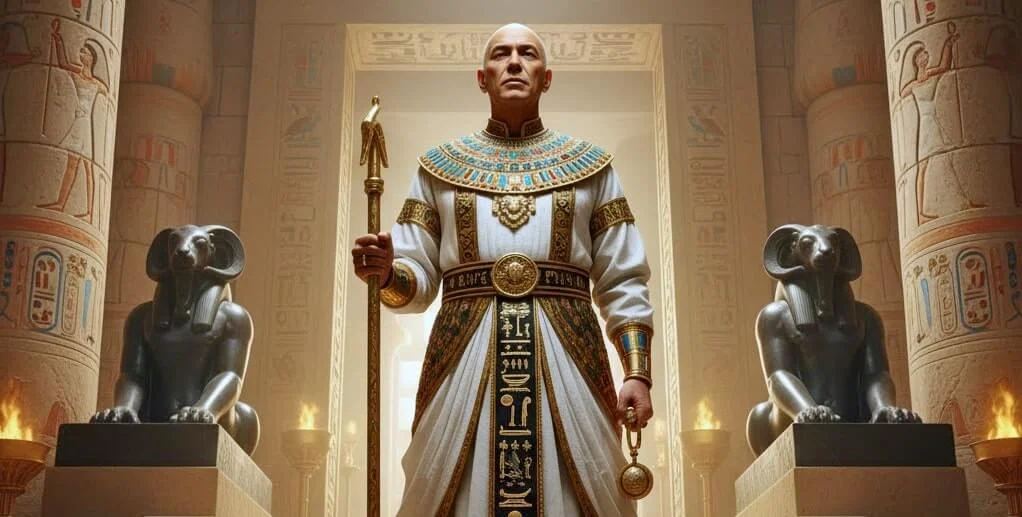
The priests of ancient Egypt were far more than just religious figures; they were the indispensable keepers of cosmic order (Ma’at), holding immense social, political, and economic power. As the ‘Servants of the God’ (Hem-netjer), they performed the daily rituals in the great temples—including cleaning, dressing, and feeding the cult statue—to sustain the deities and ensure the prosperity of the Two Lands. Learn about the strict hierarchy, from the powerful High Priests who rivaled the pharaohs to the purifying Wab Priests, and discover the deep and enduring influence this clergy had on one of history’s greatest civilizations.
The Ancient Egyptian Scribe: Life & Key Role in Society
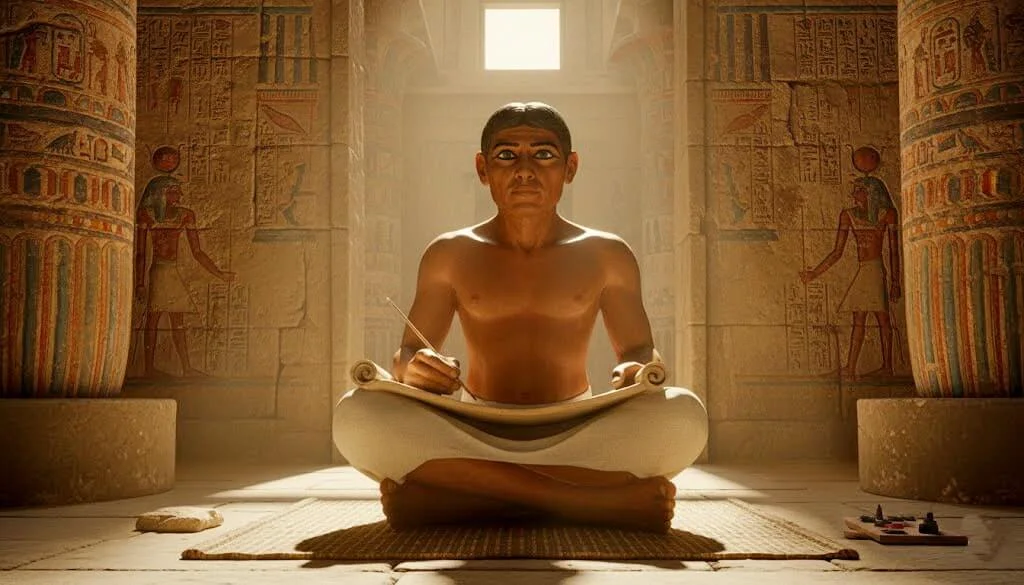
In a society where only a tiny elite could read and write, the Ancient Egyptian Scribe was the indispensable engine that powered the vast machinery of the pharaoh’s administration. More than just a copyist, the scribe was the keeper of knowledge, the tax collector, the architect, and the historian—a revered figure whose literacy granted him privilege, power, and a guaranteed path to a good life. Explore the unique training, essential tools, and high social status that defined the life of Egypt’s most vital professional class.
The Great Voyage: Hatshepsut’s Expedition to the Land of Punt
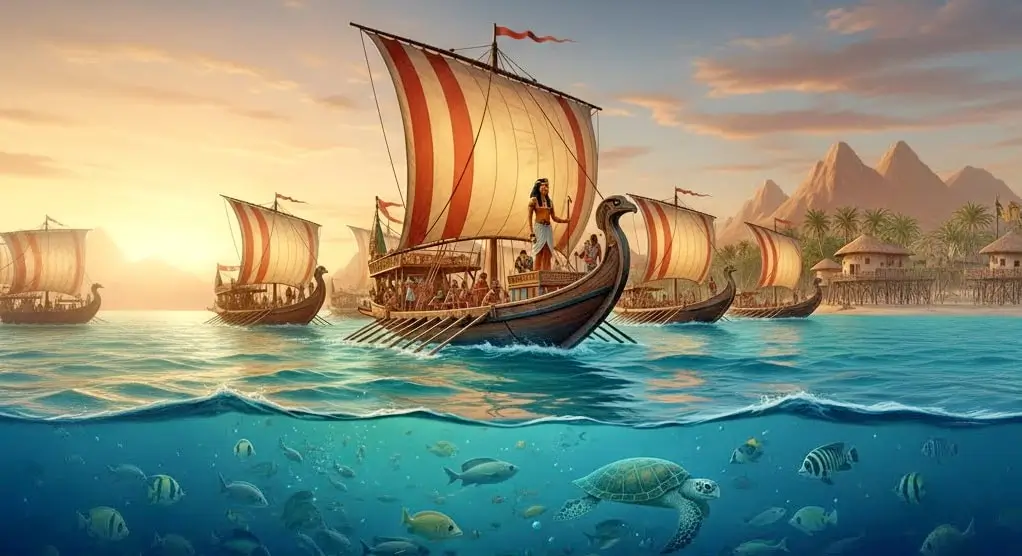
The Hatshepsut Expedition to Punt (c. 1479–1458 BC) was the defining economic venture of her reign. Recorded in stunning detail at Deir el-Bahari, this successful mission secured incense, myrrh, ebony, and live trees for Egypt. This article explores the voyage’s purpose, the goods acquired, and the lasting cultural and economic legacy of Hatshepsut’s unparalleled journey to the “Land of the Gods.”
Avaris Hyksos Capital: Unveiling the Forgotten City of the Hebrews
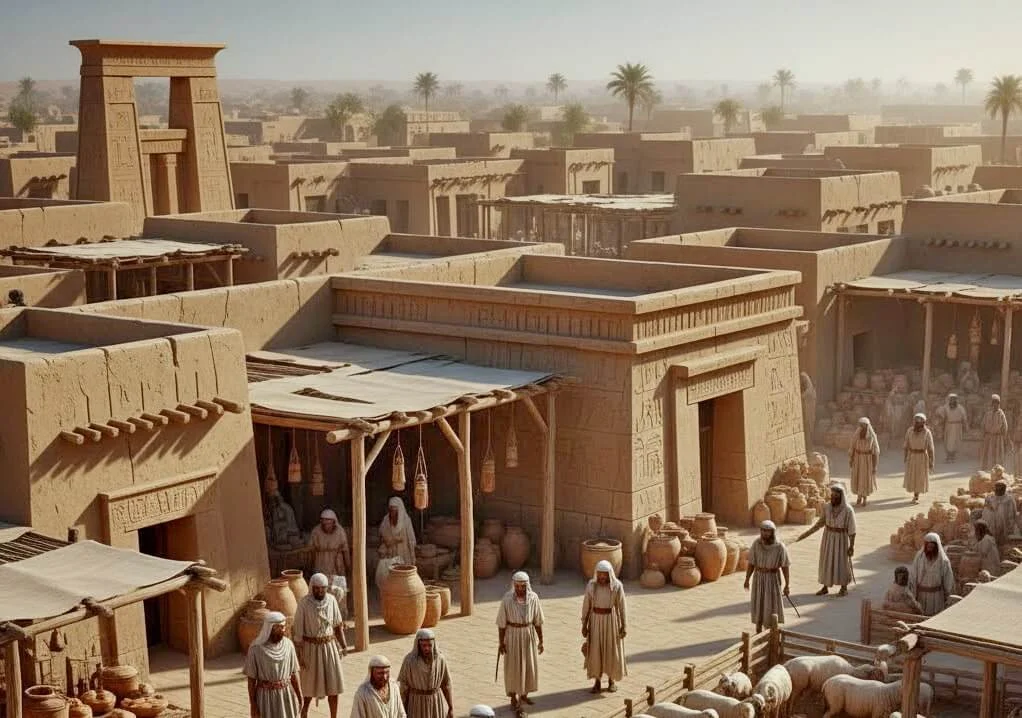
Discover the lost history of Avaris, the powerful Hyksos capital that once dominated the Nile Delta. For centuries, this forgotten Egyptian city has held silent evidence of a mysterious foreign dynasty and possibly, the ancient Israelites. Prepare to explore the archaeological findings that reveal its critical role in shaping the history of Egypt and the Near East.