
Souq El Attarine: The Antique Heart of Alexandria

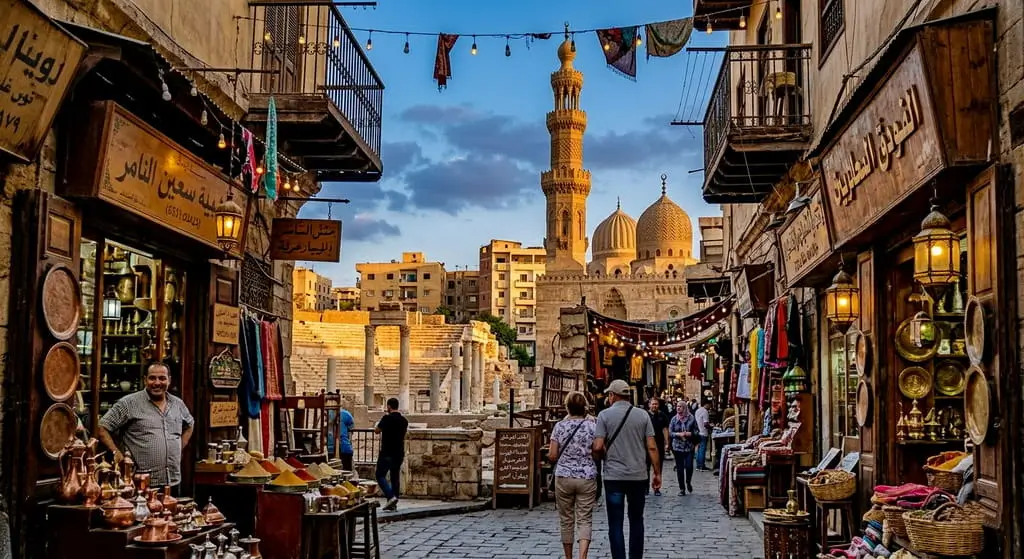
Souq El Attarine is the nostalgic, antique heart of Alexandria, offering a refined contrast to Egypt’s more frantic traditional markets. Located in the historic Attarine district, this labyrinth of narrow alleys serves as a "living time capsule" of the city’s cosmopolitan golden age, where European elegance meets Mediterranean charm. Visitors can discover a curated world of French-inspired furniture, rare maritime relics, and vintage collectibles, alongside the district’s namesake trade in exotic spices and bespoke perfumes. Centered around the architecturally unique Al-Attarine Mosque and neighboring the Roman Amphitheatre, the souq is a premier destination for serious collectors and history enthusiasts seeking to uncover the authentic soul of Alexandria’s vanished eras.

While Cairo has its bustling Khan el-Khalili, Alexandria offers a more nostalgic and European-inflected charm in Souq El Attarine. Located in the historic Attarine district, this market is a labyrinth of narrow, pedestrian-only alleys that whisper stories of Alexandria’s cosmopolitan past. Originally famous as a world-class spice and perfume center during the Islamic conquest, it has evolved into Egypt’s premier destination for antiques, curiosities, and “Old World” relics.

Souq El Attarine: A Labyrinth of History and Hidden Gems

The Souq El Attarine is unique because it reflects the diverse heritage of Alexandria. As you navigate its winding paths, you will find a fascinating “mishmash” of Islamic architecture and European influences. The market is particularly famous for:

  • Antique Furniture: You can find stunning French-inspired pieces, colonial-era bureaus, and Art Deco mirrors that tell the story of the city’s early 20th-century elegance.
  • Maritime Relics: Given Alexandria’s status as a major Mediterranean port, keep an eye out for old ship compasses, brass lanterns, and vintage diving gear.
  • The Spice Legacy: True to its name (Attarine means “perfumers” or “spice dealers”), the market still hosts traditional herbalists selling unfamiliar blends, rare incense, and the finest perfumes.
  • Curated Collectibles: From Ottoman-era coins and silver jewelry to vintage analog cameras and rare books, the souq is a playground for serious collectors.

Why It Is Different from Other Egyptian Markets

Unlike the high-energy “hard sell” often found in other tourist hubs, Souq El Attarine feels like a quiet discovery. The vendors are often lifelong collectors themselves, and the pace is significantly more relaxed. Furthermore, the market’s proximity to the Roman Amphitheater and the Al-Attarine Mosque—a beautiful landmark built on a triangular plot—makes it easy to combine your shopping with a deep dive into the city’s layered history.

The “Treasure Hunter’s” Guide to Shopping

To find the best pieces in the Souq El Attarine, you must look beyond the storefronts. Many of the true treasures are tucked away in the back of cramped, dusty shops or in the side alleys branching off the main path.

  1. Verify the Vintage: If you are buying a significant antique, especially furniture or jewelry, do not hesitate to ask about its provenance.
  2. The Export Rule: If you purchase a large or particularly old item, check with the seller regarding export permits to ensure you have no issues at customs when leaving the country.
  3. Haggle with Respect: While bargaining is expected, it is often more of a conversation here. A friendly chat about the history of an object can often lead to a better price than aggressive negotiation.
Practical Visitor Information
  • Best Time to Visit: Arrive in the late morning (around 11:00 AM) when all shops are open, or in the late afternoon to experience the market’s atmospheric lighting.
  • Location: Situated in the Attarine district, just a short walk from the Roman Amphitheater and the city center (Midan Tahrir area).
  • Duration: Plan for at least 2 to 3 hours if you enjoy browsing through relics and historical artifacts.
  • What to Wear: Comfortable walking shoes are essential, as the narrow streets can be uneven.

FUN

Souq El Attarine: Nearby Cultural Highlights

Souq El Attarine; Nearby Cultural Highlights

After your journey through the Souq El Attarine, you are perfectly placed to explore:

  1. The Roman Amphitheater: A beautifully preserved 2nd-century marble theater just a few hundred meters away.
  2. Al-Attarine Mosque: A stunning architectural landmark with deep Sufi roots and a rich history of restoration.
  3. Alexandria Opera House: A short taxi ride will take you to this 1918 masterpiece of French design.

The Souq El Attarine isn’t just a place to buy things; it’s a place to find the “soul” of Alexandria’s vanished eras. We hope this guide helps you uncover a piece of history to take home with you.

FUN

Collector’s Masterclass: Identifying Authentic Alexandrian Antiques

Collector’s Masterclass Identifying Authentic Alexandrian Antiques

Alexandria was the “Paris of the Mediterranean” from the mid-19th century through the 1950s. During this era, the city’s elite imported vast amounts of European luxury goods. Today, Souq El Attarine is the repository of these treasures. However, for a serious collector, the challenge lies in distinguishing a genuine 1920s Art Deco piece from a modern “shabby-chic” reproduction.

To master the Souq El Attarine, you must look for “The Mark of the Era.” Authentic Alexandrian antiques often feature a unique blend of European design and local materials. For instance, French-style Louis XV chairs found here are frequently made from high-quality Egyptian beechwood. Furthermore, look for handwritten inscriptions or merchant stamps inside drawer frames. These small details provide a direct link to the grand villas of old Alexandria. Consequently, a piece with a documented “local” history is often more valuable than a generic import.

Top 3 Verification Techniques

  1. The Joinery Test: Check the corners of wooden furniture. Authentic antiques from the early 20th century will have “dovetail” joints. If you see modern staples or uniform machine-cut screws, the piece is likely a contemporary reproduction.
  2. Patina and Wear: True age cannot be faked easily. Look for natural “pitting” on brass maritime equipment or slight, uneven fading on vintage marquetry. If a piece looks too perfect, it probably is.
  3. The Glass Check: Mirrors and glass cabinets from the colonial era often have a slight “waviness” or tiny air bubbles trapped inside. This “seeds” effect is a hallmark of old-world glass manufacturing.

Bibliotheca Alexandrina: The Reborn Wonder of the World

Experience the reborn wonder of the world: the Bibliotheca Alexandrina. This stunning architectural marvel, designed...
Related post
FUN

A Walking Narrative: Navigating the “Hidden Alleys”

A Walking Narrative Navigating the Hidden Alleys

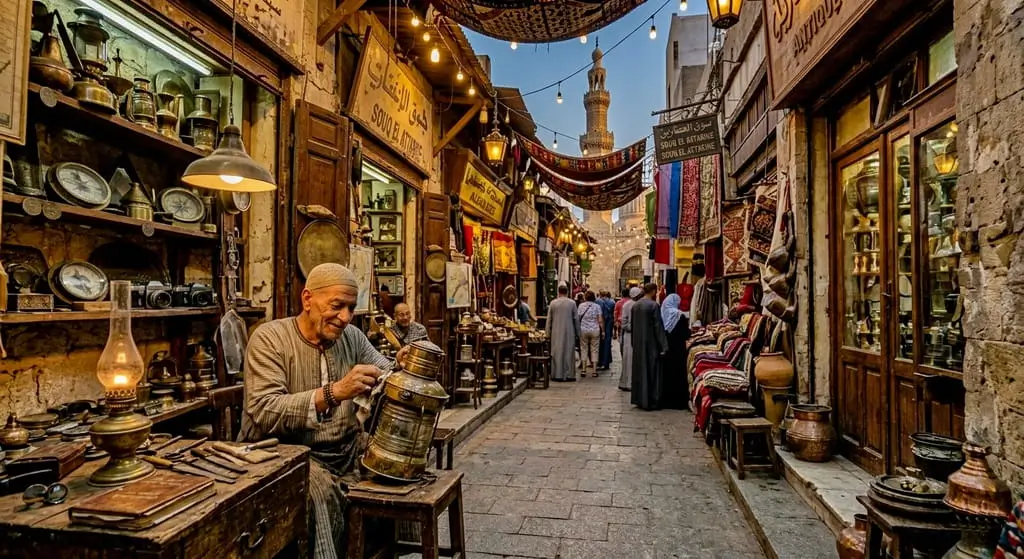
The Souq El Attarine is not a straight line; it is a living organism. To find the most authentic workshops, you must leave the wider main paths. Start your journey at the Al-Attarine Mosque and head west into the smaller “off-shoot” lanes.

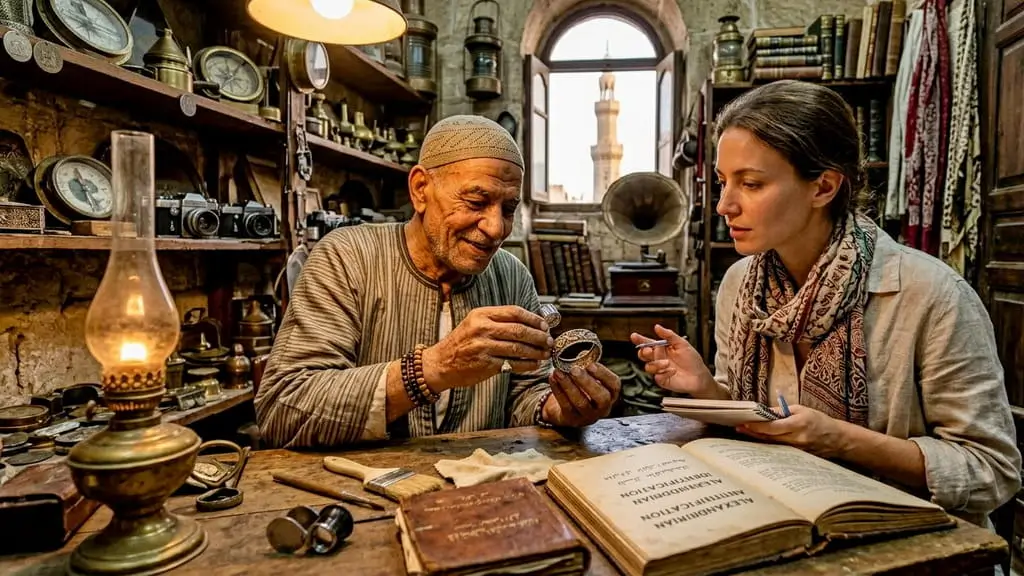
In these narrow corridors, the sound changes from the chatter of tourists to the rhythmic “clink-clink” of hammers. This is where the restoration magic happens. You might stumble upon a small room filled with vintage gramophones or a workshop dedicated solely to repairing 19th-century clocks. Specifically, the area behind the mosque is famous for its heavy brass restoration. Watching a master craftsman hand-polish a 50-year-old ship’s telegraph is a highlight of any visit. By exploring these “veins” of the market, you move beyond shopping and into the realm of cultural preservation.

The Ultimate Guide to Daraw Camel Market: History, Logistics, and Tips

The Daraw Camel Market remains a vital cornerstone of Upper Egypt’s cultural and economic landscape....
Related post
FUN

The “Golden Age” (1850–1950): History of Souq El Attarine

To truly understand Souq El Attarine, one must appreciate the cosmopolitan explosion of Alexandria. For a century, the city was home to vibrant Greek, Italian, French, and Armenian communities. These residents brought their tastes, their furniture, and their arts to the Attarine district.

As these families eventually moved on, their belongings flowed into the local market. This is why you can find an Italian espresso machine from the 1930s sitting next to an Ottoman-era silver dagger. The market is essentially a “time capsule” of this multicultural era. Because of this, Souq El Attarine serves as a silent witness to a time when Alexandria was the undisputed cultural capital of the Mediterranean. Every antique you find is a remnant of that vanished, elegant world.

Souq Al Fustat: The Definitive Guide to Cairo’s Artisanal Soul

Souq Al Fustat is the refined, artisanal heart of Old Cairo, offering a quiet sanctuary...
Related post
FUN

Nearby Heritage Eats: Where Traders Meet

Shopping for history is hungry work. To complete your experience, visit the historic cafes that surround the Souq El Attarine. These spots have been the meeting points for antique dealers and spice merchants for generations.

  • Traditional Coffee Houses: Look for the small, unnamed cafes where older men sit with water pipes (shisha) and backgammon boards. Ordering a “Kahwa Mazbout” (balanced coffee) here allows you to soak in the local atmosphere.
  • Trianon and Delices: While a short taxi ride away, these historic patisseries represent the same “European-Egyptian” fusion as the market. They are the perfect places to enjoy a pastry while reflecting on your finds.
  • Local Street Food: For a quick bite, try the Ful and Ta’ameya stalls near the mosque. These are the fuel of the market workers and provide the most authentic taste of Alexandrian street life.

Souq El Attarine: Collector’s Quick Checklist

Item What to Look For Value Indicator
Furniture Hand-carved details, solid wood Original marble tops or brass handles.
Maritime “Alexandria Port” stamps, heavy brass Working mechanical parts (compass needles).
Vinyl/Media Early Egyptian or European pressings Original sleeve art in good condition.
Jewelry Traditional silver hallmarks Intricate “filigree” work from old workshops.

Available Everyday

Giza pyramids & Sphinx, & Sakkara pyramids | Sound & Light show & Nile dinner cruises (optional) | Cairo museum, Khan El-Khalili, Citadel of Saladin,...

Available Everyday

Discover ancient Egypt living luxury hotels and top Nile cruises....
FUN
God_Anubis_Icon

Layover Tour in Cairo

This August, my boyfriend and I had quite a long layover in Cairo, 9 hours to be exact. Instead of wasting our time at the airport, we decided to do a layover tour of the city. I had been before, but my boyfriend hadn’t, so we wanted to hit the

More »

One of the best tours I have ever had!

I was thoroughly impressed by the professionalism of this tour company. I emailed to inquire about the Cairo layover tour about 30 hours before my flight was scheduled to leave from New York. I was pleasantly surprised to get a quick response confirming the tour and assuring that a guide

More »
Souqs and Markets in Egypt - Egypt Fun Tours

Cairo walking tours

After a rocky start (the driver had been in an accident on his way to pick me up,) the company very quickly sent another driver/guide named Mohammed, who was a real pro. Thoroughly enjoyed my first day in Egypt!

More »
9-day tour package - Egypt Fun Tours

You’re in “GREAT HANDS” with Egypt Fun Tours!

We first went to Egypt in July 2010. We were to pass through Cairo on our way to Africa, and we had arranged to be picked up from the Cairo airport and shown around the city during our 6-hour layover. This was arranged through emails with Hamada, of Egypt Fun

More »

Highly Recommend Egypt Fun Tours!

Several weeks ago, I reached out to Egypt Fun Tours regarding a 9-hour layover in Cairo. From the very beginning, Hani Ahmed was responsive and professional, quickly providing a well-organized itinerary tailored to our limited time. The itinerary included a visit to the pyramids, other historical sites, a delicious dinner,

More »
God_Anubis_Icon

Top-rated Tour Packages

God_Anubis_Icon