Tomb of Kheruef (TT192): Guide to Asasif’s Masterpiece

The Tomb of Kheruef (TT192) stands as a monumental bridge between traditional Egyptian aesthetics and the radical naturalism of the Amarna Period. As the largest private burial complex in the Theban Necropolis, it reflects the immense prestige of Kheruef, who served as the powerful Royal Steward to Queen Tiye. The tomb is globally renowned for its masterful low-relief carvings, which provide an unparalleled historical record of Pharaoh Amenhotep III’s royal jubilees and sacred rituals. From its sprawling open courtyard to the fluid, energetic depictions of ritual dancers, TT192 remains an essential site for understanding the peak of 18th Dynasty architectural engineering and artistic sophistication.

Tomb of Kheruef: The Monumental Legacy of TT192

The Theban Necropolis conceals many wonders, yet few structures command as much architectural respect as Theban Tomb 192, the Tomb of Kheruef. Located within the rocky basin of the Asasif area—near the iconic mortuary temples of Deir el-Bahari—this site stands as a monumental testament to the peak of Egypt’s Golden Age. Consequently, the tomb represents more than a burial; it serves as a sprawling stone stage for the eternal celebration of the Pharaoh’s reign.

Tomb of Kheruef: A Steward of Unparalleled Power

Kheruef occupied a seat of immense influence during the 14th century BCE. As the Royal Steward to Queen Tiye, the powerful matriarch and Great Royal Wife of Amenhotep III, he navigated the highest echelons of the 18th Dynasty. Because of this high status, his tomb reflects an audacity that blurs the line between private burial and royal monument. Indeed, TT192 currently holds the title of the largest private tomb in the Theban Necropolis, outshining its contemporaries in both scale and ambition.

Artistic Innovation and the Amarna Transition

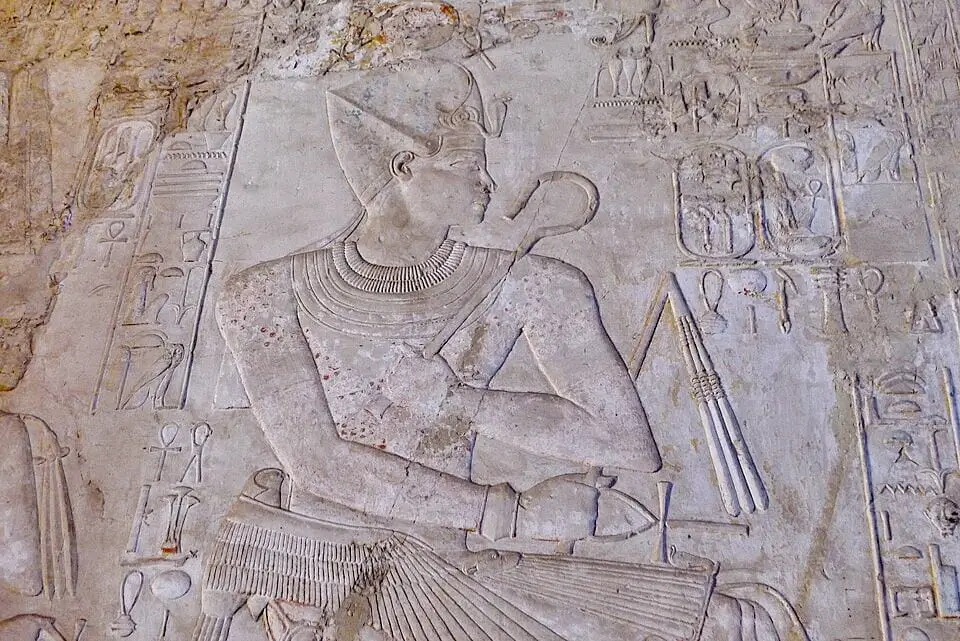
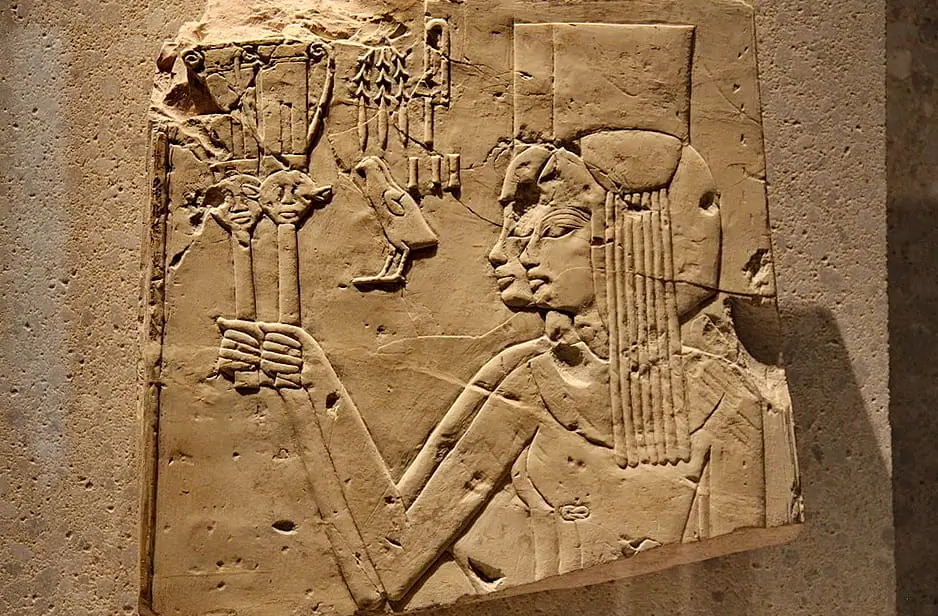
Beyond its sheer size, the Tomb of Kheruef captivates visitors with its artistic soul. The walls showcase some of the most delicate, low-relief carvings in the archaeological record. These scenes provide a rare, high-definition window into the Sed-festivals (jubilees) of Amenhotep III. Furthermore, the craftsmanship signals a pivotal moment in history. The fluidity and grace of these carvings represent the transition toward the revolutionary “Amarna” style. From the synchronized movements of ritual dancers to the regal portraits of the royal family, the artistry here captures a civilization on the brink of a radical cultural shift.

Tomb of Kheruef: Navigating the Masterpiece

In the following sections, we will peel back the layers of history within TT192. We will first explore the sophisticated engineering of its massive open courtyard and then decode the complex religious iconography of its reliefs. Ultimately, whether you are a dedicated Egyptologist or a traveler seeking the most profound sites in Luxor, this guide offers an unparalleled journey into the heart of ancient Egyptian prestige.

FUN

The Life of Kheruef: Power Behind the Throne

The Life of Kheruef Power Behind the Throne

To understand the immense scale of TT192, one must first understand the man who commissioned it. Kheruef, also known by the name Senaa, did not merely witness history; he orchestrated the daily logistics of the most powerful royal household in the ancient world.

Titles and Status in the 18th Dynasty

Kheruef held a collection of titles that placed him at the center of the Egyptian administration. As the Royal Scribe and First Royal Herald, he controlled the flow of information to the King. However, his most significant role was Steward to the Great Royal Wife, Queen Tiye. This position granted him authority over the Queen’s vast personal estates and her dedicated workforce, effectively making him the executive director of her royal court.

The Influence of Queen Tiye

Queen Tiye remains one of the most formidable women in Egyptian history. Unlike many queens who played purely ceremonial roles, Tiye functioned as a political partner to her husband, Amenhotep III. Consequently, Kheruef’s proximity to the Queen afforded him a level of prestige rarely seen among non-royal officials. We see evidence of this unique bond throughout the tomb’s reliefs, where Kheruef appears in direct service to the royal couple during their most sacred ceremonies.

The Mystery of the Unfinished Tomb

Despite the grand ambitions visible in the tomb’s architecture, Kheruef never finished his “Palace of Eternity.” Work on the site stopped abruptly, and historians find no evidence that Kheruef was ever buried here.

While some scholars suggest he fell from favor, others point to the religious upheaval at the end of Amenhotep III’s reign. As the King’s son, Akhenaten, began his radical shift toward the worship of the Aten, many high-ranking officials of the old guard found their projects—and their lives—suddenly interrupted. This sudden halt provides us with a fascinating “archaeological snapshot,” preserving the tomb in a state that reveals the step-by-step process of ancient Egyptian construction.

FUN

Architectural Masterpiece: Scale and Layout

Architectural Masterpiece Scale and Layout

The physical layout of TT192 breaks the standard mold of Theban private tombs. Instead of the typical T-shaped plan, Kheruef’s architects designed a complex that mimics the royal mortuary temples of the era.

The Grand Open Courtyard

The most striking feature of the tomb is the immense open courtyard. Measuring approximately 30 by 30 meters, this space once featured a magnificent portico supported by 32 fluted columns. Moreover, the courtyard served a dual purpose. While it acted as a traditional offering space, it also functioned as a theatrical arena. The walls surrounding this court contain the famous Sed-festival scenes, suggesting that Kheruef intended this space to be a permanent venue for celebrating the King’s eternal rejuvenation.

Engineering the Substructure

The builders utilized a sophisticated downward-sloping ramp to enter the inner sections of the tomb. This entrance leads into a massive transverse hall, which then connects to a deep, multi-columned interior.

In terms of engineering, carving such a vast area directly into the limestone of the Asasif valley required immense precision. The architects had to ensure the stability of the ceiling across wide spans, a feat they achieved by leaving strategic sections of bedrock as supporting pillars. Ultimately, the sheer volume of rock removed during construction highlights the massive labor force Kheruef had at his disposal as the Queen’s Steward.

The Catacombs of Kom Esh-Shokafa: Roman-Egyptian Underworld

Descend into one of the "Seven Wonders of the Middle Ages" at the Catacombs of...
Related post
FUN

Iconography: The Sed-Festival Reliefs

Iconography The Sed-Festival Reliefs

The courtyard of TT192 contains some of the most historically significant records of the New Kingdom. These reliefs document the Heb-Sed, or royal jubilee, an ancient ritual designed to rejuvenate the Pharaoh’s strength after 30 years of rule. Kheruef’s depictions focus specifically on the first and third jubilees of Amenhotep III.

The Raising of the Djed-Pillar

A focal point of the southern wall is the ceremony of raising the Djed-pillar. This ritual represents the restoration of stability to the cosmos and the symbolic resurrection of Osiris.

Specifically, the relief depicts Amenhotep III himself using ropes to pull the massive pillar into an upright position. Queen Tiye stands behind him, lending her spiritual support to the act. The presence of the royal couple in such a hands-on role emphasizes the King’s duty to maintain Ma’at (divine order). The precision of the low-relief work here allows us to see the intricate texture of the ropes and the royal regalia, providing a level of detail rarely matched in other 18th Dynasty tombs.

Ritual Dancers and Musicians

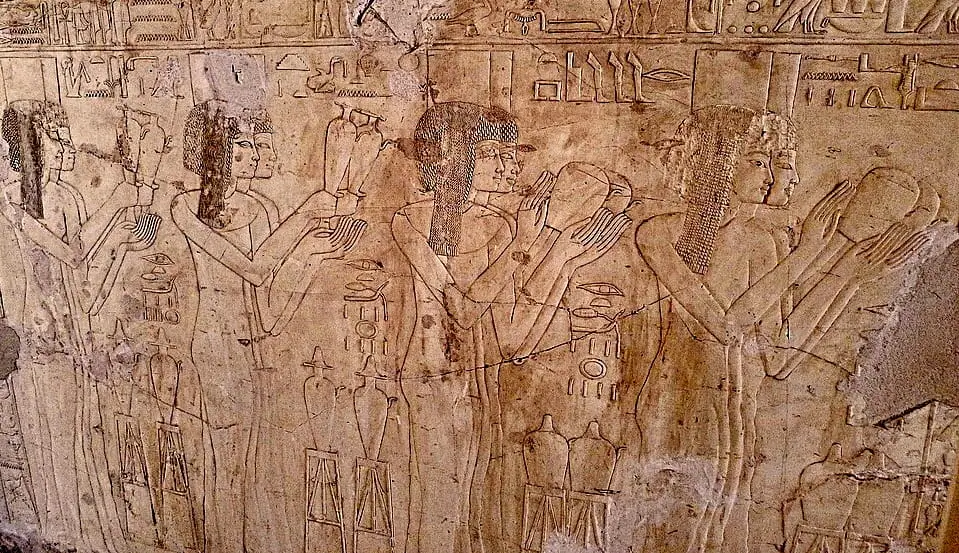
Furthermore, the tomb features celebrated scenes of acrobatic dancers and choral groups. These figures perform in honor of the King’s jubilee, capturing a sense of movement and energy that was revolutionary for the time.

In contrast to the rigid formality of earlier Egyptian art, these dancers appear in fluid, overlapping poses. Some perform backbends, while others clap in rhythmic synchronization. Because Kheruef’s artists utilized soft, rounded lines, the figures possess a lifelike quality that foreshadows the artistic shifts of the coming Amarna period. This section of the tomb serves as a vital primary source for understanding ancient Egyptian music, choreography, and ceremonial celebration.

Saqqara: Guide to Egypt’s Eternal Necropolis and the Evolution of the Pyramid

Saqqara is a vast ancient necropolis near Cairo, serving as the burial ground for the...
Related post
FUN

Artistic Transition: The “Amarna Shadow”

Architects and art historians often view TT192 as the “missing link” between traditional Egyptian aesthetics and the radical naturalism of Akhenaten’s reign.

Characteristics of the Transition Style

While the tomb technically belongs to the reign of Amenhotep III, the artistic style exhibits several “proto-Amarna” features. These include:

  • Elongated Proportions: Noticeable lengthening of the limbs and fingers of the royal family.
  • Physical Realism: A softening of the torso and a more prominent depiction of the abdomen, moving away from the idealized, muscular physique of the early 18th Dynasty.
  • Intimate Interaction: A subtle shift toward showing the royal family in more naturalistic, less stiff poses.

Portraits of Queen Tiye

Queen Tiye’s depictions in TT192 are arguably the finest in Egypt. The artists rendered her with a regal yet accessible grace, highlighting her status as a living goddess. By examining the fine details of her heavy Nubian-style wigs and intricate jewelry, scholars can trace how her iconography evolved to reflect her growing political power. This artistic excellence confirms that Kheruef employed the finest craftsmen available in the royal capital of Thebes.

Deir El-Medina: The Secret Village of the Valley of the Kings Artists

Discover Deir El-Medina, Luxor's ultimate "hidden gem." This is the secret 3,000-year-old village of the...
Related post
FUN

Visiting the Asasif Necropolis

For the modern traveler or tour operator, the Tomb of Kheruef remains a “hidden gem” that offers a quieter, more contemplative experience than the crowded valleys nearby.

Location and Accessibility

The tomb sits in the Asasif Necropolis, located in the valley leading to Hatshepsut’s Temple at Deir el-Bahari. Because it sits lower in the valley than the Tombs of the Nobles, it is easily accessible for those already visiting the Deir el-Bahari complex.

Expert Visiting Tips

  • Lighting is Key: To truly appreciate the delicate low-relief carvings, visit in the early morning or late afternoon. The angled light emphasizes the depth of the carvings, which can look “flat” under the midday sun.
  • Photography: Ensure you have a permit. The vast courtyard provides excellent wide-angle opportunities that are impossible in the cramped corridors of other Theban tombs.
  • Combined Itinerary: Pair a visit to TT192 with the nearby Tomb of Pabasa (TT279) and Tomb of Ankh-hor (TT414) for a comprehensive look at the evolution of the Asasif area across different dynasties.

The Eternal Palace of Kheruef

The Tomb of Kheruef (TT192) stands as a monumental bridge between two eras. It captures the absolute zenith of 18th Dynasty wealth and the first stirrings of a cultural revolution that would soon change Egypt forever.

Ultimately, Kheruef’s “Palace of the Dead” succeeds in its original mission: it preserves the glory of his patrons, Amenhotep III and Queen Tiye, in unperishable stone. For the student of history, the site offers an unmatched look at ancient engineering and ritual; for the traveler, it offers a moment of profound beauty amidst the sands of Luxor. By protecting and studying this immense courtyard, we maintain a direct link to the golden age of the Pharaohs.

FUN
God_Anubis_Icon

2 week group private tour – Egypt and Jordan

Our US-based agency takes small groups of experienced travelers to the most beautiful and exotic places in the world. In Dec ’19 – Jan ’20, we used the services of Egypt Fun Tours to plan, organize, and conduct an amazing trip to Cairo, Giza, Saqqara, Luxor, and Aswan. The New

More »
6 Days Luxury Tour {Egypt Treasures} - Cairo and Nile Cruise Affordable Tour Package

A trip of a lifetime in a 10 hour layover!

We recently scheduled a layover tour in Cairo through Egypt Fun Tours. Our layover was 10 hours and we scheduled the tour just about a day and a half before our arrival. When we arrived in Cairo we very easily made our way out of the airport (after getting our

More »

Great one day tour in Cairo

My husband and I had a long layover in Cairo on our way to Kenya in 2010. Since we had never been to Egypt, we decided to sign up for a one-day tour with Egypt Fun Tours Day Trips. Our guide was there when we arrived and quickly guided us

More »

Tour of Cairo

Despite a late start due to car trouble, Mohamed more than made up for it with his incredible knowledge and dedication. His explanations were detailed and thoughtful, and he went above and beyond to make sure we had a great experience. A memorable and informative tour, thanks to Mohamed’s hard

More »

11 Wonderful Hours in Cairo

I had an 11 hour layover in Cairo, and it couldn’t have been better spent than with Manal from Egypt Fun Tours. I was able to adjust my tour once we left the airport and Manal had some really great suggestions when I told her what it was I wanted

More »
God_Anubis_Icon

Top-rated Tour Packages

God_Anubis_Icon