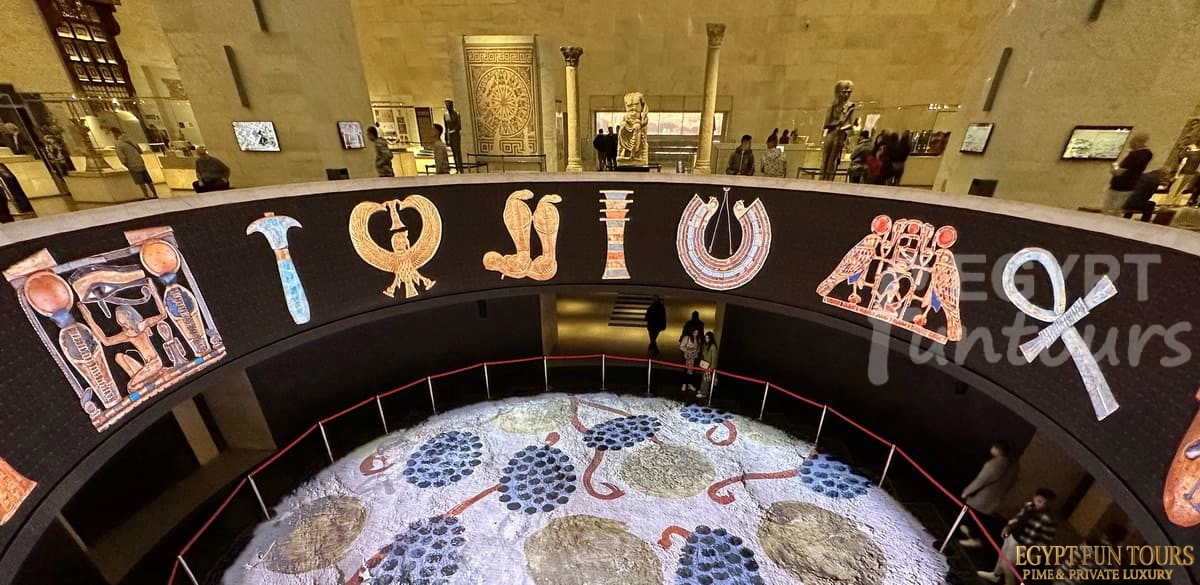
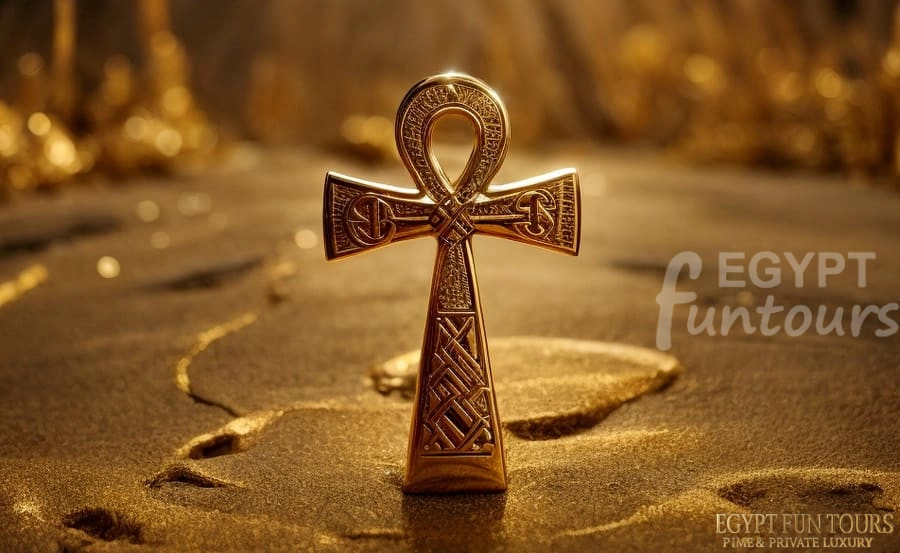
The Ankh is a popular ancient Egyptian symbol of life and immortality. Its unique design—a cross with a loop—is highly recognizable. The loop represents the eternal soul, and the vertical line symbolizes the connection between the earthly and spiritual realms. Ancient Egyptians believed the Ankh could grant eternal life and protection from evil.

The Djed pillar is an ancient Egyptian symbol representing stability, endurance, and strength. Resembling a tree trunk, it is closely associated with the god Osiris. Many believed the pillar represented Osiris’s backbone, symbolizing his power and ability to maintain order.
People often depicted the Djed pillar in religious ceremonies, rituals, and on amulets and temple walls. They saw it as a powerful symbol of protection and regeneration, believing it warded off evil and ensured the continuity of life. They also linked it to the concept of rebirth and resurrection. Its presence in tombs signified the deceased’s hope for eternal life. Today, the Djed pillar continues to symbolize the ancient Egyptians’ reverence for stability and the eternal cycle of life.
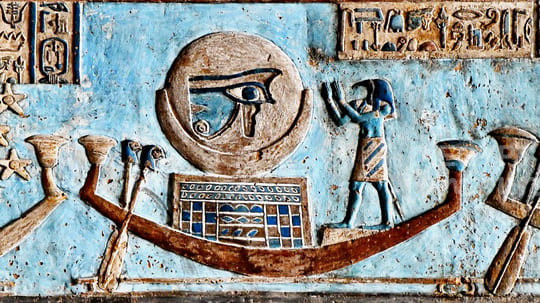
The Eye of Horus is an ancient Egyptian symbol of protection, healing, and divine power. It is a stylized eye associated with the god of the sky, Horus. After Horus lost his left eye in battle, the god Thoth restored it, making the Eye of Horus a symbol of healing and restoration. People believe the eye’s markings represent mathematical fractions. Artists often depicted the Eye of Horus on amulets, jewelry, temples, and tombs as a powerful symbol of protection and good fortune. Today, it remains a captivating symbol of ancient Egyptian beliefs in divine protection and insight.

The Eye of Ra, also known as the Udjat or the Eye of Re, is a powerful symbol in ancient Egyptian mythology, representing the all-seeing nature of the sun god, Ra. People associated it with Ra’s divine authority and solar power, believing it to be a protective symbol that radiated the sun’s fiery energy and brought balance.
In the creation myth, the Eye of Ra transformed into the destructive goddess Sekhmet before Ra tricked her into becoming the benevolent goddess Hathor. This story makes the symbol a representation of a duality: it is capable of both destruction and healing. Today, it represents the sun’s power and the watchful gaze of a divine protector.
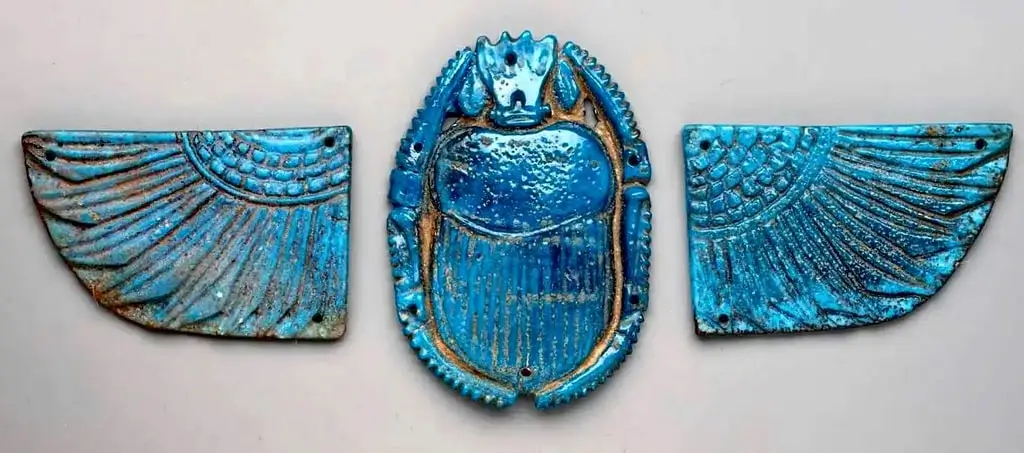
The Egyptian scarab beetle was a significant ancient Egyptian symbol. It represented the sun and was associated with the god Khepri, symbolizing rebirth and renewal. The scarab also represented transformation and resurrection due to its lifecycle.
People believed the scarab had protective qualities and used it as an amulet for good luck and to ward off evil. Scarabs were often placed on the chests of the deceased to protect them on their journey to the afterlife. The scarab remains a powerful symbol of the ancient Egyptians’ beliefs in the transformative power of life and the eternal cycle of death and rebirth.

The Tjet, also known as the Knot of Isis, is an ancient Egyptian symbol that represents eternal life, fertility, and protection. Resembling a knotted linen band, it has a close association with the goddess Isis. Often depicted in red, the Tjet symbolized blood and life force. People believed it had magical and protective properties, so it became a popular amulet and jewelry adornment.
In mythology, the Tjet links to Isis’s resurrection of Osiris. The symbol, therefore, represents Isis’s protective, life-giving nature and her role in the eternal cycle of death and rebirth. Today, the Tjet remains a powerful emblem of protection and fertility.

The Shen symbol, a looped rope with a horizontal line, represents eternity and everlasting protection. The Shen was a symbol that people associated with the sun god Ra and believed protected the pharaoh. People wore the Shen as an amulet to symbolize divine protection. Its origins are linked to Ra’s solar boat, where the looped rope formed a protective coil. This symbolized the continuous cycle of life and the universe’s eternal nature. Today, the Shen symbol reminds us of the ancient Egyptians’ belief in eternal power and divine protection.
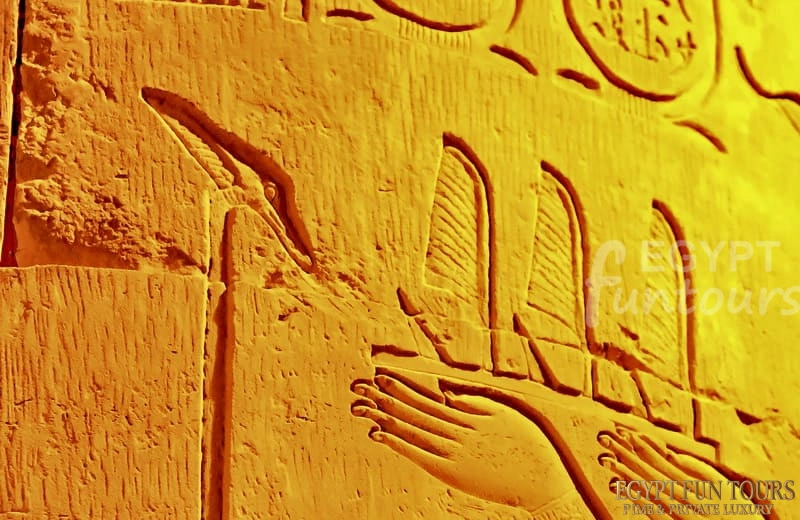
The Was scepter is an iconic symbol of power and authority in ancient Egypt. This ceremonial staff, topped with a stylized animal head, was associated with the god Set, the god of chaos.
It represented the pharaoh’s ability to rule with strength and control over chaotic forces. The scepter’s animal head symbolized loyalty, protection, and vigilance. Sometimes associated with the goddess Wadjet, it also represented healing. Today, the Was scepter stands as a symbol of leadership and the ability to maintain order.
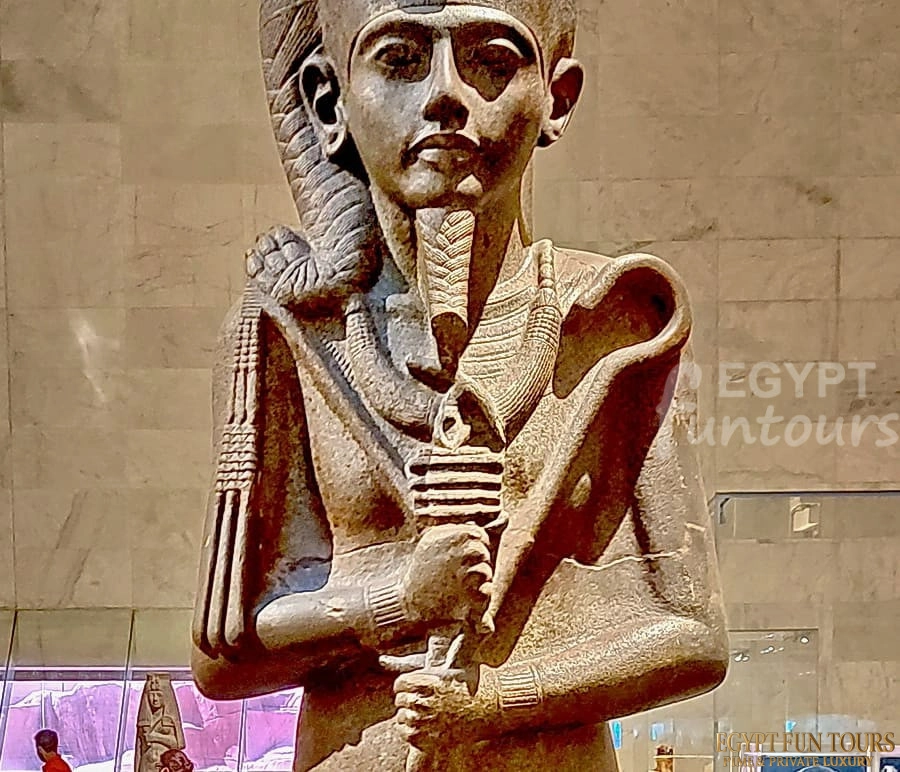
The Crook and Flail are ancient Egyptian symbols of pharaonic authority and power. The Crook (Heka) symbolizes the pharaoh’s role as a shepherd and protector. The Flail (Nekhakha) represents their ability to punish and maintain order. Together, they show the pharaoh as both a benevolent ruler and a stern enforcer of justice.
In mythology, the Crook is linked to the god Osiris, and the Flail to the god Horus. Pharaohs, as the gods’ earthly representatives, carried these symbols to show their divine authority. The Crook and Flail remain enduring symbols of leadership and power.

The Sesen, or lotus flower, was a sacred symbol in ancient Egypt, representing rebirth, purity, and enlightenment. In mythology, people associated it with the sun god Ra, who was believed to have emerged from the lotus at the beginning of creation. The flower’s ability to rise from muddy water and bloom beautifully symbolized the soul’s journey from darkness to enlightenment.
People depicted the Sesen in art, carvings, and jewelry as a reminder of the eternal cycle of life, death, and rebirth. Beyond its spiritual meaning, the lotus also had practical uses; people used its medicinal properties in remedies, and they used its fibers for textiles and paper. Today, the Sesen remains a powerful symbol of the human spirit’s transformative power.
The Egyptian Cartouche is an oval-shaped symbol that people used in hieroglyphic writing to enclose a pharaoh’s or deity’s name. People believed it was a protective amulet that immortalized a person’s name and represented the eternity of a pharaoh’s rule. Historically, cartouches are vital. They allow historians to decipher pharaohs’ names and learn about ancient Egypt’s history. Today, the cartouche remains a recognizable symbol of the pharaohs’ power and immortality.
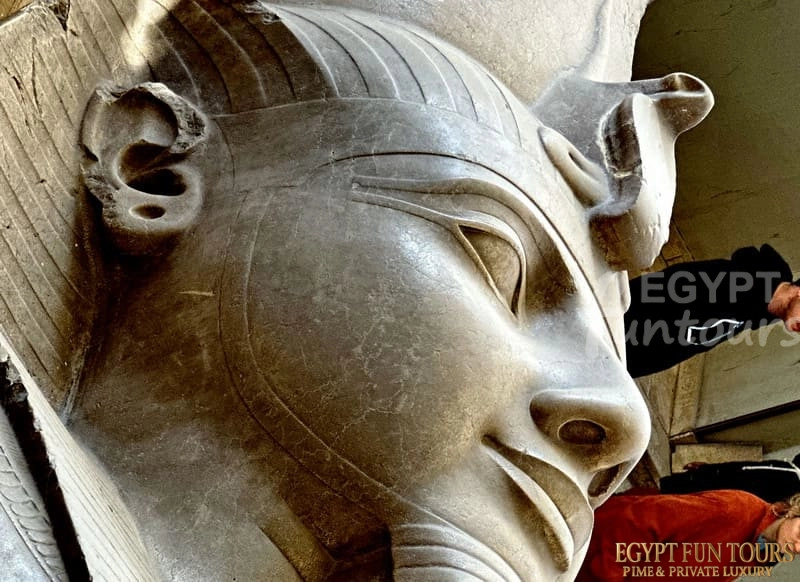
The Uraeus, or Egyptian Cobra, is a symbol of sovereignty and divine protection. We often depict the uraeus as a rearing cobra with a flared hood, and pharaohs wore it on the forehead of their crowns. This signified their divine authority and connection to the gods. People believed it had potent protective qualities, such as spitting venom at enemies. The uraeus was closely associated with Wadjet, the patron deity of Lower Egypt, and people also used it in religious ceremonies and temple decorations. Today, we still recognize the uraeus as a symbol of protection and divine sovereignty, embodying the ancient Egyptians’ belief in the power of their rulers and gods.

The nemes headdress is an iconic ancient Egyptian symbol, most associated with the pharaohs. This striped cloth headdress, often adorned with a golden cobra (uraeus), was a distinctive part of the pharaoh’s regalia. It symbolized their royal status and divine authority. The headdress was linked to the god Amon-Ra, connecting the pharaohs directly to the divine.
Beyond its symbolic use, the nemes provided practical protection from the sun. Pharaohs wore it during ceremonies to emphasize their role as intermediaries between the mortal and divine realms. Today, the nemes headdress remains a powerful symbol of ancient Egyptian royalty.
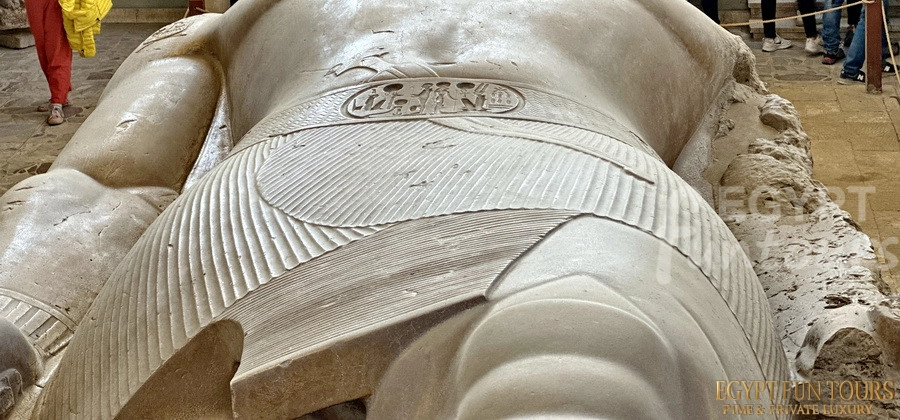
The shendyt is an ancient Egyptian royal symbol, a pleated linen skirt worn by pharaohs and high-ranking officials. It was a practical garment in the warm climate and a symbol of status and authority, differentiating the pharaohs from common people.
The shendyt held significant cultural and religious symbolism because it was associated with the god Osiris. By wearing the garment, pharaohs believed they embodied Osiris’s divine essence, reinforcing their right to rule. People also saw the shendyt as a symbol of fertility and regeneration. Today, the shendyt remains a representation of ancient Egyptian culture and pharaonic authority.
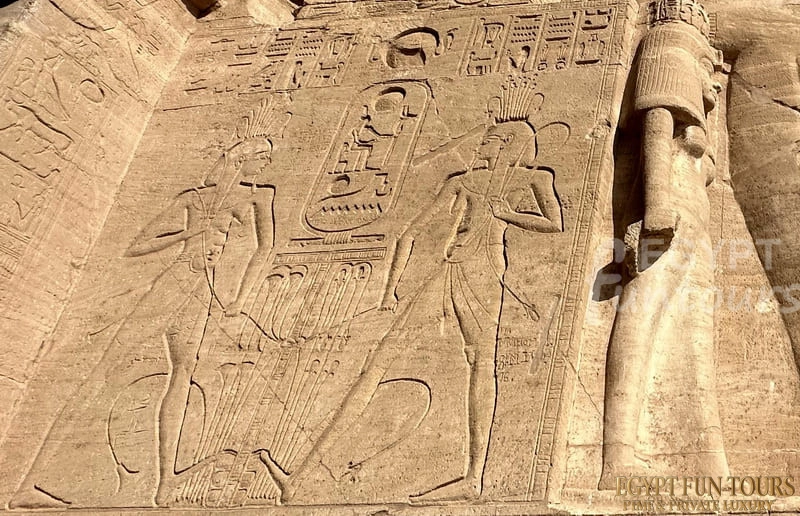
The Sema Tawi, or “Union of the Two Lands,” is an ancient Egyptian concept symbolizing the unification of Upper and Lower Egypt. Depicting bound papyrus and lotus plants, it represents the unified north and south.
This symbol signifies the pharaoh’s role as a unifier and the embodiment of divine order. It reflects the ancient Egyptians’ belief in the importance of unity and balance. The Sema Tawi is a powerful symbol of national identity and the fundamental principles of ancient Egyptian society.