The Pharaonic Village: A Living Journey Through Time

The Pharaonic Village is Cairo's premier "living museum," located on a lush island in the Nile. Founded by Dr. Hassan Ragab, it offers a motorized boat tour through history where actors reenact the daily life, farming, and industries of Ancient Egypt. The village features a world-class replica of Tutankhamun’s tomb, 12 specialized museums, and a functioning papyrus farm. Perfect for families and history enthusiasts, it provides a tactile, immersive experience that complements the traditional artifact-heavy museums of Cairo.

Ancient Egypt Comes to Life

The Pharaonic Village offers a unique way to see history. It is not a typical museum with silent statues and glass cases. Instead, it is a “living museum” where history actually moves. Located on Jacob’s Island in the Nile, the village sits away from the noise of modern Cairo. Over 5,000 trees surround the island. These trees act as a green wall to block out the city and hide the 21st century.

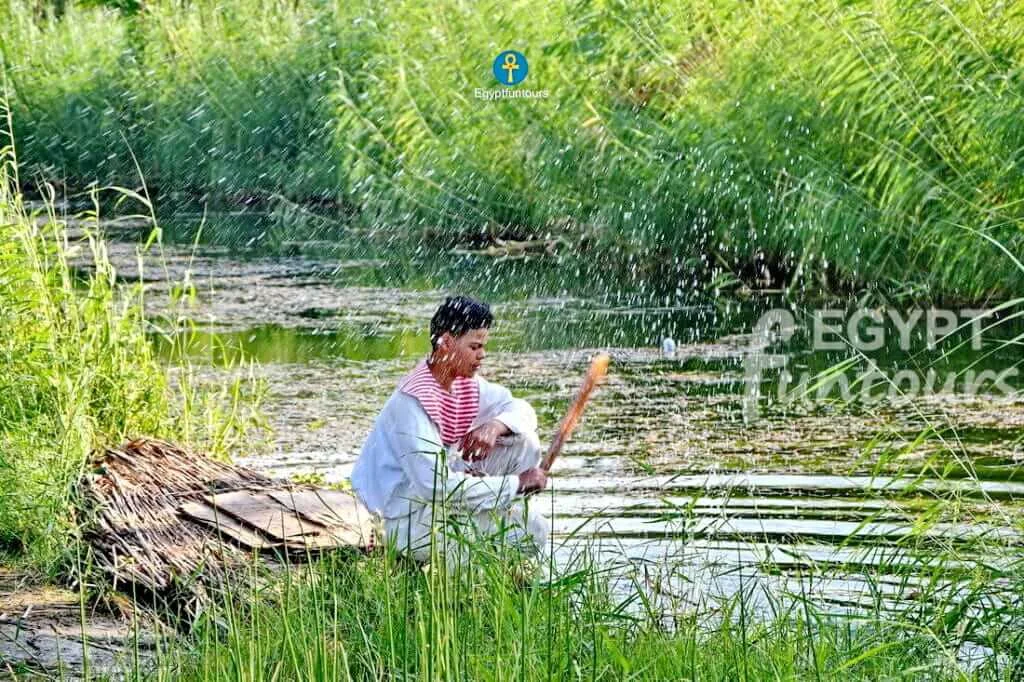
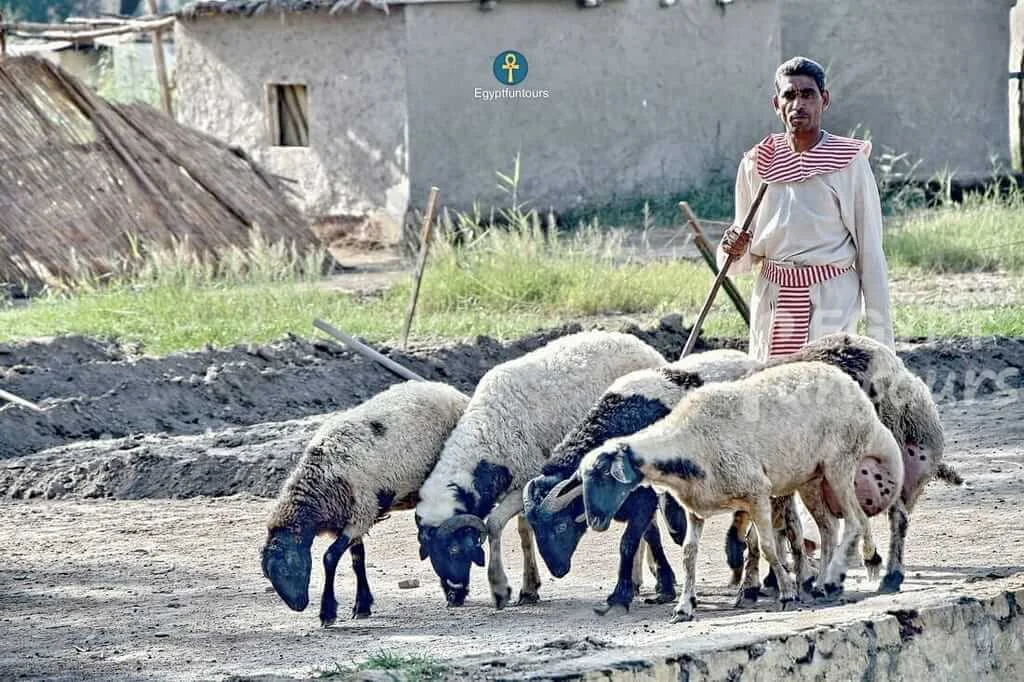
When you enter the village, you step onto a motorized barge. As the boat moves through the water, you see actors dressed as Ancient Egyptians. They farm the land, weave cloth, and carve stone using original tools. This experience makes the past feel real and human. It is the perfect place for families and students to see how the people of the Nile lived 3,000 years ago.

FUN

The Founder’s Legacy: Dr. Hassan Ragab’s Vision

The Founder’s Legacy Dr. Hassan Ragab’s Vision - The Pharaonic Village

One man’s dream created this incredible place. Dr. Hassan Ragab was an engineer, a diplomat, and a scientist. He wanted to do more than just read about history. He wanted to recreate it so everyone could touch it and feel it.

The Return of the Papyrus

Before he built the village, Dr. Ragab performed a botanical miracle. For centuries, the papyrus plant was extinct in Egypt. People knew it was important for ancient paper, but the plant no longer grew in the Nile.

  • The Search: Dr. Ragab traveled to Sudan and other parts of Africa to find the original seeds.
  • The Success: He brought the plants back to Egypt and grew them on this island.
  • The Industry: Because of his work, the papyrus industry returned to Cairo. Today, you can watch the village workers cut the stalks and press them into paper exactly as the Pharaohs did.

Building an Island of History

Dr. Ragab spent years turning a simple island into a historical masterpiece. He didn’t just build buildings; he built an environment.

  1. The Green Shield: He planted thousands of trees to ensure visitors could not see the modern apartment buildings of Giza.
  2. The Canal System: He designed a series of canals so that visitors could view the history from a boat. This mirrors how the ancient Egyptians traveled along the Nile.
  3. The Research: He worked with historians to ensure the clothes, tools, and houses looked accurate. Consequently, the village became a bridge between modern science and ancient tradition.
FUN

The Waterway Tour: Sailing Into the Past

The Waterway Tour Sailing Into the Past - The Pharaonic Village

The adventure begins on a motorized barge. This boat acts as a floating theater. It carries you through a network of narrow canals. High reeds line the water. These plants hide in the modern world and create a sense of mystery.

The Living Tableaux

As the boat glides forward, you see different scenes on the riverbanks. Professional actors stay in character and perform daily tasks.

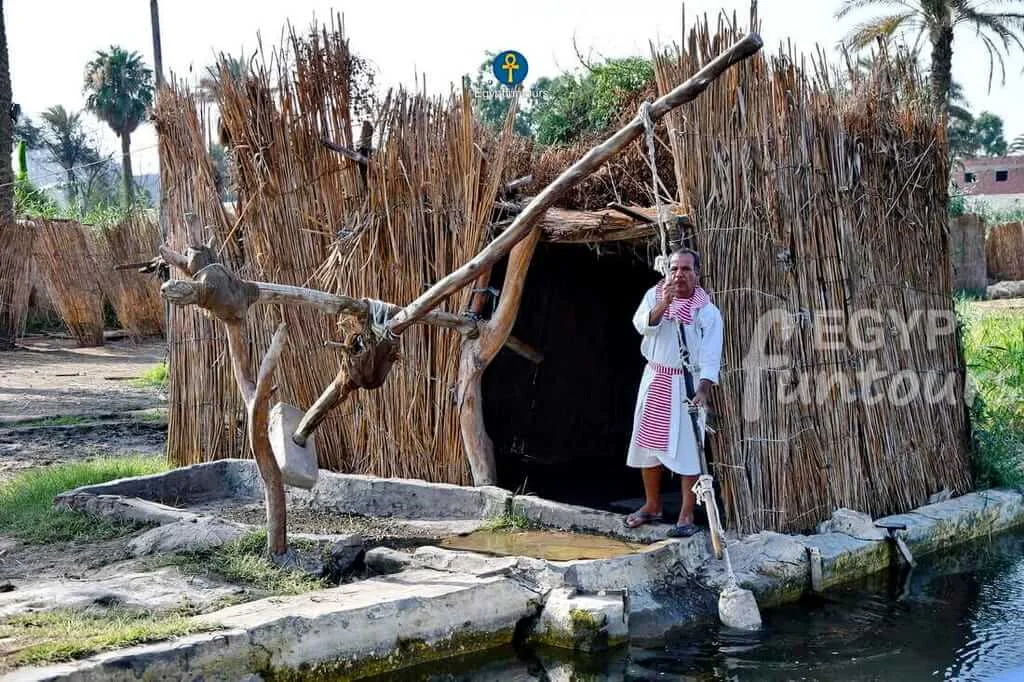
  • Agricultural Scenes: You will see men using the Shadoof. This ancient tool lifts water from the Nile to irrigate the fields. Nearby, farmers use wooden plows pulled by oxen to turn the soil.
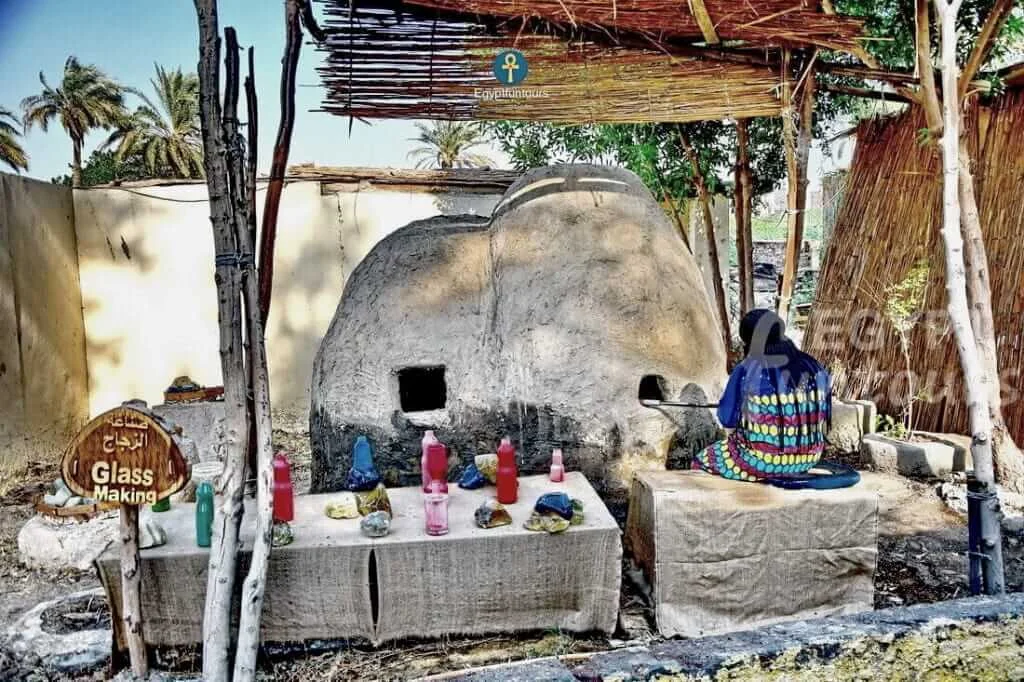
  • Industrial Crafts: The boat passes a group of women weaving linen on large wooden looms. Next, you see potters shaping clay on spinning wheels. They bake the pots in small mud-brick kilns.
  • The Mummification Process: One of the most famous stops shows a high priest preparing a body for the afterlife. He explains the tools and the salts used to preserve the skin.

The Story of Moses

The tour also includes a religious element. You will see a scene depicting the discovery of baby Moses in the bulrushes. The village uses the natural landscape of the Nile to make this biblical story feel authentic. It reminds visitors that the Nile is a sacred river for many different cultures.

FUN

The Crown Jewel: The Tutankhamun Tomb Replica

The Crown Jewel The Tutankhamun Tomb Replica - The Pharaonic Village

Many people visit the Pharaonic Village specifically for this exhibit. While the original tomb is in Luxor, this life-sized replica is world-famous for its detail.

A Masterpiece of Reproduction

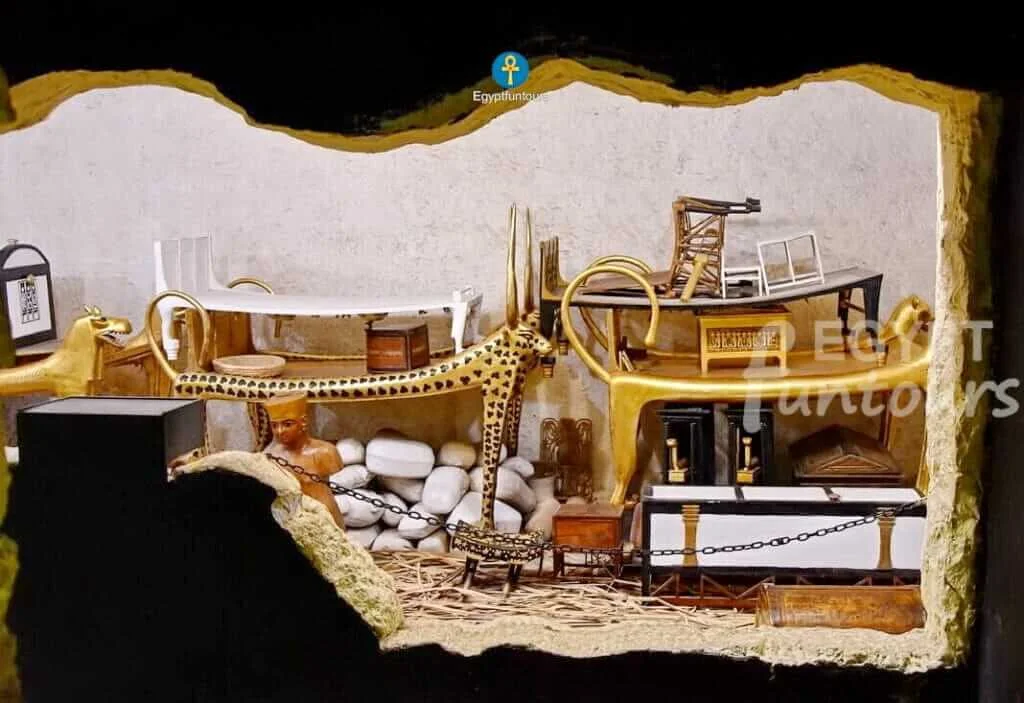
Dr. Ragab hired expert artists to recreate every single item found in the tomb of the boy king. They used the same materials as the ancients, including wood, gold leaf, and stone.

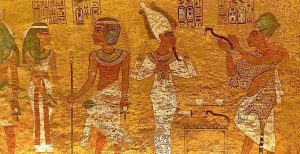
  • The Antechamber: You enter a dark room filled with golden chariots, animal-shaped couches, and white chests. It looks exactly as it did when Howard Carter first opened the door in 1922.
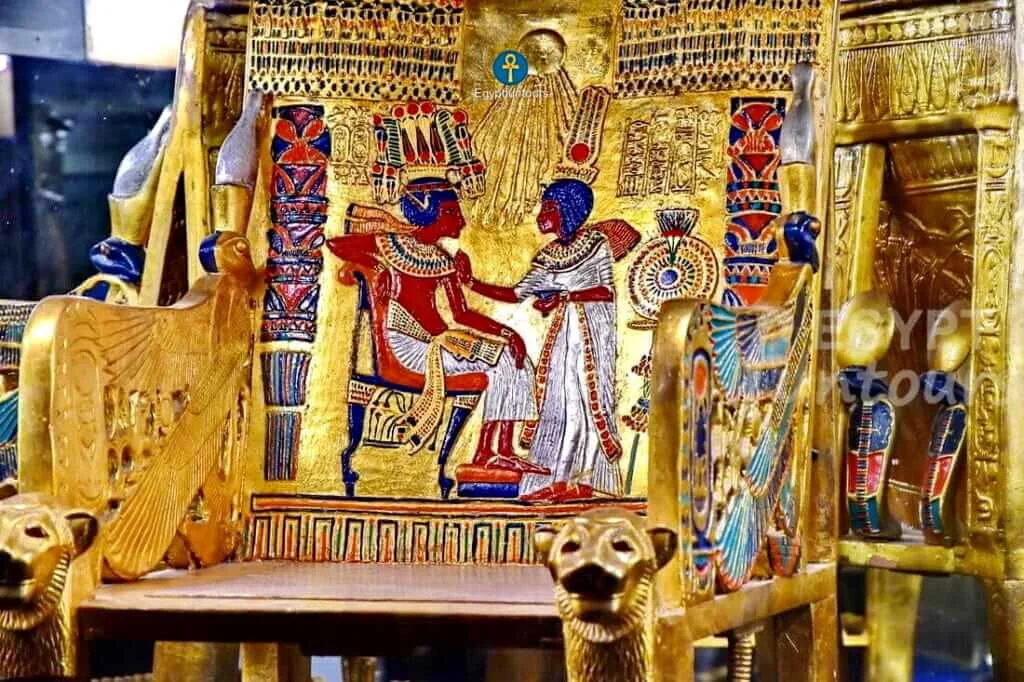
  • The Burial Chamber: You can walk right up to the massive golden shrines. These shrines fit inside each other like boxes. Inside the final shrine sits the replica of the stone sarcophagus.
  • The Treasury: This room holds the famous Anubis statue and the golden Canopic chest. Because you are closer to the objects here than in a traditional museum, you can see the intricate carvings and symbols much better.

Why the Replica Matters

Why the Replica Matters

In the real tomb in Luxor, the walls are fragile. Many of the treasures are now in the Grand Egyptian Museum. However, in this replica, you see everything together in one place. It allows you to understand the scale of the wealth buried with a minor king. It provides a “detective” experience that feels very different from looking at a glass case in a gallery.

FUN

The 12 Museums of the Village

The 12 Museums of the Village - The Pharaonic Village

The Pharaonic Village is not just about the Pharaohs. It also houses 12 smaller museums. These galleries cover different parts of Egyptian history and culture.

  1. The Mummification and Medicine Museum: Learn how ancient doctors performed surgery and which herbs they used for healing.
  2. The Ancient Boats Museum: See models of the massive ships that carried giant obelisks down the Nile.
  3. The Presidential Museums: These rooms celebrate modern leaders like Gamal Abdel Nasser and Anwar Sadat. They display personal items, photos, and letters.
  4. The Cleopatra Exhibit: This section tells the story of the famous Greek queen and her relationships with Rome.
  5. The Napoleon Museum: Discover the history of the French expedition to Egypt and how they discovered the Rosetta Stone.

Daily Life: Stepping Into the Homes of the Past

Daily Life Stepping Into the Homes of the Past

The Pharaonic Village does not just show you how people worked. It shows you where they lived. You can walk through full-scale models of ancient buildings. These structures follow the exact architectural plans found in archaeological sites like Tell el-Amarna.

The Nobleman’s House

This exhibit shows the luxury of the upper class. Wealthy Egyptians lived in large, airy villas.

  • The Layout: You enter through a grand gateway into a central courtyard. The house features a large reception hall for guests.
  • The Comforts: Look for the “wind catchers” on the roof. These vents pulled cool air into the rooms. You will also see a private bathroom and a bedroom with a wooden headrest.
  • The Kitchen: In the back, you will find the kitchen area. Actors show how the family stored grain in large clay jars and baked bread in outdoor ovens.

The Farmer’s Cottage

Contrast the nobleman’s villa with the simple home of a peasant.

  • The Materials: Farmers built their houses using mud bricks and palm branches. These materials kept the interior cool during the day and warm at night.
  • The Lifestyle: Most common people lived in one or two rooms. They shared their space with their animals. You can see the simple sleeping mats and the basic stone tools they used for grinding corn.

Family Fun and Modern Amenities

Family Fun and Modern Amenities - The Pharaonic Village

While the village focuses on history, it also provides modern entertainment. This makes it a popular destination for families with young children.

Cleopatra’s Studio

Do you want to look like a King or Queen? In this professional photo studio, you can dress up in high-quality Pharaonic costumes.

  • The Outfits: They provide wigs, jewelry, and robes for men, women, and children.
  • The Setting: You can pose on a replica throne or in front of a temple backdrop. It is the most popular souvenir in the village.

Tut Land: The Amusement Park

If the children get tired of history, they can head to Tut Land. This area features classic carnival rides, a playground, and games. It allows parents to rest while the kids burn off energy.

Dining at the King Tut Restaurant

The village features a large restaurant overlooking the Nile.

  • The Menu: They serve traditional Egyptian dishes like grilled chicken, kofta, and rice.
  • The Atmosphere: Eating by the water provides a beautiful view of the passing feluccas (traditional sailboats). It is a peaceful way to end your journey through time.
FUN

Visitor Pro-Tips: How to Plan Your Trip

To get the most out of your visit, follow these expert suggestions:

  1. Choose the Right Ticket: The village offers different ticket tiers. The “Full Package” includes the boat tour, all 12 museums, the Tutankhamun tomb, and lunch. It offers the best value.
  2. Timing is Everything: Start your tour early in the morning, around 9:00 AM. The boat tour is much more comfortable before the midday sun hits the water.
  3. Bring Small Change: While your ticket covers the entrance, it is polite to give a small tip (Baksheesh) to the actors if they pose for a photo with you.
  4. Visit the Gift Shop: The village produces its own papyrus. This is one of the few places in Cairo where you can be 100% sure you are buying genuine papyrus made from the local plants.

Frequently Asked Questions (FAQ)

Is the Pharaonic Village “cheesy”?

Some people find the live reenactments a bit simple. However, it is an educational tool. It is the only place in Egypt where you can see the process of history—how the tools worked and how the houses were built.

How do I get to the Pharaonic Village?

The village is on the west bank of the Nile in Giza. The easiest way is to take an Uber or Careem to “The Pharaonic Village” on Al Bahr Al Aazam Street. You can also reach it via the Metro (Sakiat Mekky station), but you will still need a short taxi ride to the entrance.

The Bridge Between Eras

The Pharaonic Village is a vital part of Cairo’s tourism. It transforms dry history into a vivid, breathing world. By visiting this island, you support the preservation of ancient crafts and the legacy of Dr. Hassan Ragab. It is a place where the 21st century vanishes, and the glory of the Pharaohs takes center stage.

Egypt Overland Tour of Cairo, Aswan, Luxor, and Hurghada...
Private guided tours of Cairo, Alexandria, and White Desert camping....

Layover Tour in Cairo

This August, my boyfriend and I had quite a long layover in Cairo, 9 hours to be exact. Instead of wasting our time at the airport, we decided to do a layover tour of the city. I had been before, but my boyfriend hadn’t, so we wanted to hit the

More »

Amazing tour to the pyramids of Sakkara and Dahshur

This week we had a great tour with Mohamed to the pyramids of Sakkara and Dahshur, as well as Memphis. He tailored the tour to our preferences, took a lot of time with us, and gave us detailed background information on everything. It was also great that he never tired

More »

Excellent Adventure

These guys put together an amazing itinerary that allowed me see the sunrise at the sun festival in Abu Simbel, King Tut’s tomb, and mask! That was just the tip of the iceberg. Aswan, Kom Ombo, Edfu and Luxor. So much visited with plenty of rest time. An amazing trip

More »

Day trip to Wadi el Hitan and Wadi el Rayan

We went on a full-day trip to Wadi el Hitan and Wadi el Rayan with Mohamed (Hamada). Mohamed was a wonderful guide, always making sure we had plenty of water and enough to eat, and providing us with information about the area and Egypt more generally. He also gave us

More »
Isis with wings

Top-rated Tour Packages

Isis with wings