The Pyramid of Hawara: Amenemhat III’s Mud-Brick Marvel

Discover the Pyramid of Hawara, the 12th Dynasty tomb of Pharaoh Amenemhat III, located in the Faiyum oasis. While the mud-brick pyramid itself is now heavily eroded, it is famous for its massive, attached mortuary temple. This legendary complex, known as the "Labyrinth," was described by Herodotus as a 3,000-room wonder that surpassed the Giza pyramids.

The Pyramid of Hawara

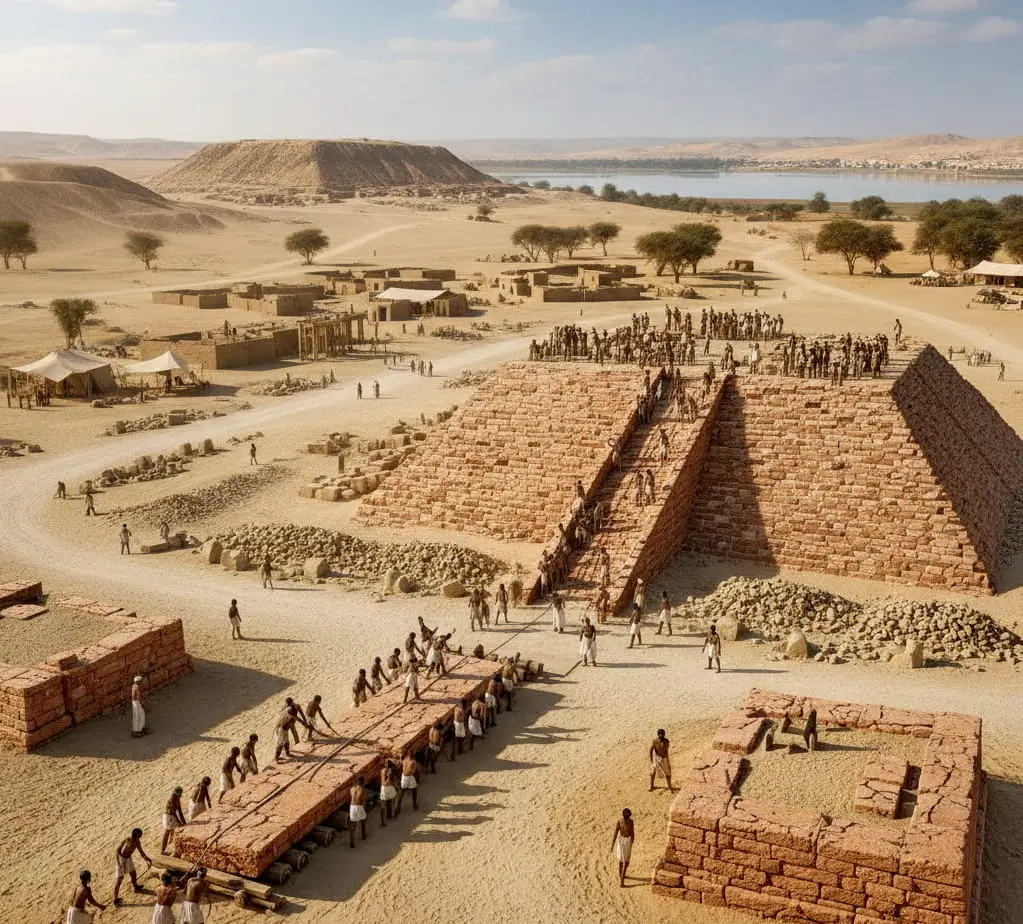
About 9 kilometers east of the Faiyoum oasis stands the Pyramid of Hawara. Builders constructed it for Amenemhet III, the sixth pharaoh of the 12th Dynasty, who reigned around 1850 B.C. The pyramid was built from brick stones and later covered in limestone, earning it the nickname “the Black Pyramid.” This massive structure, when intact, measured 58 meters high with a base 100 meters long on each side.

The Village Of Hawara

The town of Hawara sits 9 kilometers southeast of El Fayoum, one of Egypt’s most beautiful places. The settlement is about 100 kilometers southeast of Cairo and people have known it since ancient times as Hat Wa’art, which means “the footprints.” Later, its name became Laprincess. Some historians think that this name came from Amenemhat III’s Temple in Hawara, the “Laprent,” or “the temple placed at the lake’s outlet.” Archaeologists discovered some of the most beautiful portraits in Hawara, now known as “the Portraits of the Fayoum.” These are 146 painted portraits of various people dating from the first to third century A.D.

FUN

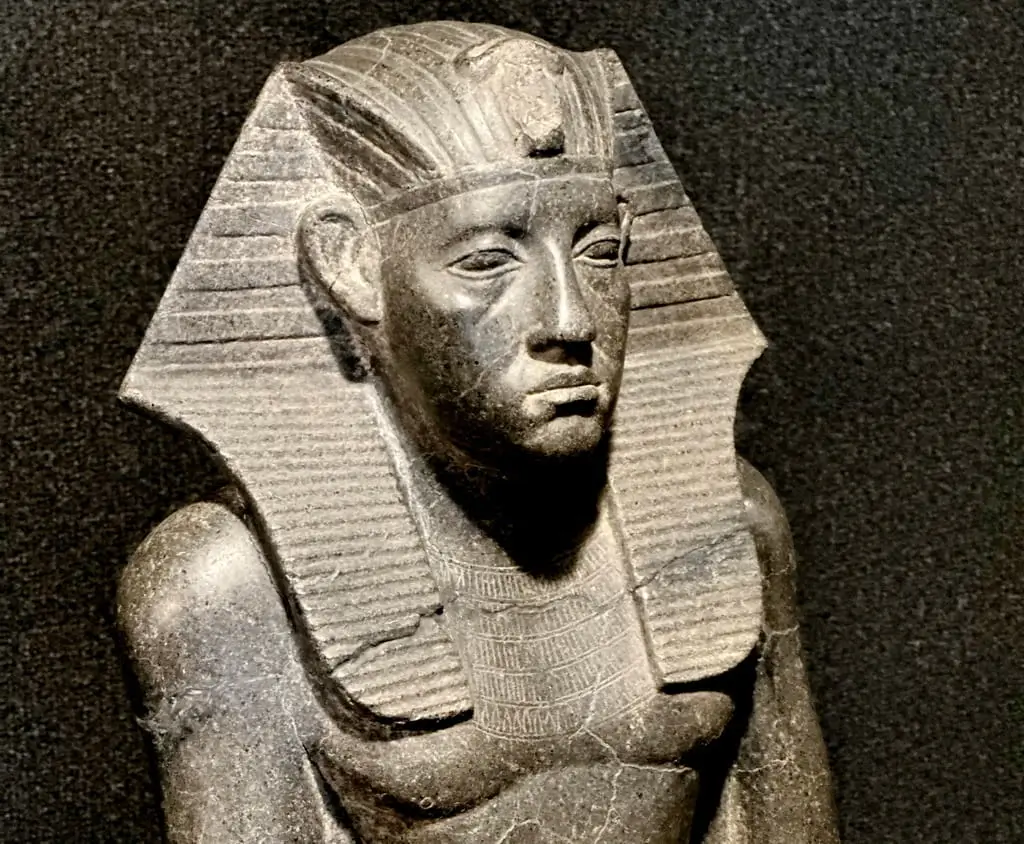
About King Amenmehat III

About King Amenmehat III

In the nineteenth century B.C., King Amenmehat III ruled Egypt and erected the Pyramid of Hawara. He was the son of King Sesostris III, who achieved tremendous accomplishments during his reign, including establishing harmonious political relations with Egypt’s neighbors to the north and east. Sesostris III also succeeded in bringing Nubia, lying to the south, completely under Egyptian rule. Because of all of his successes and successful military operations, Sesostris was able to give over a powerful kingdom to Amenmehat III, his son and his successor, permitting Amenmehat III to continue his father’s achievements and rule a generally stable country.

Amenmehat III’s Reign

Amenemhat III reigned over Egypt for about 45 years. He followed the path of his 12th dynasty forefathers. He improved Egypt’s economy and expanded cultivated land. In fact, he utilized a significant portion of the vast Qarun Lake. He added 17,000 acres to the land planted in the Fayoum region. Like many of his forefathers, Amenemhat III had various construction projects in the region. These include his pyramid and funerary temple at Hawara. He also built parts of the Temple of Madinat Madi, which he dedicated to the deity Sobek. Amenemhat III also showed interest in mining resources for his buildings. He prospered from the mining of turquoise in Sinai under his reign. He also built extensions at the Temple of the Goddess Hathor in Serbet El Khadim in Sinai.

FUN

The Tomb of His Wife

Archeologists discovered the tomb of Amenemhat III’s beloved wife, Aat, near his Dahshur pyramid, which he built before his other achievements in the Fayoum. In truth, the king was never satisfied with his pyramid in Dahshur because it had challenges and flaws that emerged during the construction process. This is why he directed his efforts, money, and time to the Pyramid of Hawara.

The Construction of The Pyramid of Hawara

Following his disastrous effort at Dahshur, Amenemhat III wanted to ensure that his new pyramid in Hawara would never collapse. This is why the engineers built it at a much lower angle than the previous pyramid in Dahshur. There was a smaller pyramid on top of the main pyramid. The bottom plan and form of the Hawara Pyramid were extremely intricate. This design may have been influenced by the Step Pyramid of Saqqara, which was completed early in the Old Kingdom era.

The first difference between the Pyramid of Hawara and previous pyramids built during the Old Kingdom was that Amenemhat III made the entrance in the southern section. Previously, the entrance was always in the northern section of the pyramids.

The King had a brilliant idea to deceive any criminals who wanted to steal the valuables inside the pyramid. Amenemhat III built a long staircase that led robbers to a small room they mistook for the burial chamber. The real burial chamber was accessible by a narrow path on the ground. A massive stone weighing more than 45 tonnes obstructed this entrance.

To deceive the robbers who were frequent at the time, the entrance to the Hawara pyramid was constructed in the western part of the pyramid and led to the first room of the pyramid. Following that, one finds oneself in a hallway that, in the end, leads nowhere. A secret opening in the ceiling leads to another route that travels in three directions: east, north, and finally west, making it much more difficult to reach the antechamber that allows the traveler to finally access the burial chamber.

FUN

The Design of the Pyramid of Hawara

The Design of the Pyramid of Hawara

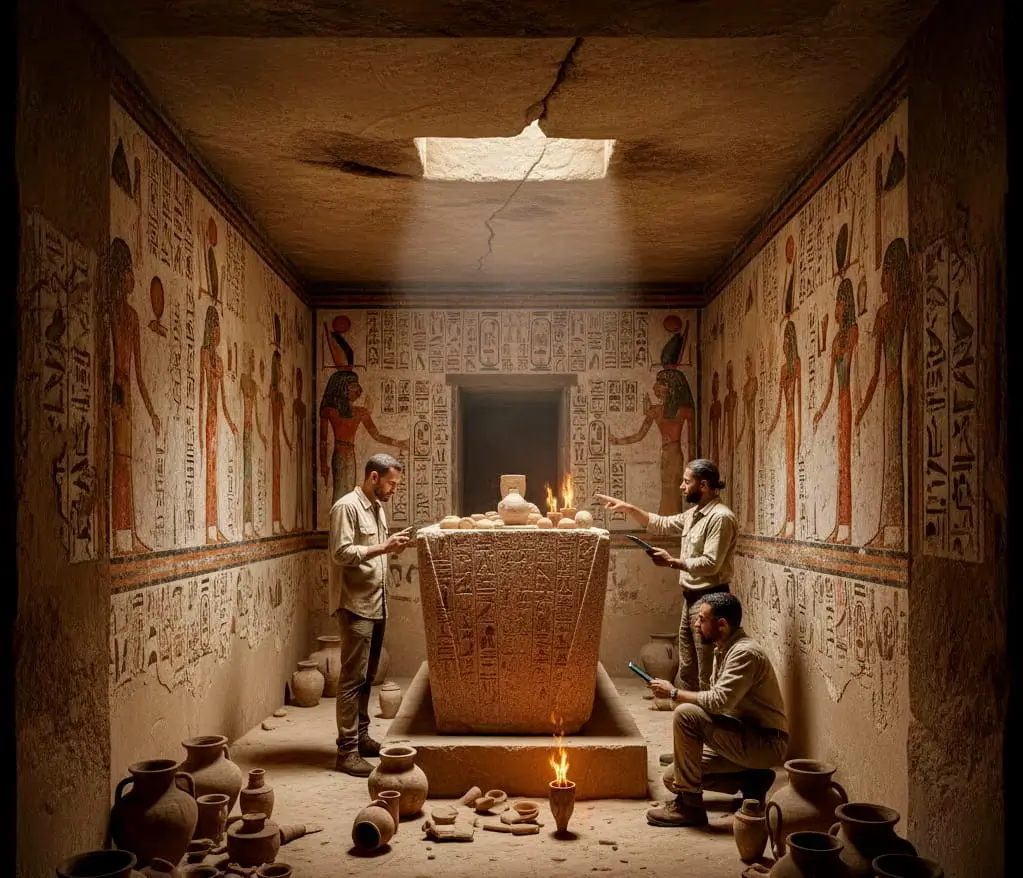
Craftsmen carved the burial chamber of the Pyramid of Hawara from rock into a rectangle. They then placed a massive single piece of quartzite inside this hollow. At the end of the construction process, they carefully removed this quartzite to create the burial chamber. It became a chamber with four walls, each half a meter thick, seven meters high, and two and a half meters broad. Despite all of Amenemhat III’s attempts to preserve his pyramid at Hawara, robbers were able to access the burial chamber. They entered through a breach in the roof and stole all of the valuable and significant objects the priests had placed there.

FUN

Quartzite Sarcophagus

The Ancient Egyptians built the Hawara pyramid with the King’s sarcophagus. They made it of quartzite and placed it within the burial chamber. Builders placed three stone blocks on top of the large stone used to close the burial chamber opening. They built the entire pyramid on top of these stones. They created the interior corridors of the pyramid in a wonderful artistic manner. This was to trick thieves who specialized in stealing the riches and jewels buried with ancient Egypt’s kings and queens. However, as the Pharaohs’ engineers developed new ideas to guard the pyramids, the thieves perfected their skills. They were able to remove all of the items placed in the burial chamber.

The Nefruptah Tomb

The Nefruptah Tomb - Pyramid of Hawara

One and a half kilometers north of the Hawara Pyramid, the tomb of Princess Nefruptah, King Amenemhat III’s daughter, stands. It was built of limestone and once housed a granite sarcophagus that was later given to the Egyptian Antiquities Authority. When Nefruptah died, her family made a beautiful sarcophagus for her and placed it inside the king’s pyramid in Hawara. This went against the ancient Egyptian custom of placing only the king’s sarcophagus in his pyramid’s burial chamber. Archaeologists discovered an offering table, three silver dishes, and jewelry belonging to Princess Nefruptah inside her tomb at the Hawara Pyramid.

FUN

The Mortuary Temple Of Amenmehat III

The Mortuary Temple Of Amenmehat III

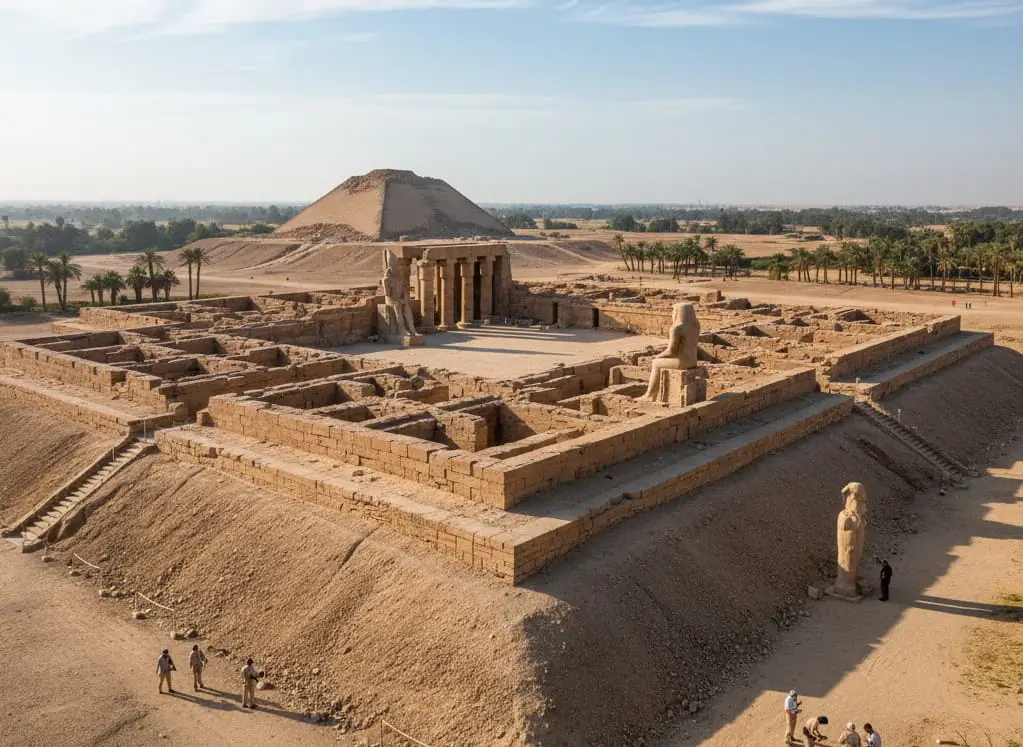
Beyond the Hawara Pyramid, the remains of Amenemhat III’s funerary temple still stand. When builders first constructed the pyramid and temple, they joined the two structures. The temple featured 12 roofed halls—six to the north and six to the south. The Mortuary Temple of Amenemhat III had a huge defensive wall and more than 300 separate halls and chambers. Builders placed half of these rooms below ground, where they housed the king’s tomb, and built the rest above ground. Today, nothing of this structure survives except for the ground-floor pillars; archaeologists have yet to excavate the underground level.

10 Days Egypt Trip of Cairo, Luxor, and Hurghada...
Explore the best of Egypt in two weeks including the Abu Simbel Sound and Light Show....

My Dream Came True

I had waited 60 years to get to Egypt; in fact, it was my 60th birthday gift to myself. I went with my oldest daughter, and the experience was excellent. It was meticulously planned by the tour company and was designed for me and my daughter. I never had a

More »
Memnon colossi of king amenophis III 4 min

Book with them, they are Professionals

It has always been my dream to visit Egypt. This was a beautiful tour, almost two years later, I can’t stop thinking about my time in Egypt, Valley of the Kings, Temple of Kom Ombo, Edfu, Luxor! I was able to add an eighth day to see Abu Simbel (a

More »
Souqs and Markets in Egypt - Egypt Fun Tours

Cairo walking tours

After a rocky start (the driver had been in an accident on his way to pick me up,) the company very quickly sent another driver/guide named Mohammed, who was a real pro. Thoroughly enjoyed my first day in Egypt!

More »
15-Day Historical Egypt Tour Package

all good!

we took pyramid and Cairo city tours and all went smoothly. The were very flexible to adapt to our requirements. Car, car driver and guide were great. very knowledgable and professional tour. Very recommendable

More »

Jeep Safari in the Sahara

I contacted Hani two days before I went to Egypt and asked him if it was possible to combine two of their tours as we were short on time. We had planned to stay in Cairo but with the uprising we decided it would be safed outside of the hot

More »
Isis with wings

Top-rated Tour Packages

Isis with wings