The Sacred Apis Bull: God Incarnate of Memphis

The Sacred Apis Bull of Memphis was a unique, living deity—the physical incarnation (Ba) of the creator god Ptah, identified by a precise set of 29 sacred marks. This revered bull lived a ritualistic life in Memphis, where his well-being reflected the prosperity of Egypt. Upon his death, he underwent elaborate mummification and was entombed in massive sarcophagi within the subterranean Serapeum at Saqqara. This deceased bull, or Osiris-Apis, was later transformed by the Ptolemies into the syncretic god Serapis, cementing the cult's influence across the classical world and leaving behind profound archaeological sites, like the Serapeum, which remain key destinations for modern visitors.

The Sacred Apis Bull: God Incarnate of Memphis

Ancient Egypt revered divinity in many forms. However, few were as unique as the Apis Bull. He was a living god, literally walking the earth. The bull served as the living manifestation (Ba) of the great creator god, Ptah. This allowed the divine creator of Memphis to interact directly with humanity.

The cult of the Apis Bull defined the capital city. His life centered in Memphis. His death required the most massive burial rituals in the vast underground Serapeum at Saqqara.

This guide explores his mythological origin and his meticulous selection process. We detail his ritual life and his ultimate transformation into the god Serapis. Your journey into the heart of Egyptian animal cults begins here.

First, we must understand this sacred bull’s divine lineage.
FUN

Divine Genetics: Apis’s Connection to Ptah and the Cosmos

Divine Genetics Apis's Connection to Ptah and the Cosmos

The Apis Bull represented a unique intersection of divinity. His primary role was the living face of Ptah, the patron of craftsmen and the creator god of Memphis. Ptah, the hidden intellect, used the Apis Bull as his visible spirit (Ba).

The Incarnation of Ptah

The bull’s essence was the life-force of Memphis. The bull symbolized fertility, often linked to the vital flooding of the Nile. Later, he absorbed solar power, connecting him to the sun god Re. This made the Apis Bull a comprehensive cosmic deity.

The Mother Cow

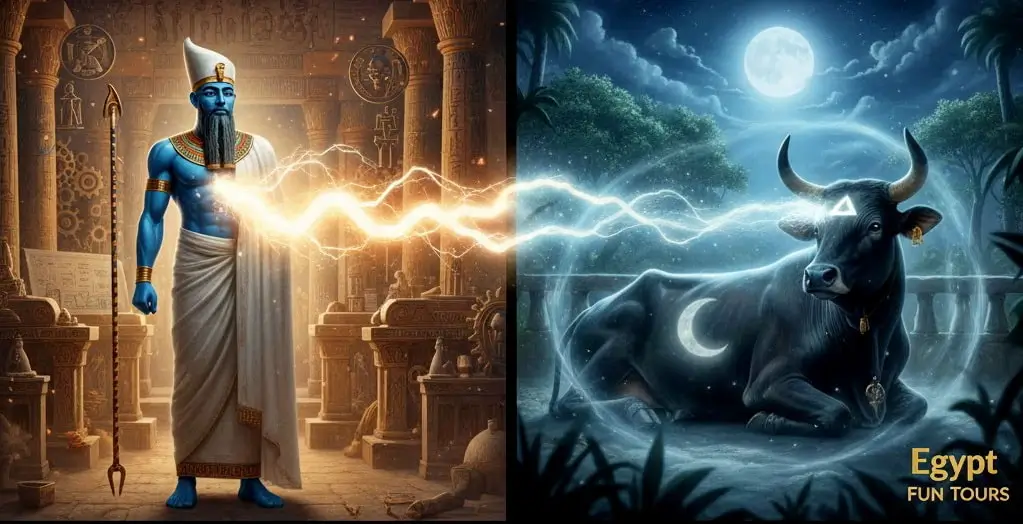
The mother of the Apis Bull received equal reverence. She was the Apis Cow. Egyptians believed she conceived the divine calf miraculously. Specifically, a bolt of lightning or a ray of moonlight impregnated her. She was often identified with the powerful sky goddess, Hathor. Clearly, such a unique god required an equally unique method of identification.

FUN

The Prophecy and Selection of the Apis Bull

The Prophecy and Selection of the Apis Bull

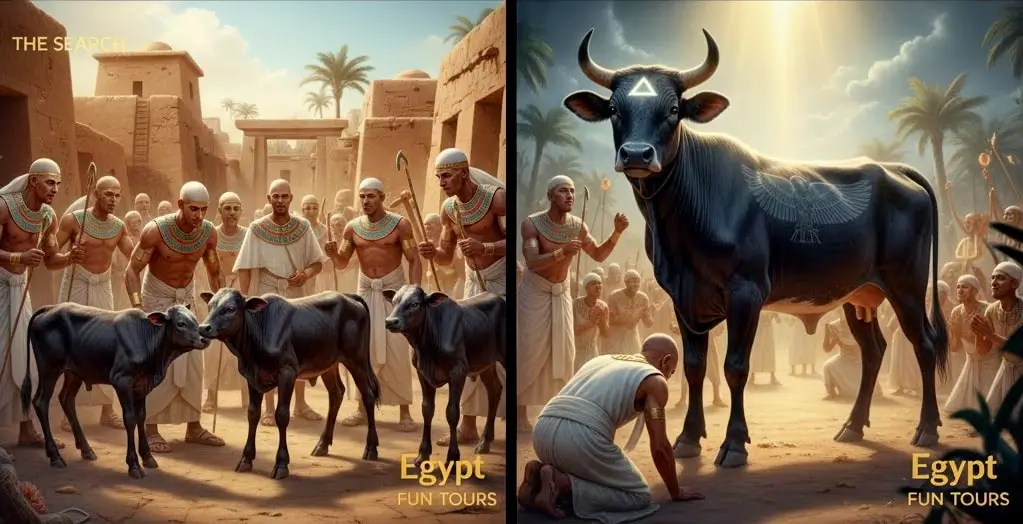
Finding the next Apis Bull was a matter of national religious security. Priests searched all of Egypt for a calf that matched the sacred prophecy. This selection was a major political and religious event. It demonstrated the divine sanction of the Pharaoh’s rule.

The Sacred Marks

The true incarnation had to display a precise set of 29 sacred markings. These were non-negotiable proof of his divinity.

Key features included:

  • A white triangle or square on his forehead.
  • The image of a vulture or scarab on his back.
  • A double-hair tail.
  • The image of a crescent moon on his flank.

Enthronement and Oracle

The chosen Apis Bull traveled in triumph to Memphis. He lived in luxury, served by high-ranking priests. The bull himself served as an oracle. Priests interpreted his movements. His actions provided direct divine answers to the people and the Pharaoh. Once identified, the living god’s daily life followed a meticulously planned ritual.

Life and Ritual in Memphis

The life of the Apis Bull was one of immense privilege and spiritual duty. His everyday life was structured by ritual in the heart of the capital city.

The Apis Bull’s Residence

The bull resided in the Apieion or Apiseum. This was a dedicated, lavish temple complex in Memphis. He enjoyed the finest care. Crucially, he shared his complex with his sacred harem of cows.

Public Processions and Festivals

The Apis Bull appeared at major annual festivals. For instance, during his birthday celebration, he was adorned with finery. Priests paraded him through the streets of Memphis. This rare public appearance drew a massive crowd. It was often the only time common people saw their god.

The Political Significance

The people believed the health of the Apis Bull dictated the prosperity of Egypt. A strong, long-lived Apis guaranteed good harvests and a legitimate Pharaoh.

The bull’s life was honored, but his death required the most elaborate and expensive burial ritual in all of Egypt. This led to the creation of one of the most mysterious and impressive sites in the entire realm of ancient archaeology.

Egyptian Phoenix Bennu: Myth, Symbolism, and Legacy

Forget the fire. The original legend is even better. Meet the Bennu, the Egyptian Phoenix....
Related post
FUN

The Apis Bull: Death and Immortality

The Apis Bull, Death and Immortality

The death of the Apis Bull triggered a national crisis and a massive religious undertaking. The bull’s passing meant intense public mourning. The subsequent burial ritual was arguably the most elaborate in Egypt, rivaling that of the Pharaohs.

The Burial Process

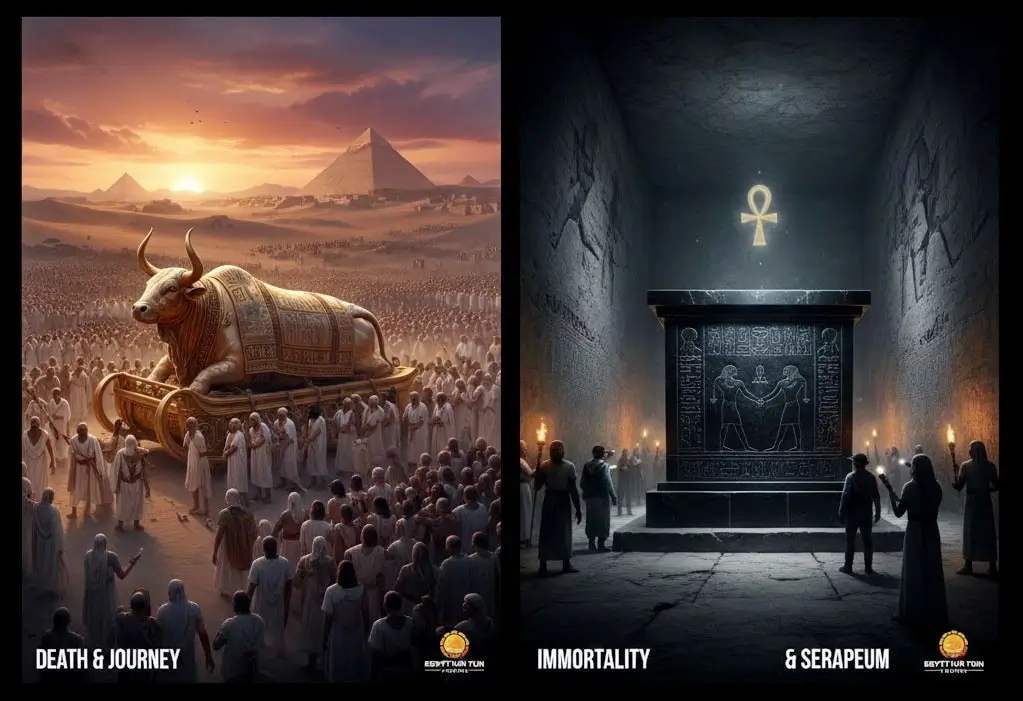
When the Apis Bull died, usually after 14 to 25 years, the entire nation entered a mourning period. Priests treated the bull’s body with royal reverence. It underwent a full mummification process, sometimes lasting 70 days. This prepared the divine vessel for eternity.

The Journey to Saqqara

The massive mummy then traveled in an incredible funeral procession. It went from Memphis, the city of the living, across the desert to the Serapeum at Saqqara. This was a journey of supreme religious significance, serving as a major pilgrimage for Egyptians.

The Serapeum Structure

The final resting place is the Serapeum, a hidden, subterranean marvel within the Saqqara necropolis. Archaeologist Auguste Mariette discovered it in the 19th century. It consists of a vast complex of carved rock tunnels. These tunnels contain side chambers. Each chamber holds one enormous, polished granite or limestone sarcophagus. Each sarcophagus weighs many tons. The scale demonstrates the profound devotion to the Apis Bull.

The union of the deceased Apis Bull with a greater god led to one of the most powerful theological developments of the Late Period.

Hathor, Sekhmet, and the Volatile Eye of Ra: Dual Power for Political Control

The pharaohs used the terrifying dual nature of the Volatile Eye of Ra as a...
Related post
FUN

The Great Fusion: Osiris-Apis to Serapis

The Great Fusion, Osiris-Apis to Serapis

Upon death, the Apis Bull did not disappear. Instead, Egyptian theology demanded his rebirth. This led to a powerful syncretism that created the last great god of ancient Egypt.

Osiris-Apis (Oserapis)

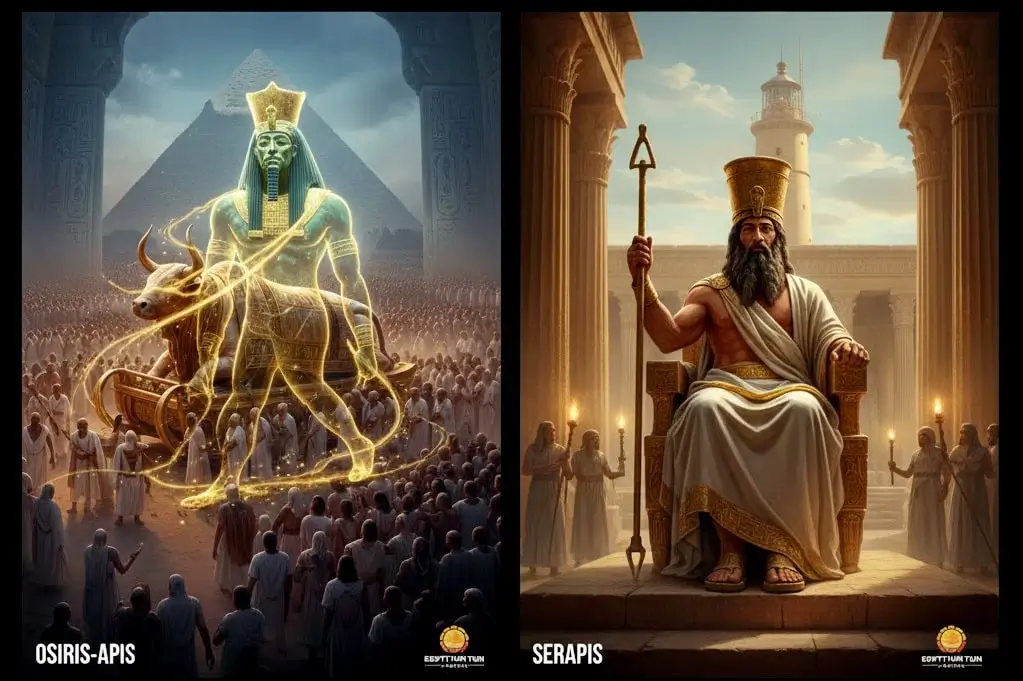
The deceased Apis Bull immediately merged with Osiris, the god of resurrection and the underworld. This created the composite deity Osiris-Apis (Oserapis). This fusion guaranteed the bull’s eternal power in the afterlife, securing the future of the nation.

The Ptolemaic Intervention

When the Greek Ptolemaic dynasty took control of Egypt, they needed a common god. This god had to appeal to both Greek and Egyptian worshippers. They chose Osiris-Apis. They hellenized him, creating the new state god, Serapis.

The God Serapis

Serapis became the patron god of Alexandria. He was depicted as a Greek man with a beard, similar to Zeus. He wore a modius (a grain basket) on his head. This combined the Egyptian concepts of fertility and the underworld with Greek authority. The creation of Serapis demonstrates the enduring legacy of the Apis Bull.

The Apis cult was not just recorded on temple walls. Foreign scholars also documented him, cementing his importance in the classical world.

External Views and Decline

The fame of the Apis Bull extended far beyond Egypt’s borders. The cult fascinated classical writers and travelers.

Greek and Roman Accounts

Classical historians like Herodotus and Strabo documented the Apis Bull cult. They described the bull’s magnificent processions and the complex selection process. Their accounts provide invaluable insight into the religious spectacle. Importantly, the oracle of the Apis Bull was widely respected throughout the Mediterranean.

The Decline of Memphis

While Serapis flourished in the new capital of Alexandria, the original Apis Bull cult in Memphis began a slow decline. The economic and political heart of Egypt had moved. However, the worship persisted for centuries.

The End of Bull Worship

The ancient tradition ended with the rise of Christianity. The cult of the Apis Bull, along with all other Egyptian pagan worship, was ultimately suppressed during late Roman rule. This marked the end of a multi-millennia-old, profound connection between a living animal and the divine.

Atum: The Self-Created God Who Rose From Chaos (Creator of the Ennead)

God Atum is the central figure in the Heliopolitan creation myth, regarded as the ultimate...
Related post
FUN

The Living Legacy: Visiting Memphis and Saqqara Today

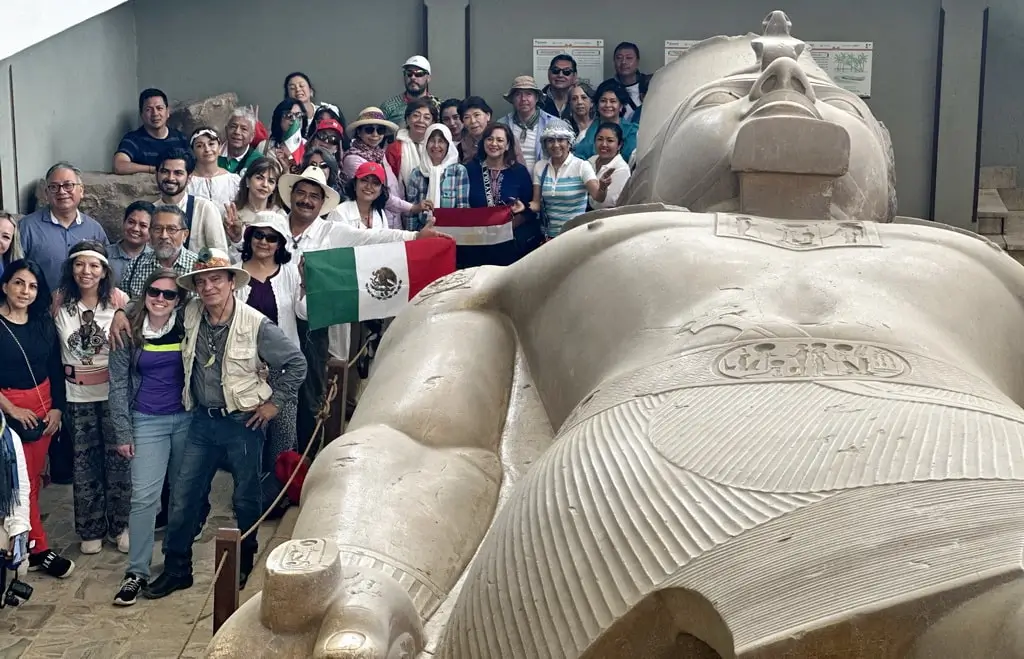
The Colossus of Ramesses II in Memphis

The story of the Sacred Apis Bull is a journey to the very heart of Egyptian faith. It illustrates the unique combination of the divine, the political, and the monumental. We have explored his identity as the living Ptah, the strict rules for his selection, and his spectacular final resting place.

The journey through the history of the Apis Bull is a journey every traveler should take. Memphis, the site of his temple, is an essential open-air museum. Furthermore, the Serapeum at Saqqara offers one of the most powerful and quiet archaeological experiences in Egypt.

The Apis Bull may no longer walk the earth. But the massive stone sarcophagi and the silent tunnels of the Serapeum remain a humbling testament to the grandeur of this ancient god.

Ready to descend into the silent, sacred Serapeum tunnels where the Apis Bulls were entombed? Explore our Memphis and Saqqara tour packages today!

Explore UNESCO world's heritage sites in Egypt with expert Egyptlogist Tour guides....
Make every moment count. A trip to remember....

Transit Stopover in Cairo

We have just returned from a two week holiday in Cape Town. On the way out our airline schedule meant that we had a 15 hour stop in Cairo. We decided to arrange a tour of the city and after asking for quotes/itineraries we chose Egypt Fun Tours. This worked

More »

Like two days of touring in one day!

I had a 12 hour stay in Cairo- and had made no plans on how to spend it until 8pm the night before departure. I emailed Egypt Fun Tours in a panic and they responded immediately. They made it incredibly easy to arrange a tour and we made arrangements via

More »
12 Days Solo Woman Tour Package (Queen Cleopatra)

Mohamed is Very Kind Person

Mohamed. I just want to thank you again for your kindness. You made our trip memorable. Give your family and the Egypt Fun Tours crew all my love and thank them again for me. Take care. Enjoy the season! Love. Linda

More »

7 night Egypt Experience Cairo, Aswan, Luxor

Trip of a lifetime!! COVID SAFE!! Knowledgeable guide who loves to share the magic of Egypt with tourists. Friendly and accommodating. This company goes to the extreme to make clients feel welcome and help them. A family company that takes good care of its support staff. Must book the 7-night

More »
Isis with wings

Top-rated Tour Packages

Isis with wings