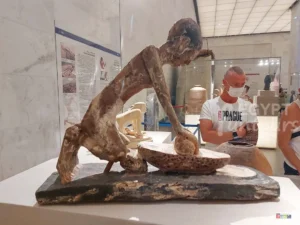
Kom Aushim Museum: The Evolution and Rebirth
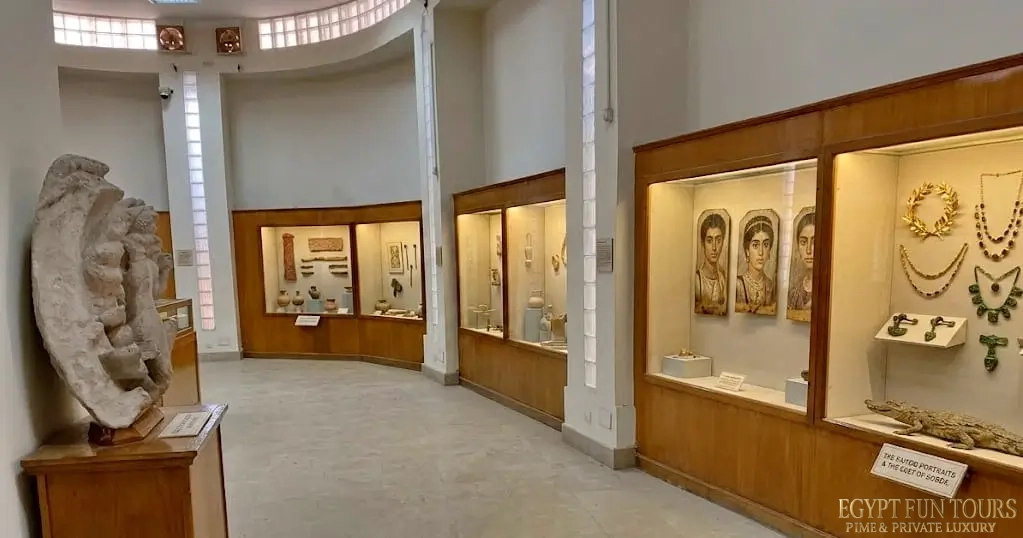
The museum has a fascinating history of development, reflecting Egypt’s ongoing commitment to regional heritage preservation.
Kom Aushim Museum: The 1974 Foundation
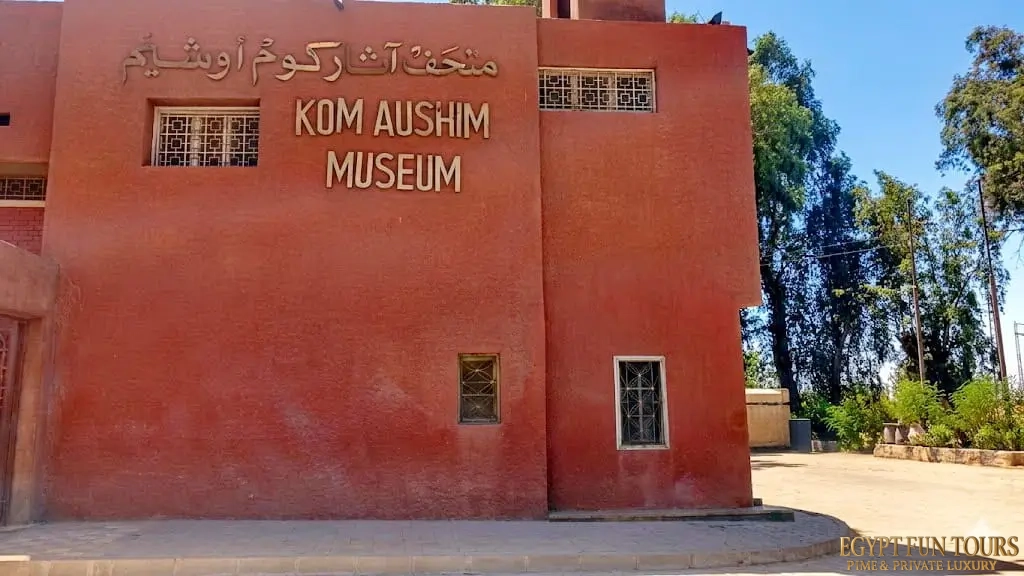
The Egyptian Antiquities Service originally established the Kom Aushim Museum in 1974. At that time, authorities built a modest, single-story structure to store and display the numerous artifacts coming to light from the ongoing joint excavations at Karanis and other nearby Faiyum sites.
Kom Aushim Museum: The Modern Renovation (2016)
As decades passed, the original building required structural upgrades and better environmental controls to protect its delicate contents. Therefore, the Ministry of Antiquities closed the museum for an extensive renovation project.
Architects added a second floor to double the exhibition space. Furthermore, installation teams added modern lighting systems, advanced security, and state-of-the-art climate-controlled display cases. The museum reopened its doors to the public in November 2016, instantly becoming a premier cultural attraction in the Faiyum Governorate.
Kom Aushim Museum: Layout and Key Exhibition Highlights
The Kom Aushim Museum utilizes a well-organized, dual-level layout. The exhibition design intentionally guides visitors chronologically and thematically through the rich tapestry of Faiyum’s history.
The Ground Floor: The Echoes of Daily Life
The ground floor focuses heavily on the domestic, economic, and administrative realities of ancient Faiyum, particularly during the Greco-Roman period.
Agricultural and Fishing Implements
Because Faiyum functioned as the breadbasket of Roman Egypt, the museum displays an impressive array of ancient farming tools. Visitors can examine remarkably preserved wooden sickles, winnowing forks, and woven baskets. Additionally, because of Lake Moeris, the collection features ancient fishing hooks, net weights, and bronze spears.
Glassware and Ceramics
Karanis housed sophisticated local glass-blowing workshops. Accordingly, the ground floor features a stunning collection of intact Roman glass vessels. These items range from delicate perfume vials to heavy household storage jars, showcasing a surprising variety of colors and techniques.
Textual Heritage
The arid climate of the Faiyum desert acted as a natural preservative for organic materials. Consequently, the museum displays fascinating fragments of papyri and ostraca (pottery shards used for writing). These texts, written in Demotic, Greek, and Latin, contain personal letters, tax receipts, and magical spells, offering a direct look into the thoughts of ancient residents.
The Upper Floor: Funerary Customs and Religious Synthesis
The upper floor transitions from the worldly to the divine, exploring how the diverse population of Faiyum approached religion, mummification, and the afterlife.
The Worship of Sobek
The crocodile god, Sobek, reigned supreme in the Faiyum Oasis. In fact, towns like Karanis featured massive stone temples dedicated to this deity. The upper floor proudly exhibits several well-preserved crocodile mummies of varying sizes. Ancient worshippers offered these mummies at local shrines to secure fertility and protection from the Nile’s floods.
The Faiyum Portraits
The crowning artistic achievement of the collection rests in its selection of Faiyum Portraits. These stunning, realistic funerary paintings date back to the Roman period.
-
Artists painted these highly individualized portraits on wooden panels using the encaustic (hot wax) technique.
-
Originally, embalmers wrapped these panels directly over the faces of mummies.
-
The haunting, expressive eyes of the subjects blend classical Roman portraiture styles with traditional Egyptian eternity beliefs.
Monastic and Islamic Heritage
The exhibition route finishes with a look at Faiyum’s later history. The upper floor displays exquisitely woven Coptic textiles from local Christian monasteries. Additionally, it features beautifully glazed ceramics, coins, and wooden screens representing the region’s rich Islamic era.