Shoshenq I: The Libyan Roots and the Meshwesh Rise to Power
To understand the rise of Shoshenq I, you must look beyond the traditional borders of the Nile Valley. You must look toward the vast desert landscapes of ancient Libya. His ascension to the throne did not come from a sudden, violent invasion by a foreign army. Instead, his rise marked the grand climax of a long process. For centuries, a powerful Libyan tribal group known as the Meshwesh quietly migrated, integrated, and maneuvered within Egypt.
The Meshwesh Migration and Egyptian Integration
During the New Kingdom, the Western Desert frontiers witnessed constant friction. Native Egyptians frequently clashed with these Libyan groups. For instance, rulers like Ramesses II and Merneptah fought bitter campaigns to repel waves of Meshwesh immigrants. However, the Libyans eventually achieved what raw military conquest could not. They successfully integrated into Egyptian society through steady, peaceful assimilation.
As the central authority of the 20th Dynasty began to fragment, the Egyptian military changed its strategy. Consequently, the state began to rely heavily on these robust Libyan clans as professional mercenary forces. The Meshwesh were highly disciplined, fearsome warriors. In fact, ancient reliefs easily identify them by their distinct feathers, long cloaks, and sidelocks of hair.
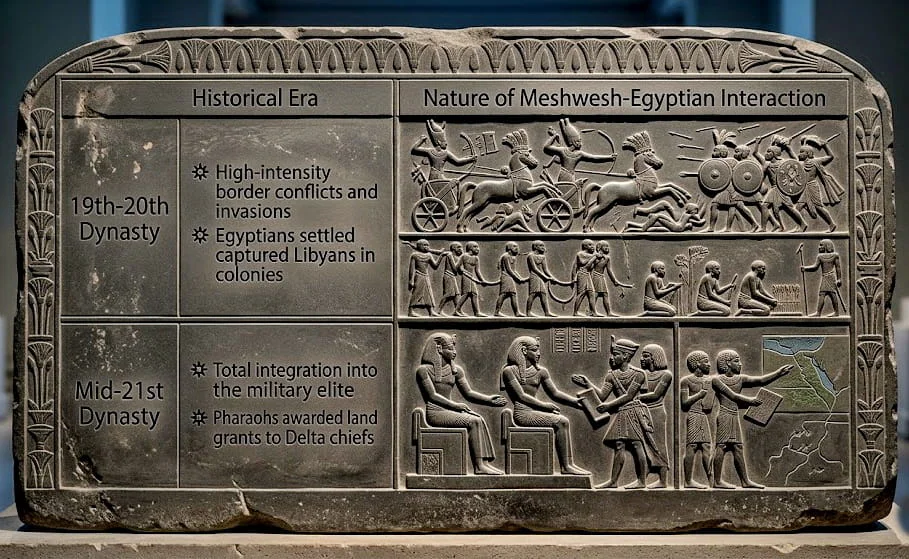
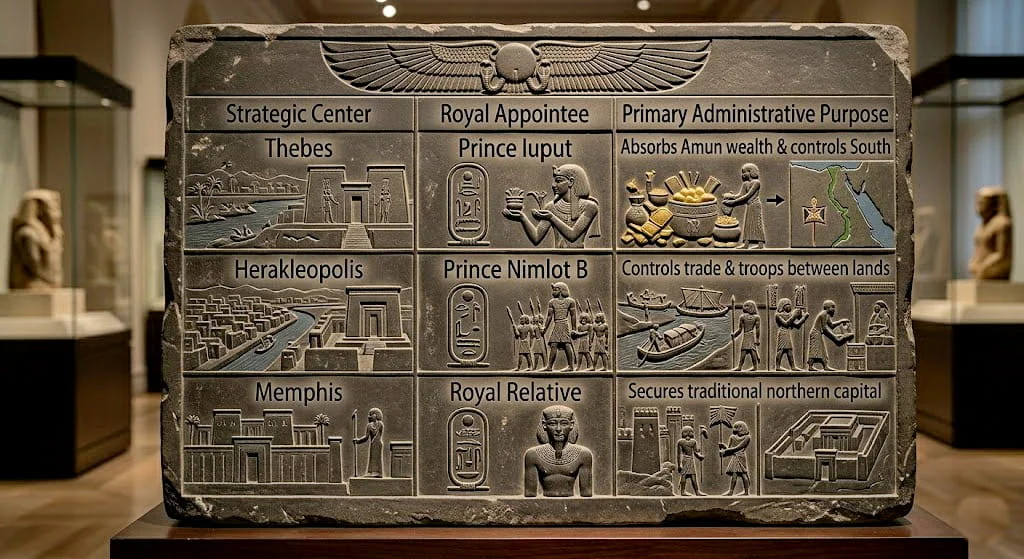
Over several decades, the pharaohs granted fertile lands in the Delta to these mercenary captains. These settlements flourished around Bubastis, Tanis, and Herakleopolis. Because of this, the families formed permanent military colonies. The settlers quickly adopted Egyptian names, learned the local language, and embraced religious customs. Nevertheless, they fiercely maintained their traditional tribal hierarchy and proud lineage.
The Great Chiefs of the Ma: Shoshenq’s Illustrious Lineage
By the late 21st Dynasty, the descendants of these Libyan settlers had transformed the political landscape. They became the most powerful aristocratic landlords in Lower Egypt. Shoshenq I was born into this highly influential military elite. He was the son of Nimlot A, the Great Chief of the Ma, and a noblewoman named Tentsepeh.
His family held unmatched political weight. For example, his paternal uncle, Osorkon the Elder, had already broken historic barriers by ruling as a pharaoh during the 21st Dynasty. Therefore, this lineage granted Shoshenq an impeccable pedigree. It perfectly blended raw Libyan tribal loyalty with deep connections to the elite courts of Tanis and Memphis.
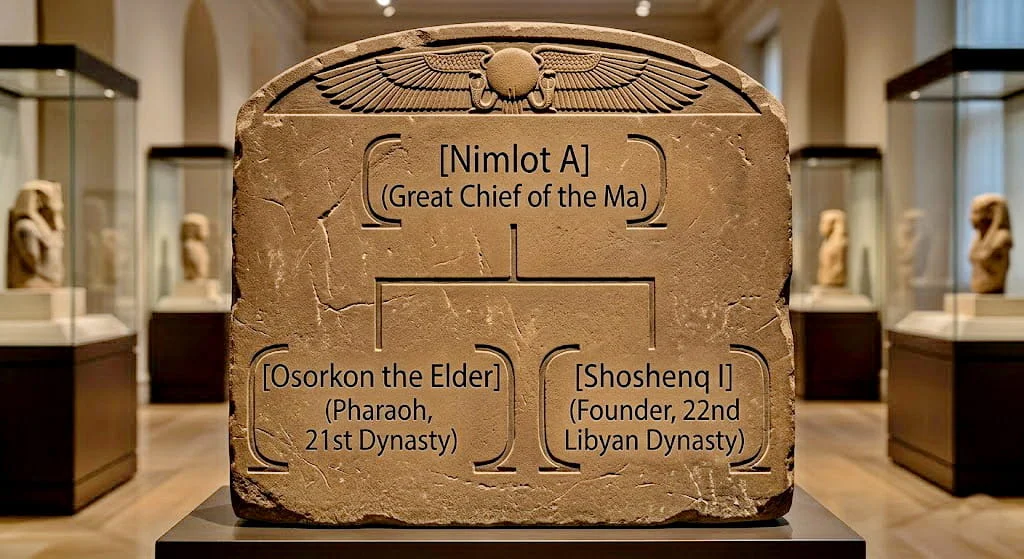
Eventually, Shoshenq I inherited the title of Great Chief of the Ma. He did not limit his ambitions to the Delta, though. He soon served as the commander-in-chief of all Egyptian military forces. Furthermore, he acted as the primary advisor to the final pharaoh of the 21st Dynasty, Psusennes II. His authority grew so absolute that ancient records even describe him resolving complex local property disputes with the explicit backing of the Oracle of Amun.
A Masterclass in Diplomacy: The Peaceful Transition of Power
When Psusennes II passed away without a clear male heir, no chaotic civil war erupted. The country avoided a bloody military coup, and the state did not fracture. Instead, Shoshenq I executed a flawless, peaceful transition of absolute power.
He achieved this historic political maneuver through deep diplomatic ties and strategic matrimonial alliances:
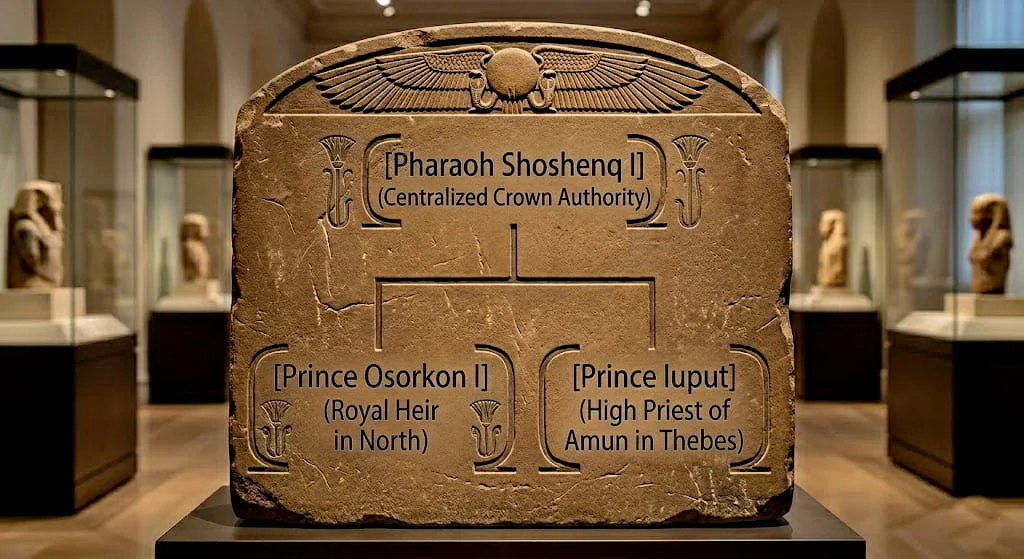
- Securing the Royal Bloodline: Shoshenq secured his family’s legitimacy early by arranging a royal marriage. He married his eldest son and heir, Osorkon I, to Princess Maatkare, who was the daughter of King Psusennes II.
- The Crown of the Two Lands: Through this calculated union, any future heir born to his lineage would carry the pure, traditional royal bloodline of the 21st Dynasty. At the same time, the heir would inherit the raw martial power of the Libyan chieftains.
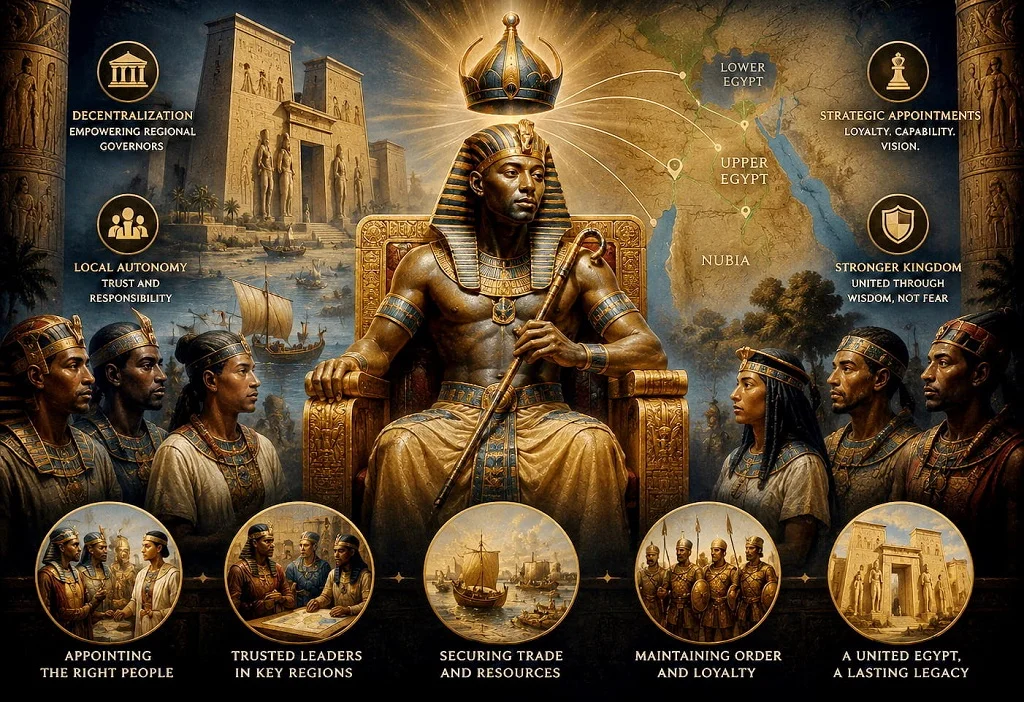
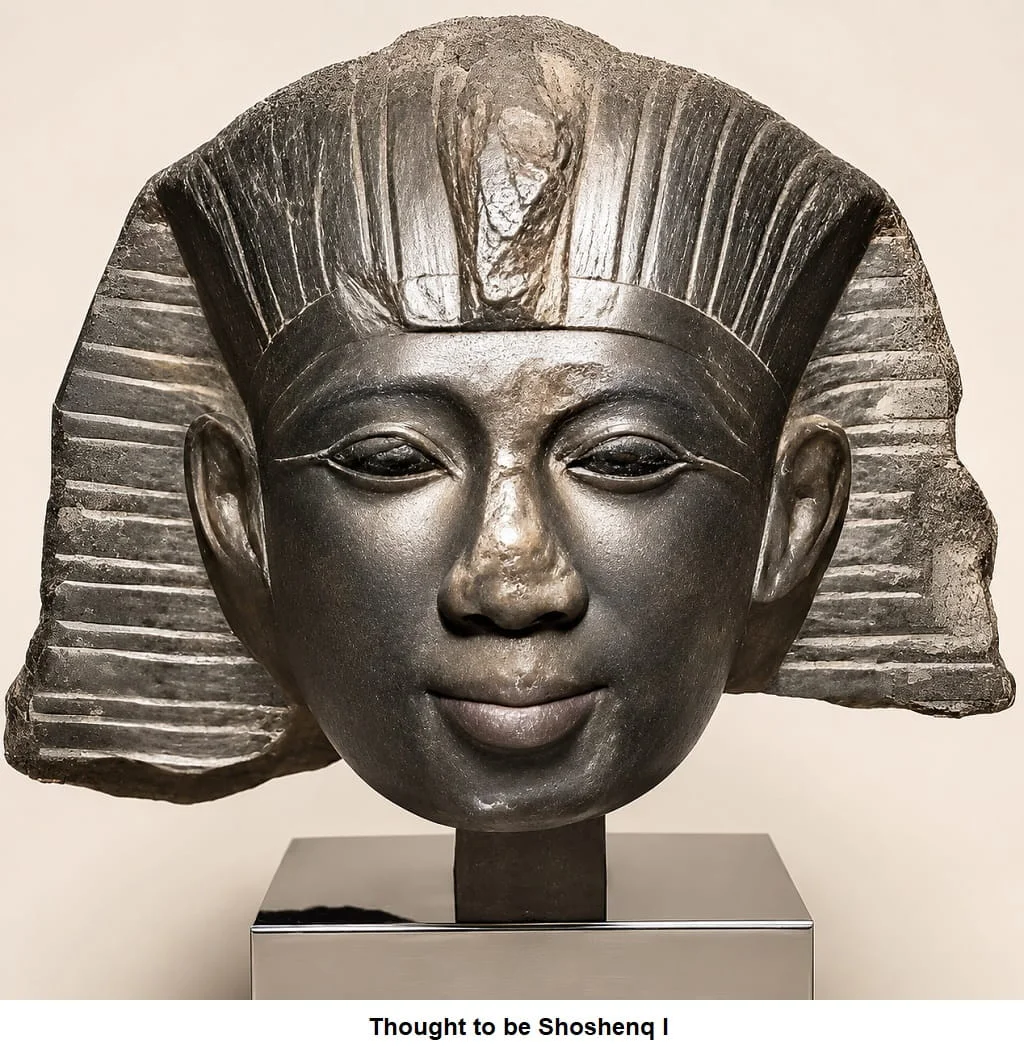
Consequently, Shoshenq I ascended the throne around 943 BC with the unanimous backing of the military, the wealthy Delta aristocracy, and the elite priesthood. He officially ended the 21st Dynasty and proudly established the 22nd Dynasty. Today, modern historians frequently call this the Bubastite or Libyan Dynasty. By preserving traditional pharaonic rituals while injecting the dynamic energy of his Meshwesh roots, the newly crowned king stood ready to forge a bold, unified future for a long-divided Egypt.