The Twenty-first Dynasty: Guide to Divided Kingdom and Silver Kings

This comprehensive guide explores The Twenty-first Dynasty of Egypt, a fascinating era marking the start of the Third Intermediate Period (c. 1069–945 BCE) that arose following the collapse of the New Kingdom. Rather than a chaotic dark age, this period was characterized by a unique, peaceful dual-power system where the country was split geographically but united ideologically: the secular pharaohs ruled international trade from the northern capital of Tanis, while the High Priests of Amun established a absolute theocracy in southern Thebes. The article profiles the dynasty's seven rulers—highlighted by the incredible solid silver treasures of the "Silver Pharaoh" Psusennes I discovered by Pierre Montet—and details how these pragmatic leaders creatively recycled older monuments to build their new capital while launch a top-secret rescue mission to protect and cache the looted mummies of Egypt's greatest historical pharaohs.
The eye of Horus
WhatsApp
Email
Print

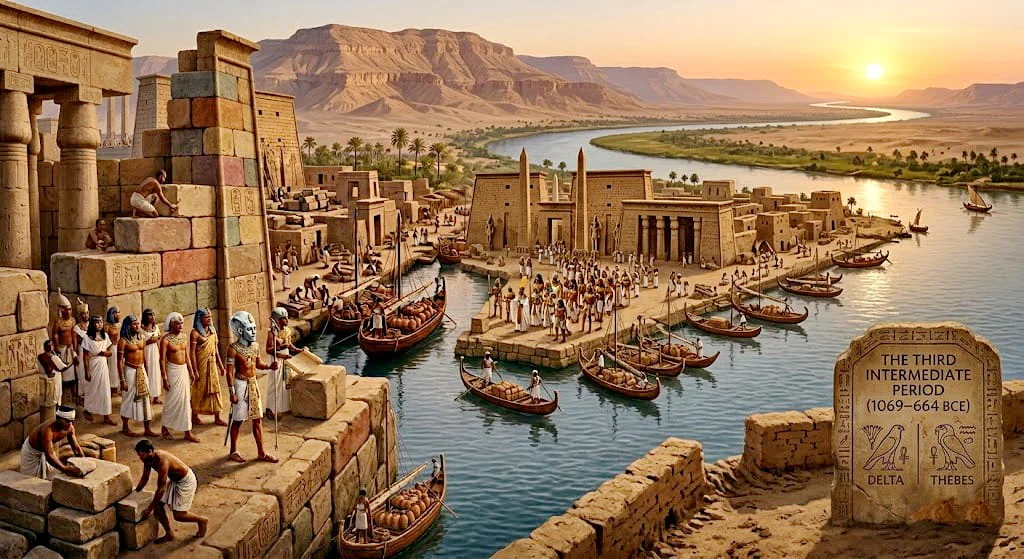
For five centuries, the New Kingdom was the peak of ancient Egyptian power. It was the golden age of Thutmose III and Ramesses II. However, by the middle of the eleventh century BCE, this superpower dissolved from within. When Ramesses XI died around 1069 BCE, the nation fractured cleanly in two. From this collapse emerged the Twenty-first Dynasty of Egypt. This fascinating era marks the start of the Third Intermediate Period.

A New Look at a Misunderstood Era

Early historians often dismissed this period as a dark age of chaos and decay. Modern archaeology tells a much better story. The Twenty-first Dynasty of Egypt was actually a masterclass in political survival.

Faced with a global trade collapse, the rulers of this era engineered a unique dual-power system. This strategy split the nation geographically but kept it united through religion and family ties.

The Divided Kingdom: Tanis and Thebes

The Divided Kingdom Tanis and Thebes

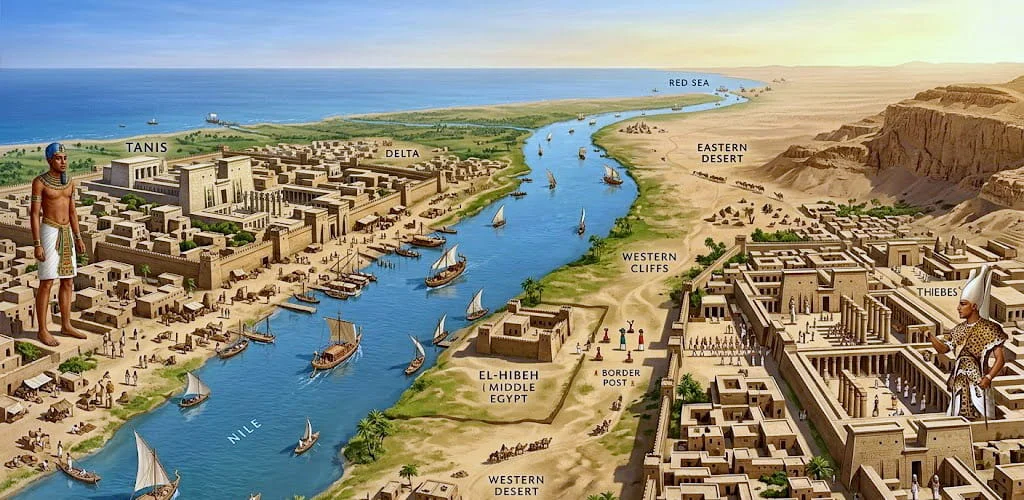
The northern delta became a busy center of international trade. It was ruled by a line of pharaohs from the new capital city of Tanis. At the same time, Upper Egypt became an absolute theocracy. It was governed from Thebes by the High Priests of Amun, who ruled in the name of the gods.

This era brought incredible changes to Egyptian culture. Gold was outshone by the sacred rarity of solid silver. Royal architects pragmatically recycled ancient monuments to build a stunning new capital.

Most importantly, the high priests launched a top-secret rescue mission. They gathered and hid the looted mummies of Egypt’s greatest New Kingdom pharaohs to protect them from thieves. The history of the Twenty-first Dynasty of Egypt is a gripping tale of a divided nation surviving with astonishing creativity.

Divider

The Geopolitical Landscape of The Twenty-first Dynasty of Egypt

The Geopolitical Landscape of The Twenty-first Dynasty of Egypt

The era of the Twenty-first Dynasty of Egypt was a unique experiment in governance. It was not a time of civil war or total collapse. Instead, it was a structured separation of power between the north and the south.

The Secular Power in the North

The Pharaohs ruled from the new capital city of Tanis. Located in the Nile Delta, Tanis was perfectly positioned for trade. The northern kings acted as secular leaders. Their primary focus was managing international commerce and naval defense.

This delta location offered vital security against Mediterranean threats. It allowed the Tanite kings to maintain Egypt’s status as a major player in the ancient Mediterranean world.

The Theocratic Power in the South

In the south, power rested in Thebes. This city remained the religious heart of the nation. Here, the High Priests of Amun held absolute authority. They did not rule as kings in the traditional sense. Instead, they treated the god Amun as the actual king of Egypt.

The Priests managed the vast temple estates and controlled the military forces in Upper Egypt. It was a functioning theocracy, where every major decision required the guidance of the divine.

Power Sharing: How the North and South Cooperated

This setup defined the Twenty-first Dynasty of Egypt. These two centers cooperated rather than fought. They maintained a delicate balance that kept the country stable for over a century.

Royal families often married into each other. A daughter of a Tanite Pharaoh might marry a High Priest of Thebes. This strengthened the bond between the two regions. It allowed Egypt to function as one land with two heads, ensuring that both the commercial north and the religious south could prosper.

Chronological Guide to the Pharaohs of The Twenty-first Dynasty of Egypt

Chronological Guide to the Pharaohs of The Twenty-first Dynasty of Egypt

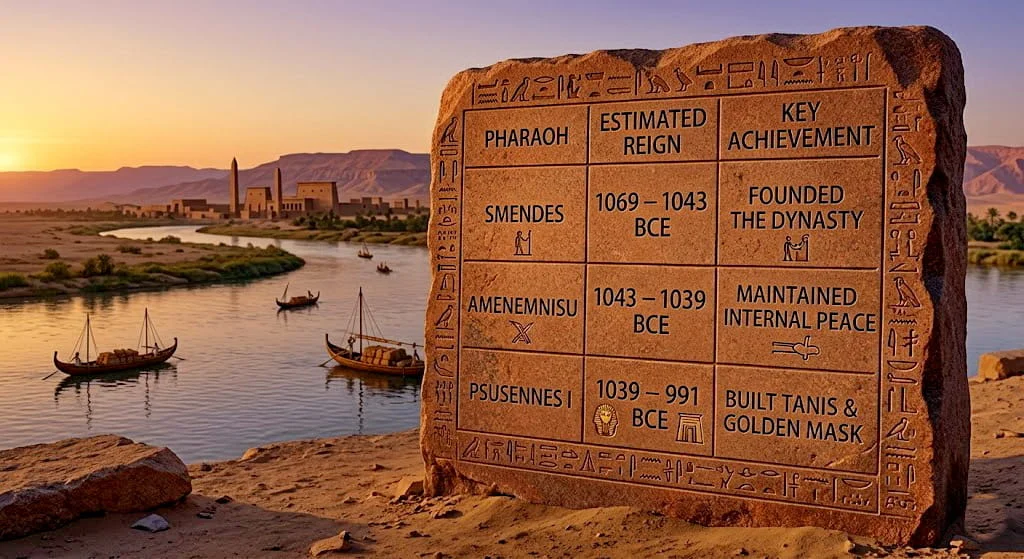
Seven distinct pharaohs ruled from the northern capital during the Twenty-first Dynasty of Egypt. Their reigns spanned over a century. Together, they navigated a changing world with practical leadership.

1. Smendes: The Founder of the Dynasty

Smendes (also known as Nesbanebdjed I) was the first king of this era. Before taking the throne, he was a powerful governor in the northern Delta. When Ramesses XI died, Smendes seized the opportunity to rule. He established the new capital at Tanis and stabilized the country’s northern borders.

2. Amenemnisu: The Brief Interregnum

Amenemnisu had a short and shadowy reign of only a few years. Historians believe he ruled alongside the founder or struggled to consolidate his power. Despite his brief time on the throne, he managed to maintain the delicate peace with the high priests in the south.

3. Psusennes I: The Legendary Silver Pharaoh

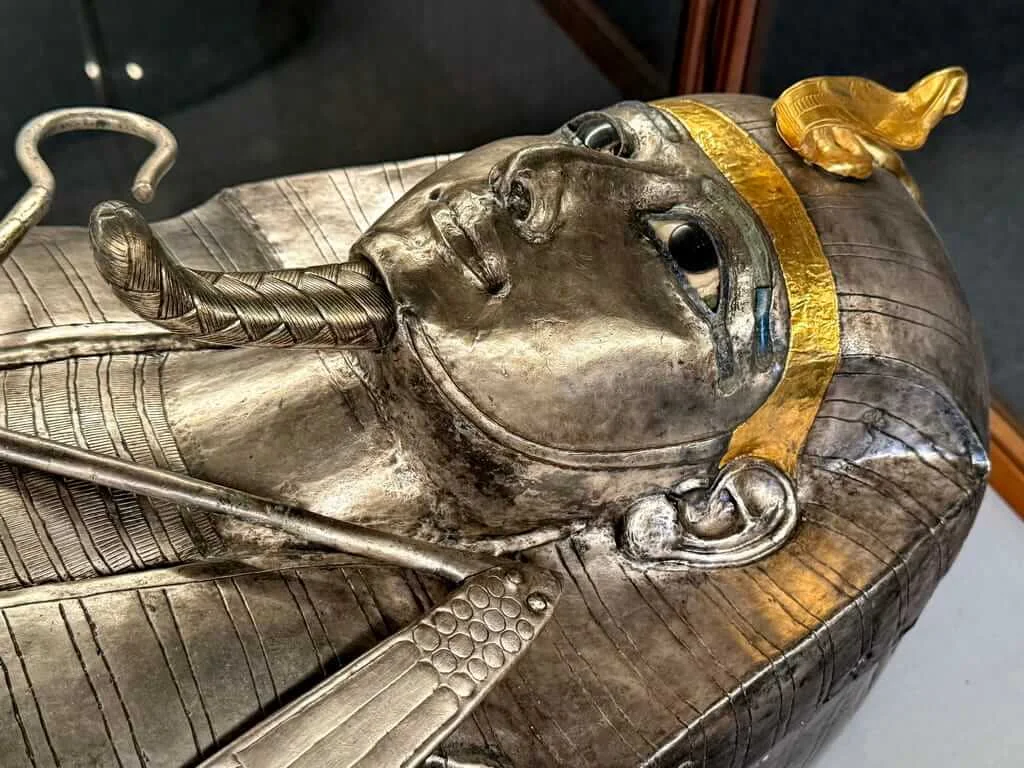
Silver Coffin of King Psusennes I

Psusennes I was the most influential ruler of the Twenty-first Dynasty of Egypt. He sat on the throne for nearly fifty years. He built massive defensive walls around Tanis and expanded the Great Temple of Amun. His intact royal tomb, discovered in 1940, revealed spectacular silver coffins and gold masks that rivaled those of Tutankhamun.

Golden Scarab

The Final Rulers of The Twenty-first Dynasty of Egypt
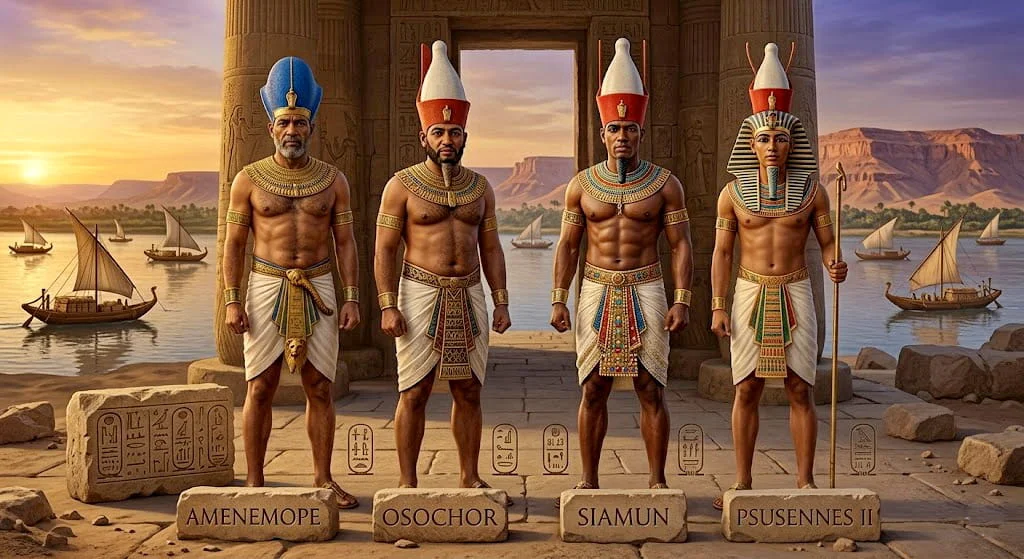
The Final Rulers of The Twenty-first Dynasty of Egypt

The later half of the dynasty faced shifting populations and new foreign influences, particularly from Libyan groups settling in the Delta.

4. Amenemope: The Protector of Artisans

Amenemope succeeded Psusennes I and continued his predecessor’s building programs. His funerary goods show that artistic craftsmanship remained highly refined despite economic limitations. He focused on preserving domestic stability.

5. Osochor: The First Libyan Pharaoh

Osochor (or Osorkon the Elder) marks a major shift in Egyptian history. He was of Libyan descent, representing the growing political influence of Libyan military families in northern Egypt. His peaceful reign paved the way for future dynasties.

6. Siamun: The Active Builder and Diplomat

Siamun was one of the most energetic rulers of the Twenty-first Dynasty of Egypt. He ordered extensive construction projects at Tanis and Heliopolis. He also engaged heavily in foreign policy across the Levant, protecting trade routes from emerging regional powers.

7. Psusennes II: The Last King of the Line

Psusennes II brought this historic era to a close. His reign was quiet and diplomatic. He successfully bridged the political gap, allowing power to pass peacefully to his son-in-law, Shoshenq I, who founded the Twenty-second Dynasty.

The Incredible Treasures of Tanis and The Twenty-first Dynasty of Egypt
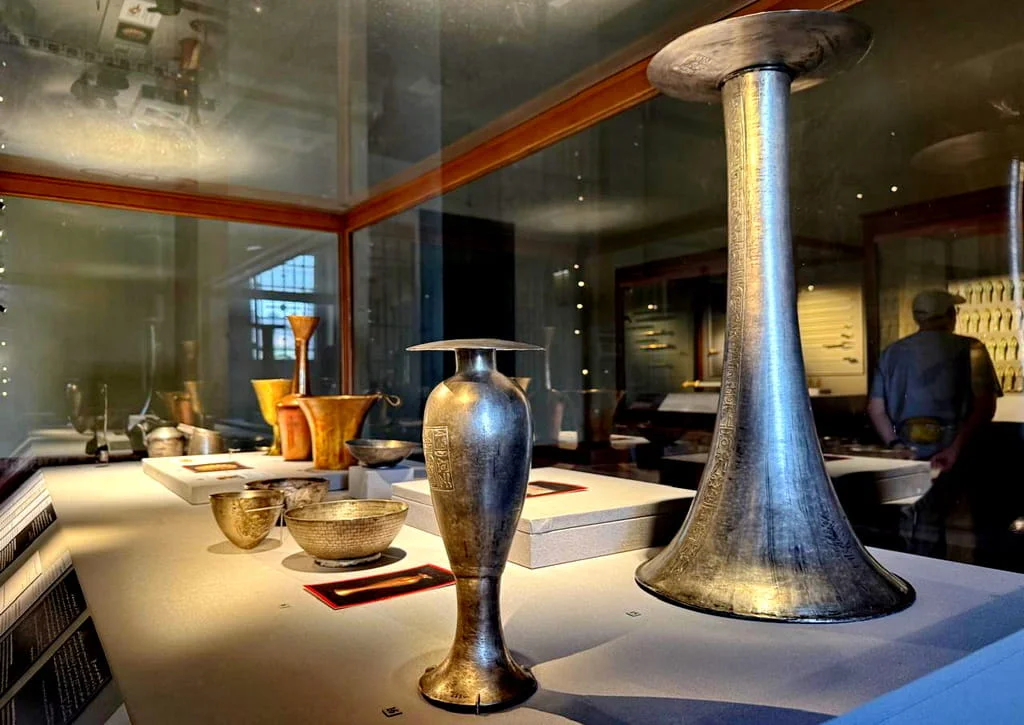
Treasures of Tanis

In 1939, French archaeologist Pierre Montet made a stunning discovery. He found the intact royal tombs of the Twenty-first Dynasty of Egypt at Tanis. Unfortunately, World War II broke out at the same time. This global conflict completely overshadowed the find, keeping it out of the public eye. The treasures unearthed inside these tombs were breathtaking. They proved that the Tanite kings still held immense wealth and artistic power.

The Story of the Silver Pharaoh

The ultimate highlight of the discovery was the burial of King Psusennes I. He is often called the “Silver Pharaoh.” He was buried inside a magnificent coffin made of solid silver. In ancient Egypt, silver was incredibly rare. It had to be imported from abroad, making it far more valuable than gold. Religiously, Egyptians believed that the bones of the gods were made of silver, while their flesh was gold.

Masterpieces of Ancient Metalwork

Beyond the silver coffin, the tombs contained dazzling items. Workers found a beautiful solid gold funerary mask resting on the pharaoh’s mummy. The tomb also held gold bracelets, heavy collars, and fine silver vessels. These artifacts highlight the elite craftsmanship of the Twenty-first Dynasty of Egypt. Even during an economic transition, the royal workshops created some of the finest metalwork in human history.

Material Culture and Recycling the Past

The architecture of Tanis reveals a fascinating strategy. The kings did not have easy access to southern quarries, so they adapted creatively.

The Practice of Monument Recycling

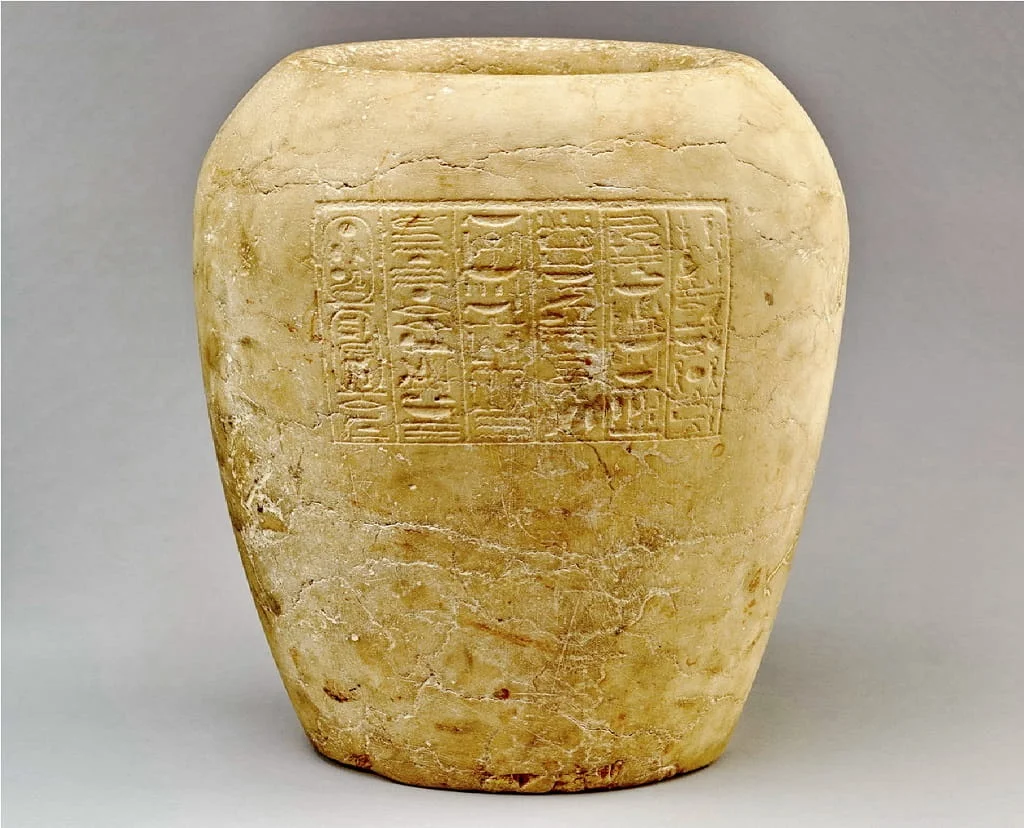
To build the temples of the Twenty-first Dynasty of Egypt, architects reused stones from older monuments. They took giant blocks, statues, and obelisks from Pi-Ramesses, the old capital of Ramesses II. They carefully transported these massive pieces to Tanis. Workers then re-carved the original cartouches with the names of the new Tanite kings.

Pragmatic Engineering or Piety?

Early historians viewed this recycling as a sign of poverty or laziness. Today, experts see it as brilliant engineering and political strategy. By using the stones of Ramesses II, the new pharaohs connected themselves directly to the greatness of the New Kingdom. It was a practical way to build a spectacular capital while honoring Egypt’s imperial past.


The eye of Horus

The Theban Cache: Saving the Royal Mummies in The Twenty-first Dynasty of Egypt

The Theban Cache Saving the Royal Mummies in The Twenty-first Dynasty of Egypt

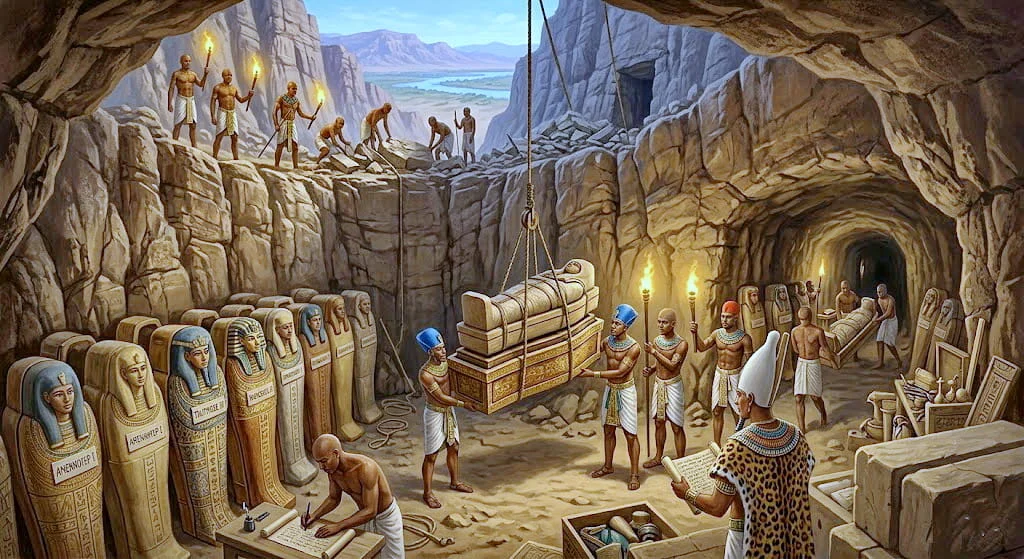
While the northern pharaohs built their new capital, the south faced a massive crisis. The Valley of the Kings was no longer safe. Economic hardship led to a major wave of tomb-robbing. To stop this desecration, the leaders of the Twenty-first Dynasty of Egypt took drastic action. The High Priests of Amun organized a secret rescue mission to save Egypt’s greatest pharaohs.

The Top-Secret Collection Operation

The priests systematically visited the violated tombs of the Valley of the Kings. They gathered the scattered mummies of legendary rulers like Thutmose III, Seti I, and Ramesses II. The priests repaired the damaged wrappings. They carefully recorded their actions in ink directly on the linen bandages. These records provided a clear history of how each pharaoh was rescued during the Twenty-first Dynasty of Egypt.

The Secret Tomb at Deir el-Bahari

The priests needed a final, permanent hiding place. They chose a deep, cliffside tomb near Deir el-Bahari, now known as DB320. Workers quietly hauled dozens of royal coffins down a narrow vertical shaft. They stacked them tightly in the dark corridors. This brilliant plan worked perfectly, keeping the pharaohs completely hidden from grave robbers for nearly three thousand years.

The Economic and Political Motives of the Priests

This rescue mission was deeply pious, but it also served a highly practical purpose for the ruling elite.

Financing the State Through Recycling

The high priests did not just move the mummies. They also systematically stripped the original tombs of their valuable gold and silver linings. This recovered wealth was brought directly into the state treasury at Thebes. It helped fund the government and pay military forces during the Twenty-first Dynasty of Egypt.

Strengthening Royal Authority

By controlling the sacred remains of past pharaohs, the High Priests of Amun boosted their own political legitimacy. They presented themselves as the true protectors of Egypt’s holy ancestors. This strategic move secured their authority over Upper Egypt, demonstrating that politics and religion were always intertwined in this fascinating era.

Divider

Socio-Economic Reality and the Lasting Legacy of The Twenty-first Dynasty of Egypt

The world surrounding the Twenty-first Dynasty of Egypt was vastly different from the golden days of empire. The Eastern Mediterranean had just experienced the Late Bronze Age Collapse. Major trade networks had broken down, and access to raw materials was highly limited. Despite these global challenges, Egypt adjusted. The people developed a highly resilient local economy to survive this transitional era.

Adapting to Resource Scarcity

The lack of imports forced Egyptian craftsmen to innovate. Because timber and tin were difficult to acquire, metalworkers became experts at recycling older bronze objects. This scarcity explains why the solid silver treasures found at Tanis were so extraordinary. Securing that much silver required highly successful trade and diplomatic relations with Mediterranean merchants.

Daily Life in a Divided Land

For the average citizen, daily life remained deeply connected to the agricultural cycles of the Nile. The division between northern and southern governments did not disrupt daily farming or local trade. In fact, the domestic peace maintained during the Twenty-first Dynasty of Egypt allowed local markets to thrive without the heavy tax burdens of foreign military campaigns.

The Historic Legacy of The Twenty-first Dynasty of Egypt

When Psusennes II passed away, the dynasty came to a peaceful end. Power shifted smoothly to the Twenty-second Dynasty without causing a destructive civil war.

The Historic Legacy of The Twenty-first Dynasty of Egypt

Redefining an Era of Survival

Modern historians no longer view the Twenty-first Dynasty of Egypt as a dark age of failure. Instead, it is celebrated as an era of remarkable political ingenuity.

Faced with massive geopolitical shifts, the rulers successfully preserved the core of Egyptian civilization. They protected the borders, kept the economy moving, and maintained internal peace.

The Ultimate Gift to Modern Archaeology

Perhaps the greatest legacy of this dynasty was its preservation of the past. The secret mummy caches created by the Theban priests saved the physical remains of Egypt’s greatest pharaohs.

Without the clever, protective actions taken during the Twenty-first Dynasty of Egypt, our modern understanding of New Kingdom history would be entirely blank. This era did not destroy Egypt’s grand legacy—it actively saved it.

The eye of Horus

FAQs About The Twenty-first Dynasty of Egypt

What was the capital during the Twenty-first Dynasty of Egypt?

The primary political capital was Tanis, located in the north-eastern Nile Delta. However, Thebes served as a secondary religious capital in the south, ruled by the High Priests of Amun.

Why is Psusennes I called the Silver Pharaoh?

Psusennes I is called the “Silver Pharaoh” because he was buried in a spectacular, intact solid silver coffin. In ancient Egypt, silver was much harder to source than gold, making his burial incredibly unique and valuable.

Was Egypt at war during the Twenty-first Dynasty of Egypt?

No, this era was remarkably peaceful within Egypt. While the country was politically split between the north (Tanis) and the south (Thebes), the two ruling factions cooperated through strategic marriages and shared religious beliefs to avoid civil war.

Who discovered the treasures of The Twenty-first Dynasty of Egypt?

French archaeologist Pierre Montet discovered the intact royal tombs at Tanis between 1939 and 1940. Because his discovery happened at the start of World War II, it did not receive the global media attention it deserved.

Why did the pharaohs of this dynasty recycle older monuments?

The kings of the Twenty-first Dynasty of Egypt recycled stones, statues, and obelisks from the nearby city of Pi-Ramesses (built by Ramesses II). They did this for practical engineering reasons due to limited access to southern stone quarries, and to link their names to the glory of the New Kingdom.

How did the 21st Dynasty end?

The dynasty ended peacefully when the last king, Psusennes II, died without a male heir. Power passed smoothly to his son-in-law, Shoshenq I, a powerful commander of Libyan descent who founded the Twenty-second Dynasty.

Divider

Great guided tour of pyramids

We travelled to Cairo on Friday, May 3, 2019, from Toronto. We landed at 0530 and were met by a representative of Fun Tours at the departure gate. We were only on a layover of 6 hours, and the tour company came with a private van, water, a driver, and

More »

Excellent Layover Tour

I would recommend Egypt Fun Tours to everyone who is looking for either a cultural or relaxing trip in Egypt. I was recently on a private layover tour and could not have been any happier with my day in Cairo. My tour guide, Hani was waiting just outside immigration and

More »
Cairo belly dance show - Egypt Fun Tours

The BEST tour – a dream come true

I’ve been dreaming of going to Egypt since I was 7 years old. At 37, I finally made it. Even with the warnings that it’s not safe for Americans. Thankfully, Egypt Fun Tours quickly put any worry aside. Hamada, the owner, was recommended by a friend. He was our personal

More »

Layover tour of Cairo Pyramids

On a recent trip, I had 8 hours from the time I landed in Cairo to when my next flight was scheduled to leave. Luckily, I arrived in the morning and left in the afternoon, so, not being one to sit around an airport for 8 hours, I visited the

More »
13-day Egypt guided tour package - Egypt Fun Tours

Easily the best two days of the year!

We were doing the 14-day Mediterranean cruise and were in Egypt for two days. I was searching the internet for about 4 days and finally found Egypt Fun Tours as my guide in Egypt. It ended up being the best 2 days of the entire cruise trip. Since this is

More »
God_Anubis_Icon

Top-rated Tour Packages

God_Anubis_Icon
WhatsApp
Email
Print