
The Fragmented Horizon (Egypt Before Psamtik I)
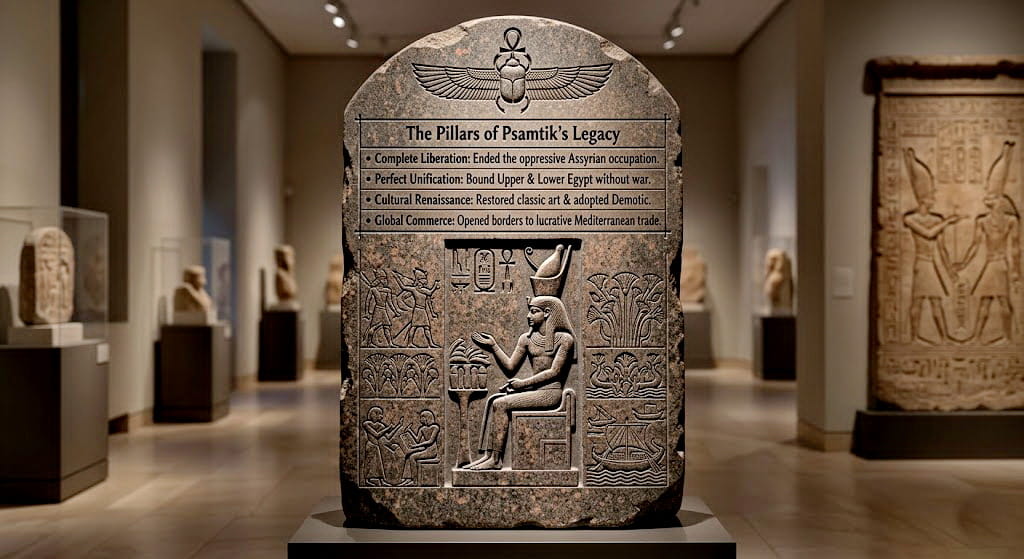
To understand the monumental achievements of Psamtik I, one must first look at the shattered world of his birth. The mid-seventh century BC marked the lowest point of the Third Intermediate Period. During this era, Egypt suffered from a fractured landscape, political fragility, and constant foreign intervention. For centuries, the ancient authority of the double crown had vanished. In its place, local rulers, competing dynasties, and a devastating loss of national sovereignty defined the country.
The Fallout of the Third Intermediate Period
By the twilight of the eighth century BC, Egypt was no longer a unified superpower. The central authority of the Pharaoh had dissolved into a patchwork of competing principalities. Consequently, regional divides split the nation down the middle. In the south, the Kushite kings of the 25th Dynasty ruled from the sacred city of Thebes. They viewed themselves as the true guardians of traditional pharaonic culture and the cult of Amun. Meanwhile, a series of local Libyan chieftains, meshwesh rulers, and petty kings carved up the northern Delta. These local factions constantly vied for territory and commercial dominance.
Unfortunately, this deep regional divide left the country utterly vulnerable to external aggression. The expanding Neo-Assyrian Empire—the military juggernaut of the Near East—soon clashed with the Kushite rulers. As a result, this catastrophic collision turned Egyptian soil into a bloody geopolitical battleground.
The Assyrian Shadow and the Dodecarchy
The conflict reached its peak under the Assyrian kings Esarhaddon and Ashurbanipal. Through successive, brutal invasions, the Assyrian war machine marched down the Nile. They successfully sacked Memphis and eventually unleashed devastating destruction upon Thebes. Because of this overwhelming force, the invaders permanently drove the Kushite pharaohs south. The defeated kings retreated past the cataracts and back into Nubia.
Rather than ruling Egypt directly, Ashurbanipal established a clever vassal system to keep the country divided and weak. Specifically, he recognized a network of twelve local Delta lords. The Greek historian Herodotus later famously dubbed this governing coalition the Dodecarchy. These petty rulers bound themselves by oaths of loyalty to Nineveh. Furthermore, they paid heavy tributes and lived under the constant monitoring of Assyrian garrisons.
Among these local principalities, however, one city began to rise rapidly above the rest: Sais (modern Sa el-Hagar) in the Western Delta.
Psamtik I: The Strategic Rise of Sais
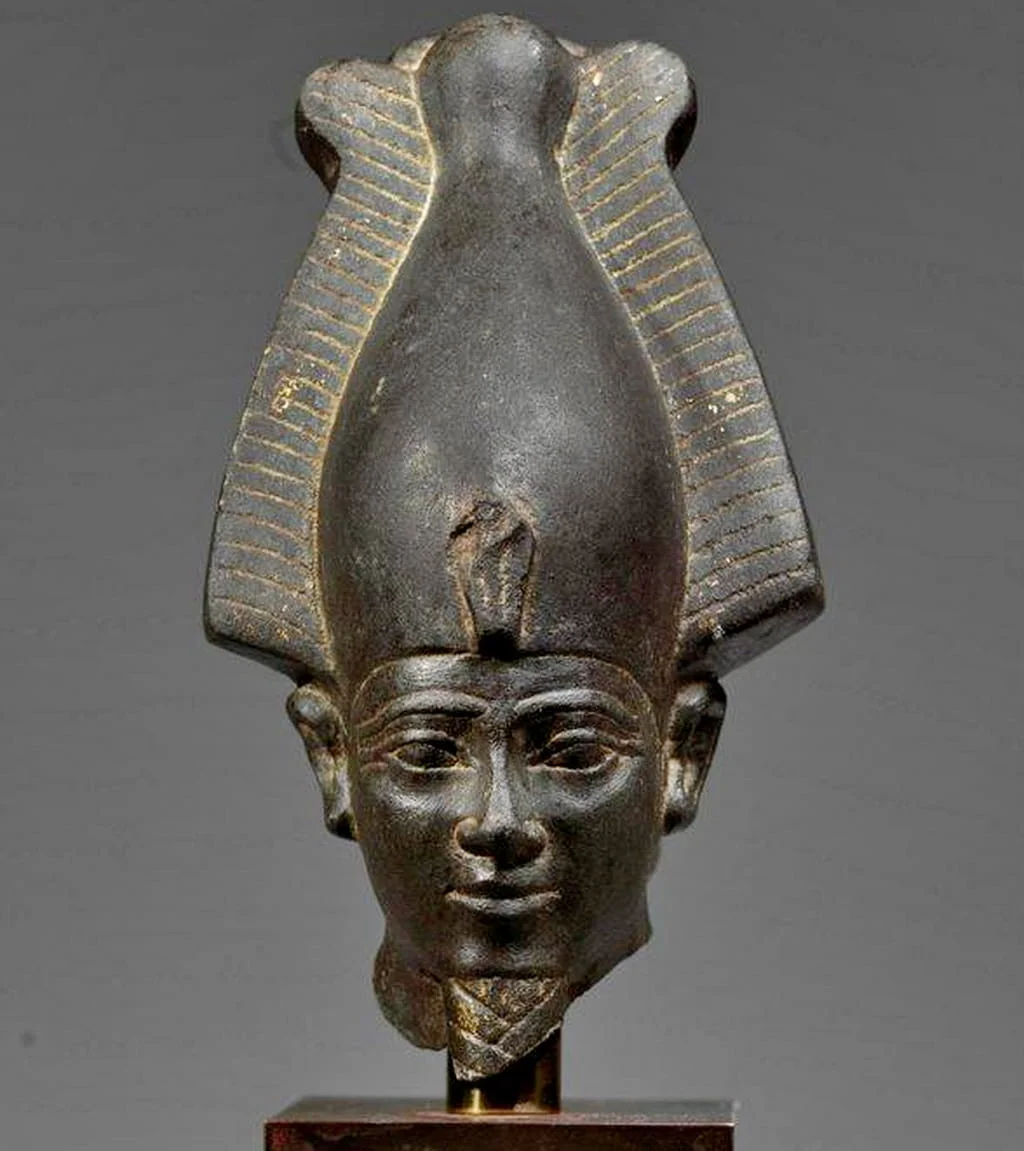
Sais occupied a brilliant strategic position. Because it sat directly on the Canopic branch of the Nile, the city perfectly controlled both domestic river trade and maritime commerce with the Mediterranean. Therefore, the rulers of Sais grew into astute politicians. They quickly understood that survival required playing a dangerous double game.
Psamtik’s father, Necho I, initially secured a powerful position when the Assyrians appointed him as the chief vassal ruler of Sais and Memphis. Necho I proved his loyalty to Ashurbanipal by fighting alongside Assyrian forces against Kushite counter-offensives. However, this dangerous alliance ultimately cost Necho his life.
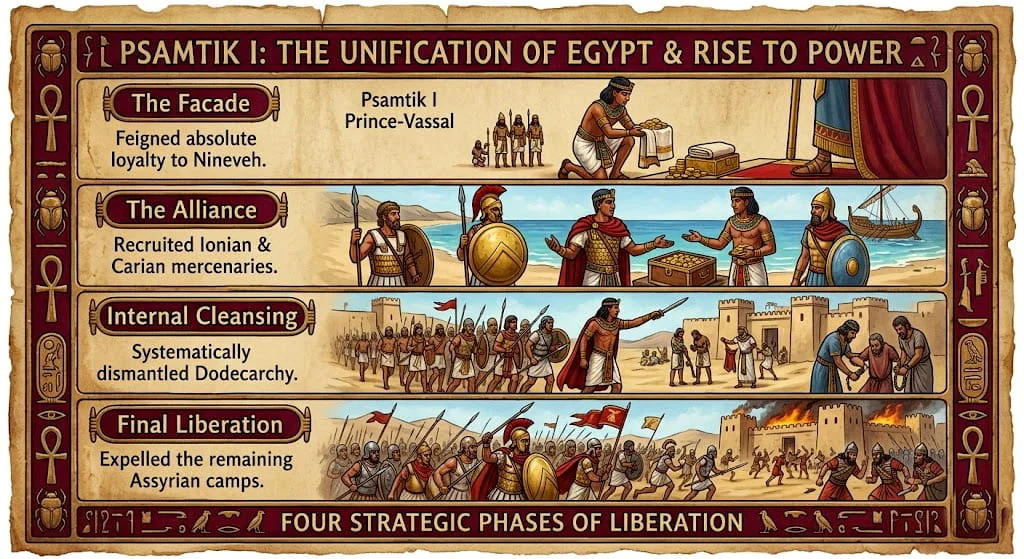
Following his father’s tragic death, young Psamtik inherited a bitter legacy. He faced a nation occupied by a foreign empire, a Delta divided by jealous rival lords, and a family name deeply entangled with the conquerors of Nineveh. Yet, from this weak position of apparent submission, Psamtik I would mastermind one of the most brilliant campaigns of national liberation in ancient history.